
Creative Biolabs is offering the most comprehensive services for antibody development projects. With strict regulation and effective execution, we are dedicated to providing the most valuable solutions to complete your projects.
HighlightsCreative Biolabs is offering the most comprehensive services for antibody development projects. With strict regulation and effective execution, we are dedicated to providing the most valuable solutions to complete your projects.
HighlightsCreative Biolabs has established a broad range of platforms for developing novel antibodies or equivalents. These cutting-edge technologies enable our scientists to meet your demands from different aspects and tailor the most appropriate solution that contributes to the success of your projects.
HighlightsWith deep understanding in antibody-related realms and extensive project experience, Creative Biolabs offers a variety of references to help you learn more about our capacities and achievements, including infographic, flyer, case study, peer-reviewed publications, and all kinds of knowledge that can assist your projects. You are also welcome to contact us directly for more specific solutions.
HighlightsGet a real taste of Creative Biolabs, one of the most professional custom service providers in the world. We are committed to providing highly customized comprehensive solutions with the best quality to advance your projects.
HighlightsAdvances in antibody engineering technology are enabling the designation of various engineered antibody forms for specific purposes in cancer diagnosis and immune therapy. With years of experience and great deal of researches, scientists from Creative Biolabs have investigated and established a series of approaches for bivalent and bispecific scFv/ Fab construction. The Fab and scFv fragments derived from phage display antibody libraries usually have short half-life and less affinity, whereas in many in vitro and in vivo applications, multivalency of antibody molecules is a desirable property. Linking two or more binding sites efficiently not only increases the functional avidity of antibody molecules, but also make the construction of bispecific antibodies (antibodies with dual specificities) possible.
scFv Dimerization (bivalent and bispecific)
We have developed three approaches to generate genetically engineered, dimerized scFv antibody fragments, namely, "Diabody", "Tandem scFv" and "Miniantibody".
Diabody
Diabody is a non-covalent dimer of single chain Fv (scFv) fragment that consists of the heavy chain variable (VH) and light chain variable (VL) regions connected by a small peptide linker. Common linkers of 14–15 amino acid residues are long enough to span the distance between the N- and C-termini of the variable domains in a scFv. However, using linkers of 3–12 amino acid residues in length will result in the formation of diabody.
When two scFvs linked by the short linkers are expressed in the same cells, dual-functional antigen-binding sites are formed by crossover pairing of the variable light-chains and heavy-chains. The bispecific diabody, which is constructed from heterogeneous scFvs, is also an important and commonly used form of recombinant bispecific antibody (BsAb). Diabodies have a rigid structure and can be expressed at high yields in bacteria.
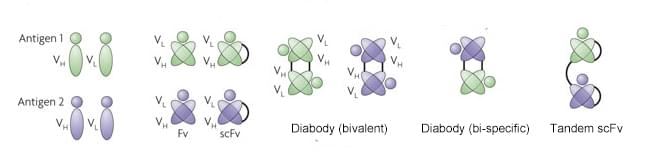 Fig.1 Schematic diagram of scFv and Diabody.1, 3
Tandem scFv
Tandem scFv (taFv) is produced by connecting two scFv molecules through a short linker. This format has a very flexible structure and is the simplest to be generated. Both bacterial expression plus refolding and eukaryotic expression are available for production of tandem scFvs. With years of experience, we have successfully constructed over 100 tandem scFvs. Creative Biolabs will be pleased to work on your requirements and design a proper strategy to construct the exact tandem scFv (bivalent or bispecific) you need.
It is worth mentioning that bispecific immune cell engagers, such as T cell engagers and NK cell engagers, are very special forms of tandem scFv and they have been widely studied in tumor immunotherapy. In such molecules, one scFv binds to immune cells via the specific marker, such as CD3 of T cells, and the other one to tumor cells via tumor associated antigens. They retarget immune cells to tumor cells.
Miniantibody
Bivalent (or bispecific) (scFv)2, so-called miniantibody, is produced by association of two scFv molecules through two modified dimerization domains. Leucine zippers are employed to mediate dimerization of scFv in a miniantibody form. We constructed dimerization cassettes that allow the conversion of scFv antibodies from all our phage display libraries to bivalent or bispecific antibodies. In this procedure, either Fos or Jun leucine zippers were fused to scFv proteins. Two cysteine residues were engineered in the Fos and Jun zipper domains to produce disulfide-stabilized homodimers. This approach usually results in efficient production of stable, secreted homodimers that retain their specificity as assessed in a number of assays. Also, Fos/Jun heterodimer instead of Fos/Fos or Jun/Jun homodimer formation allows production of bispecific (scFv)2 antibodies.
Fab Dimerization
We are professional in producing bivalent or bispecific Fab antibodies in miniantibody format.
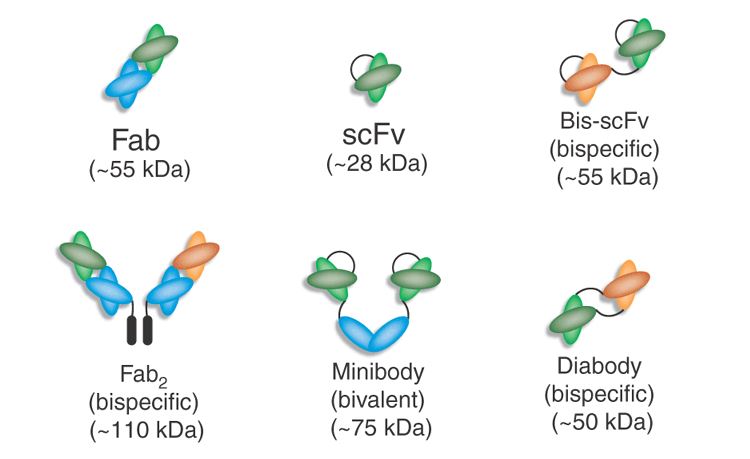 Fig.2 Schematic diagram of bispecific antibody formats.2, 3
Reference
All listed services and products are For Research Use Only. Do Not use in any diagnostic or therapeutic applications.








