Creative Biolabs is offering the most comprehensive services for antibody development projects. With strict regulation and effective execution, we are dedicated to providing the most valuable solutions to complete your projects.
HighlightsCreative Biolabs is offering the most comprehensive services for antibody development projects. With strict regulation and effective execution, we are dedicated to providing the most valuable solutions to complete your projects.
HighlightsCreative Biolabs has established a broad range of platforms for developing novel antibodies or equivalents. These cutting-edge technologies enable our scientists to meet your demands from different aspects and tailor the most appropriate solution that contributes to the success of your projects.
HighlightsWith deep understanding in antibody-related realms and extensive project experience, Creative Biolabs offers a variety of references to help you learn more about our capacities and achievements, including infographic, flyer, case study, peer-reviewed publications, and all kinds of knowledge that can assist your projects. You are also welcome to contact us directly for more specific solutions.
HighlightsGet a real taste of Creative Biolabs, one of the most professional custom service providers in the world. We are committed to providing highly customized comprehensive solutions with the best quality to advance your projects.
HighlightsCreative Biolabs has a cutting-edge proprietary method for generating hybridomas targeting endogenous proteins. Traditionally, self-antigens or proteins sharing conserved domains across species have posed challenges for hybridoma generation due to limited or absent immune responses. Utilizing "knock-out" mice for immunization has proven effective in circumventing issues arising from sequence similarities across species.
The advancement of human monoclonal antibody (mAb) production using traditional cell culture techniques was significantly aided by genetically modified mice designed to express human antibody repertoires. This was achieved through transchromosomal engineering, involving the manipulation of endogenous mouse immunoglobulin heavy and light chain loci and the introduction of transgenes encoding human immunoglobulin chains. Subsequent progress has enabled transgenic mice to express multiple V gene segments, expanding the potential repertoire of recovered mAbs. A later breakthrough led to the generation of transgenic mice producing human mAbs with diverse heavy chain isotypes. While immune responses in these transgenic mice can sometimes be less robust than those in normal mouse strains used for generating mouse mAbs, the expression system of human immunoglobulins in transgenic mice effectively mitigates undesirable human anti-mouse antibody responses. It also retains the advantages of conventional murine cell culture techniques for potential therapeutic reagent development.
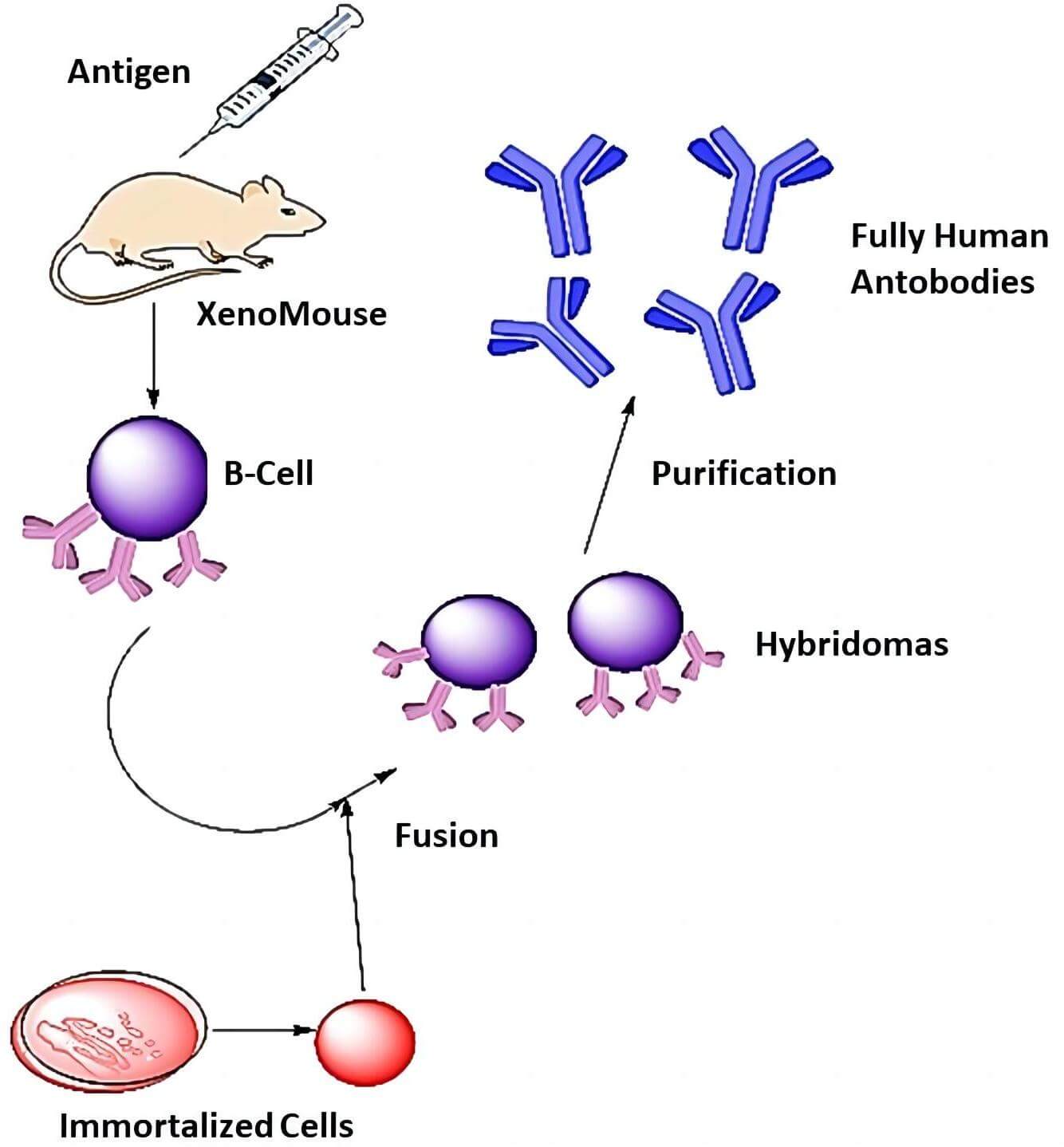 Fig.1 Hybridoma-derived mAb synthesis in genetically altered mice.1
Our scientists possess extensive expertise in developing knockout mice where the target gene is deleted. This deletion effectively eliminates the expression of the protein of interest in both embryonic stem cells and adult mice. By immunizing these gene-inactivated mice, we can successfully generate hybridomas. These hybridomas, in turn, produce mAbs that specifically target the "knocked-out" protein and its conserved domains across different species. The efficacy of our gene-inactivated mice service has been consistently validated across numerous projects. This validation underscores its reliability in producing and characterizing a diverse range of murine mAbs directed against self-antigens and proteins with conserved domains.
Creative Biolabs offers customized, comprehensive solutions, ensuring the highest quality to advance our clients' projects. We provide a one-stop hybridoma generation service in gene-inactivated mice, streamlining the entire antibody discovery process. Our general service content involves a series of interconnected steps, including gene inactivation, immunization, hybridoma production, and antibody development. We focus on providing a seamless and efficient workflow, ensuring that clients receive high-quality antibodies in a timely manner.

A critical step in our process involves the precise deletion of endogenous mouse immunoglobulin genes within the gene-inactivated mice. This sophisticated genetic modification eliminates the production of mouse antibodies, which can sometimes interfere with downstream applications, particularly in human therapeutic development. Subsequently, we introduce human immunoglobulin genes into these mice. This replacement allows the mice to produce antibodies with human variable regions, which can have significant advantages.
Following the genetic modification, the gene-inactivated mice are immunized with the target antigen. Our team designs immunization strategies to elicit a robust and targeted immune response. This method requires careful consideration of variables like antigen preparation, adjuvant selection, and immunization schedules. The goal is to maximize the activation of B cells that produce antibodies against the desired target.
After the mice have generated an adequate immune response, spleen cells containing antibody-producing B cells are harvested. These B cells are then fused with myeloma cells, which are immortalized cell lines, to create hybridomas. Each hybridoma cell line generates a single type of antibody, known as mAb. This step is crucial for generating a stable and continuous source of antibodies.
The hybridomas generated are then cultured, and the antibodies they produce are collected and characterized. This involves a series of assays to assess the antibodies' specificity, affinity, and functionality. We employ various techniques, including ELISA, flow cytometry, and other advanced methods, to identify and select the hybridomas that produce the highest-quality antibodies for the client's specific application.
The final step in our service is antibody purification. The antibodies collected from the hybridoma cultures are purified to remove any contaminants, such as cell culture media components and other proteins. We employ various purification techniques, including affinity chromatography, to ensure that the final antibody product is of the highest purity and quality.
The monoclonal antibodies produced through our hybridoma-based service in gene-inactivated mice have broad utility, serving as essential tools in basic research for elucidating protein function, dissecting signaling pathways, and unraveling disease mechanisms. They also play a vital role in drug discovery, enabling the development of innovative therapeutics for diseases like cancer, autoimmune disorders, and infectious diseases, and are crucial for creating sensitive diagnostic assays and biopharmaceutical applications, including both therapeutic interventions and in vivo research. The use of gene-inactivated mice to generate fully human mAbs has notably advanced therapeutic antibody development, with a key application being the treatment of advanced colorectal cancer, demonstrating their significant potential in medicine and research. These antibodies also hold promise in emerging fields such as personalized medicine, where their specificity can be harnessed to create targeted therapies tailored to individual patients.
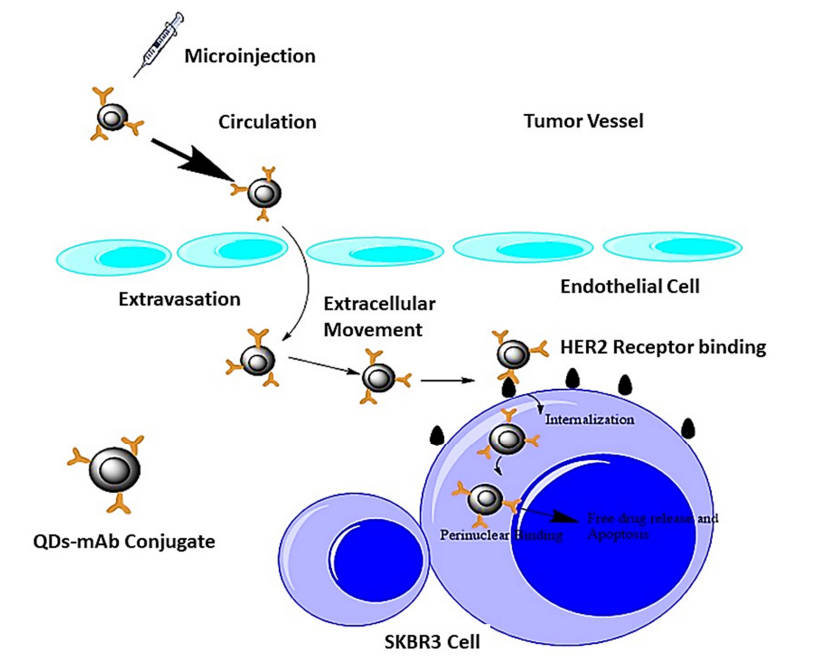 Fig.2 HER2-receptor targeting by QD-mAb conjugate.1
Fatima, Iqra, et al. utilize fully human monoclonal antibodies (Abs) produced in transgenic mice to specifically target malignant cells1. In the case of the HER2 receptor, a particular Ab is employed and conjugated with quantum dots (QDs) through various coupling methods. The resulting conjugate, known as the quantum dot-monoclonal antibody (QD-mAb) conjugate, is administered into the bloodstream to achieve localization. Post-injection, it undergoes a sequence of processes to reach the intracellular space, enabling bioimaging specifically of the HER2 receptor. This process leads to the apoptosis of cancer cells, either through the release of the antibody or the production of free radicals. The QD-mAb conjugate targets the HER2 receptor, followed by internalization via vesicle formation, ultimately resulting in intracellular binding in the final phase.
The efficacy of our gene-inactivated mice service has been robustly validated across numerous projects, facilitating the production and characterization of an extensive array of murine mAbs directed against self-antigens and proteins with conserved domains. Typically, gene-inactivated mice exhibit robust immune responses to recombinant antigens sourced from diverse origins, including denatured antigens, thereby yielding mAbs of exceptional quality and performance.
A: Gene-inactivated mice offer several critical advantages. Primarily, they overcome immune tolerance, allowing for the generation of antibodies against self-antigens, which are typically difficult to target. Moreover, this approach facilitates the production of antibodies that identify conserved epitopes across species. Finally, the absence of the target protein in these mice often leads to a more robust immune response, enhancing the overall success rate of antibody discovery.
A: This approach is particularly well-suited for challenging antigens, including self-antigens, conserved proteins, and targets with low immunogenicity. Gene-inactivated mice can mount an immune response against antigens that traditional methods struggle with. Additionally, this method works effectively for soluble proteins, membrane proteins, and complex antigens.
A: The timeline for antibody generation varies based on the individual project needs, such as the complexity of the target antigen and the generation of the gene-inactivated mice. Typically, generating the gene-inactivated mice can take several months. The subsequent steps, including immunization, hybridoma generation, screening, and antibody production, may take an additional few months. We collaborate with our clients to establish realistic timetables and offer frequent updates during the process.
A: We use stringent quality control techniques at all stages of the antibody production process. We utilize a range of techniques, including flow cytometry, ELISA, and surface plasmon resonance (SPR), to assess antibody specificity and affinity. Furthermore, we perform extensive characterization assays to validate antibody performance in downstream applications. These stringent measures ensure that the antibodies we deliver fulfill the highest quality requirements.
Endowed with extensive experience in mAb synthesis, Creative Biolabs is recognized as a leader in the field. Supported by our state-of-the-art hybridoma infrastructure, we guarantee the delivery of diverse hybridoma-based services. We enthusiastically recommend you contact us for additional details.
All listed services and products are For Research Use Only. Do Not use in any diagnostic or therapeutic applications.