- Home
- ADC Development
- ADC In Vitro Analysis
- ADC In Vitro Efficacy Evaluation: Comprehensive Binding, Internalization & Cytotoxicity Assays
- ADC Internalization Analysis: FACS, Confocal & pH-Sensitive Dye Platforms
ADC Internalization Analysis: FACS, Confocal & pH-Sensitive Dye Platforms
Internalization efficiency is a critical determinant of ADC therapeutic efficacy. Creative Biolabs provides comprehensive internalization analysis services to evaluate how effectively your ADC candidates are internalized by target cells. Using advanced platforms including pH-sensitive fluorescent dyes, flow cytometry (FACS), and confocal microscopy, we deliver quantitative data on internalization kinetics and extent—enabling informed decisions in pre-clinical ADC development.
Inquire About Internalization AnalysisOverview: The Critical Role of Internalization in ADC Mechanism of Action
Antibody-drug conjugates (ADCs) exert their cytotoxic effects through a multi-step mechanism of action. After binding to target antigens on the cell surface, ADCs must be internalized via receptor-mediated endocytosis to deliver their cytotoxic payloads into the cell interior. The rate and extent of this internalization process directly impact the efficiency of payload delivery and final therapeutic outcome.
Why Internalization Efficiency Matters in Pre-Clinical Studies
In pre-clinical ADC development, understanding the relationship between internalization kinetics and therapeutic efficacy is essential for lead candidate optimization. Key considerations include:
- • Payload Delivery Efficiency: Rapid and efficient internalization ensures sufficient cytotoxic payload reaches intracellular compartments where it can exert its therapeutic effect.
- • Target Cell Specificity: Optimal internalization profiles minimize off-target effects by limiting ADC exposure to non-target tissues.
- • Affinity-Internalization Balance: Research demonstrates that moderate-affinity antibodies often exhibit superior tumor accumulation and efficacy compared to very high-affinity variants, due to improved tumor penetration and optimal internalization kinetics.
- • Conjugation Impact Assessment: Drug-linker attachment may alter the internalization behavior of the ADC relative to the unconjugated parent antibody, necessitating direct measurement.
Comprehensive Internalization Analysis Coverage
Our ADC internalization evaluation services provide multi-dimensional characterization of internalization kinetics, extent, and cellular trafficking. We profile both unconjugated monoclonal antibodies during antibody selection and finalized ADCs post-conjugation, enabling comprehensive assessment of how your ADC candidates perform in physiologically relevant cellular environments.
Overcoming Analytical Challenges in ADC Internalization Assessment
Accurate internalization measurement is technically demanding due to the complexity of cellular uptake processes and the need for physiologically relevant assay conditions. Common challenges in pre-clinical characterization include:
- ▶ Surface vs. Internalized Signal Discrimination: Distinguishing between ADC bound to cell surface antigens and ADC that has been internalized requires specialized detection technologies. Incomplete discrimination leads to overestimation of internalization rates.
- ▶ Kinetic vs. Endpoint Analysis: Internalization is a dynamic process. Endpoint measurements may miss critical kinetic differences between ADC candidates that impact in vivo efficacy.
- ▶ Cellular Environment Complexity: Cell surface antigen density, antigen recycling rates, and intracellular trafficking pathways all influence measured internalization—requiring careful assay design and interpretation.
ADC Internalization Evaluation Services
We provide comprehensive internalization analysis services tailored to your ADC development needs. Our integrated analytical platforms enable accurate determination of internalization kinetics, extent, and cellular trafficking characteristics. Each service is designed to deliver actionable data for your pre-clinical research and development decisions.
Tailored Analytical Solutions for Your Research
Every ADC project has unique characterization requirements. Our services can be customized to match your specific antibody format, target antigen, and research objectives. Whether you need rapid internalization screening for antibody lead selection or comprehensive kinetic analysis for mechanism of action studies, we work with you to design the optimal analytical strategy for your pre-clinical development timeline. Contact us to discuss your specific needs.
| Service Name | Technical Specifications | Analysis Capabilities | Service Deliverables |
|---|---|---|---|
|
Primary Method pH-Sensitive Dye Internalization Assay Real-time, live-cell internalization tracking using pH-sensitive fluorescent dyes that activate upon endosomal acidification. |
• Dye Technology: pH-sensitive organic dyes (e.g., pHrodo™) that fluoresce in acidic endosomal compartments. • Assay Format: Live-cell flow cytometry or fluorescence microscopy for kinetic profiling. • Time Resolution: Continuous monitoring from 0 to 24+ hours for complete kinetic curves. • Cell Models: Target antigen-expressing cell lines, primary cells, or engineered systems. |
• Real-time internalization kinetics (rate and extent) • EC50 internalization time determination • Live/dead cell discrimination • Comparative analysis of ADC vs. unconjugated mAb |
• Time-course fluorescence data with kinetic curves • Internalization rate constants and EC50 values • Flow cytometry histograms and microscopy images • Technical support for data interpretation |
|
Quantitative FACS-Based Internalization Analysis Quantitative internalization measurement using flow cytometry with acid-wash discrimination of surface-bound and internalized signals. |
• Detection Method: Fluorescently labeled ADC with acid-wash quenching of surface fluorescence. • Instrumentation: Modern flow cytometers for high-throughput quantitative analysis. • Multiparameter: Simultaneous assessment of internalization, cell viability, and antigen expression. • Controls: Internalization-deficient controls for specificity validation. |
• Quantitative internalization percentage at multiple timepoints • Antigen expression correlation analysis • Cell population heterogeneity assessment • Temperature-dependent internalization profiling |
• Flow cytometry data with gating strategy • Internalization percentage summary table • Kinetic curve fitting and parameter extraction • Raw data and analysis template |
|
Visualization Confocal Microscopy Internalization Service Spatial visualization of ADC internalization and intracellular trafficking using confocal laser scanning microscopy. |
• Microscopy: High-resolution confocal imaging of live or fixed cells. • Colocalization: Organelle markers for tracking intracellular trafficking pathways. • 3D Analysis: Z-stack imaging for volumetric internalization assessment. • Time-Lapse: Live-cell imaging for real-time trafficking visualization. |
• Subcellular localization of internalized ADC • Colocalization with endosomal/lysosomal markers • Internalization pathway determination • Membrane vs. intracellular signal quantification |
• High-resolution confocal images with scale bars • Colocalization analysis reports • Time-lapse movie compilations (optional) • Image quantification and statistical summary |
|
Radiolabel Radiolabel Internalization Tracing Service Highly sensitive quantitative internalization analysis using radiolabeled ADC for precise kinetic measurements. |
• Labeling: Radioisotope conjugation (e.g., 125I, 3H) using validated protocols. • Fractionation: Acid-based membrane stripping for surface vs. internalized separation. • Sensitivity: Detects low-level internalization not visible by fluorescence methods. • Kinetic Profiling: Comprehensive time-course analysis with high temporal resolution. |
• Ultra-sensitive internalization quantification • Complete kinetic profiling across extended timeframes • Intracellular payload retention analysis • Cross-validation with fluorescence methods |
• Radioactivity counts and internalization percentages • Full kinetic curves and rate constant calculations • Comparison report with other analytical methods • Regulatory-compatible documentation |
Custom Analytical Services
Affinity-Internalization Correlation Analysis
Integrated analysis combining binding affinity data with internalization kinetics to identify optimal antibody candidates with balanced affinity and internalization properties.
Epitope Mapping & Internalization
Systematic evaluation of how different epitope targets influence internalization efficiency, supporting informed target selection for ADC development programs.
Conjugation Impact Assessment
Direct comparison of unconjugated antibody vs. ADC internalization to quantify the impact of drug-linker conjugation on cellular uptake kinetics and optimize conjugation strategies.
Regulatory Package Support
Comprehensive analytical reports formatted for regulatory submission, including method validation data, assay acceptance criteria, and Certificate of Analysis documentation.
Standardized Workflow for ADC Internalization Evaluation
Our streamlined pre-clinical analysis workflow ensures data integrity, reproducibility, and comprehensive internalization characterization from sample receipt to final reporting:
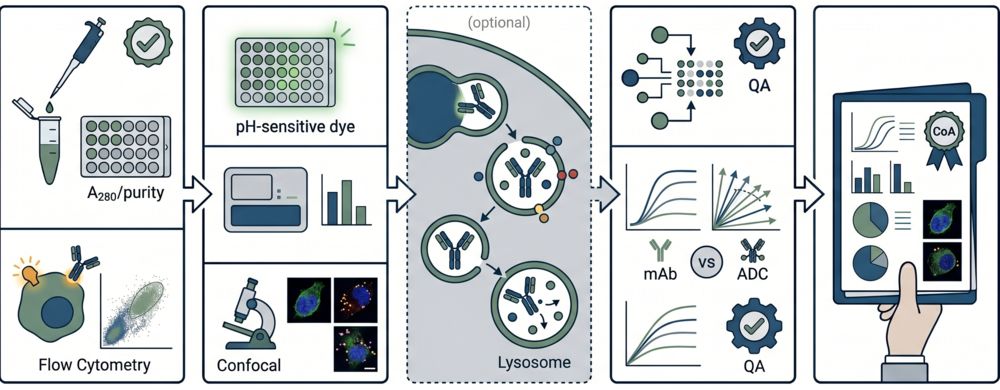
Phase 1: Sample Receipt & Cell Line Verification
Upon sample receipt, we verify ADC concentration, purity, and binding activity. Simultaneously, we confirm target antigen expression in your chosen cell line using flow cytometry or ELISA. This ensures the experimental system is properly configured for accurate internalization analysis.
Phase 2: Multi-Platform Internalization Profiling
Parallel analysis using pH-sensitive dye assays for kinetic profiling, FACS for quantitative measurement, and confocal microscopy for spatial visualization. This orthogonal approach provides comprehensive coverage of the ADC's internalization characteristics across different biological contexts.
Phase 3: Intracellular Trafficking Analysis (Optional)
For mechanism of action studies, we track ADC trafficking through endosomal and lysosomal compartments using organelle-specific fluorescent markers. This is particularly valuable for understanding payload release kinetics and optimizing linker chemistry.
Phase 4: Comparative Analysis & Kinetic Modeling
Advanced data analysis compares internalization kinetics between ADC and unconjugated mAb, calculates rate constants and EC50 values, and correlates internalization efficiency with binding affinity data. Quality control metrics ensure data accuracy across replicates.
Phase 5: Comprehensive Reporting & Interpretation
Delivery of a complete analytical report including kinetic curves, internalization percentages, microscopy images, and expert interpretation. Certificate of Analysis (CoA) provided for each batch, supporting your pre-clinical development decisions and candidate selection.
Advanced Platforms for ADC Internalization Analysis
Our multi-platform approach ensures accurate internalization assessment across diverse ADC architectures, target antigens, and research objectives:
1. pH-Sensitive Fluorescent Dye Platform
A cornerstone platform for real-time, live-cell internalization kinetics using pH-sensitive organic dyes. These dyes remain non-fluorescent at neutral pH (cell surface) but fluoresce brightly in acidic endosomal compartments, enabling discrimination of surface-bound vs. internalized ADC without washing steps.
- • Real-Time Monitoring: Continuous fluorescence measurement captures complete kinetic profiles without disrupting cells.
- • Live-Cell Compatibility: Non-toxic dyes enable long-term kinetic studies across 24+ hour timeframes.
- • High-Throughput Option: 96-well plate format compatible with automated sampling for screening studies.
2. Flow Cytometry (FACS) Platform
A high-precision quantitative platform for internalization measurement using acid-wash discrimination. Flow cytometry provides statistically robust data with single-cell resolution, enabling analysis of heterogeneous cell populations and population-level kinetic profiling.
- • Quantitative Precision: Measures internalization percentage for thousands of individual cells per sample.
- • Multiparameter Analysis: Simultaneous assessment of internalization, viability, and antigen expression.
- • Cell Line Panel: Validated protocols for diverse tumor cell lines and primary cells.
3. Confocal Microscopy Platform
A visualization platform for spatial resolution of ADC internalization and intracellular trafficking. Confocal microscopy provides subcellular localization information that complements quantitative flow cytometry data, essential for understanding trafficking pathways and payload release mechanisms.
- • Subcellular Resolution: Visualizes ADC localization within endosomal and lysosomal compartments.
- • Colocalization Studies: Organelle markers identify specific trafficking pathways for your ADC.
- • Quantitative Imaging: Fluorescence intensity analysis provides spatial quantification of internalization.
4. Radiolabel Tracing Platform
A highly sensitive platform for quantitative internalization analysis using radioisotope-labeled ADC. Radiolabel methods offer superior sensitivity for detecting low-level internalization and provide unambiguous quantification of intracellular payload retention over extended timeframes.
- • Ultra-Sensitive Detection: Detects internalization events below fluorescence method detection limits.
- • Extended Kinetics: Validated for time-course studies spanning 24-72 hours.
- • Regulatory Acceptance: Well-established methodology with extensive validation documentation.
Why Choose Our ADC Internalization Evaluation Services?
Orthogonal Multi-Platform Validation
We employ orthogonal analytical methods—pH-sensitive dyes, FACS, confocal microscopy, and radiolabel tracing—to cross-validate internalization measurements, ensuring data accuracy and reliability for your pre-clinical decision-making.
Affinity-Internalization Integration
Our services integrate binding affinity characterization with internalization kinetics analysis, enabling identification of optimal antibody candidates with balanced target binding and cellular uptake properties.
Physiologically Relevant Cell Models
We utilize antigen-expressing tumor cell lines, engineered cell systems, and primary cells to provide internalization data that translates to in vivo therapeutic outcomes.
Accelerated Turnaround for Preclinical Research
Our streamlined workflow and dedicated analytical team deliver comprehensive internalization analysis reports within 2-3 weeks, supporting fast-paced pre-clinical ADC development timelines.
Research Insights: Advances in ADC Internalization Analysis
Recent advances in ADC internalization analysis technologies have demonstrated that comprehensive internalization characterization—including both kinetic and extent parameters—is critical for predicting in vivo efficacy. According to Shin et al. (2023), understanding the internalization behavior of B7-H3 targeting ADCs is essential for optimizing therapeutic outcomes in solid tumor models.
Key Insights from Recent Research:
- • Affinity-Internalization Balance: Studies have shown that moderate-affinity antibodies (KD in the 1-10 nM range) often exhibit superior in vivo efficacy due to optimal tumor penetration and internalization kinetics. Very high-affinity antibodies may show reduced tumor penetration despite superior binding.
- • Epitope-Dependent Internalization: Different epitope targets on the same antigen can result in dramatically different internalization rates and trafficking pathways, directly impacting ADC efficacy.
- • Conjugation Impact: Drug-linker conjugation can alter the internalization kinetics of antibodies by 2-5 fold depending on conjugation site and payload hydrophobicity. Direct measurement of ADC internalization is essential for accurate efficacy predictions (Joubert et al., 2020).
These insights underscore the importance of comprehensive internalization profiling in ADC pre-clinical development programs.
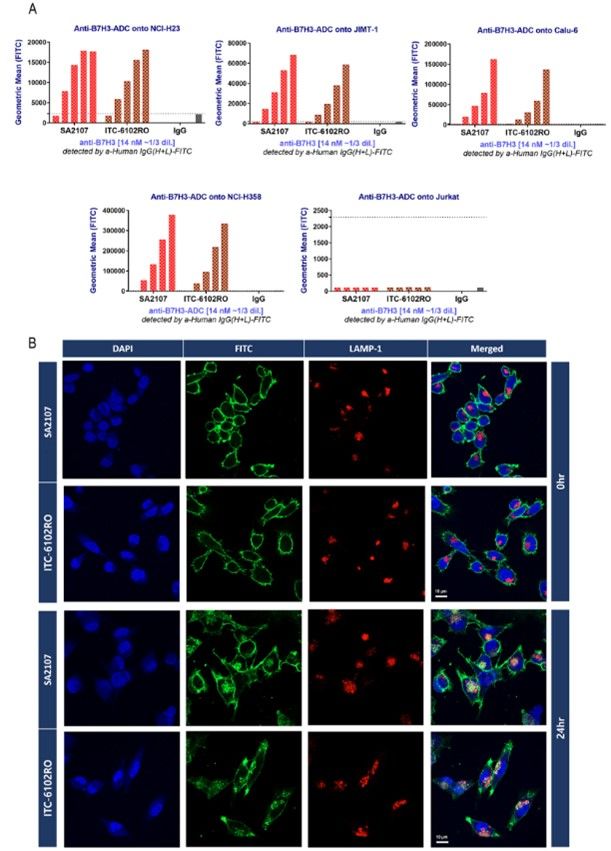
Fig.1 Cytotoxicity of ADC aggregates.1,3
FAQs about ADC Internalization Evaluation
Q: Why is internalization analysis important for ADC development?
A: ADCs exert their cytotoxic effects through intracellular delivery of payloads. Efficient internalization is essential for payload delivery to target cells. Our analysis helps identify optimal antibody candidates and confirms that conjugation has not negatively impacted the internalization behavior of your ADC.
Q: Which internalization method is best for my ADC project?
A: The optimal method depends on your research objectives. pH-sensitive dyes provide real-time kinetic profiling for live cells. FACS offers quantitative high-throughput measurement. Confocal microscopy provides spatial visualization of trafficking. We recommend orthogonal validation using multiple methods for comprehensive characterization.
Q: Can you compare the internalization of our ADC with the unconjugated antibody?
A: Yes. We offer comparative analysis services that directly compare the internalization kinetics and extent of your ADC with its unconjugated parent antibody. This is essential for understanding how drug-linker conjugation impacts cellular uptake and for optimizing conjugation strategies.
Q: How much ADC sample is required for internalization analysis?
A: For a complete internalization characterization package (pH-dye + FACS + microscopy), we typically require 200-500 μg of purified ADC. For kinetic screening only, 50-100 μg may be sufficient. Contact us if your sample is limited—we can often optimize methods for low-input pre-clinical materials.
Q: Can you analyze internalization in specific cell types or primary cells?
A: Yes. We can utilize your provided cell lines or primary cells for internalization analysis. We maintain a panel of validated tumor cell lines expressing common ADC targets, and we can also develop custom assay conditions for novel target antigens or specific patient-derived cells.
Other ADC In Vitro Evaluation Services
Related Products
Related Resources

References:
1. Shin, S.H., et al. ITC-6102RO, a novel B7-H3 antibody-drug conjugate, exhibits potent therapeutic effects against B7-H3 expressing solid tumors. Cancer Cell Int. 2023;23(1):172. https://doi.org/10.1186/s12935-023-02991-x
2. Joubert, N., et al. Antibody-Drug Conjugates: The Last Decade. Pharmaceuticals (Basel). 2020;13(9):245. https://doi.org/10.3390/ph13090245
3. Distributed under Open Access License CC BY 4.0, without modification.
For Research Use Only. NOT FOR CLINICAL USE.
Online Inquiry
Welcome! For price inquiries, please feel free to contact us through the form on the left side. We will get back to you as soon as possible.
