- Home
- UTC Development
- Antibody-Oligonucleotide Conjugate (AOC) Development
- Oligonucleotide Synthesis for AOC
Oligonucleotide Synthesis Services for AOC
Synthetic oligonucleotides (ONs) have been investigated for various therapeutic and diagnostic applications. The interest in ONs arises because of their capability to cause selective inhibition of gene expression by binding to the target DNA/RNA sequences through different mechanisms. Creative Biolabs is a leading biotechnology company that has the expertise and ability in providing ON synthesis, modification, and conjugation services for customers worldwide. Armed with sophisticated equipment, advanced antibody conjugation technologies, and highly experienced staff, we now provide customized ON preparation service for antibody-ON conjugates (AOCs) development.
Background
ONs Introduction
ONs are chemically synthesized short nucleic acid sequences (DNA or RNA), which have the selective inhibition of gene expression by interfering with the flow of information in biological systems, resulting from their binding to the target sequence by a variety of mechanisms such as antigene or triplex approach, antisense activity, and RNA interference (RNAi). The two most important parameters of ONs are their length and composition. These two parameters define the majority of the features and functional properties of ONs. To date, ONs have become vital for many commonly used laboratory techniques, including polymerase chain reaction (PCR), DNA sequencing, and array preparation. Since the discovery of small interfering RNA (siRNA), there have been over 60 clinical trials and the first drug patisiran (Onpattro) was approved for use in the clinic in 2018.
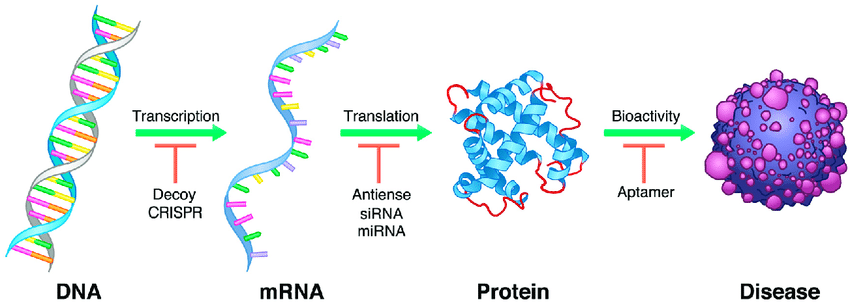 Fig.1 Therapeutic ONs act on different stages of pathological gene expression.1
Recently, ON conjugate has attracted increasing attention, owing to its obvious advantages of improving the existing ON properties and imparting entirely new properties. ONs are conjugated mostly at 5’- or 3’-termini because of their easy accessibility. The 2’-positions of ribose sugar, nucleobases, and internucleotidic phosphodiester bonds can also be used for conjugation. Studies have proved that conjugation through the 3’-terminus enhances the exonuclease resistance and the 2’-OH modification has been found particularly useful in an antisense strategy. Several synthetic approaches have been developed for facile preparation of ON-conjugates, which can be grouped into two major categories: (i) on-support conjugation, where conjugation is achieved using support-bound ONs; and (ii) solution-phase conjugation, where ONs are cleaved from the support, deprotected and purified, before solution-phase conjugation.
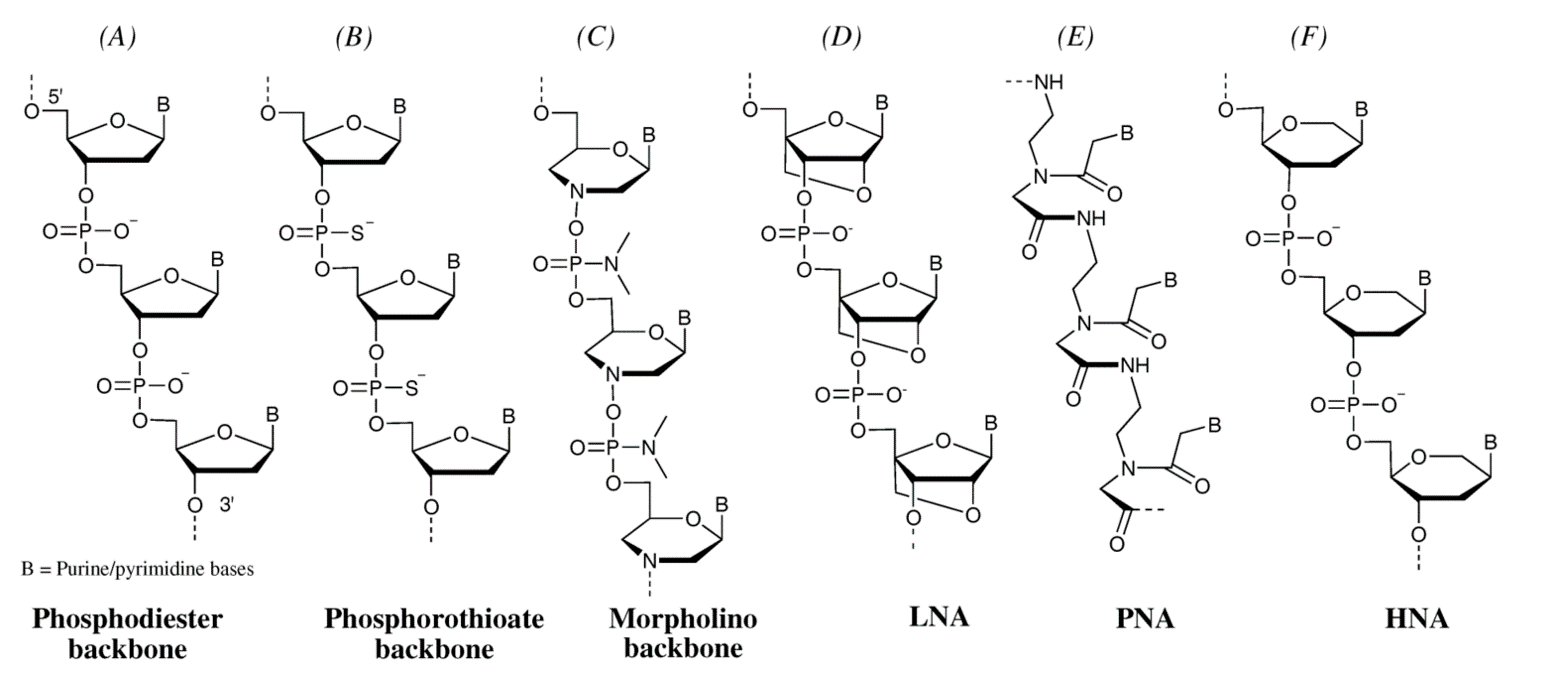 Fig.2 Structures of natural and modified ON backbones.2
Our Service
Oligonucleotide Synthesis Services
Tremendous efforts have been made by Creative Biolabs to improve the ON properties by either incorporating chemical modifications in the ON structure or covalently linking reporter groups to ONs. We have developed a large number of ONs containing modified sugars, bases and also evaluated their effects on intrinsic ON properties. Moreover, problems like poor stability can be resolved by introducing structural modifications in the ON structure. The poor cell or tissue-specific delivery of ONs can be addressed by conjugating natural or modified ONs to molecules such as antibodies or their fragments. The choice of the appropriate format for an ON is usually defined by the desired functionalities and current limitations of the envisioned application. With deep understanding of this, Creative Biolabs is capable of designing and synthsizing appropriate oligonucleotides.
Tips for the Design of ONs
- The amino or thiol modification should be located at either the 5’ or 3’ end of the ON. The 5’ end tends to be the preferred location as it results in higher purity ONs, which in turn slightly increases antibody-ON conjugation efficiency.
- Avoid stretches of more than four consecutive G bases since these sequences can form G-quadruplex or cruciform structures, which can result in lower hybridization and coupling efficiencies.
- Minimize base repetition.
ONs and their synthetic alternatives have been under active investigation for more than 60 years. They are not only limited to therapeutics but also found various use in diagnostics and nanotechnology. Creative Biolabs provides customized oligonucleotide synthesis and modification services for our honor clients. Further conjugation services are also available for you. If you are interested in our ON module or Conjugation Strategies for AOC Development, please feel free to contact us for more information.
Highlights
- Expertise in customized ON synthesis: Creative Biolabs provides tailored oligonucleotide synthesis and modification services for antibody-ON conjugates (AOCs), ensuring precise results for therapeutic development.
- Advanced antibody-ON conjugation techniques: Creative Biolabs leverages cutting-edge technologies for efficient conjugation of ONs to antibodies, enhancing stability and delivery in AOC development.
- Extensive experience in oligonucleotide modification: With expertise in modifying sugars, bases, and phosphodiester bonds, Creative Biolabs improves ON stability and functionality for specific applications.
- Comprehensive ON design support: Creative Biolabs provides guidance on optimal oligonucleotide design, including tips to avoid G-quadruplex formation and improve hybridization and conjugation efficiencies.
- Overcoming delivery challenges in ON therapies: Creative Biolabs addresses poor cell-specific delivery by conjugating ONs with antibodies, improving the targeting accuracy and therapeutic efficiency of AOCs.
FAQ
-
Q: What makes CD79B an attractive target for bispecific ADCs in cancer therapy?
A: CD79B, a component of the B cell receptor complex, is exclusively expressed on B lymphocytes and B cell lymphomas. Its ability to rapidly internalize to the lysosomal compartment upon antibody binding makes it an ideal target for bispecific ADCs, enhancing the delivery of cytotoxic drugs directly to cancer cells, particularly in non-Hodgkin lymphomas.
-
Q: How do CD79B-based bispecific ADCs improve the treatment of B cell malignancies?
A: CD79B-based bispecific ADCs leverage the specific expression of CD79B on B cells and lymphomas to deliver cytotoxic drugs precisely to these cells. By targeting CD79B in combination with other antigens, such as CD3 or CD45, these ADCs can induce potent and selective anti-tumor activity, improving therapeutic outcomes in B cell malignancies.
-
Q: What are the key benefits of using Creative Biolabs' CD79B-based bispecific ADCs development services?
A: Creative Biolabs offers a comprehensive suite of services for developing CD79B-based bispecific ADCs, including antibody engineering, small molecule synthesis, and bio-conjugation. Their expertise ensures the efficient design and construction of bispecific ADCs that are tailored to the specific needs of each project, saving time and reducing costs.
-
Q: How does Creative Biolabs optimize the development of CD79B-based bispecific ADCs for maximum efficacy?
A: Creative Biolabs employs advanced technologies and in-depth research to optimize the selection of target combinations, linker strategies, and payloads for CD79B-based bispecific ADCs. This ensures that the ADCs are highly specific, stable, and effective in delivering therapeutic agents to B cell malignancies.
-
Q: What are some examples of CD79B-based bispecific ADCs that Creative Biolabs can develop?
A: Creative Biolabs has developed various target combinations for CD79B-based bispecific ADCs, including CD79B x CD3, CD79B x CD32B, and CD79B x CD45. These combinations are designed to enhance the selective targeting and killing of B cells, providing powerful therapeutic options for conditions like B cell lymphomas and autoimmune diseases.
-
Q: How does the use of CD79B-based bispecific ADCs compare to traditional antibody therapies?
A: CD79B-based bispecific ADCs offer several advantages over traditional antibody therapies, including enhanced specificity and potency. By delivering cytotoxic drugs directly to B cells via the CD79B receptor, these ADCs can achieve more effective tumor cell killing with reduced off-target effects, making them a superior therapeutic option.
References
- Takakura, K.; et al. The clinical potential of oligonucleotide therapeutics against pancreatic cancer. International journal of molecular sciences. 2019, 20(13): 3331.
- Singh, Y.; et al. Recent developments in oligonucleotide conjugation. Chemical Society Reviews. 2010, 39(6): 2054-2070.
For Research Use Only. NOT FOR CLINICAL USE.
Online Inquiry
Welcome! For price inquiries, please feel free to contact us through the form on the left side. We will get back to you as soon as possible.
