


Anti-Glycan Antibody Development Services
Precisely Target, Rapidly Discover.
Are you encountering obstacles in producing precision-targeted immunoglobulins, profiling intricate carbohydrate structures, or addressing bottlenecks in biopharmaceutical applications? Our Glycan-Specific Antibody Solutions expedite therapeutic discovery and deliver custom-engineered reagents via innovative immunization protocols, high-throughput screening systems, and thorough validation processes. Creative Biolabs empowers your exploration of carbohydrate biology's complexities through collaborative expertise.
Contact our team to get an inquiry now!
Background
Carbohydrate-binding antibodies constitute fundamental biomedical research tools. Due to analytical limitations in directly characterizing glycomolecules within complex biological systems, most studies utilize glycan-specific immunoglobulins to identify and quantify saccharide epitopes through methods including immunohistochemistry, Western blotting, and enzyme-linked immunosorbent assays. These reagents permit manipulation of glycan-dependent pathways via agonist/antagonist functions and enable glycoconjugate separation through affinity-based isolation. Their utility extends to identifying disease-associated glycobiomarkers, exemplified by the MBr1 monoclonal antibody's pivotal role in discovering Globo H as an oncoglycan biomarker. Such applications necessitate rigorously validated, epitope-mapped antibodies with confirmed specificity.
Anti-Glycan Antibody
Carbohydrate-specific antibodies constitute core analytical instruments in biomedical science. Owing to limitations in directly characterizing glycosylated biomolecules within complex biological systems, researchers predominantly utilize saccharide-targeting immunoglobulins to identify and measure glycoepitopes through immunodetection platforms, including tissue staining, protein blotting, and immunosorbent assays. These immunoreagents permit regulation of carbohydrate-dependent signaling routes via receptor modulation capabilities and support glycobiomolecule separation through binding-based isolation techniques. Their utility extends to identifying disease-associated glycobiomarkers, exemplified by the MBr1 monoclonal antibody's pivotal role in discovering Globo H as an oncoglycan biomarker. Such applications necessitate rigorously validated, epitope-mapped antibodies with confirmed specificity.
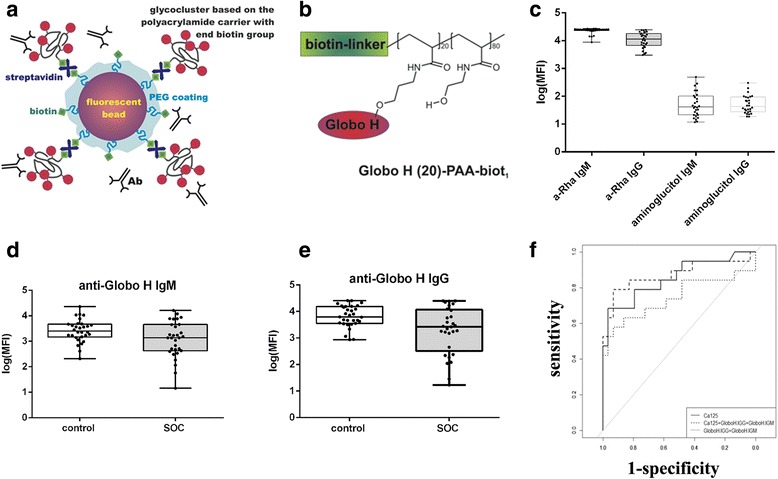 Fig.1 Circulating IgG/IgM glycan-reactive immunoglobulins bind multivalent Globo H clusters, discriminating ovarian cancer patients from healthy cohorts.1,3
Production of Anti-Glycan Antibodies
Antibodies to carbohydrates are essential for basic research. Given analytical challenges in directly identifying glycans within complex biological matrices, most investigations employ glycan-specific immunoglobulins to monitor carbohydrate determinant expression via methods including immunohistochemistry, immunoblotting, and enzyme-linked immunosorbent assays. These reagents additionally facilitate modulation of glycan-mediated biological pathways through agonist/antagonist functions and enable glycoconjugate isolation through affinity purification. Moreover, antibodies support discovery of disease-relevant saccharides, exemplified by MBr1's instrumental role in identifying Globo H as an oncological saccharide biomarker. Such applications necessitate access to rigorously validated, high-specificity antibodies.
Click the bottom to discover our service for different type of Anti-Glycan Antibodies:
Published Data
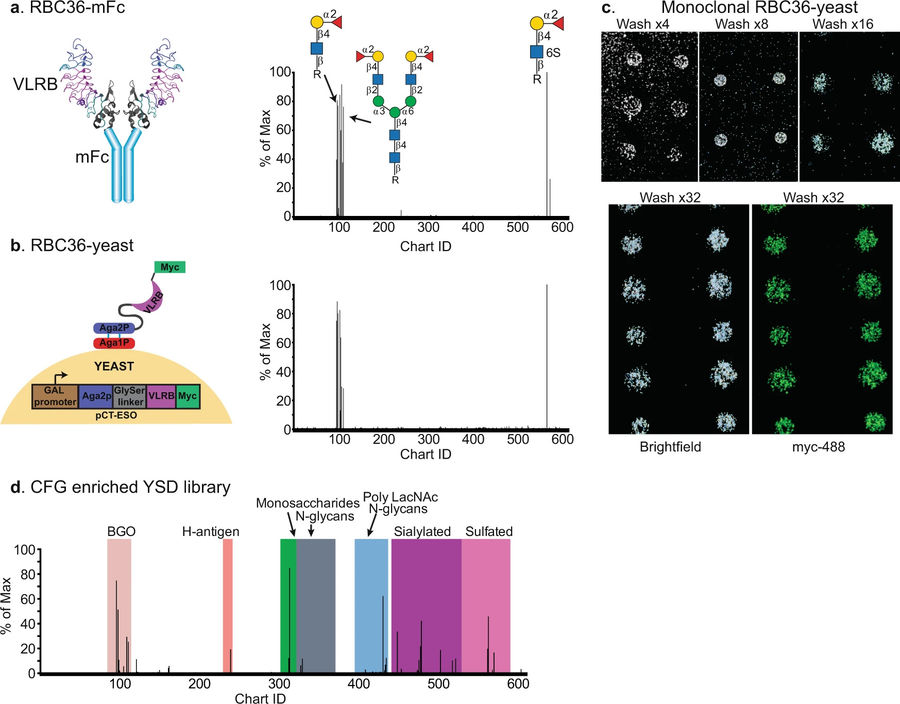 Fig.2 Integrated yeast display and glycan microarray platforms enabled expedited characterization of VLRB ligand recognition.2,3
Recent research has explored the development of Smart Anti-Glycan Reagents (SAGRs) derived from immunized lampreys, presenting a novel experimental approach to study cellular glycans, which are known to play crucial roles in cancer progression. This investigation utilized lampreys' evolutionarily distinct immune architecture expressing variable lymphocyte receptors (VLRs) to generate precise glycan-targeting molecules. Researchers exposed lampreys to heterogeneous cellular antigens, then screened resultant plasma through high-throughput glycoarray technology featuring ~600 unique saccharide structures. This approach yielded 15 recombinant VLRB-Ig fusion proteins (SAGRs) capable of discriminating among distinct terminal saccharide functional groups. These findings underscore lamprey-derived reagents' potential as innovative molecular tools for illuminating saccharide-mediated mechanisms in physiological and pathological contexts, including oncological processes.
What We Can Offer?
Utilizing cutting-edge platforms and expert scientific teams, we support international clients in generating anti-carbohydrate antibodies, including both monoclonal and polyclonal formats.
Our comprehensive offerings include:
- Custom Monoclonal / Polyclonal Anti-Glycan Antibody Development
- Glycan Antigen Design & Synthesis
- Antibody Characterization & Validation Services
- Antibody Engineering
- Diagnostic Antibody Development Support
- Therapeutic Antibody Discovery & Optimization.
Experience the Creative Biolabs Advantage - Get a Quote Today
Why Choose Us?
Creative Biolabs stands at the forefront of glycan research, offering unparalleled expertise and a commitment to delivering superior anti-glycan antibody solutions.
Key Advantages and Unique Features:
- Unrivaled Glycan Expertise: With years of specialized experience, our team possesses deep scientific knowledge in glycobiology and antibody development, enabling us to tackle the most challenging glycan targets.
- Proprietary Platform Technology: We utilize cutting-edge platforms, including advanced immunization strategies, sophisticated high-throughput screening methods, and robust characterization assays, ensuring high specificity and affinity.
- Customized Methodologies: Our platform delivers client-specific glycan-targeting solutions through custom-engineered development strategies addressing unique carbohydrate structures and application-specific requirements spanning discovery research through therapeutic development and diagnostic implementation.
- Advanced Validation: We implement multi-tiered validation protocols for all bioreagents, incorporating epitope mapping and functional characterization to guarantee batch-to-batch consistency and experimental reproducibility.
- Accelerated Development: Our optimized workflows and advanced techniques minimize development timelines, bringing your research and therapeutic programs to fruition faster.
- Cost-Effectiveness: We deliver high-quality antibodies at competitive prices, offering exceptional value without compromising on performance.
Workflow
FAQs
Here are some frequently asked questions from potential clients interested in Kidney Targeting Module Development:
Q: What mechanisms underlie glycan-binding antibody function, and what confers their therapeutic relevance?
A: These immunoglobulins specifically recognize glycoepitopes on biological surfaces. Their clinical significance stems from detecting disease-associated glycosylation patterns in cancers, autoimmune disorders, and infections, enabling biomarker-based diagnostic approaches and precisely targeted therapeutic strategies.
Q: What essential stages define carbohydrate-targeting antibody development?
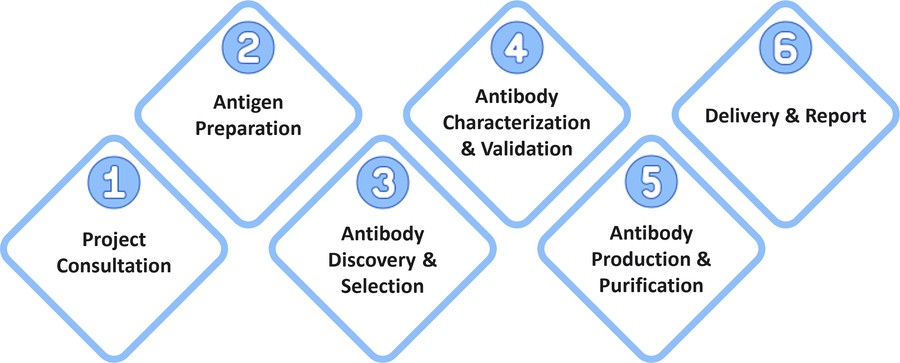
A: Key steps comprise target epitope identification, antigen preparation, heterologous immunization, monoclonal antibody isolation via hybridoma technology, comprehensive binding characterization, followed by manufacturing-scale production and purification for therapeutic implementation.
Q: What technical hurdles impede anti-carbohydrate antibody development, and what solutions exist?
A: Primary challenges encompass glycan structural diversity, low immunogenic potential, and off-target binding. Mitigation strategies deploy glycan microarray profiling, chemoenzymatic epitope engineering, and multi-tiered validation frameworks to confirm target exclusivity and functional potency.
Q: What protocols certify glycan antibodies for clinical deployment?
A: Certification requires epitope mapping, binding kinetics analysis, functional cellular assays, preclinical efficacy/toxicity profiling, and adherence to guidelines for investigational new drug (IND) applications, ensuring biosimilar compliance and human trial readiness.
Q: Why engage domain experts for carbohydrate-targeting antibody projects?
A: Collaborative advantages include needs assessment via discovery workshops, milestone-driven antigen design, antibody library generation/panning, affinity maturation cycles, and post-development optimization support for translational integration into therapeutic pipelines.
Related Products
To further support your research and development in glycobiology, Creative Biolabs offers a suite of products:
- Monoclonal Antibodies
- Polyclonal Antibodies
- Secondary & Tag Antibodies
- Isotype & Loading Control Antibodies
- Carbohydrate Antigens
Creative Biolabs offers a series of anti-glycan antibody-related services for worldwide customers. To explore these capabilities, please contact us for more information.
References:
- Pochechueva T, et.al. Naturally occurring anti-glycan antibodies binding to Globo H-expressing cells identify ovarian cancer patients. Journal of ovarian research. 2017; 10(1): 8.
- McKitrick, Tanya R., et al. "Development of smart anti-glycan reagents using immunized lampreys." Communications biology 3.1 (2020): 91.
- Distributed under Open Access license CC BY 4.0, without modification.