


Anti-Glycan Antibody Engineering Service
Accelerate Your Antibody Development!
Are you encountering difficulties generating highly selective antibodies targeting complex carbohydrate antigens, or addressing performance variability in glycan-based research and diagnostic tests? Creative Biolabs' Glycan-Specific Antibody Development Service enables generation of precise, high-performance anti-glycan immunoreagents via cutting-edge gene editing, phage library screening, and glycosylation modulation technologies, dramatically accelerating glycobiology research progress.
Contact our team to get an inquiry now!
Background
Immunoglobulins constitute a class of glycoproteins naturally synthesized by the immune system to defend against diverse exogenous and endogenous antigens. These molecules see broad clinical deployment for disease prevention, diagnosis, and therapy. Köhler and Milstein's 1975 hybridoma breakthrough enabled mass production of uniform monoclonal antibodies. Current antibody development systems have inaugurated a transformative period for producing and utilizing immunoreagents targeting infectious agents and cancerous diseases. Engineered antibodies have become principal therapeutic agents against cancer and autoimmune conditions during the past decade. Thus, pioneering modification strategies are imperative to optimize immunoglobulins or associated biological molecules, augmenting specificity, affinity, functionality, and related properties.
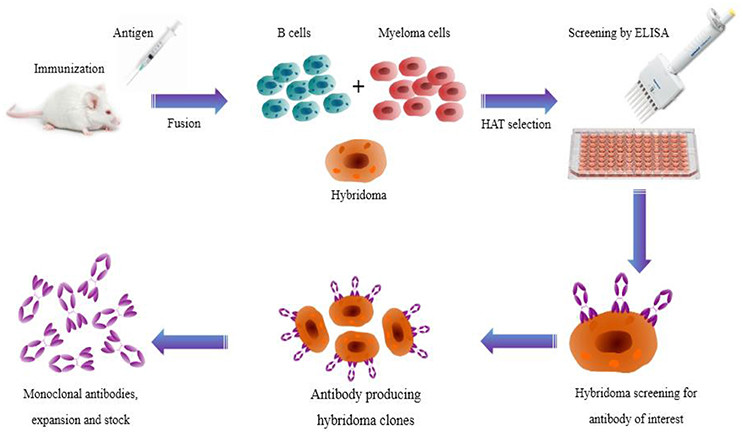 Fig.1 The production route of hybridoma technology.1,3
Anti-Glycan Antibody
Carbohydrate-targeting antibodies constitute a specialized class demonstrating selective binding to glycan structures, vital for basic science and medical applications. Similar to other antibodies, they allow custom modification to achieve potency augmentation, human sequence adaptation, and circulation longevity. Modified versions may adopt distinct immunoglobulin classes or structural configurations, typically generated via modern molecular biology methodologies such as hybridoma technology, genetic manipulation, phage display, fragment fabrication, and cell-free platforms. Optimal performance requires selecting appropriately tailored variants through context-specific strategies to address diverse application demands.
Published Data
Studies consistently reveal glycan modification's profound functional influence on antibodies, particularly via strategic small-molecule inhibitors. Studies suppressing Fucosyltransferase 8 (FUT8) with compounds such as 2-fluorofucose or 2-deoxy-2-fluoro-L-fucose generate non-fucosylated antibodies. These afucosylated IgG forms exhibit markedly elevated ADCC in vitro, stemming from intensified FcγRIIIa binding on effector immune cells—a critical process in cancer immunotherapy.
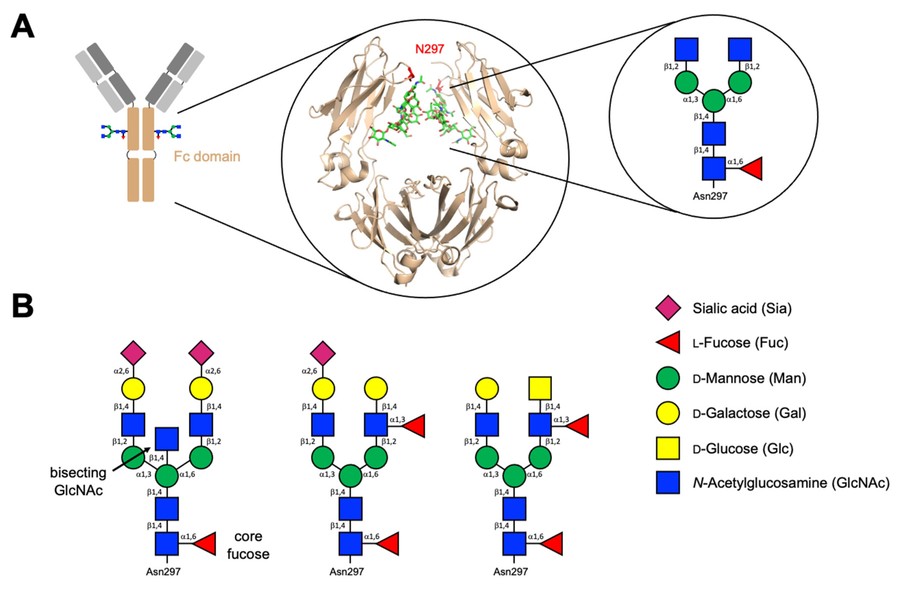 Fig.2 Structure of the Fc domain of a typical IgG and its Fc N-glycan.2,3
Additionally, investigations employing glycosidase inhibitors (kifunensine, swainsonine, castanospermine) enable generation of antibodies with defined high-mannose, hybrid, or complex N-glycan structures. Kifunensine treatment during manufacturing, for instance, predominantly produces high-mannose glycans. While effector functions may be differentially modulated, such controlled glycosylation proves instrumental for elucidating structure-function correlations and developing immunoglobulins with tailored pharmacokinetics. These documented outcomes highlight glycoengineering's capacity through pharmacological modulators to precisely direct antibody glycosylation and resultant bioactivity, establishing novel design paradigms for next-generation therapeutics with customized functionalities.
What We Can Offer?
Creative Biolabs stands as a premier source for integrated Anti-Glycan Antibody Engineering solutions, dedicated to advancing clients' transformative research and therapeutic initiatives. Our services portfolio delivers premium-grade, bespoke immunoreagents and associated support.
- Custom Anti-Glycan Antibody Development: Full-service generation of novel anti-glycan antibodies, including both monoclonal antibody and polyclonal antibody formats, from antigen design to purification and characterization.
- Antibody Affinity Maturation: Services to significantly enhance the binding affinity of existing anti-glycan antibodies, crucial for improving their diagnostic sensitivity or therapeutic potency.
- Advanced Antibody Format Conversion: Conversion of various antibody fragments (e.g., scFv, Fab) into full-length IgG antibodies or other specialized formats to suit diverse research and therapeutic needs.
- Precision Glycoengineering of Antibodies: Targeted modification of antibody glycosylation patterns using advanced techniques, including the application of small molecule inhibitors, to optimize effector functions, stability, and pharmacokinetics.
- Comprehensive Antibody Characterization: In-depth biochemical and functional characterization of engineered antibodies, providing detailed insights into their binding kinetics, specificity, and biological activity.
Experience the Creative Biolabs Advantage - Get a Quote Today
Why Choose Us?
Select Creative Biolabs for Anti-Glycan Immunoglobulin Engineering; our distinguished proficiency, frontier technologies, and dedication expedite your research advancements.
- Proficiency & Systems: Years of focused expertise, deploying advanced genetic modification, phage library screening, and novel glycoengineering with targeted molecular modulators for premium antibody development.
- Accuracy & Validation: Large-scale, exact selection via tailored glycan microarrays secures precise, high-affinity leads, stringently certified for purity and reproducible function.
- Bespoke Strategies & Demonstrated Outcomes: We engineer customized solutions synchronized with your objectives, reinforced by a documented history of productive partnerships and peer-reviewed evidence.
FAQs
Q: How does Creative Biolabs' Anti-Glycan Antibody Engineering Service handle highly challenging or novel glycan targets?
A: We specialize in overcoming the complexities of novel or challenging glycan targets. Our approach combines advanced synthetic glycan antigen design, diverse antibody library construction (e.g., large-scale phage display libraries), and highly sensitive screening methodologies to identify specific binders. We then employ iterative engineering cycles, including affinity maturation and targeted glycoengineering, to optimize performance even for the most difficult targets.
Q: Can Creative Biolabs develop antibodies targeting particular protein glycosylation variants?
A: Certainly. Our proficiency includes creating antibodies that distinguish between distinct protein glycoforms. This demands advanced immunogen development and rigorous selection methodologies to guarantee target glycosylation state specificity while excluding off-target binding. Such competency proves especially crucial for diagnostics and therapeutics addressing disease-associated glycosylation patterns.
Q: What quality validation protocols guarantee engineered antibody performance?
A: Quality supremacy defines Creative Biolabs. Our engineered immunoreagents complete stringent multi-tiered QC: purity verification (SDS-PAGE, SEC-HPLC), binding kinetics (SPR), specificity screening (glycan arrays, ELISA), and application-specific functional testing. This comprehensive strategy delivers performance-certified, reliable antibodies for your research.
Related Products
To further support your research and development in glycobiology, Creative Biolabs offers a suite of products:
- Monoclonal Antibodies
- Polyclonal Antibodies
- Secondary & Tag Antibodies
- Isotype & Loading Control Antibodies
- Carbohydrate Antigens
Creative Biolabs offers a series of anti-glycan antibody-related services for worldwide customers. To explore these capabilities, please contact us for more information.
References:
- Saeed, Abdullah FUH, et al. "Antibody engineering for pursuing a healthier future." Frontiers in microbiology 8 (2017): 495.
- Li, Shasha, et al. "Glycoengineering of therapeutic antibodies with small molecule inhibitors." Antibodies 10.4 (2021): 44.
- Distributed under Open Access license CC BY 4.0, without modification.