Creative Biolabs is offering the most comprehensive services for antibody development projects. With strict regulation and effective execution, we are dedicated to providing the most valuable solutions to complete your projects.
HighlightsCreative Biolabs is offering the most comprehensive services for antibody development projects. With strict regulation and effective execution, we are dedicated to providing the most valuable solutions to complete your projects.
HighlightsCreative Biolabs has established a broad range of platforms for developing novel antibodies or equivalents. These cutting-edge technologies enable our scientists to meet your demands from different aspects and tailor the most appropriate solution that contributes to the success of your projects.
HighlightsWith deep understanding in antibody-related realms and extensive project experience, Creative Biolabs offers a variety of references to help you learn more about our capacities and achievements, including infographic, flyer, case study, peer-reviewed publications, and all kinds of knowledge that can assist your projects. You are also welcome to contact us directly for more specific solutions.
HighlightsGet a real taste of Creative Biolabs, one of the most professional custom service providers in the world. We are committed to providing highly customized comprehensive solutions with the best quality to advance your projects.
HighlightsCapture-Sandwich ELISA Guided Selection is a high-precision screening strategy that leverages the specificity of capture-and-detection ELISA formats to enrich phage display libraries for high-quality binders. By immobilizing target molecules in a sandwich configuration, this approach ensures that only ligands recognizing distinct epitopes or accessible regions are retained, minimizing non-specific enrichment. This method is particularly valuable when screening for antibodies against complex antigens or for applications where dual epitope recognition is desirable. Creative Biolabs implements this approach to maximize functional binder recovery while preserving specificity and diversity. By combining capture-oriented selection with controlled detection, researchers gain deeper insight into the interaction landscape of their targets.
The sandwich ELISA format ensures that candidate binders must recognize at least two distinct binding surfaces. This increases specificity and reduces false-positive enrichment. Creative Biolabs designs the assay to balance capture and detection requirements for optimal screening performance.
Target immobilization is carefully controlled to present accessible epitopes while minimizing non-specific interactions. Proper surface chemistry and orientation preserve antigen conformation for reliable selection.
Detection antibodies or secondary probes are integrated to confirm functional binding. This staged approach ensures that only candidates with correct binding geometry and affinity progress through the workflow.
Even while enforcing stringent capture and detection requirements, the workflow is optimized to retain rare or subdominant clones. Creative Biolabs monitors enrichment to maintain diverse candidate representation.
Multiple rounds of sandwich capture and screening are used to progressively enrich high-quality binders. Feedback from each round informs subsequent selection conditions to improve outcome reliability.
Sequencing and binding assays provide continuous insight into library composition. Creative Biolabs leverages these data to refine capture orientation, detection conditions, and selection parameters.
For projects requiring high specificity and functional binder enrichment, Creative Biolabs is available to discuss tailored sandwich ELISA-guided workflows.
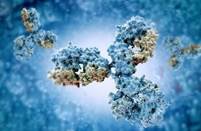
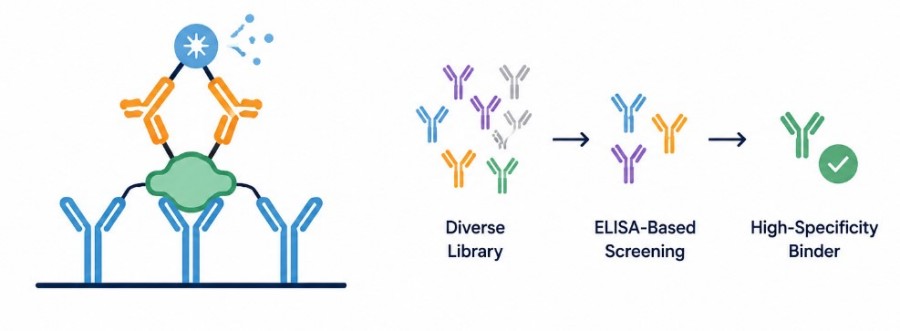 Fig.1 Capture-Oriented Screening for Precise Antibody Selection.
Capture-sandwich guided selection enables the isolation of antibodies with stringent epitope requirements, ensuring that candidates recognize their intended targets with high fidelity. This approach reduces off-target binding and enhances the quality of the resulting antibody pool. By requiring dual recognition events through capture and detection, the workflow selectively enriches candidates that maintain precise structural and functional interactions.
The workflow supports research projects where recognition of two or more target sites is critical for functional studies or mechanistic analysis. By simultaneously monitoring binding to multiple epitopes, researchers can dissect complex molecular interactions and identify clones with cooperative or additive binding profiles. Creative Biolabs designs these assays to provide a comprehensive view of binding landscape dynamics.
For proteins exhibiting multiple domains, post-translational modifications, or flexible conformations, sandwich ELISA guided selection helps reveal binders that maintain functional engagement under near-native conditions. By preserving structural integrity and epitope accessibility, Creative Biolabs ensures that selected antibodies reflect true functional interactions. The method is effective across both structured and intrinsically disordered targets.
Subdominant binding regions are often overlooked in standard screening methods due to competition with dominant epitopes. Sandwich-guided workflows increase the likelihood of capturing these rare interactions by selectively enriching antibodies that engage less accessible or weaker epitopes. This expanded recovery broadens the diversity of the candidate pool and provides additional insights into previously hidden functional regions.
Integration with automated ELISA platforms allows Creative Biolabs to efficiently process large phage display libraries while maintaining precise capture and detection control. Multiple candidate panels can be screened in parallel, accelerating discovery timelines and improving experimental reproducibility. High-throughput compatibility ensures that researchers can evaluate thousands of clones without sacrificing assay quality. This scalability is critical for early-stage discovery programs that demand both speed and accuracy.
By combining capture and detection in the same workflow, selected candidates are effectively pre-validated for functional binding before additional downstream assays. The workflow provides immediate feedback on binding quality, epitope coverage, and interaction specificity. As a result, downstream characterization, mechanistic studies, and structural analysis are streamlined, saving both time and experimental resources.
Reach out to Creative Biolabs to explore how sandwich ELISA-guided selection can advance your discovery campaigns.
01 Optimized capture surface design
Surface chemistry and immobilization orientation are carefully selected to present antigens effectively while minimizing background. Creative Biolabs ensures consistency and reproducibility across selection rounds.
02 Controlled incubation and washing parameters
Stringent yet gentle incubation and washing protocols preserve weak but meaningful binders. This helps maintain library diversity without compromising specificity.
03 Sequential enrichment and detection cycles
Candidates are assessed using multiple capture-detection iterations, progressively enriching high-quality binders. Iterative design allows fine-tuning of assay parameters.
04 Integration with analytical and sequencing platforms
Library composition is continuously monitored to evaluate enrichment trends. This data informs adjustments to capture orientation, detection antibody choice, and washing stringency.
05 High-throughput compatibility
The workflow supports parallel processing of multiple libraries or target variants. Creative Biolabs designs workflows to maximize efficiency while preserving quality.
06 Final candidate validation
Selected clones are characterized for binding strength, specificity, and functional relevance. Detailed reporting ensures readiness for downstream research applications.
Contact Creative Biolabs to learn how our sandwich ELISA-guided workflows can be implemented for your project.
 Enhanced target specificity
By requiring dual-epitope engagement, the workflow minimizes off-target binding and false positives.
Preservation of rare binders
Even with stringent capture conditions, Creative Biolabs ensures subdominant and low-frequency clones are maintained.
Applicability to complex targets
The approach supports multi-domain proteins, membrane-associated antigens, and structurally challenging targets.
Integration with downstream workflows
Candidates are immediately suitable for structural studies, mechanistic research, or additional functional characterization.
Data-driven optimization
Sequencing and binding data guide adjustments to improve enrichment, specificity, and recovery efficiency.
Customizable and scalable
Workflows can be tailored to library type, target complexity, and throughput requirements to meet unique project goals.
Researchers interested in high-specificity binder discovery are encouraged to contact Creative Biolabs for consultation.
Capture-Sandwich ELISA Guided Selection provides a robust and highly selective method for enriching phage display libraries against complex targets and multiple epitopes. By combining controlled capture, dual-site detection, and iterative selection, Creative Biolabs ensures that high-quality, functionally validated candidates are recovered while maintaining library diversity. Researchers seeking to implement precise and efficient binder discovery workflows are invited to connect with Creative Biolabs to discuss how sandwich ELISA-guided selection can be tailored to their project needs.
All listed services and products are For Research Use Only. Do Not use in any diagnostic or therapeutic applications.