Creative Biolabs is offering the most comprehensive services for antibody development projects. With strict regulation and effective execution, we are dedicated to providing the most valuable solutions to complete your projects.
HighlightsCreative Biolabs is offering the most comprehensive services for antibody development projects. With strict regulation and effective execution, we are dedicated to providing the most valuable solutions to complete your projects.
HighlightsCreative Biolabs has established a broad range of platforms for developing novel antibodies or equivalents. These cutting-edge technologies enable our scientists to meet your demands from different aspects and tailor the most appropriate solution that contributes to the success of your projects.
HighlightsWith deep understanding in antibody-related realms and extensive project experience, Creative Biolabs offers a variety of references to help you learn more about our capacities and achievements, including infographic, flyer, case study, peer-reviewed publications, and all kinds of knowledge that can assist your projects. You are also welcome to contact us directly for more specific solutions.
HighlightsGet a real taste of Creative Biolabs, one of the most professional custom service providers in the world. We are committed to providing highly customized comprehensive solutions with the best quality to advance your projects.
HighlightsLeveraging its advanced High-Affi™ technology, Creative Biolabs offers custom production services of highly specific pan anti-β-hydroxybutyrylated and site-specific anti-β-hydroxybutyrylated protein antibodies.
Lysine β-hydroxybutyrylation (KBHB), a histone post-translational modification identified in 2016, is enriched at active gene promoters and found on numerous lysine residues across all four core histones (H2A, H2B, H3, H4) and H1.
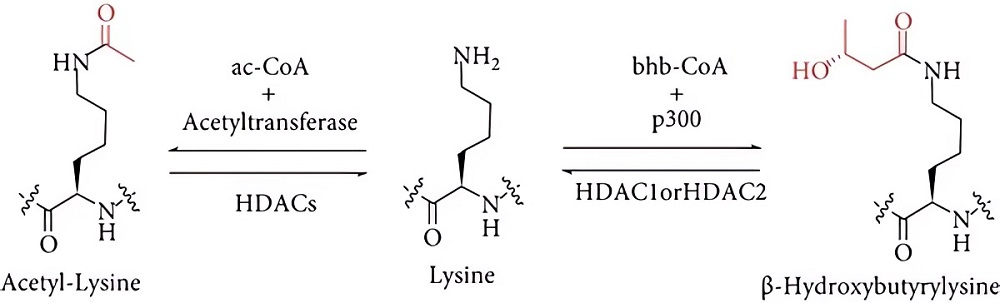 Fig.1 Schematic of the KBHB pathway.1,3
Histone KBHB levels significantly increase in cultured cells with elevated β-hydroxybutyrate. Similarly, prolonged fasting or streptozotocin-induced diabetic ketoacidosis in mice also elevates histone KBHB. In contrast, histone lysine acetylation (Kac) shows only a marginal increase, indicating a more profound effect of β-hydroxybutyrate on histone KBHB than Kac.
During cellular starvation, metabolism shifts from carbohydrates to fatty acids. Under prolonged fasting, ketone body-derived histone KBHB associates with amino acid catabolism. Research shows histone KBHB enrichment at active gene promoters during starvation, and increased H3K9BHB levels correlate with upregulated genes in starvation-responsive metabolic pathways, suggesting histone KBHB is a novel epigenetic mechanism linking metabolism to gene expression.
Proteomic analyses show that genes upregulated by KBHB differ from those with acetylation and methylation, implying distinct roles for histone KBHB compared to Kac and lysine methylation (Kme). Histone KBHB likely adds complexity to physiological homeostasis.
Ketogenic diets inhibit tumor growth in animal models and potentially humans, suggesting elevated histone KBHB from these diets may contribute to tumor-suppressive gene expression. Given KBHB's metabolic regulation, it may also be involved in conditions like diabetes.
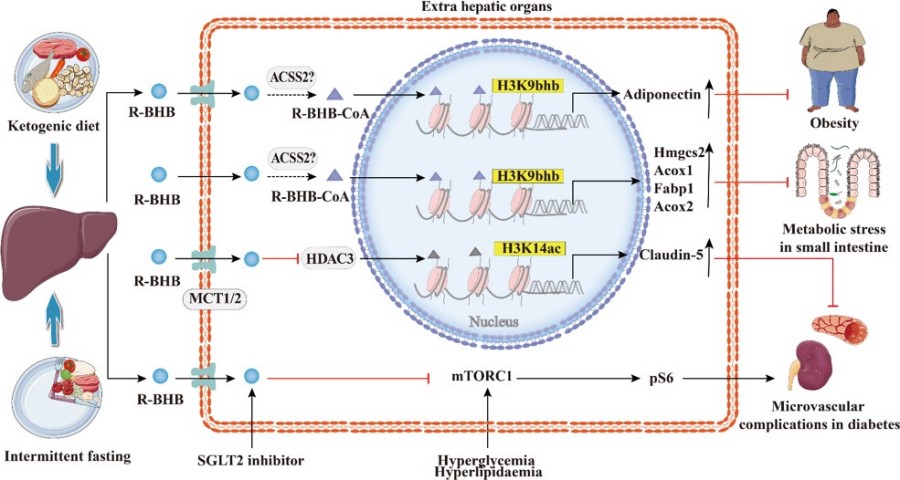 Fig.2 Histone KBHB in metabolic diseases.2,3
However, β-hydroxybutyrylation's diverse effects are unclear, requiring further study of its physiological functions. Antibodies are key tools for studying post-translational modifications. Creative Biolabs provides comprehensive antibody services, especially in PTMs, offering high-affinity and 100% quality assurance.
Pan anti-β-Hydroxybutyrylation antibodies: These antibodies latch onto the β-hydroxybutyryl mark on lysine, no matter what other amino acids are around or which protein it's on. So, they're handy for seeing the overall KBHB levels in a sample, across all the different proteins.
Site-specific anti-β-Hydroxybutyrylation antibodies: They're made to spot the β-hydroxybutyryl tag on one specific lysine within a particular protein. These are key for figuring out what KBHB does at those individual spots.
Polyclonal antibodies: Animal-derived mixtures recognizing different epitopes of the KBHB modification or specific sites.
Monoclonal antibodies: From a single immune cell clone, highly specific to one epitope, offering better consistency. Recombinant versions are also available.
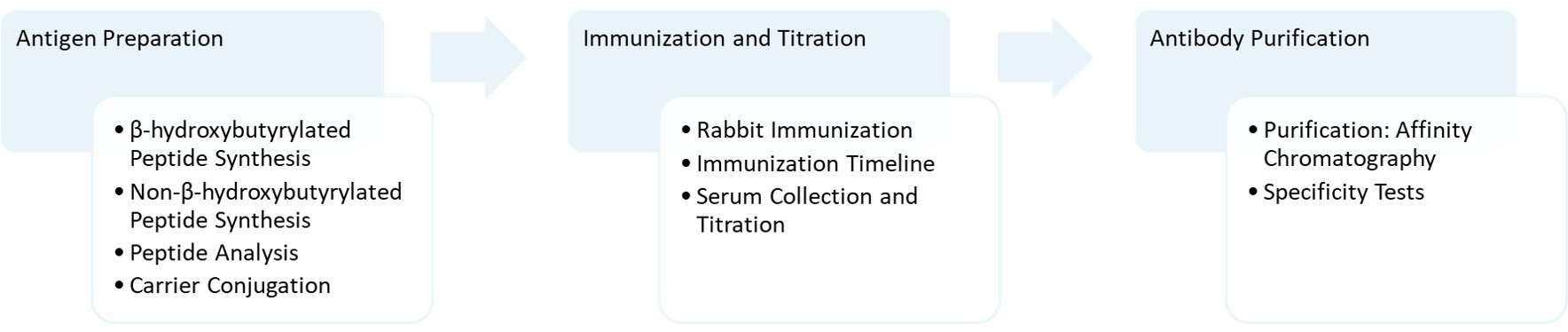
The way to get these polyclonal antibodies targeting the β-hydroxybutyryl mark is by giving animals a shot of a lab-made piece that has this mark on it, usually linked to a bigger protein to get the immune system going. This makes the animal produce a bunch of different antibodies. To make sure you only get the ones that recognize the β-hydroxybutyryl part, you then run the resulting serum through a special column that grabs those specific antibodies. Sometimes, you even do an extra step to remove any that might accidentally stick to normal, unmodified bits. The cool thing about this method is that you can get a good amount of these specific antibodies pretty quickly, and because they grab onto different spots on the target, they tend to bind well.
Phage display is a lab-based trick for finding specific monoclonal antibodies. Take a huge collection of antibody fragments and display them on the surface of viruses called bacteriophages. Then you let these viruses bind to your β-hydroxybutyrylated target. The ones that stick get separated out, multiplied, and the process is repeated to find the best binders. Finally, you pick individual winners and get them to produce full-length recombinant monoclonal antibodies. What's great about this is you can screen tons of different antibodies, even ones you wouldn't normally get from just injecting an animal, and you have more control over picking antibodies with the exact properties you want.

The hybridoma method is a classic way to make monoclonal antibodies. You start by immunizing an animal with your β-hydroxybutyrylated target to get its immune cells making antibodies. Then, you fuse these antibody-producing cells with immortal cancer cells to create hybridoma cells that can both make antibodies and grow forever. You then screen these hybridoma cells to find the ones churning out antibodies that specifically recognize the β-hydroxybutyryl mark. Once you find a good one, you make sure it's just a single type of cell and then grow it to produce large amounts of those exact monoclonal antibodies. The big plus here is that you get stable cell lines that constantly pump out high-quality, very specific antibodies.

Creative Biolabs can provide a full array of PTM-specific antibody production services based on your preferences.
Precision Antigen Design: We thoughtfully design β-hydroxybutyrylated antigens, considering flanking sequences to ensure highly specific antibodies that distinguish this modification from others.
Versatile Antibody Generation: Utilizing both hybridoma and phage display, we tailor our approach to generate diverse antibodies against your specific β-hydroxybutyrylation targets, increasing the chance of finding high-affinity binders.
Rigorous Specificity Validation: Our screening uses multiple assays, like ELISA and Western blotting with both modified and unmodified molecules to confirm exceptional specificity for β-hydroxybutyrylation.
Flexible Antibody Engineering: We offer various antibody formats (e.g., fragments), labeling, and conjugation options to meet diverse research application needs.
Dedicated Scientific Support: Our expert team in antibody development and post-translational modifications provides guidance throughout the discovery process for optimal results.
Case 1: Monospecific Anti-β-Hydroxybutyrylation Polyclonal Antibody Production
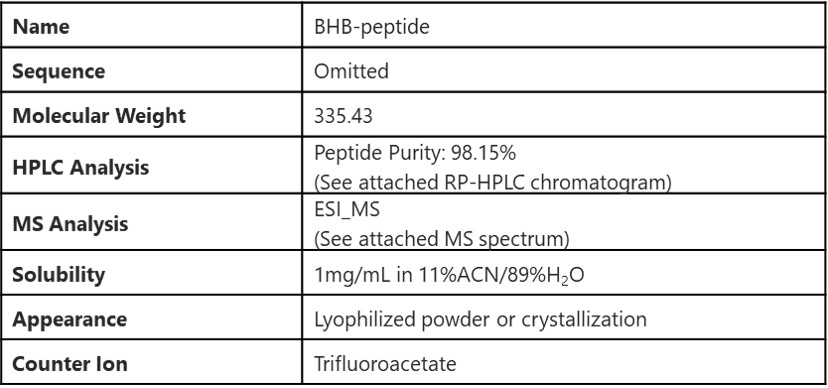
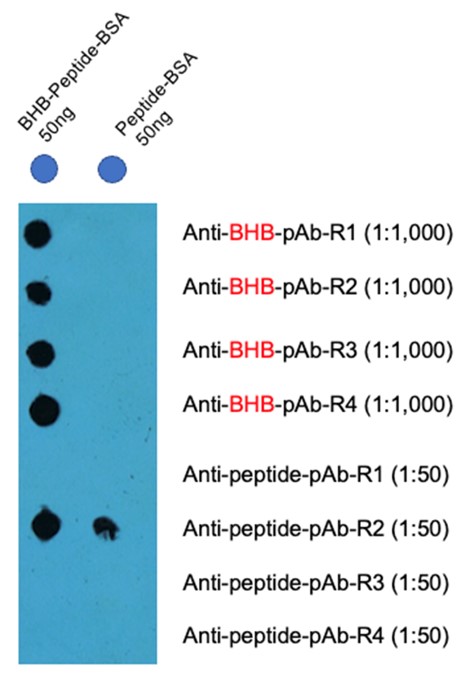
Case 2: Hybridoma Anti-β-Hydroxybutyrylation Monoclonal Antibody Production
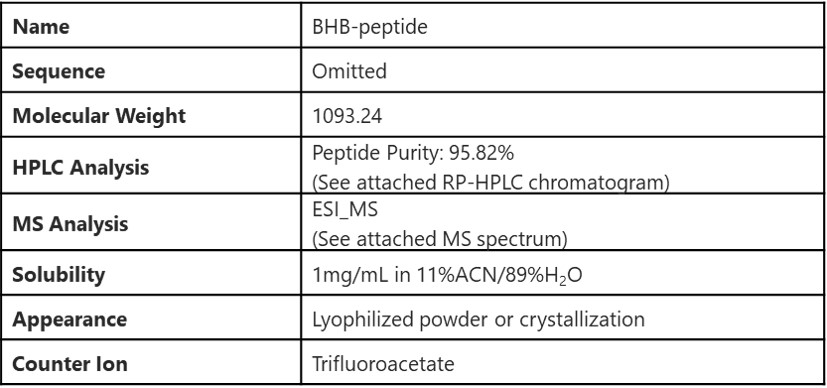
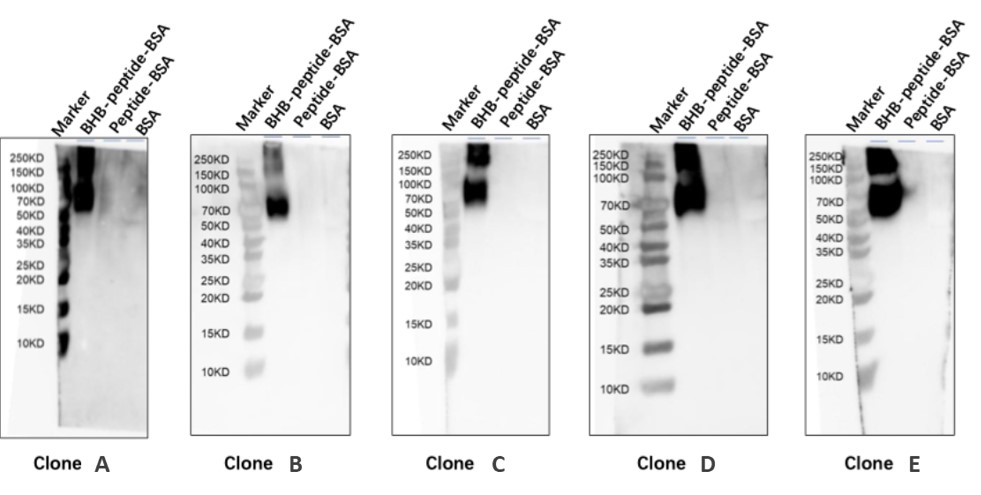
Q: How confident can I be that the antibody will only recognize β-hydroxybutyrylation and not other similar modifications I'm also studying?
A: We understand the critical need for specificity. Our antigen design focuses on unique structural features of KBHB, and our rigorous validation includes comparative testing against acetylation, methylation, and other relevant modifications. We provide detailed specificity data to assure you of minimal cross-reactivity, a common concern when studying PTMs.
Q: My target protein has multiple lysine residues. How can I be sure you can generate a site-specific antibody for a particular KBHB site?
A: Generating site-specific antibodies is a key capability. We utilize precisely designed peptide antigens mimicking the specific KBHB site of interest, including flanking sequences. Our screening processes are optimized to select antibodies that recognize this unique context, and we provide validation data confirming site specificity, a common challenge when studying PTMs on multi-lysine proteins.
Q: What if the antibody you generate doesn't work well in my downstream application (e.g., ChIP, IF)? Do you offer any guarantees or support?
A: We strive to generate antibodies suitable for a range of applications. We provide detailed characterization data to guide your experimental design. While we don't offer blanket guarantees due to the variability of biological systems, we offer comprehensive technical support and will work closely with you to troubleshoot any issues and optimize antibody usage.
Q: How do you handle intellectual property? I need to ensure that any novel antibodies generated remain proprietary to my research.
A: We understand the importance of IP. Our standard agreements clearly outline IP ownership, ensuring that any novel antibodies generated specifically for your project are proprietary to you. We are happy to discuss and tailor IP terms to meet your institution's or company's specific requirements.
All listed services and products are For Research Use Only. Do Not use in any diagnostic or therapeutic applications.