
Chemical Reactivity of Crosslinkers
Why Reactive Chemical Groups Matter?
The most important property of crosslinker is their reactive chemical groups. The reactive groups have established methods and mechanisms for chemical modification. Crosslinkers contain at least two reactive functional groups that target common functional groups in biomolecules such as proteins and nucleic acids. Protein modification reagents such as PEGylated or biotinylated reagents have reactive groups at one end and chemical moieties (PEG chains or biotinylated groups, respectively) at the other end. The functional groups commonly used as targets for bioconjugation include primary amines, thiols, carbonyls, carbohydrates, and carboxylic acids. Using photoreactive groups, coupling can also be non-selective.
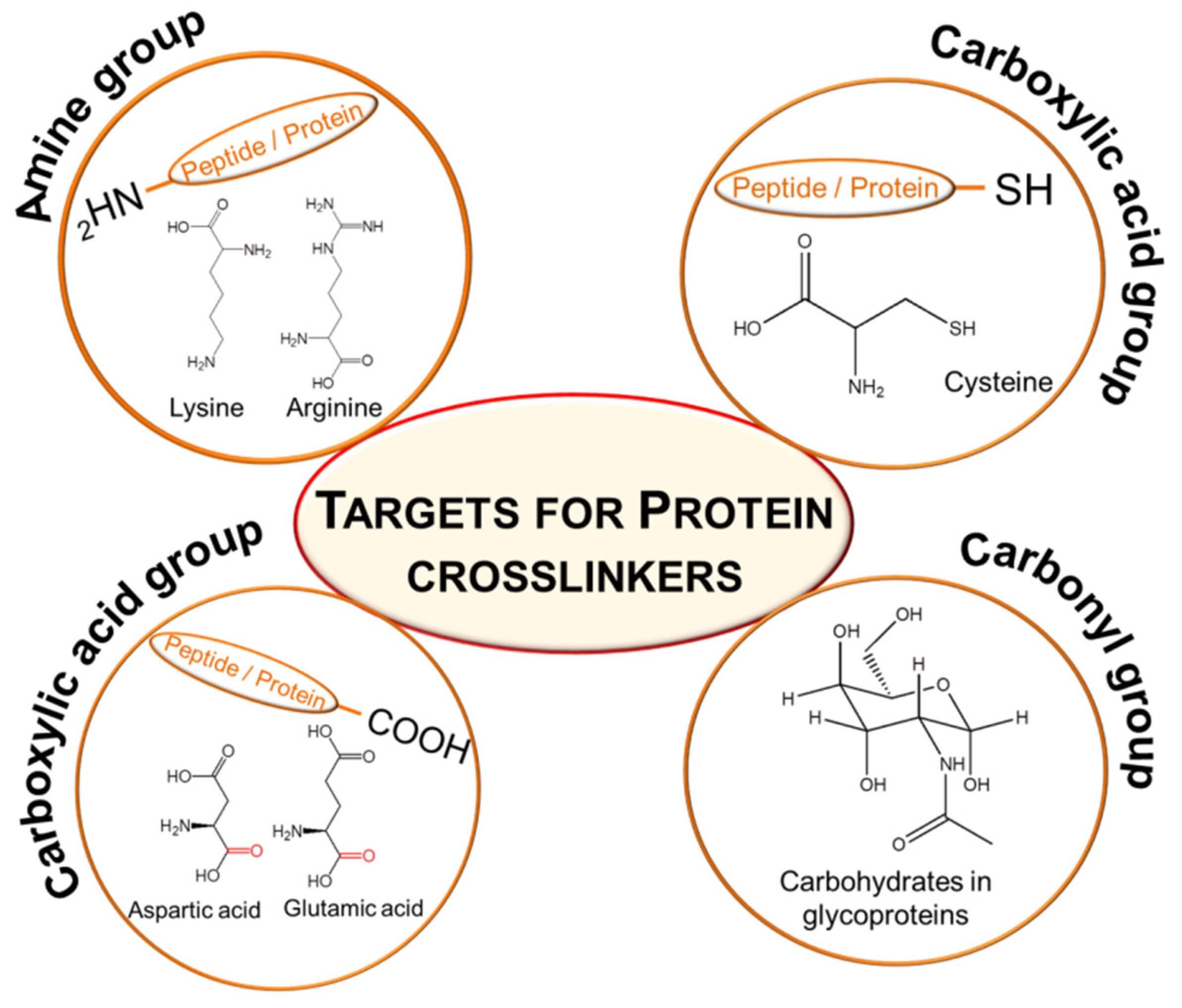 Figure 1 Functional group targets in proteins/peptides that are susceptible to physical, chemical or enzymatic modifications.1
Popular Crosslinker Reactive Groups for Protein Conjugation
Amine-Reactive Chemical Groups
Primary amine (- NH2) group is at the N-terminus of each polypeptide chain (called α - amine) and at the side chain of lysine (Lys, K) residues (called ε - amine). Since primary amines are positively charged at physiological pH, they are found at the outer side (i.e. the outermost surface) of proteins and are hence easy to bind without perturbing the protein structure. Many reactive chemical groups react with primary amines but the most commonly used are N-hydroxysuccinimide esters (NHS esters) and imide esters.
Carboxylic Acid-Reactive Chemical Groups
Carboxylic acid (-COOH) exists at the C-terminus of each polypeptide chain, as well as in the side chains of aspartic acid (Asp, D) and glutamic acid (Glu, E). Like primary amines, carboxyl groups are typically located on the surface of protein structures. Carboxylic acids are reactive with carboxamides.
| Reactive Group | Reaction Mechanism |
|---|---|
| EDC (Carbodiimide) | Activate carboxylic acids to form O-acylisourea intermediates, which then react with primary amines to form stable amide bonds. This reaction is usually promoted by N-hydroxysuccinimide (NHS) or sulfonamide NHS to improve stability and coupling efficiency. |
| DCC (dicyclohexyl carbodiimide) | DCC (Dicyclohexylcarbodiimide) crosslinks carboxylic acids into primary amines in the same manner as EDC. However, due to its insolubility in water, DCC is mainly used for manufacturing and organic synthesis applications, rather than typical protein research in biological laboratories. |
| Acid Chloride / Anhydride | Highly reactive carboxylic acid derivatives that react with nucleophiles, such as amines or alcohols, to form amides or esters. These are generally too reactive and unstable for use with delicate biomolecules in aqueous solutions. |
Sulfhydryl-Reactive Chemical Groups
Thiol group (- SH) exists in the side chain of cysteine (Cys, C). Usually, as part of the secondary or tertiary structure of proteins, cysteine is linked together between its side chains through disulfide bonds (-s-s-). These must be reduced to thiol groups so that they can be crosslinked by most types of reactive groups. Thiol groups are reactive with maleimide, halogenated acetyl, and pyridyl disulfides.
- Maleimides - Maleimide-activated crosslinkers and labeling reagents react specifically with sulfhydryl (-SH) groups under near-neutral conditions (pH 6.5-7.5) to form stable thioether bonds.
- Haloacetyls - Most haloacetyl crosslinkers contain iodoacetyl or bromoacetyl groups. Haloacetyl groups react with sulfhydryl groups under physiological to alkaline conditions (pH 7.2-9) to form stable thioether bonds.
- Pyridyl disulfides - Pyridyl disulfides react with sulfhydryl groups to form disulfide bonds over a wide pH range.
Carbonyl-Reactive Chemical Groups
By using sodium periodate to oxidize polysaccharides for post-translational modification, carbonyl (- CHO) groups can be generated in glycoproteins. Hydrazide and alkoxyamine reactive groups target aldehydes.
Nonspecific-Reactive Chemical Groups
Photoreactive crosslinking agents are widely used for non-specific bioconjugation. Although there are many options, the two most common photo reactive chemical groups are diazide and aryl azide. Light reactive groups are activated by ultraviolet light and can be used in vitro and in vivo.
Essential Factors Influencing Crosslinker Chemical Efficiency
- Crosslinker Type: Select a crosslinker that is appropriate for the desired crosslinking method (chemical or physical crosslinking). Crosslinkers with different types of reactivity may have varying efficiencies.
- Concentration: The concentration of the crosslinker is an important factor that affects the degree of crosslinking. An optimal concentration can enhance the crosslinking efficiency, while too high or too low concentrations may lead to reduced efficiency.
- Reaction Conditions: Optimizing the reaction temperature, time, and pH is essential for promoting the crosslinking reaction.
- Substrate Properties: The type and properties of the substrate (such as molecular weight, functional groups, etc.) can also impact the choice of crosslinker and its efficiency.
- Additives: The use of appropriate auxiliary additives (such as catalysts, plasticizers) can also enhance the dispersibility and reactivity of the crosslinker, thus improving its efficiency.
Frequently Asked Questions
Q: How can I prevent protein aggregation during the binding process with NHS maleimide crosslinker?
A: Aggregation usually occurs due to self-crosslinking or hydrophobic interactions. The mitigation strategies include: (1) using heterobifunctional NHS maleimide crosslinkers (avoiding self-crosslinking as it first reacts with amines and then with thiols); (2) Add PEGylated spacer arms (to increase solubility); (3) Combine and gently mix at low protein concentrations (1-10mg/mL); (4) Immediately purify the conjugate through SEC to remove unreacted crosslinking agents.
Q: Do I use photoactive crosslinking agents for live cell binding?
A: Yes - photoactive crosslinking agents (such as Sulfo SANPAH) are cell permeable and non-toxic before UV activation, making them suitable for live cell PPI profiles. However, ultraviolet radiation (365 nm) can cause cell damage at high doses, so we recommend shortening the exposure time (10-30 seconds) and optimizing the crosslinking agent concentration (1-10 µ M).
Q: If my protein does not have lysine residues, can I use NHS ester crosslinkers?
A: No - NHS esters specifically target primary amines (lysine or N-terminal). If your protein lacks lysine, consider using thiol reactive crosslinking agents (such as maleimide) after reducing disulfide bonds to expose cysteine or EDC to target carboxylic acids (Asp/Glu).
Conclusion
Crosslinkers are bifunctional/multifunctional reagents that can achieve covalent protein coupling. Reactive groups determine specificity, efficiency, and coupling performance. Common reactive groups include those targeting primary amines (NHS esters, isothiocyanates), thiols (maleimide, iodoacetamide), carboxylic acids (EDC) and hydroxyl groups (aryl azides) with groups targeting each suitable for different applications. The main applications are ADC synthesis (NHS maleimide crosslinker used in Brentuximab vedotin), diagnostic markers (NHS ester fluorophores), PPI profiling (photoactivatable aryl azides) and vaccine development (cyanogen bromide activated polysaccharide coupling). The selection of crosslinkers requires matching reactive groups with target residues, optimizing spacer arm properties (solubility, cleavability), and verifying conjugate mass.
Overview of What Creative Biolabs Can Provide
As a leading expert in the field of bioconjugation, Creative Biolabs provides a comprehensive set of services based on a deep understanding of crosslinking agent chemistry and its applications. Our services aim to meet the diverse needs of researchers and biopharmaceutical companies from initial concepts to large-scale production. If you are interested in our bioconjugation services, please feel free to contact us for more details.
Recommended products
- Fluorescent Reagents
- Crosslinker Products for Bioconjugation
- Cleavable Linker
- Non-cleavable Linker Bioconjugation
Recommended Services
Reference
- Jayachandran B, Parvin T N, Alam M M, et al. Insights on chemical crosslinking strategies for proteins. Molecules, 2022, 27(23): 8124.https://doi.org/10.3390/molecules27238124. Distributed under Open Access license CC BY 4.0, without modification.