All posts by biolabs

06Feb/26
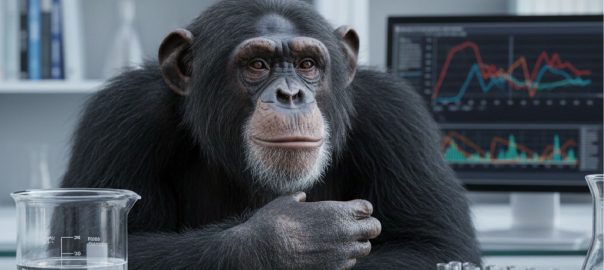
Chimpanzee Translational Medicine: What This Closest-Primate Model Still Teaches Us (and How Biospecimens Power Modern, Ethical Studies)(OA Literature)

Chimpanzee Translational Medicine: What This Closest-Primate Model Still Teaches Us (and How Biospecimens Power Modern, Ethical Studies)

Why chimpanzees still matter in translational medicine—despite major research restrictions Chimpanzees (Pan troglodytes) sit at a unique intersection of biology and translational relevance. As our closest living relatives, they share deep similaritiesRead More…
06Dec/25
Marmosets in Translational Research: Why This Small Primate Is Making a Big Impact(OA Literature)

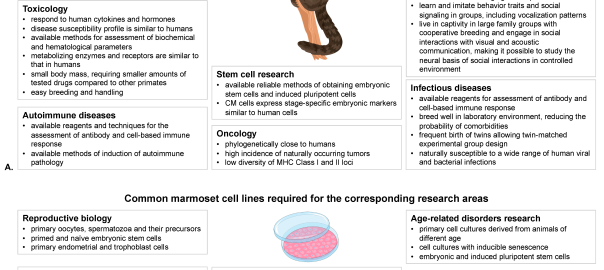
Marmosets in Translational Research: Why This Small Primate Is Making a Big Impact

If you work at the edge of discovery—where mechanistic biology must survive contact with real physiology—you’ve probably felt the gap between “works in rodents” and “works in primates.” The common marmoset (CallithrixRead More…

05Nov/25

The African Green Monkey (Chlorocebus aethiops): A Crucial Non-Human Primate Model for Virology and Translational Medicine

The landscape of biomedical research is ever-evolving, demanding increasingly precise and reliable preclinical models to accelerate drug and vaccine development. While the Macaque species justly receives much attention, the African Green MonkeyRead More…

15Oct/25

The Rhesus Macaque (Macaca mulatta): The Historical Cornerstone and Modern Frontline of Translational Research

The evolution of modern medicine owes a significant debt to the non-human primate (NHP) model. While numerous species contribute to preclinical testing, the Rhesus Macaque (Macaca mulatta) holds a unique, storied placeRead More…

28Sep/25

The Indispensable Role of the Cynomolgus Monkey (Macaca fascicularis) in Modern Biomedical Research: An NHP Biologicals Perspective

The journey of a novel therapeutic, from benchside discovery to patient bedside, is fraught with complexity, risk, and rigorous testing. Navigating the crucial phase of preclinical development requires a model system thatRead More…