Creative Biolabs has a tradition of commitment. To achieve efficient execution and regulatory approval, we offer careful considerations of your program for the development of a cellular or gene therapy product – now and in the future.
EXPLORE MORE HighlightsWe focus on unmet needs and develop novel cellular and gene drugs and solutions that offer significant benefits over existing options.
EXPLORE MORE HighlightsThe advent of Chimeric Antigen Receptor T-cell (CAR-T) therapies has revolutionized the field of oncology, providing new avenues for treating various forms of cancer. Our 20 years of experience in the biotechnology sector have equipped us with the expertise and technological capabilities to support the entire lifecycle of CAR-T products, from early development to commercialization.
EXPLORE MORETo accelerate advanced breakthroughs of your projects, we offer broad range of platforms which enable our clients be free to tackle problems with cutting-edge technologies from different angles and in different methods.
EXPLORE MORE HighlightsUse the resources in our library to help you understand your options and make critical decisions for your study. We offer oncolytic virus, CAR-T, and dendritic cell related documents, as well as newsletter. If you don't find the answers you're looking for, contact us for additional assistance.
EXPLORE MORE HighlightsGet a real taste and understanding of the business and culture of one of the world's great research-based cellular and gene therapy discovery and development companies.
EXPLORE MORE
Creative Biolabs provides a CXCL1/8–CXCR1/2 Chemokine-Axis Matching CAR-T Development Service for Solid Tumor Targeting, designed to overcome poor CAR-T infiltration and functional exhaustion within hostile tumor microenvironments. Through innovative chemokine receptor engineering and targeted homing strategies, our platform reprograms CAR-T cells to navigate CXCL1/8-rich regions, effectively converting immunosuppressive signals into precise trafficking cues.
The CAR T-cell therapy in solid tumors is critically hampered by the dense, immunosuppressive TME. A major contributing factor is the inability of CAR-T cells to efficiently infiltrate the tumor mass. The TME frequently overexpresses CXCL1 and CXCL8, which are strong chemoattractants for immunosuppressive cells and are linked to angiogenesis and poor prognosis. By incorporating the respective receptor, CXCR1 or CXCR2, into the CAR construct, T cells are re-engineered to follow this highly expressed chemokine signal.
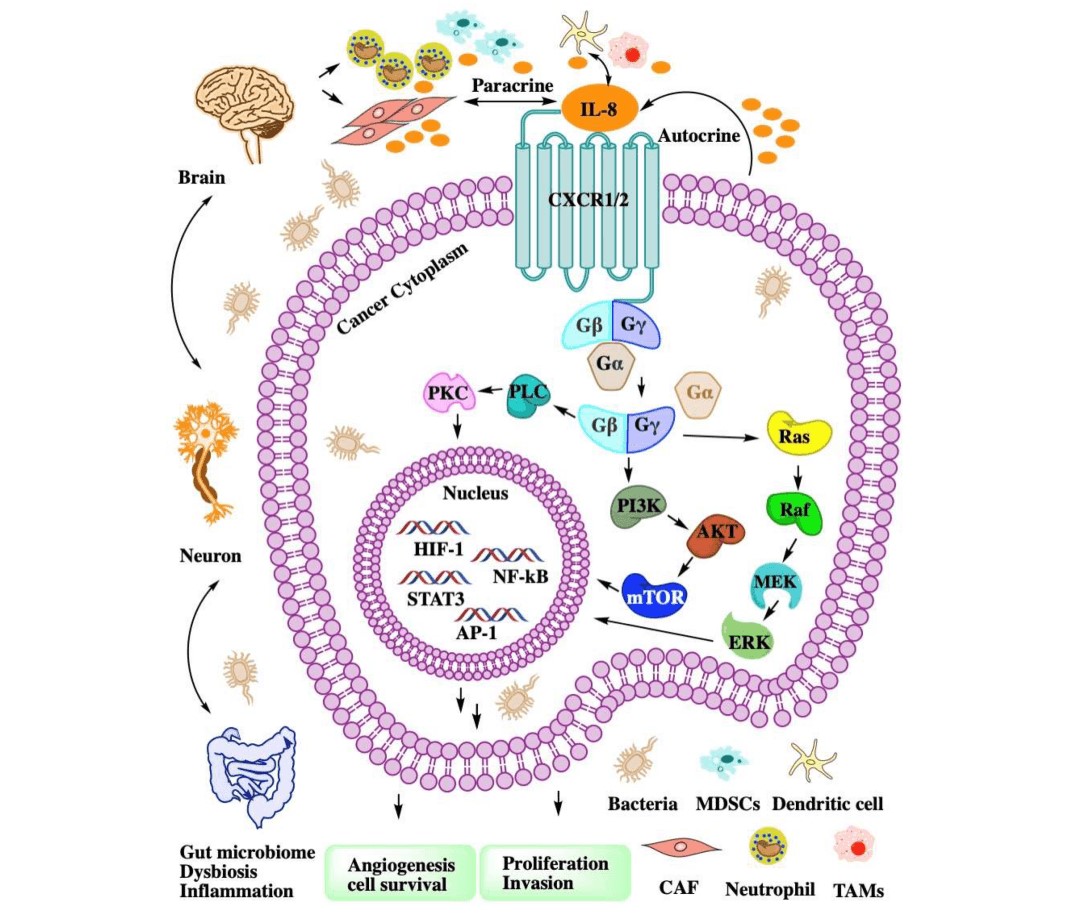 Fig.1 The complex network of the CXCL8-CXCR1/2 axis in the TME.1,3
Solid tumors create dense, immunosuppressive microenvironments often rich in pro-tumorigenic chemokines like CXCL1 and CXCL8. Conventional CAR-T cells, lacking the matching receptor, are effectively blocked from reaching the tumor core. Our service directly addresses this fundamental limitation by genetically modifying your T cells to express the cognate receptor (CXCR1 or CXCR2) specific to the abundant TME ligands (CXCL1/8). This simple yet profound modification transforms a barrier into a highway, significantly increasing the intra-tumoral accumulation and persistence of your engineered cell product.
Discover How We Can Help - Request a Consultation.
Our service is built upon a robust foundation of cutting-edge cell engineering and functional validation platforms designed specifically for next-generation CAR-T systems. We utilize an integrated approach to ensure optimal receptor selection, expression, and functional validation.
| Assays | Method |
|---|---|
| Chemotaxis / Migration Assays | Use Transwell or microfluidic systems with CXCL1/8 in the lower chamber. Measure the proportion of CAR-T cells migrating through the membrane. |
| Tumor Infiltration Analysis | Detect CAR-T density in tumor tissues using flow cytometry or immunohistochemistry. |
| Cytotoxicity and Effector Function Assays |
In vitro: LDH release, flow cytometry-based killing, or real-time cell analysis. In vivo: Tumor growth inhibition and tumor burden measurements. |
| Receptor Expression and Signaling Analysis | Flow cytometry to assess surface receptor expression. Western blot or phospho-flow to measure downstream signaling activation |
The required starting materials include target antigen information with expression patterns, T-cell source material from leukapheresis or PBMCs, and tumor microenvironment data specifying CXCL1/8 concentration ranges.
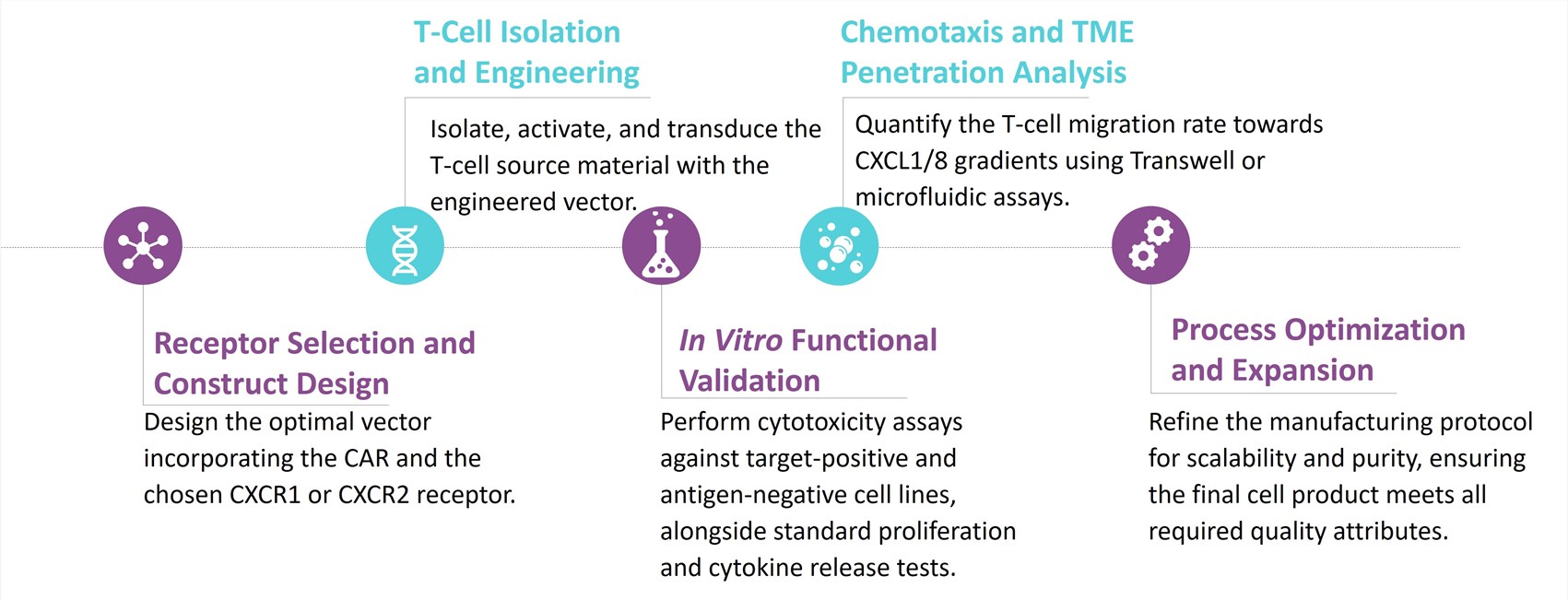
This research tackles the challenge of using CAR-T cell therapy for solid tumors, which often resist treatment due to a hostile microenvironment and poor T-cell infiltration. The authors developed a novel strategy by engineering CAR-T cells to express receptors for IL-8, a cytokine released by tumors. This modification significantly improved the cells' ability to migrate into and persist within tumors, leading to complete regression and lasting immunity in aggressive pre-clinical cancer models.
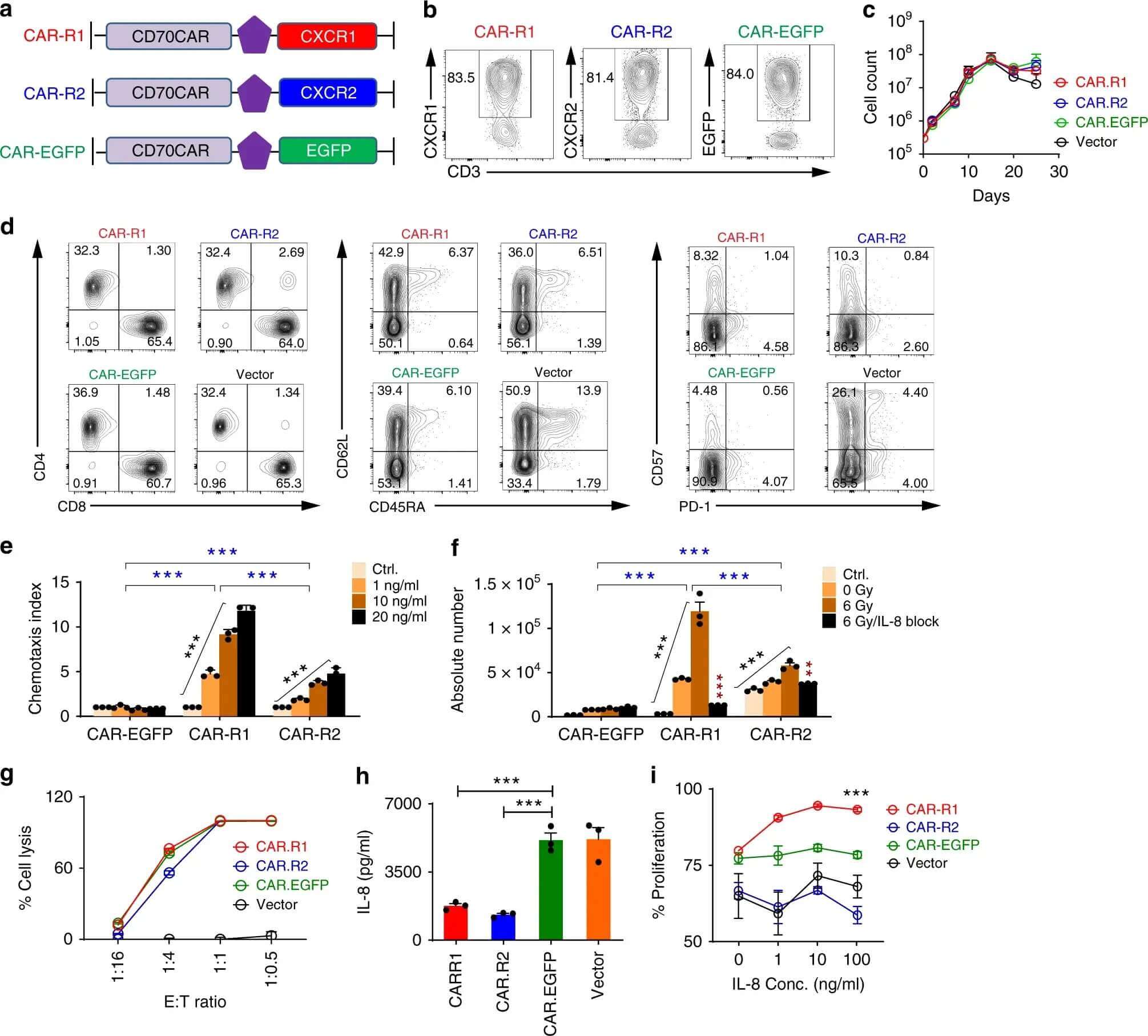 Fig.2 Construction and in vitro analysis of CXCR1 or CXCR2-modified CAR T cells.2,3
How does adding a chemokine receptor improve CAR efficacy?
CXCR1/2 gives CAR-T cells chemotaxis toward tumor-produced CXCL1/8, increasing their concentration and persistence at the tumor site—turning passive circulation into active tumor hunting.
What safety measures are used when engineering chemokine-targeted CARs?
We use logic-gated or tandem CARs that require both chemokine and tumor antigen signals for full activation, reducing off-target effects in healthy tissues.
How do you choose between CXCR1 and CXCR2 for a project?
Choice depends on the tumor's chemokine profile. Specialized TME analysis identifies which receptor provides the strongest, most specific homing signal.
Can this strategy combine with other CAR-T enhancements?
Yes. CXCR1/2 can be integrated with armored CARs, TME-degrading enzymes, or cytokine-secreting modules to improve infiltration and function in hostile TMEs.
Creative Biolabs is your trusted partner in overcoming the critical TME barriers facing CAR-T therapy for solid tumors. By utilizing our proprietary CXCL1/8-CXCR1/2 Chemokine-Axis Matching technology, you gain a strategic advantage in T-cell homing, persistence, and overall therapeutic efficacy. We provide fully characterized, research-ready CAR-T cells supported by detailed data packages and validated protocols to accelerate your journey toward the clinic. Ready to revolutionize your solid tumor CAR-T project? Contact our team to discuss your antigen, TME profile, and goals.
References
For any technical issues or product/service related questions, please leave your information below. Our team will contact you soon.
All products and services are For Research Use Only and CANNOT be used in the treatment or diagnosis of disease.
 NEWSLETTER
The latest newsletter to introduce the latest breaking information, our site updates, field and other scientific news, important events, and insights from industry leaders
LEARN MORE NEWSLETTER NEW SOLUTION
CellRapeutics™ In Vivo Cell Engineering: One-stop in vivo T/B/NK cell and macrophage engineering services covering vectors construction to function verification.
LEARN MORE SOLUTION NOVEL TECHNOLOGY
Silence™ CAR-T Cell: A novel platform to enhance CAR-T cell immunotherapy by combining RNAi technology to suppress genes that may impede CAR functionality.
LEARN MORE NOVEL TECHNOLOGY NEW SOLUTION
Canine CAR-T Therapy Development: From early target discovery, CAR design and construction, cell culture, and transfection, to in vitro and in vivo function validation.
LEARN MORE SOLUTION