Creative Biolabs has a tradition of commitment. To achieve efficient execution and regulatory approval, we offer careful considerations of your program for the development of a cellular or gene therapy product – now and in the future.
EXPLORE MORE HighlightsWe focus on unmet needs and develop novel cellular and gene drugs and solutions that offer significant benefits over existing options.
EXPLORE MORE HighlightsThe advent of Chimeric Antigen Receptor T-cell (CAR-T) therapies has revolutionized the field of oncology, providing new avenues for treating various forms of cancer. Our 20 years of experience in the biotechnology sector have equipped us with the expertise and technological capabilities to support the entire lifecycle of CAR-T products, from early development to commercialization.
EXPLORE MORETo accelerate advanced breakthroughs of your projects, we offer broad range of platforms which enable our clients be free to tackle problems with cutting-edge technologies from different angles and in different methods.
EXPLORE MORE HighlightsUse the resources in our library to help you understand your options and make critical decisions for your study. We offer oncolytic virus, CAR-T, and dendritic cell related documents, as well as newsletter. If you don't find the answers you're looking for, contact us for additional assistance.
EXPLORE MORE HighlightsGet a real taste and understanding of the business and culture of one of the world's great research-based cellular and gene therapy discovery and development companies.
EXPLORE MORE
Creative Biolabs provides a CXCL16-CXCR6 Chemokine-Axis Matching CAR-T Development Service for Solid Tumor Targeting, engineered to improve T-cell trafficking, tumor infiltration, and functional persistence while reducing the risk of neurotoxicity. Through chemokine receptor integration, spatial homing optimization, and comprehensive mechanistic profiling, our platform enhances targeted accumulation and controlled immune activation within solid tumor environments.
The CXCL16-CXCR6 chemokine axis represents a vital communication pathway in both immunological surveillance and disease pathology. CXCL16, which exists as both a membrane-bound adhesion molecule and a soluble chemoattractant, binds to its unique receptor, CXCR6, primarily expressed on T-cell subsets (effector and resident memory T cells). This axis plays a critical, often detrimental role in cancer: promoting chemoresistance and tumor invasiveness in numerous malignancies. Furthermore, it has a high-impact link to Immune Effector Cell-Associated Neurotoxicity Syndrome (ICANS) severity in CAR T-cell therapy.
Creative Biolabs offers a specialized service targeting the dualistic role of the CXCL16-CXCR6 axis in advanced cancer immunotherapies, specifically CAR T cells. This pathway is a critical determinant of both T-cell persistence and tumor infiltration (efficacy) and Central Nervous System (CNS) toxicity (safety). Our approach integrates trafficking enhancement with toxicity modulation, providing a complete solution for designing safer and more effective cellular therapies.
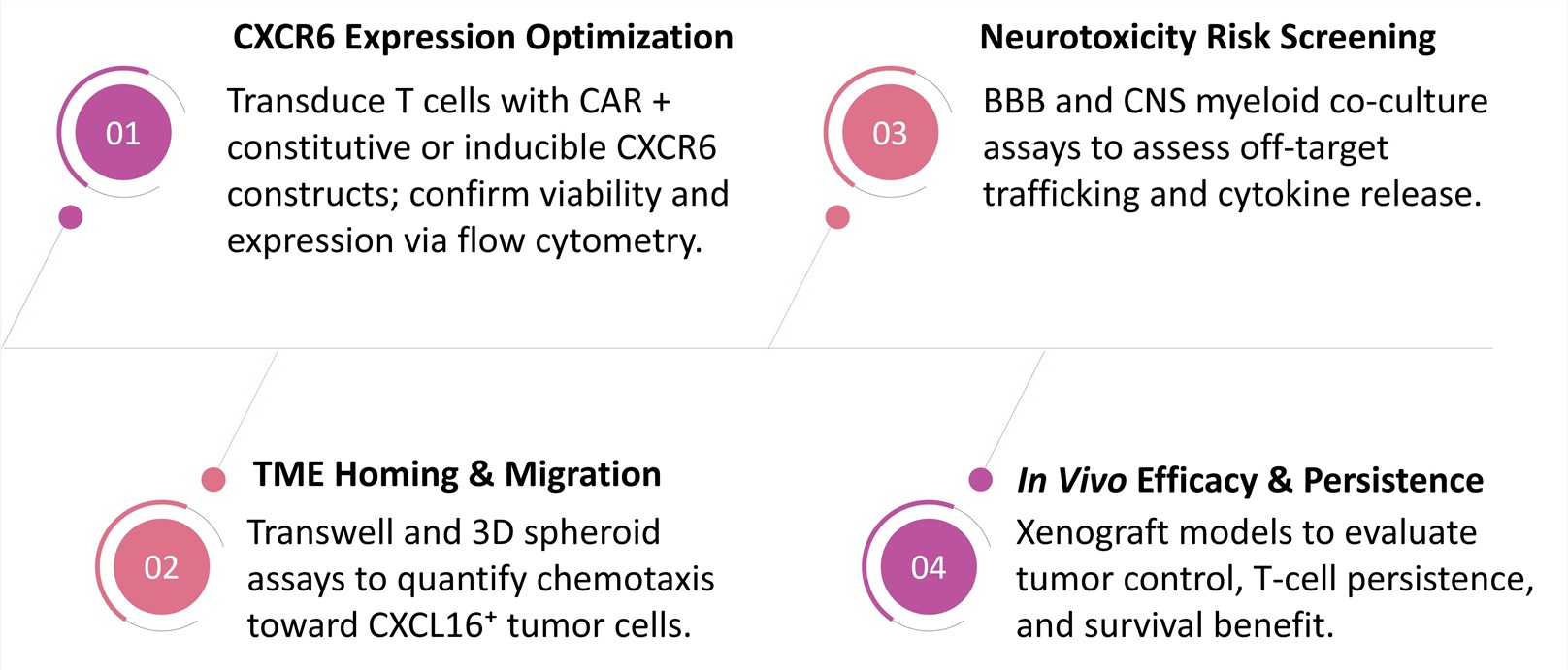
We engineer CAR T cells with optimized CXCR6 expression to leverage the high CXCL16 levels commonly present in solid tumor TMEs. This improves targeted T-cell trafficking and retention, directly addressing poor tumor infiltration.
We use in vitro and ex vivo models to evaluate neurotoxicity linked to the CXCL16–CXCR6 axis. By profiling CXCR6+ T-cell distribution and CXCL16 expression in CNS-associated tissues, we can refine CAR designs or recommend small-molecule modulators to reduce unwanted T-cell entry into the brain and lower ICANS risk.
Our screening assays identify T-cell engineering strategies or molecular inhibitors that prevent tumors from exploiting CXCR6-mediated survival pathways to resist treatments such as docetaxel.
Discover How We Can Help - Request a Consultation.
Creative Biolabs employs integrated technology platforms to fully characterize the CXCL16-CXCR6 axis and engineer optimal cell therapy candidates. Our services provide the necessary tools to predict, prevent, and promote T-cell function through chemokine receptor matching.
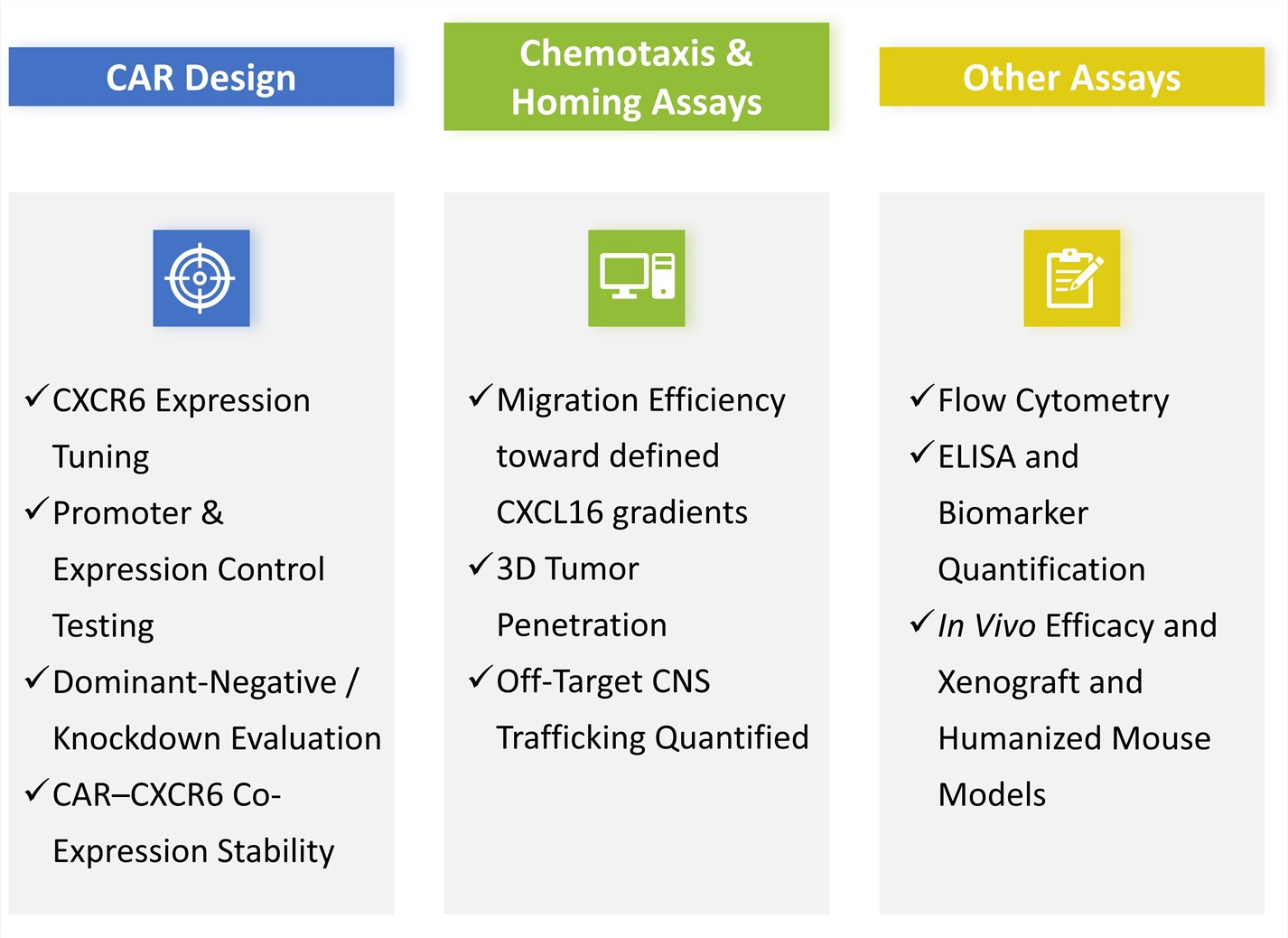
The required starting materials include the car genetic sequence, primary human T-cells for initial testing, and relevant tumor cell lines for efficacy assessment.
This study investigates the mechanisms of ICANS, a major side effect of CAR-T cell therapy. By analyzing patient samples, researchers discovered that a specific type of cytotoxic CAR-T cell, identified by the CXCR6 protein, is recruited into the central nervous system during ICANS. These cells interact with CXCL16-expressing myeloid cells in the brain.
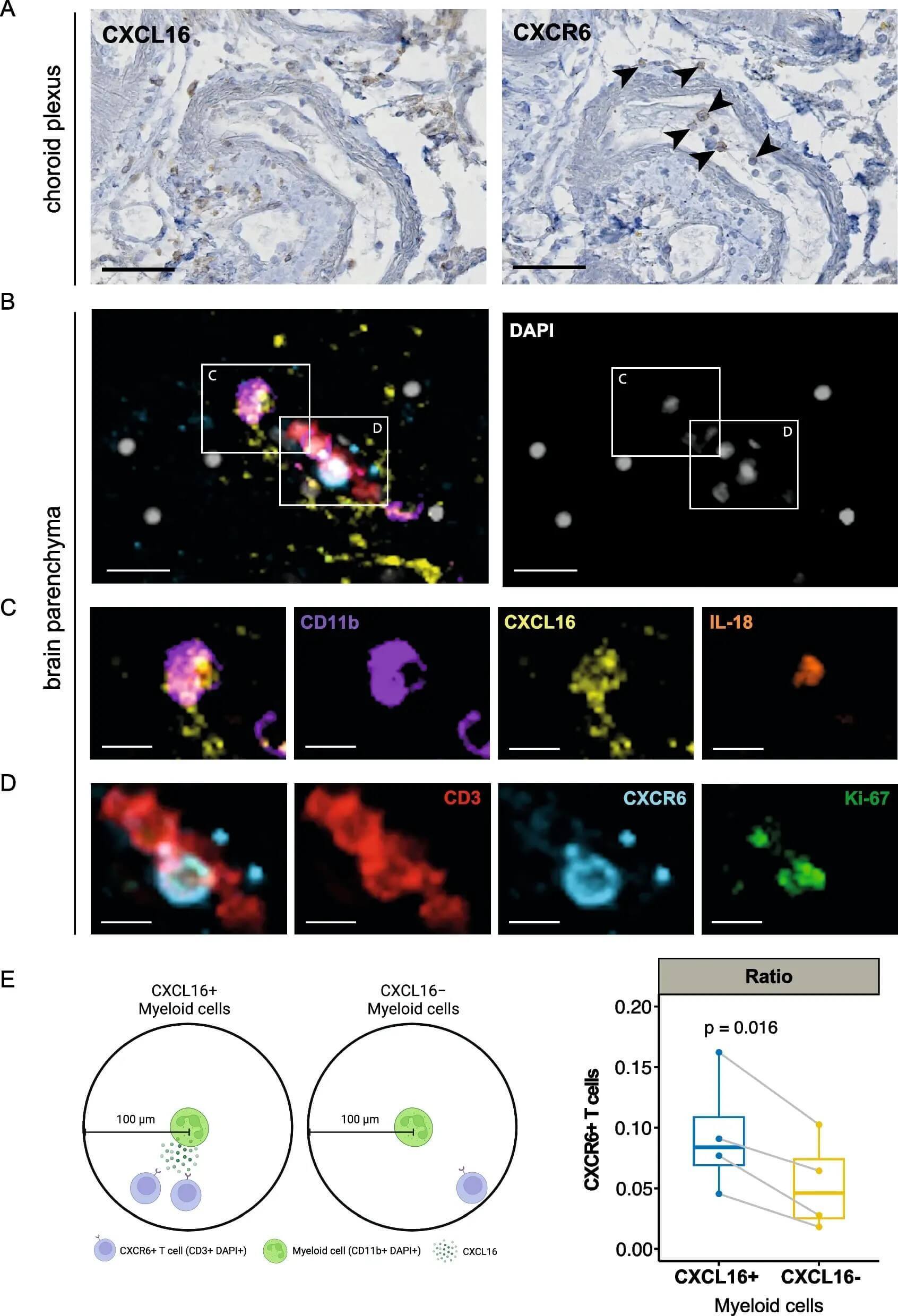 Fig.1 Immunohistochemical staining for CXCL16 and CXCR6.1
How does CXCR6 enhance CAR T performance in solid tumors?
Many solid tumors express high CXCL16. Adding CXCR6 gives CAR T cells a chemotactic "homing signal", improving trafficking, tumor retention, and sustained killing.
Can this be applied to my existing CAR design?
Yes. The platform is target-agnostic. You provide your CAR sequence, T cells, and tumor cell lines; we integrate CXCR6 engineering and functional validation.
Does this increase development time or cost?
The added engineering step is offset by early de-risking. Predictive assays reduce failed in vivo studies, often lowering total cost and time-to-decisions.
Are there alternative receptors to consider?
Yes, options include CXCR2 (CXCL8/IL-8 axis) and CCR4. We can profile your tumor's chemokine landscape to select the best match.
Creative Biolabs is a recognized leader in chemokine receptor engineering for adoptive cell therapy. Our unique advantage lies in our dual focus on enhanced efficacy and built-in safety, a necessity when dealing with the pleiotropic CXCL16-CXCR6 pathway. We combine published, cutting-edge mechanistic insights with proprietary high-throughput screening platforms. Connect with our team for details and project consultation.
Reference
For any technical issues or product/service related questions, please leave your information below. Our team will contact you soon.
All products and services are For Research Use Only and CANNOT be used in the treatment or diagnosis of disease.
 NEWSLETTER
The latest newsletter to introduce the latest breaking information, our site updates, field and other scientific news, important events, and insights from industry leaders
LEARN MORE NEWSLETTER NEW SOLUTION
CellRapeutics™ In Vivo Cell Engineering: One-stop in vivo T/B/NK cell and macrophage engineering services covering vectors construction to function verification.
LEARN MORE SOLUTION NOVEL TECHNOLOGY
Silence™ CAR-T Cell: A novel platform to enhance CAR-T cell immunotherapy by combining RNAi technology to suppress genes that may impede CAR functionality.
LEARN MORE NOVEL TECHNOLOGY NEW SOLUTION
Canine CAR-T Therapy Development: From early target discovery, CAR design and construction, cell culture, and transfection, to in vitro and in vivo function validation.
LEARN MORE SOLUTION