Creative Biolabs has a tradition of commitment. To achieve efficient execution and regulatory approval, we offer careful considerations of your program for the development of a cellular or gene therapy product – now and in the future.
EXPLORE MORE HighlightsWe focus on unmet needs and develop novel cellular and gene drugs and solutions that offer significant benefits over existing options.
EXPLORE MORE HighlightsThe advent of Chimeric Antigen Receptor T-cell (CAR-T) therapies has revolutionized the field of oncology, providing new avenues for treating various forms of cancer. Our 20 years of experience in the biotechnology sector have equipped us with the expertise and technological capabilities to support the entire lifecycle of CAR-T products, from early development to commercialization.
EXPLORE MORETo accelerate advanced breakthroughs of your projects, we offer broad range of platforms which enable our clients be free to tackle problems with cutting-edge technologies from different angles and in different methods.
EXPLORE MORE HighlightsUse the resources in our library to help you understand your options and make critical decisions for your study. We offer oncolytic virus, CAR-T, and dendritic cell related documents, as well as newsletter. If you don't find the answers you're looking for, contact us for additional assistance.
EXPLORE MORE HighlightsGet a real taste and understanding of the business and culture of one of the world's great research-based cellular and gene therapy discovery and development companies.
EXPLORE MORE
Are you currently facing critical challenges in your solid tumor immunotherapy pipelines, such as poor CAR-T persistence, rapid T-cell exhaustion, and consequent high clinical failure rates? Creative Biolabs' Solid Tumor Targeting CAR-T Development Service by AMPK Activation & mTOR Inhibition engineers next-generation CAR-T cells with enhanced mitochondrial fitness and spare respiratory capacity by applying precise combinatorial metabolic pre-conditioning. Our approach ensures sustained cytotoxic function and improved tumor infiltration even within hypoxic, immunosuppressive microenvironments, enabling durable anti-tumor responses and higher success rates in solid tumor treatment.
AMPK activation serves as a pivotal metabolic checkpoint that enhances the mitochondrial fitness and functional persistence of CAR-T cells within the nutrient-deprived and hypoxic tumor microenvironment. Concurrently, mTOR inhibition alleviates T cell exhaustion and prevents premature differentiation, thereby sustaining their long-term antitumor capacity. The integrated strategy of CAR-T and AMPK Activation & mTOR Inhibition represents a critical advancement in metabolic reprogramming, designed to overcome the immunosuppressive barriers of solid tumors and achieve durable therapeutic efficacy.
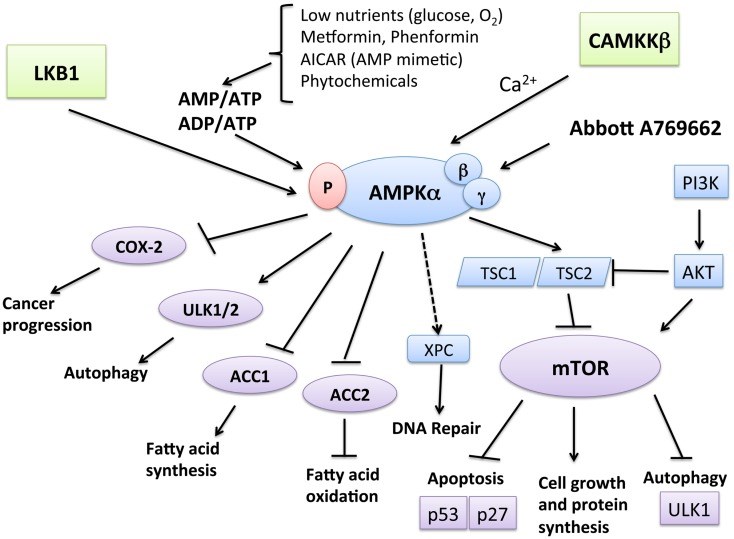 Fig.1 AMPK in tumor suppression: key functions and regulatory pathways.1
Creative Biolabs' Solid Tumor Targeting CAR-T Development Service by AMPK Activation & mTOR Inhibition delivers metabolically hard-wired CAR-T cells designed for peak performance against the most challenging solid tumor microenvironments (TME). We move beyond standard manufacturing to address the fundamental bioenergetic limitations that cause T-cell failure in vivo, ensuring your therapeutic cells possess the high mitochondrial spare respiratory capacity (SRC) required for sustained attack under hypoxia and nutrient stress.
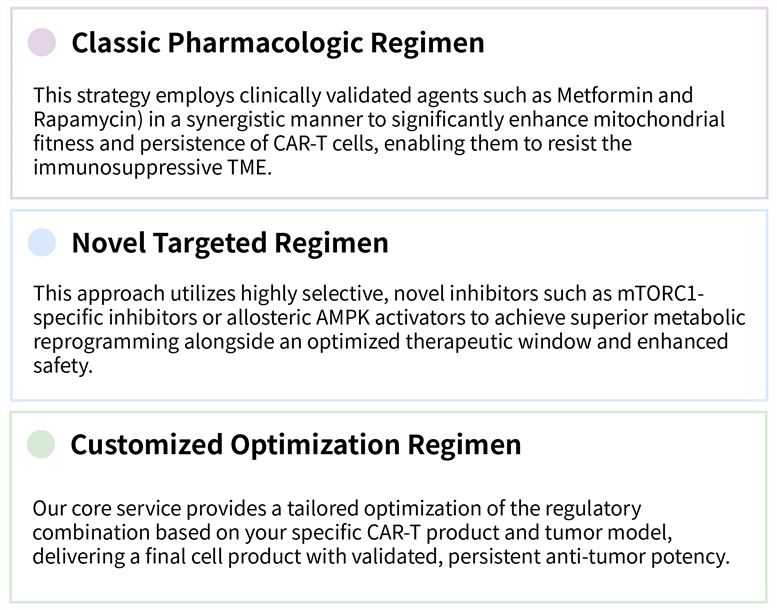
We offer a spectrum of synergistic AMPK/mTOR modulation regimens, from clinically-validated drug combinations to novel targeted agents, all designed to endow your CAR-T cells with superior metabolic fitness and durable anti-tumor activity in the solid tumor microenvironment.
Required Starting Materials:
Target Antigen Data: Specific tumor antigen expression profiles and validation data for the CAR target.
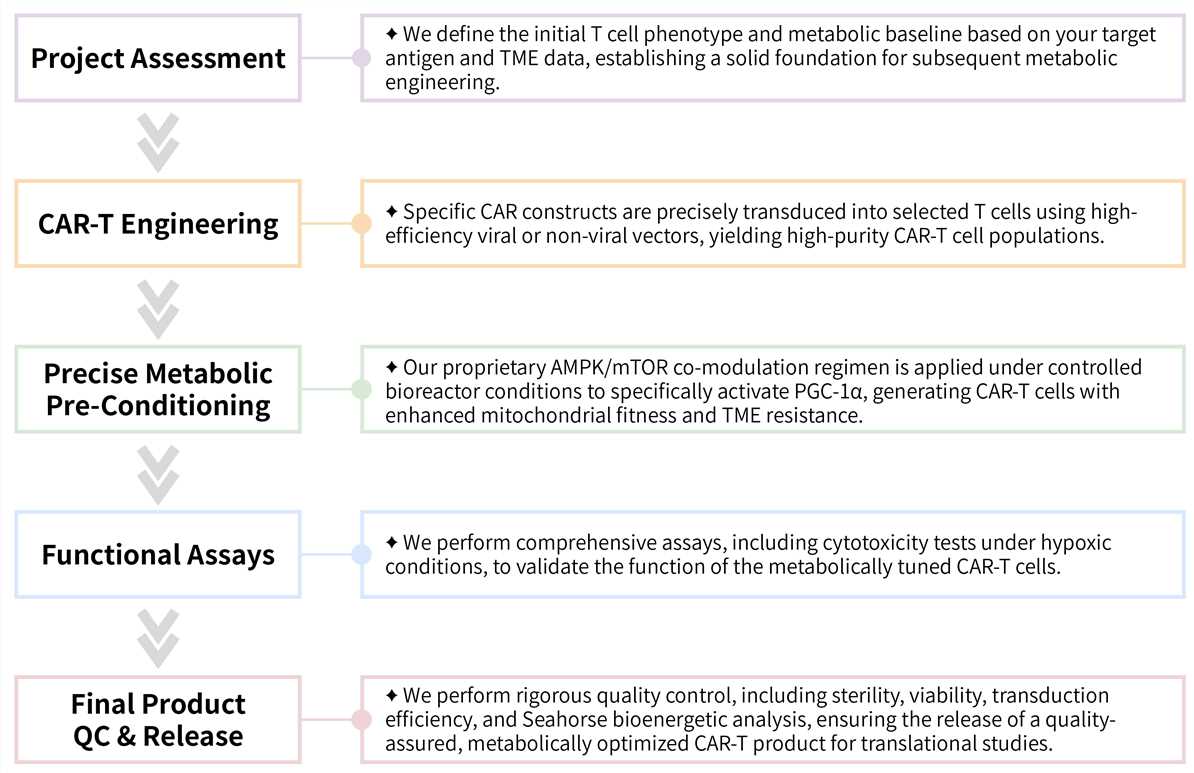
Final Deliverables:
How does the dual AMPK Activation & mTOR Inhibition approach compare to using only Rapamycin (mTOR inhibition) in standard CAR-T manufacturing?
While Rapamycin alone is known to enhance T cell memory formation, our dual approach provides a unique advantage by simultaneously activating AMPK to drive mitochondrial biogenesis via PGC-1α. This results in a higher SRC, which is specifically required for persistence under hypoxia, a challenge that standard Rapamycin protocols do not fully address.
What is the primary precaution or safety concern associated with metabolically modifying the T cells?
The primary concern is potential off-target effects, specifically the unintended induction of apoptosis or loss of proliferation, as seen when Metformin is used alone. Our precaution is our proprietary dosing and timing protocols for the combined agents, which are meticulously optimized to ensure PGC-1α activation and SRC increase without compromising necessary T cell expansion.
Choose our solid tumor CAR-T service for expert metabolic reprogramming. We uniquely co-activate AMPK and inhibit mTOR, generating persistent, metabolically robust T cells. Our products demonstrate enhanced mitochondrial spare capacity for sustained function in hypoxia and inherent tumor microenvironment modulation, ensuring superior efficacy against solid tumors.
"Using Creative Biolabs' Solid Tumor Targeting CAR-T Development Service by AMPK Activation & mTOR Inhibition in our research has significantly improved T-cell durability under nutrient-deprived conditions. The resulting cells showed a twofold increase in mitochondrial reserve capacity compared to our in-house control, directly addressing our primary bottleneck in solid tumor targeting." Dr. E. L*****n.
"The expert team solved our critical problem with AMPK monotherapy, which was causing unwanted T-cell apoptosis. Their combinatorial strategy allowed us to realize the mitochondrial benefits without the cytotoxic pitfalls, facilitating our successful transition to in vivo efficacy studies." K. B*****z, PhD.
"We utilized this service specifically to address the challenge of glioma-infiltrating T cells. The final report, complete with mass cytometric data showing reduced MDSCs in the TME, confirmed their unique ability to engineer T cells that are not only resistant to but can actively reshape the tumor environment." P. A*****o, MD.
Creative Biolabs is committed to translating groundbreaking metabolic science into clinical reality. Our Solid Tumor Targeting CAR-T Development Service by AMPK Activation & mTOR Inhibition provides the essential metabolic resilience needed for success in challenging solid tumor indications.
To discuss your project specifics, explore our full range of services, or review detailed efficacy data, please reach out to our expert team.
Reference
For any technical issues or product/service related questions, please leave your information below. Our team will contact you soon.
All products and services are For Research Use Only and CANNOT be used in the treatment or diagnosis of disease.
 NEWSLETTER
The latest newsletter to introduce the latest breaking information, our site updates, field and other scientific news, important events, and insights from industry leaders
LEARN MORE NEWSLETTER NEW SOLUTION
CellRapeutics™ In Vivo Cell Engineering: One-stop in vivo T/B/NK cell and macrophage engineering services covering vectors construction to function verification.
LEARN MORE SOLUTION NOVEL TECHNOLOGY
Silence™ CAR-T Cell: A novel platform to enhance CAR-T cell immunotherapy by combining RNAi technology to suppress genes that may impede CAR functionality.
LEARN MORE NOVEL TECHNOLOGY NEW SOLUTION
Canine CAR-T Therapy Development: From early target discovery, CAR design and construction, cell culture, and transfection, to in vitro and in vivo function validation.
LEARN MORE SOLUTION