Solid Tumor Targeting CAR-T Development Services through Bypass Systemic Trafficking
Online Inquiry
Background Service What We Can Offer Workflow Types Highlights FAQs Contact
Creative Biolabs provides Solid Tumor Targeting CAR-T Development Services via Local-Regional Delivery, designed to overcome poor tumor penetration, systemic toxicity, and long development timelines. Through advanced biomaterial-integrated cell engineering and precision delivery strategies, this next-generation platform enhances CAR-T retention, persistence, and local efficacy within the tumor site while reducing systemic exposure. This approach empowers researchers to accelerate translational development and unlock new therapeutic potential in solid tumor immunotherapy.
Introduction
By shifting CAR-T administration from systemic infusion to controlled regional or intra-tumoral routes, therapeutic cells bypass biological barriers, including abnormal vasculature and suppressive stromal structures. Literature reports demonstrate improved tumor infiltration and localized immune activation with reduced systemic exposure.
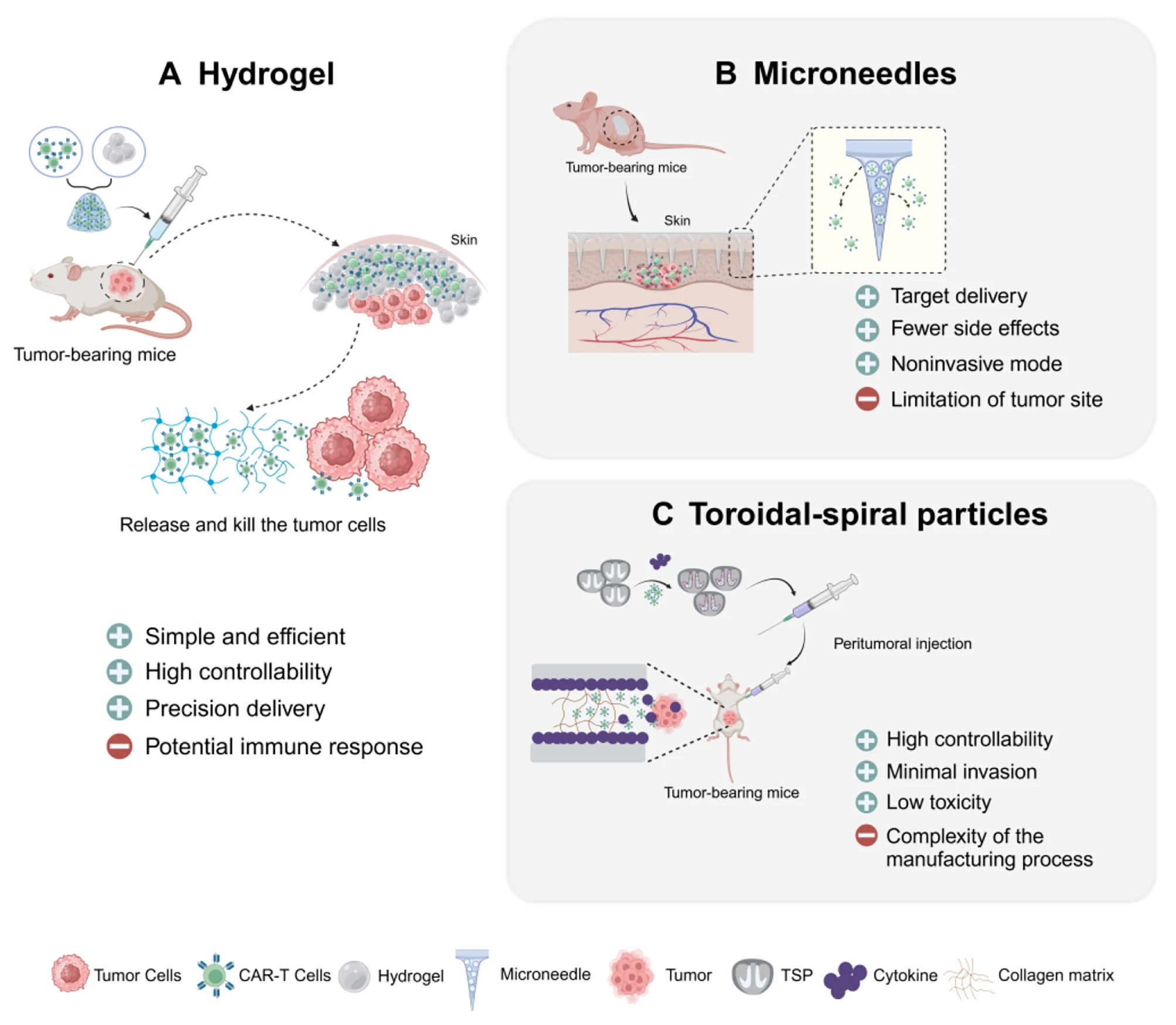 Fig.1 Adjuvant delivery strategies for CAR-T cells in preclinical studies.1
Creative Biolabs' CAR-T Development by Anti-Angiogenic Normalization
Our service offers a holistic, integrated strategy that moves beyond conventional intravenous (IV) delivery, which is often inefficient for solid tumors. We provide specific deliverables and solutions centered on leveraging local and regional infusion techniques—such as local-regional infusion, biomaterial delivery, and scattered cell seeding—to ensure a higher concentration of active CAR T-cells reaches the target site. This approach is designed to overcome the physical and immunosuppressive barriers of the TME, resulting in superior efficacy and a safer therapeutic profile. This service enables direct or regionally guided CAR-T delivery to the tumor site, improving cellular infiltration, local activation, and anti-tumor potency while minimizing systemic side effects. Our team supports design, optimization, evaluation, and scale-up to match your research or pre-clinical development needs.
Discover How We Can Help - Request a Consultation.
What we can offer
|
Strategy Type
|
Technical Approach
|
Advantage
|
|
Local Injection
|
Direct intra-tumoral injection
Intraperitoneal or intracavitary injection
|
High local CAR-T concentration with reduced systemic distribution and toxicity
|
|
Regional Catheter Infusion
|
Infusion via hepatic artery, pulmonary artery, or cerebral ventricles
|
Delivers CAR-T directly into the blood supply of solid tumors
|
|
Implant / Scaffold Systems
|
CAR-T embedded in microgels, scaffolds, or nanoparticle carriers
|
Provides local sustained release and protects CAR-T activity
|
|
Locally Induced Migration
|
Co-delivery with chemokines or attractant factors
|
Uses local signals to guide CAR-T accumulation toward the tumor
|
|
Controlled Release Systems
|
Hydrogel or microcapsule carriers for sustained CAR-T release
|
Prolongs local activity and reduces repeated dosing
|
Our Workflow
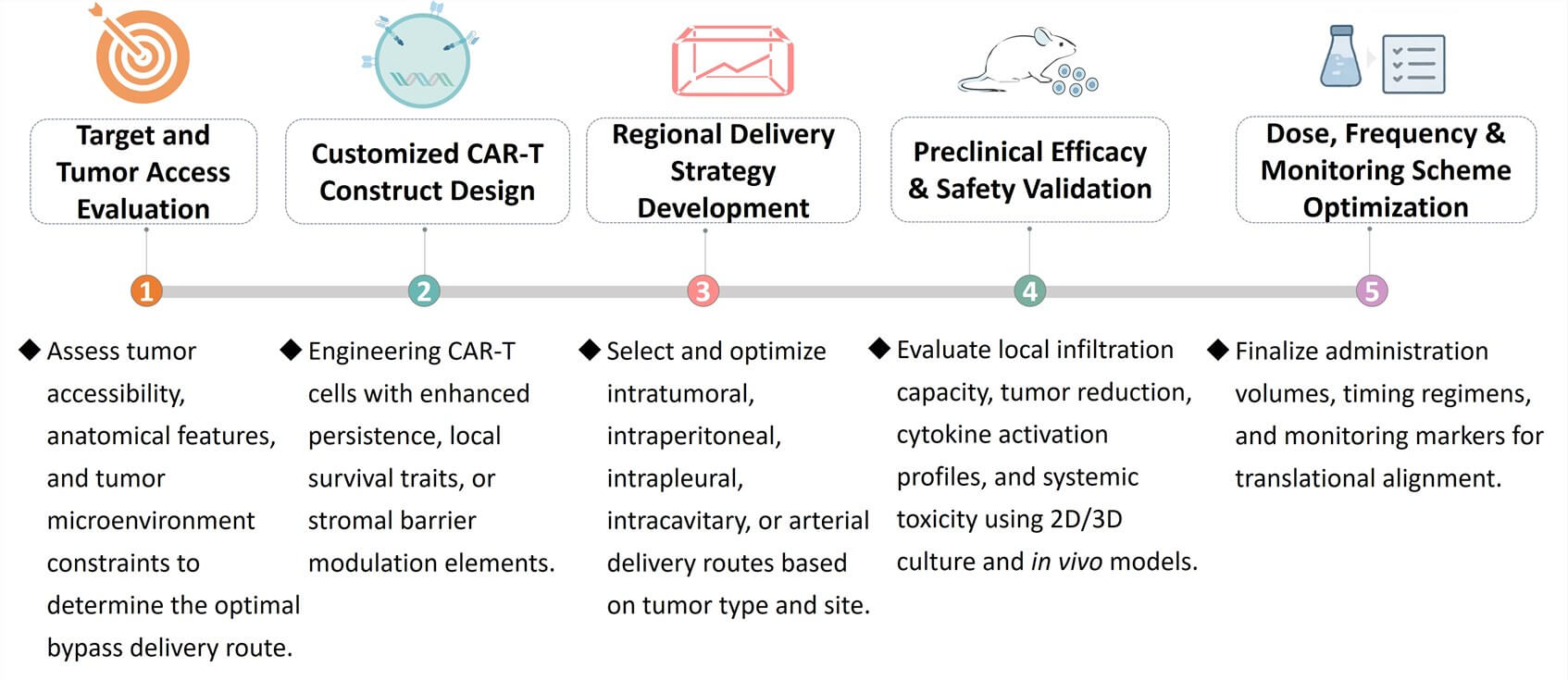
Our integrated service covers target and tumor access evaluation to determine optimal delivery routes, customized CAR-T construct design with enhanced persistence traits, regional delivery strategy development for site-specific administration, preclinical efficacy and safety validation using in vivo models, and optimization of dosing regimens and monitoring schemes for clinical translation.
Types of Our CAR-T Development through Bypass Systemic Trafficking
Minimally invasive microneedles deliver CAR-T cells directly into the tumor tissue. This method ensures controlled release, sustained local concentration, and reduced systemic exposure, improving therapeutic efficacy while maintaining safety for accessible or superficial tumors.
A flexible, implantable mesh allows precise localization and retention of CAR-T cells. The micromesh gradually releases cells into surrounding tumor tissue, enhancing infiltration in irregularly shaped or difficult-to-access solid tumors and improving local anti-tumor activity.
CAR-T cells embedded in a biocompatible fibrin matrix are retained locally and released slowly over time. This enhances penetration into dense or fibrotic tumor tissues, supports cell viability, and can be combined with ECM-modulating agents for improved efficacy.
Polymer–nanoparticle hydrogel protects CAR-T cells from mechanical stress and prolongs their activity within the tumor. This controlled delivery improves infiltration, maintains therapeutic concentration, and minimizes systemic distribution, making it suitable for a variety of solid tumor types.
Unique Features
-
Increased Local Concentration: Direct delivery enables high CAR-T cell accumulation within the tumor core.
-
Reduced Systemic Toxicity: Bypassing systemic circulation lowers the risk of cytokine release syndrome (CRS) and other immune-related adverse events.
-
Enhanced Solid Tumor Penetration: Combining with ECM-degrading modules or local chemokines helps overcome physical barriers in the tumor microenvironment.
-
Flexible Combination: Can be used alongside immune checkpoint inhibitors, chemotherapy, or radiotherapy for synergistic effects.
FAQs
Which tumor types benefit most from bypass trafficking delivery?
Tumors with poor vascular access or dense stromal compartments—such as pancreatic, ovarian, and glioma—commonly benefit.
Can this approach be combined with immune-modulating agents?
Yes, integration with checkpoint inhibitors or cytokine modulators is often effective.
How is dosing determined for regional injection?
Dosing is based on tumor volume, anatomical constraints, and T-cell expansion kinetics.
Are safety concerns different from IV infusion?
Local delivery typically reduces systemic toxicity; however, localized inflammatory responses must be monitored.
Partner with Us
With deep CAR-T development experience, state-of-the-art tumor delivery technologies, and clinically informed regional infusion methods, Creative Biolabs enables more efficient tumor-localized activity. Intra-tumoral and regional CAR-T delivery approaches are proven to improve therapeutic response while minimizing systemic immune activation. Creative Biolabs offers comprehensive expertise across CAR-T research, development, and translational evaluation. Reach out to our team to discuss your project and explore tailored solutions.
Reference
-
Gu, Xinyu et al. "Infusion and delivery strategies to maximize the efficacy of CAR-T cell immunotherapy for cancers." Experimental hematology & oncology vol. 13,1 70. 26 Jul. 2024. Distributed under Open Access License CC BY 4.0, without modification. https://doi.org/10.1186/s40164-024-00542-2