Solid Tumor Targeting CAR-T Development Services: Target Cytokine & Chemokine Milieu
Online Inquiry
Background Service What We Can Offer Workflow Types Highlights FAQs Contact
Creative Biolabs' Solid Tumor Targeting CAR-T Development Service offers a comprehensive solution for overcoming TME resistance by targeting the modulation of the cytokine and chemokine milieu. Featuring precision chemokine receptor engineering and integrated cytokine regulation, this platform enhances CAR-T trafficking, durability, and safety in solid tumor settings. By reprogramming the immunosuppressive landscape into a pro-inflammatory niche, researchers can accelerate development cycles and unlock the next generation of effective and safe solid tumor immunotherapies.
Introduction
CAR T-cell therapy is bottlenecked in solid tumors by poor cell homing and the highly suppressive tumor microenvironment (TME). Creative Biolabs has engineered a sophisticated solution that directly targets the cytokine and chemokine milieu. This involves leveraging CXCR2 and related receptors for precision navigation and deploying survival cytokines (IL-7/IL-15) and resistance receptors to ensure T-cell longevity and resilience against immunosuppression, leading to superior clinical outcomes.
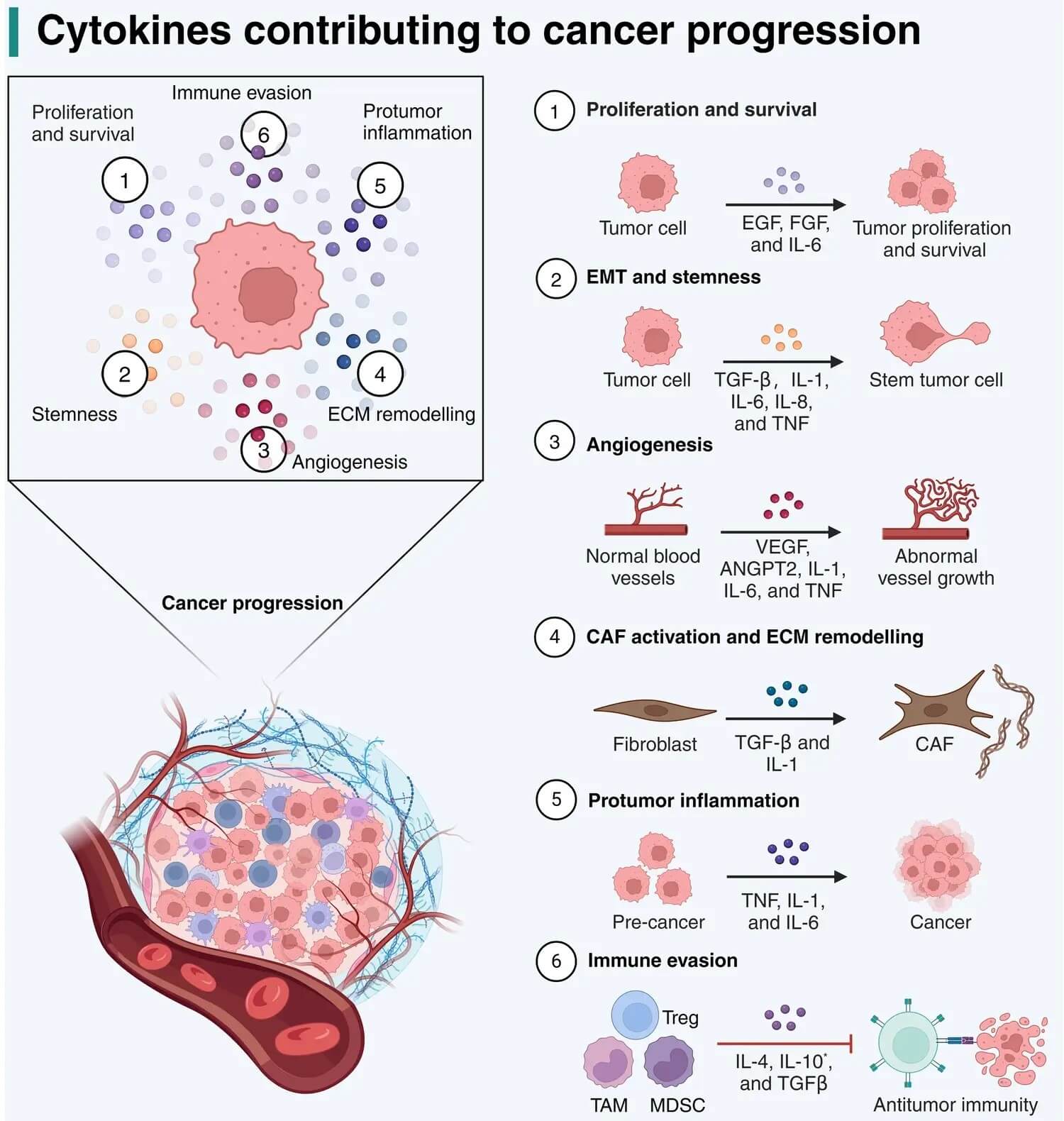 Fig.1 Mechanisms of cytokine-mediated tumor progression.1
Service
Our service delivers genetically engineered CAR-T cells that bypass the most critical failure points in solid tumor treatment: cell exclusion and immunosuppression. We provide modular constructs designed for Homing, Longevity, and TME Resistance, ensuring the final therapeutic product is optimized for deep tumor penetration and sustained anti-tumor activity.
Our solutions include:
-
Precision Homing Modules: Integration of chemokine receptors to actively guide T-cells along high-concentration tumor chemokine gradients.
-
Longevity Modules: Co-expression of survival cytokines (IL-7, IL-15) or constitutively active receptors to preserve the highly potent T-cell memory stem cell phenotype.
-
Resistance Modules: Incorporation of dominant-negative or switch receptors to neutralize inhibitory TME signals, guaranteeing T-cell function is maintained.
Discover How We Can Help - Request a Consultation.
Key Performance Indicators
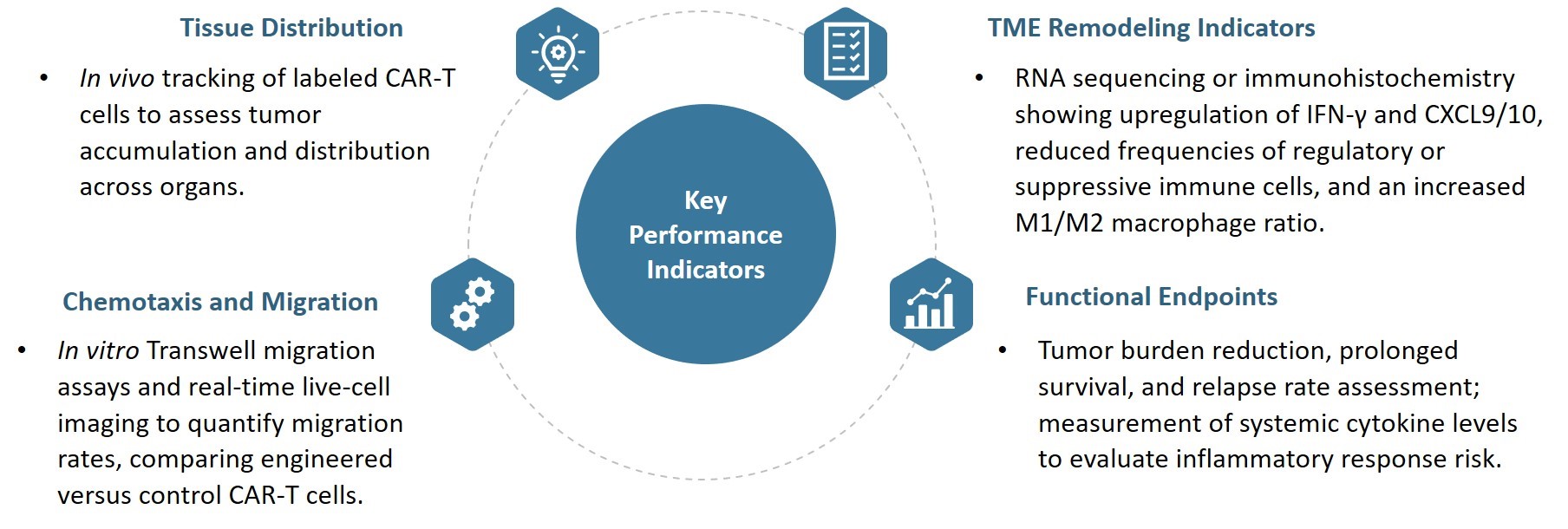
Our Workflow
The required starting materials include the target antigen sequence, tumor/ME chemokine expression data, and the desired CAR backbone with co-stimulatory domain selection.
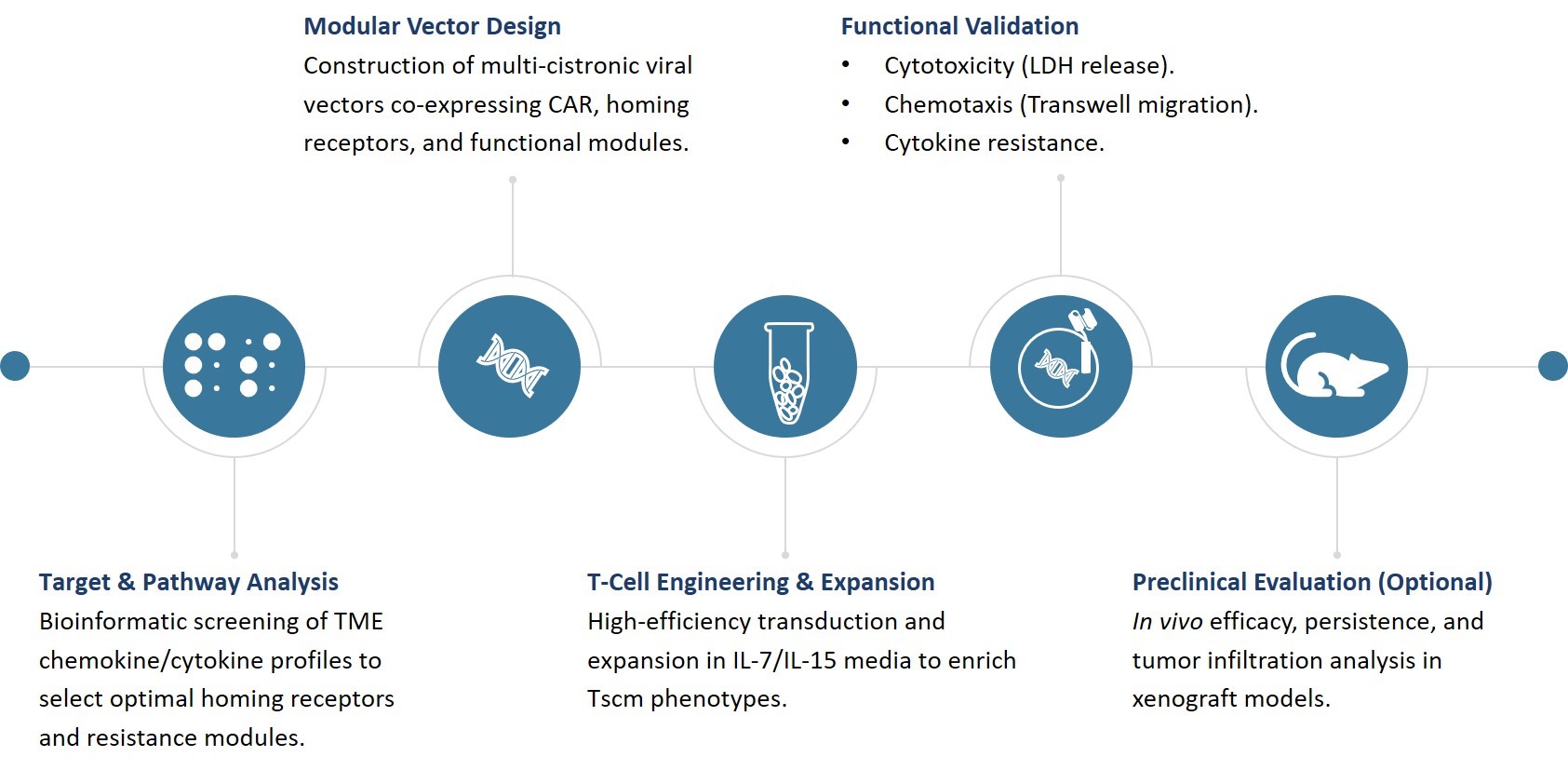
Types of our Solid Tumor Targeting CAR-T Development Services
This service focuses on arming CAR-T cells to secrete key survival and activation signals, primarily common cytokines, either in soluble form or as membrane-bound fusion proteins. This internal fueling mechanism ensures the T-cells survive, expand, and maintain a high-quality memory phenotype even in nutrient-poor or cytokine-deficient TME, promoting long-term persistence.
This strategy tackles immunosuppression head-on by integrating Dominant-Negative Receptors (dnRs). Specifically, the TGF-βRII module renders the CAR-T cell insensitive to the pervasive growth factor TGF-β. By neutralizing this powerful inhibitory signal, the dnR module allows T-cells to proliferate and maintain their cytotoxic function within the hostile TME, a critical step for solid tumor efficacy.
This innovative service utilizes Inverted Cytokine Receptors (ICRs) to flip immunosuppressive signals into activation signals. For example, the ICR module can transform the binding of an inhibitory cytokine like IL-4 into a pro-survival or activation signal. This effectively turns the tumor's own defensive mechanism against it, providing a unique therapeutic advantage.
Core Benefits
-
Integrated Trifecta Engineering: We uniquely address solid tumor challenges through combined homing, longevity, and resistance modules, creating durable, navigational CAR-T cells.
-
Validated TME-Specific Modules: Our chemokine receptors and cytokine payloads are selected from a pre-optimized library backed by published in vivo efficacy data.
-
Integrated Safety Strategy: Platform designs incorporate IL-6/IL-6R blockade compatibility to mitigate cytokine release syndrome risks.
FAQs
Is IL-15 co-expression better than exogenous IL-2 for persistence?
Yes. Membrane-bound IL-15 enhances CD8+ and NK cell persistence without expanding Tregs or causing systemic toxicity, unlike high-dose IL-2.
What are the safety risks of cytokine-secreting CAR-T cells?
We design localized cytokine action and integrate safety measures to manage systemic cytokine release syndrome risks.
Is your platform compatible with my existing CAR vector?
Yes. Our modules (homing receptors, cytokines, and resistance domains) can be integrated into your lentiviral CAR construct.
Partner with Us
Creative Biolabs' Solid Tumor Targeting CAR-T Development Services: Target Cytokine & Chemokine Milieu provides the validated, modular platform necessary to transform your early-stage therapeutic concept into a clinically viable product. By solving the multi-faceted challenges of Homing, Longevity, and TME Resistance, we provide the ultimate foundation for durable anti-tumor responses. To learn more about how our Tri-Factor Engineering Platform can accelerate your solid tumor pipeline and to discuss your specific project requirements, please reach out to our expert team.
Reference
-
Yi, Ming et al. “Targeting cytokine and chemokine signaling pathways for cancer therapy.” Signal transduction and targeted therapy vol. 9,1 176. 22 Jul. 2024. Distributed under Open Access License CC BY 4.0, without modification. https://doi.org/10.1038/s41392-024-01868-3