Introduction to Collectins and Ficolins
Collectins and ficolins play significant roles at several levels of the immune defense of mammals. Previous studies have indicated that collectins are calcium-dependent carbohydrate-recognizing proteins that have been identified in the plasma and on the mucosal surfaces. Two types of collectins have been confirmed, including surfactant protein A (SP-A) and surfactant protein D (SP-D), and the C-type carbohydrate recognizing domains (CRDs) in collectins are capable of binding with collagenous regions to further recognize pathogens. Meanwhile, a wide variety of ficolins, such as L-ficolin, M-ficolin, and H-ficolin, have shown their roles in activating the lectin pathway of the complement system to regulate the innate immune responses. Moreover, the collectins can selectively bind to acetyl-mannosamine (ManNAc), mannose, as well as N-acetyl-glucosamine (GlcNAc) and present sugar preferences in mammals. For example, SP-D shows strongly binding for a disaccharide (maltose) in mice models. Additionally, the carbohydrate-binding activity of ficolins is controlled by the fbg domain, which consists of 200-250 residues. A series of proteins containing fbg domain, such as fibrinogens and ficolins, have also been detected and evaluated by different functional assays.
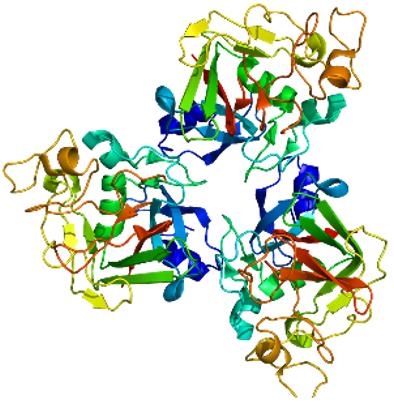
Fig. 1 M-ficolin.1
The Collectins and Ficolins-Related Diseases
Aberrant regulation of the complement system has been related to a number of diseases, such as diabetes, cancers, as well as immunodeficiency diseases. Recently, many reports have illustrated that the abnormal expression or dysregulation of collectins and ficolins may also play a major role in the occurrence and development of human diseases. For example, the expression level of ficolin-2 and FCN2 gene mutations have been confirmed in many disease models, including several infectious diseases. The data have suggested that FCN2 promoter variants can affect the ficolin-2 expression in serum samples and can be considered as a susceptibility factor for infection diseases. As a consequence, much effort has been taken to identify the function of collectins and ficolins, which can provide new insight into the therapeutic options to inhibit disease progression.
Collectins and Ficolins in the Innate Immune System
Many reports have suggested that collectins and ficolins are essential to mediate the innate immune system in mammals. The structures of collectins are similar to complement C1q, the main recognition molecule in the classical pathway of the complement system, suggesting their potential in complement-based drug development. Furthermore, numerous investigations have indicated that ficolins and mannose-binding lectin (MBL) share structural and functional similarities in activating the lectin pathway of innate immune responses against infections. In addition, the sequence of collectins and ficolins are very different, except for the similar collagen-like sequences at N-terminal polypeptides. The C-terminal polypeptides of collectins and ficolins consist of CRDs and fibrinogen domain, respectively. Currently, collectins and ficolins seem to recognize the surface sugar codes of a wide range of microbes and can bind to various cell surface carbohydrate molecules. As a result, studies of complement activation based on collectins and ficolins on microbial surfaces are capable of providing a unique opportunity in the complement therapeutics filed.
Creative Biolabs offers a full range of complement component-related services and products. If you’d like to know more information, please directly contact us.
Reference
-
By Emw - Own work, CC BY-SA 3.0, https://commons.wikimedia.org/w/index.php?curid=8767878
Related Product
For Research Use Only.
Related Sections: