Why Hemolysis Inhibition Still Matters
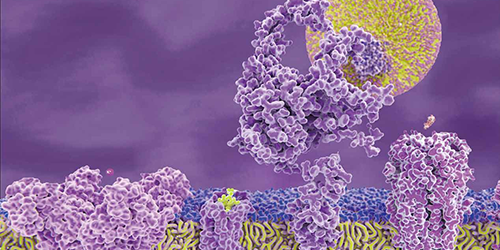
Unlike assays that measure a single protein interaction, the hemolysis assay is a functional, systems-level readout. It doesn't just tell you if your drug binds to C5, it tells you if that binding event is sufficient to prevent the entire downstream cascade from forming the Membrane Attack Complex (MAC) and punching a hole in the cell. It captures the integrated outcome of the entire pathway, making it a crucial tool for:
-
Mechanism of Action (MoA) Confirmation: Verifying that your inhibitor actually works as intended in a biologically complex environment.
-
Potency Assessment: Providing a key metric for the concentration-dependent effectiveness of your candidate.
-
Comparative Analysis: Benchmarking your novel candidate against established standards-of-care.
Great Minds Choose Creative Biolabs
Sample and Material Guidance
For Your Test Articles
-
Provide concentration-verified stocks
-
Include formulation buffer for vehicle controls
-
Let us know if the modality is temperature-sensitive or light-sensitive
For Matrix-Dependent Questions
-
We'll advise exact volumes
-
If you want cross-donor robustness, we can source pooled serum and single-donor lots with documented complement activity
Shipping
-
Use cold packs (short haul) or dry ice (long haul) per modality
-
We provide pre-filled chain-of-custody forms
Every project is unique, and we provide extensive customization to maximize relevance.
Design Your Customization
Popular Add-On Assays
Design Your Customization
Case Studies
Case 1
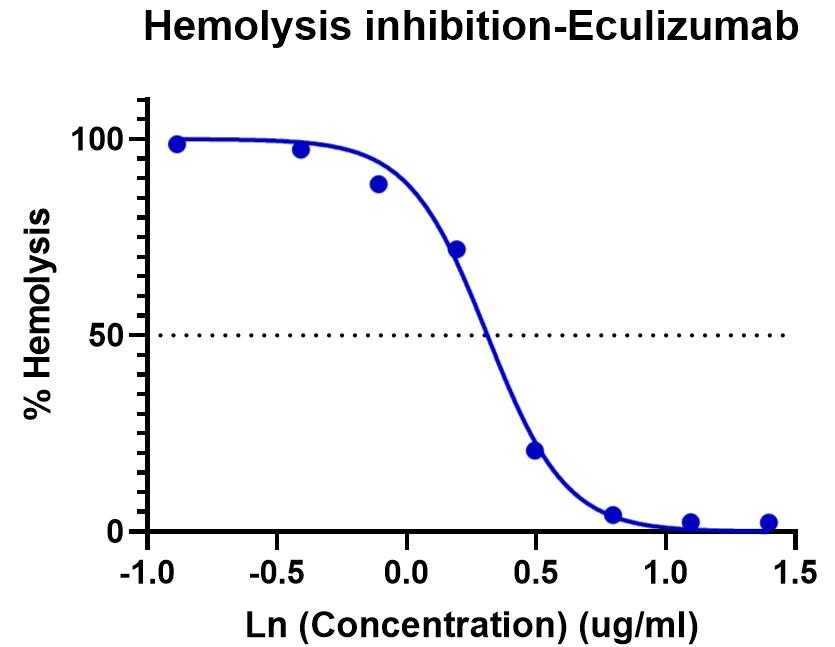
Test the IC50 of Eculizumab in CH50 hemolysis assay
This assay was performed to test the IC50 of Eculizumab in CH50 hemolysis assay. Eculizumab is a potent C5 inhibitor. It inhibits the cleavage of C5 into C5a and C5b, therefor inhibits the formation of MAC. After hemolysis assay, the hemolysis was calculated and the curve was draw and finally obtained the IC50 of Eculizumab.
Fig. 2 Hemolysis inhibitor assay.
Case 2
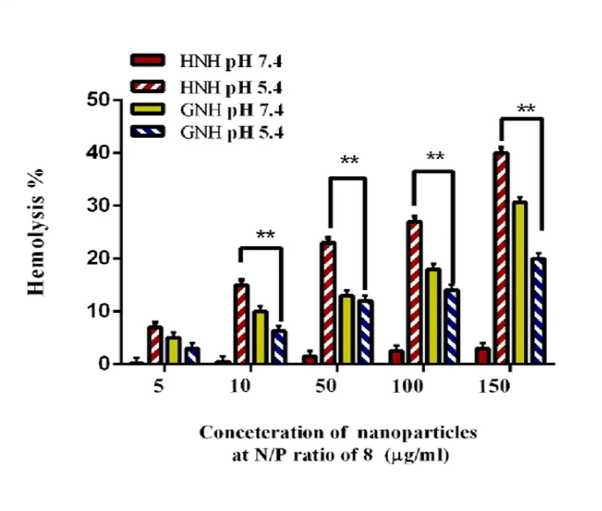
A hemolysis assay was carried out to investigate and compare the membrane release activity of HNH and GNH nanoparticles
A hemolysis assay was carried out to investigate and compare the membrane release activity of HNH and GNH nanoparticles at physiological pH (7.4) and endosomal pH (5.4). Both of nanoparticles were able to lyse red blood cells at pH 5.4 at different concentrations. However, the HNH showed a statistically significant higher activity than GNH at this pH. GNH nanoparticles, on the other hand, demonstrated the hemolytic activity between 6 to 30% as a function of nanoparticles concentration at pH 7.4, while the HNH nanoparticles lost their activities at this pH.
Fig. 3 Hemolysis assay of GNH and HNH Nanoparticles.
1,2
References
-
Alipour, Mohsen, et al. "Nano-biomimetic carriers are implicated in mechanistic evaluation of intracellular gene delivery." Scientific reports 7.1 (2017): 41507. https://doi.org/10.1038/srep41507
-
Distributed under Open Access license CC BY 4.0, without modification.
Frequently Asked Questions
What species of red blood cells do you use?
We can accommodate requests for RBCs from human and other species, such as rat, mouse, rabbit, or dog, depending on your specific research needs. Please specify your requirements during your project inquiry.
What types of samples do you accept?
We accept a wide range of test articles, including but not limited to small molecules, peptides or proteins, natural product extracts, and other biologics. Samples should be provided dissolved in a suitable solvent. Please provide the exact concentration and solvent information with your submission. The required amount depends on the concentration range and the number of replicates you need. We will provide detailed sample requirements before the project begins.
What controls are standard in your studies?
Positive inhibition control (pathway-appropriate reference), negative control (vehicle/isotype), heat-inactivated serum, and—when MOA matters—component-depleted serum ± add-back. Per-plate standards normalize day-to-day drift. Outlier rules and re-run criteria are documented.
Which add-on assays pair best with hemolysis inhibition?
Frequently: C3/C4 deposition, C5b-9 quantification, C3a/C5a panels, opsonization/phagocytosis, and surface-activation models.
Can I receive preliminary updates during the experiment?
We understand your interest in the project's progress. For longer-term projects or upon your specific request, our project manager can provide you with timely updates at key milestones (e.g., upon sample receipt, after assay completion). Our goal is to maintain transparent and seamless communication.
How do I get a quote?
You can request a quote by contacting our business development team via the contact form on our website, email, or phone. Please provide as much detail as possible about your project (e.g., number of compounds, desired concentration range) so we can provide an accurate quotation.















 Fig. 1 Workflow of haemolysis inhibition assay.