Product List Background Ficolin-3 Functional Service
Background
Ficolin-3, also named H-ficolin, is a plasma protein first discovered in 1990 as an autoantigen. It is a soluble pattern recognition molecule (PRM) of the innate immune system and binds to acetylated molecules, for example, as found in acetylated carbohydrate structures or on proteins via its fibrinogen-like recognition domain. The fitting patterns recognized by ficolin-3 may be present on apoptotic and necrotic cells, and this offers ficolin-3 the possibility of acting as an initiator of scavenging actions. Besides, ficolin-3 plays an important role in the complement system which can activate the lectin pathway (LP), causing both anti-microbial defense and homeostatic balance. To initiate this activation, ficolin-3 relies on the activation of attached enzymes, i.e., so-called Mannose-binding lectin (MBL)-associated serine proteases (MASPs). When compared to ficolin-1, ficolin-2, MBL, and collectin-LK, ficolin-3 is the most abundant of the five PRMs of the LP.
Research showed that a frameshift mutation in exon 5 (FCN3 + 1637delC) of the FCN3 gene, resulting in premature termination of transcription was demonstrated to be involved in lower levels of ficolin-3 in the heterozygous state. It also revealed that ficolin-3 participate in the clearance of dying host cells. Furthermore, ficolin-3 deficiency is a rare condition and is related to both infection and autoimmune disease including systemic lupus erythematosus (SLE). A study has proven that ficolin-3 deficiency causes an 8-time increased odds of having a disease (p<0.05).
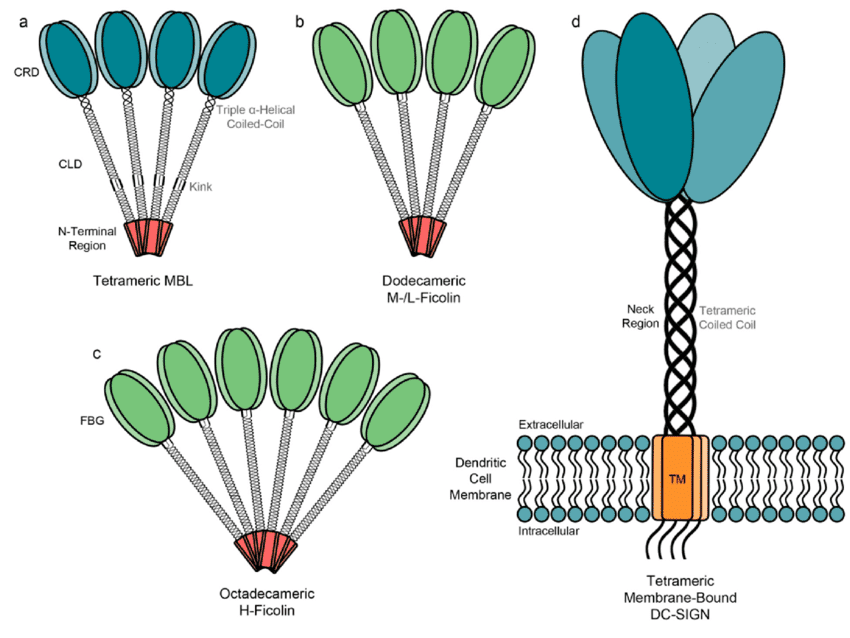 Fig. 1 Structure of H-ficolin.1, 3
Ficolin-3 Functional Service
Creative Biolabs provides a broad array of ficolin-3-focused supplies, encompassing anti-ficolin-3 antibodies, ELISA kits, and human complement ficolin-3 proteins. These meticulously designed tools are essential in propelling research initiatives aimed at formulating therapeutic approaches for various diseases.
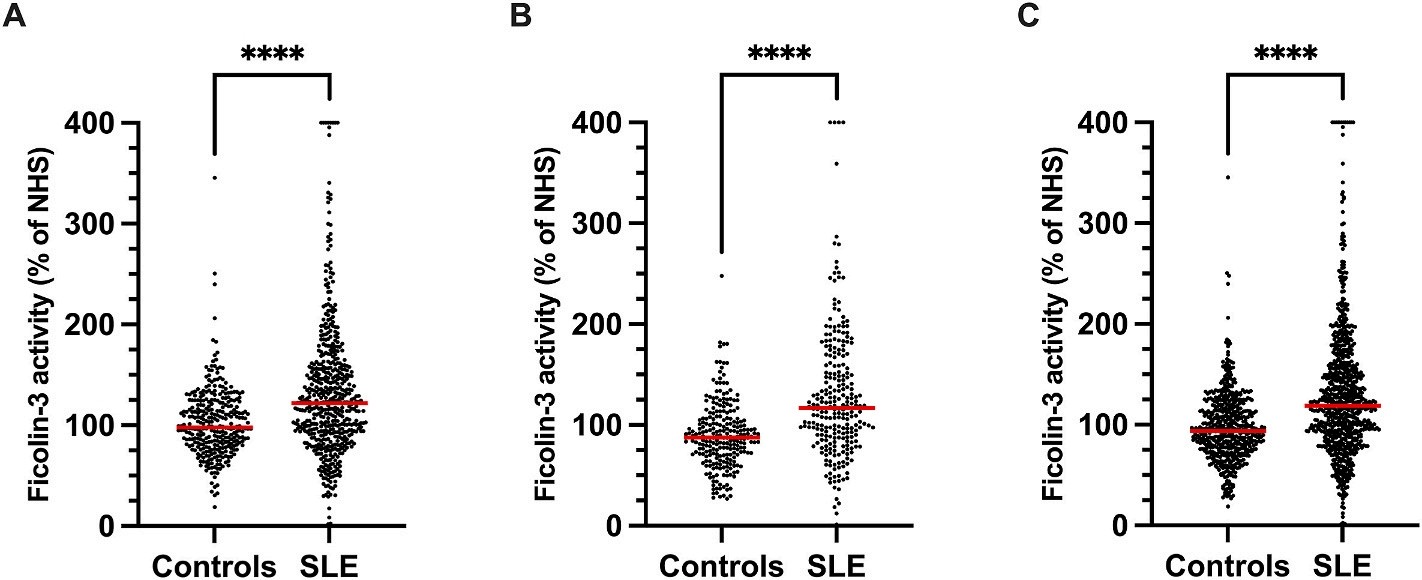 Fig.2 Activity of ficolin-3 in Individuals with systemic lupus erythematosus.2, 3
Researchers targeted the lectin pathway to elucidate its role in Systemic Lupus Erythematosus (SLE), highlighting ficolin-3 as a focal point due to its predominant role in complement activation. They assessed ficolin-3 activity in Swedish SLE patients and controls, finding that higher ficolin-3 activity significantly correlated with a cluster characterized by specific antibodies and increased lymphopenia and hematological disease rates. Genetic analysis revealed that low ficolin-3 activity linked to variants near the FCN3 gene reduced the frequency of these manifestations and autoantibodies. Although FCN3 gene loss-of-function variants weren’t linked to SLE broadly, a subset showed acquired ficolin-3 deficiency post-diagnosis, underscoring ficolin-3’s role in modulating disease pathways.
Creative Biolabs presents a wide selection of ficolin-3-related services, comprising binding evaluations and supplementary functional analyses, meticulously customized to aid their distinguished clients in clinical and research pursuits.
References
-
Mason, Christopher P., and Alexander W. Tarr. "Human lectins and their roles in viral infections." Molecules 20.2 (2015): 2229-2271.
-
Lindelöf, Linnea, et al. "A survey of ficolin-3 activity in Systemic Lupus Erythematosus reveals a link to hematological disease manifestations and autoantibody profile." Journal of Autoimmunity 143 (2024): 103166.
-
Distributed under Open Access license CC BY 4.0, without modification.


 INQUIRY
 Datasheet