Electrochemical biosensor is a strong candidate for cancer theranostics owing to their advantage of ultra-sensitivity, high selectivity, low cost, quick readout, and simplicity. They have played a critical role in the transition towards point-of-care (POC) diagnostic devices. Modern electrochemical bio-affinity sensors, such as DNA- or immunosensors, offer remarkable sensitivity essential for early cancer detection. With rich experience in electrochemical biosensor development, Creative Biolabs provides cancer electrochemical biosensing services as well as offer customized sensor products for worldwide customers.
Overview of Cancer Detection
Cancers are normally induced by uncontrollable cell proliferation which is accompanied by a series of cellular events, such as specified genomic alterations, following transcriptome and protein alteration, tumor formation, cancer cell migration, and tumor metastasis. Besides, the tumor related microenvironment also changes. Traditional methods for detecting cancer, such as histopathological diagnostic techniques and immunological methods often request complex operation, long turnaround time and experienced personnel. These assays are difficult to obtain an early diagnosis and prognosis quickly for malignant tumors. Compared with traditional technology, electrochemical technique has the advantages of rapid detection, high sensitivity and specificity in the detection of tumor cells. Electrochemical biosensors provide powerful tools for cancer early diagnosis, which have been successful in differentiating tumor cells from normal cells and targeted detection of localized or circulating tumor cells (CTCs).
Advancing Cancer Detection by Creative Biolabs
Sensitive biosensors based on various electrochemical techniques have been widely used in the detection of cancer cells. The use of electrochemical biosensors for cancer detection can be carried out by Creative Biolabs from the following three major aspects.
- Electrochemical immunosensors for tumor cell detection
Electrochemical immunosensors constructed on the basis of specific reactions between antigens and antibodies, specific recognition function of adapters and the cell impedance principle have successfully achieved high-sensitivity linear detection of various cancer cells.
- Electrochemical nucleic acid biosensors in tumor cell detection
Electrochemical nucleic acid biosensors use nucleic acid molecules as molecular recognition elements, whose principle is to fix a single strand of oligonucleotides on the electrode and hybridize with the target DNA, and detection of target substances by detecting changes in electrochemical parameters before and after hybridization. In recent years, quantum dots (QDs) and aptamer are usually combined to capture cells.
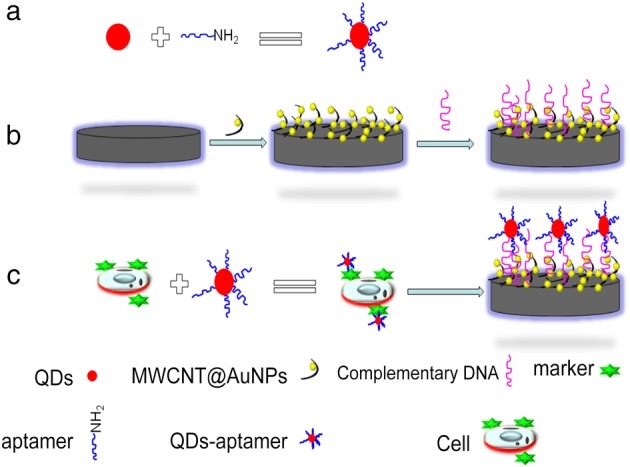 Fig.1 Electrochemical probes based on QD-aptamers were constructed to detect tumor cells.1, 2
- Detection of CTCs by electrochemical biosensors
It is necessary to develop highly specific and sensitive tools to capture CTCs which accounts for only 0.004% of the number of cells in the blood. Compared with other biosensors, electrochemical biosensor has higher sensitivity, simplicity and low cost. Different new nanomaterials are being used to modify electrodes to amplify biometric event signals, narrow detection range and improve detection sensitivity. More specific electrochemical probes have been constructed to improve the ability to capture CTCs.
Services
- Integration of electrochemical biosensor with liquid biopsy
- Integration of electrochemical biosensor with microfluidic chips
- Animal level and in vivo detection
- Various electrochemical measurement methods: amperometry / potentiometry…
New advancements of electrochemical biosensor used in cancer detection have been widely reported recent years. If you are interested in our services, please feel free to contact us for more information.
Published Data
1. An Electrochemical DNA Biosensor Based on Immobilized ZnO Nanowires for Breast Cancer 1 (BRCA1) Gene
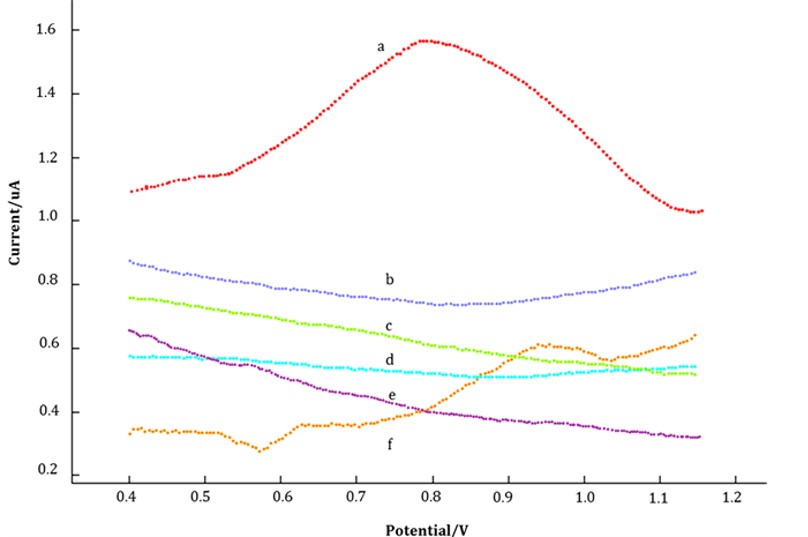 Fig.2 DPV responses obtained for different sensing surfaces and after hybridization with different DNA targets.3,2
This study developed an electrochemical DNA biosensor for rapid detection of the breast cancer 1 (BRCA1) gene. The sensor utilized a short oligonucleotide DNA probe immobilized on zinc oxide nanowires (ZnONWs), which were chemically synthesized on a gold electrode using a hydrothermal method. Field emission scanning electron microscopy (FESEM) analysis revealed that the ZnONWs are uniform, dense, and oriented perpendicularly to the substrate. Differential pulse voltammetry (DPV) was used to study the DNA probe-target recognition in a 0.1 M acetate buffer solution at pH 7.00, showing an oxidation signal at +0.8 V upon hybridization. The biosensor detected the target sequence in the 10.0–100.0 μM range, with a detection limit of 3.32 μM. The results demonstrated that the ZnONWs/Au electrode platform is effective for DNA immobilization and detection.
2. Label-Free Electrochemical Biosensor Using a Graphene-Based Dual-Modal Probe for the Detection of Breast Cancer Cells
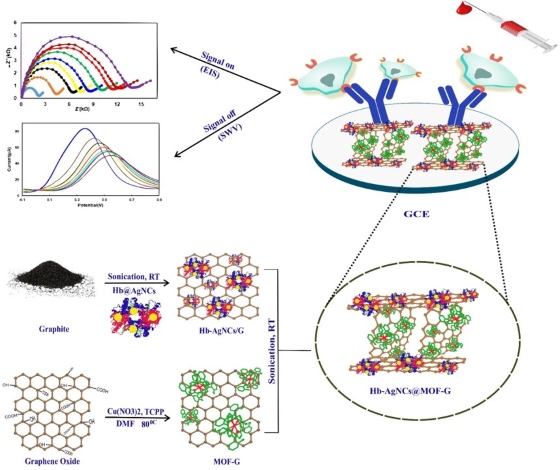 Fig.3 Schematic of breast cancer cell detection using the engineered Hb-AgNCs@MOF-G nanohybrid.4,2
This study developed an electrochemical biosensor for the detection of breast cancer cells, employing silver nanoclusters encapsulated in hemoglobin and Cu(II)-porphyrin-based metal-organic frameworks (BioMOF), integrated into a graphene-enhanced nanohybrid probe. The Hb-AgNCs@MOF-G probe exhibited excellent electrochemical activity, porosity, dispersity, and an extensive area for effective functionalization. Ultra-small 5 nm particles were fabricated via a green ultrasonic-assisted stirring technique and immobilized on a glassy carbon electrode, producing detectable signals through ferricyanide/ferrocyanide redox probes. The immunosensor detected as low as 2 cells/mL through EIS and 16 cells/mL with SWV, covering a wide concentration range from 102 to 5 × 10⁴ cells/mL. The sensor showed enhanced selectivity (5- to 16-times) and strong detection in human blood, with recovery efficiencies ranging from 94.8–111%. This biosensor could simplify early cancer diagnosis and patient monitoring, eliminating the need for labeling or signal amplification.
References
- Zhang, Zhenhua, et al. "Application of electrochemical biosensors in tumor cell detection." Thoracic cancer 11.4 (2020): 840-850.
- Distributed under Open Access license CC BY 4.0, without modification.
- Mansor, Nur Azimah, et al. "Detection of breast cancer 1 (BRCA1) gene using an electrochemical DNA biosensor based on immobilized ZnO nanowires." Open Journal of Applied Biosensor 3.02 (2014): 9.
- Zare, Ali-Akbar, et al. "Label-free electrochemical cancer cell detection leveraging hemoglobin-encapsulated silver nanoclusters and Cu-MOF nanohybrids on a graphene-assisted dual-modal probe." Scientific Reports 13.1 (2023): 21980.
For Research Use Only.