Our team possesses deep, specialized knowledge and extensive hands-on experience specifically in Europium and Ruthenium labeling chemistries, ensuring superior conjugation efficiency and label stability for your target biomolecules.
At Creative Biolabs, we offer unparalleled special labeling services for antibodies and proteins. Leveraging our vast experience and cutting-edge technology platforms, we deliver bespoke conjugation solutions that precisely meet your research demands. This translates into superior signal-to-noise ratios, enhanced sensitivity, and ultimately accelerates your journey towards groundbreaking scientific discovery.
Introduction to Special Labeling
The landscape of biological research and diagnostics increasingly demands biomolecular detection with exquisite sensitivity, reliability, and reproducibility. In recent years, reactive dyes conjugated with electrochemiluminescent (ECL) moieties have emerged as a powerful solution, finding widespread application across medical diagnostics, environmental analysis, and food safety monitoring. Unlike traditional fluorophores, which are prone to photobleaching and high background, ECL offers a robust, time-gated detection mechanism. The most efficient and widely utilized ECL reactions to date are centered around rare-earth metal-ligand complexes, particularly those involving Europium and Ruthenium. These complexes possess significantly longer fluorescence lifetimes compared to conventional organic dyes like fluorescein or rhodamine, thereby enabling both time-gated and time-dependent measurements that dramatically reduce background interference. Critically, these labeling reactions are characterized by their rapidity and the mild conditions required for conjugation, preserving the biological integrity of the labeled biomolecule.
Spotlight on Efficient Special Labels:
| Europium (Europium Chelates/Cryptates) | Ruthenium (Ruthenium Tris(bipyridine) Complexes) | |
|---|---|---|
| Mechanism | Europium-based labels typically involve a chelate or cryptate structure surrounding the Europium ion. When excited by light, energy is transferred to the Europium ion, which then emits light at a characteristic long-lived wavelength. In ECL applications, an electrochemical reaction generates a light-emitting intermediate. | Ruthenium complexes, particularly those with bipyridine ligands (e.g., [Ru(bpy)₃]²⁺), undergo electrochemical oxidation to form an excited state. This excited state then reacts with a co-reactant (like tripropylamine) to generate light. |
| Advantages | The primary advantage of Europium labels is their exceptionally long fluorescence lifetime (microseconds to milliseconds), allowing for time-resolved fluorescence detection. This capability effectively discriminates against short-lived background fluorescence from biological samples, leading to superior signal-to-noise ratios. They also exhibit high quantum yields and excellent photostability. | Ruthenium labels are renowned for their high ECL efficiency and are readily available, offering high sensitivity and a broad dynamic range. Like Europium, they exhibit a relatively long luminescence lifetime, contributing to reduced background. The reaction is stable and occurs under mild, physiological conditions. |
| Applications | Ideal for high-sensitivity immunoassays (e.g., TR-FRET, DELFIA), especially in multiplexing scenarios, clinical diagnostics where low analyte concentrations are critical, and imaging applications requiring minimal background. | Widely used in automated clinical analyzers, drug discovery for high-throughput screening, highly sensitive detection in complex biological matrices, and environmental monitoring. |
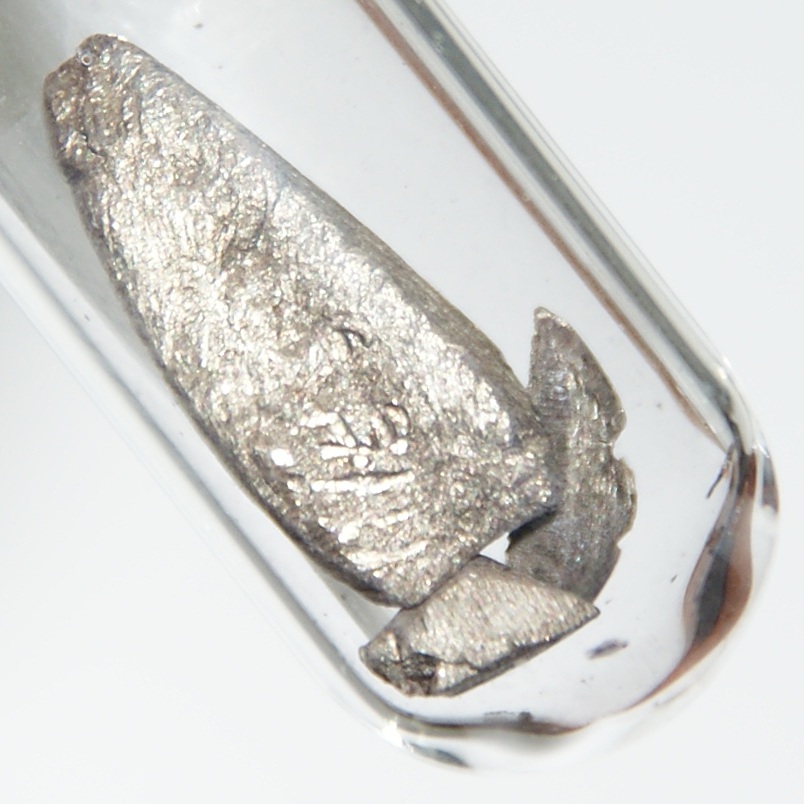 Fig.1 Weakly oxidized europium.3
Special Labeling Services Provided by Creative Biolabs
Creative Biolabs provides comprehensive labeling and testing services for diverse antibody combinations, facilitating rapid identification of target receptors. Our special labeling services are designed to provide you with custom-engineered biomolecular tools, either as an extension of our antibody production and purification projects or as a stand-alone service. Our highly experienced team combines profound expertise in conjugation chemistry with an in-depth understanding of biological applications, ensuring that your labeled molecules perform optimally in your specific assays. From initial consultation to final quality control, we prioritize fidelity, sensitivity, and functional integrity, empowering your research with reagents that truly excel.
Comprehensive Service Offerings:
Custom Antibody & Protein Conjugation
Precise and stable conjugation of your proprietary or commercially available antibodies and proteins with Europium, Ruthenium, or other specialized labels.
Multiplexing Solutions
Design and execution of multi-label strategies for simultaneous detection of multiple analytes, optimizing sample usage and data complexity.
Small Molecule & Peptide Labeling
Expert labeling of small molecules and peptides for ligand-binding assays, drug screening, and cell penetration studies.
Advanced Purification & Characterization
Rigorous purification steps to ensure high purity of labeled products, followed by comprehensive characterization including spectrophotometry, mass spectrometry, and functional validation.
Published Data
1. Magnetic Graphene-Based Extraction and Antibody-Labeled CdTe QDs Detection Electrochemiluminescent Immunoassay
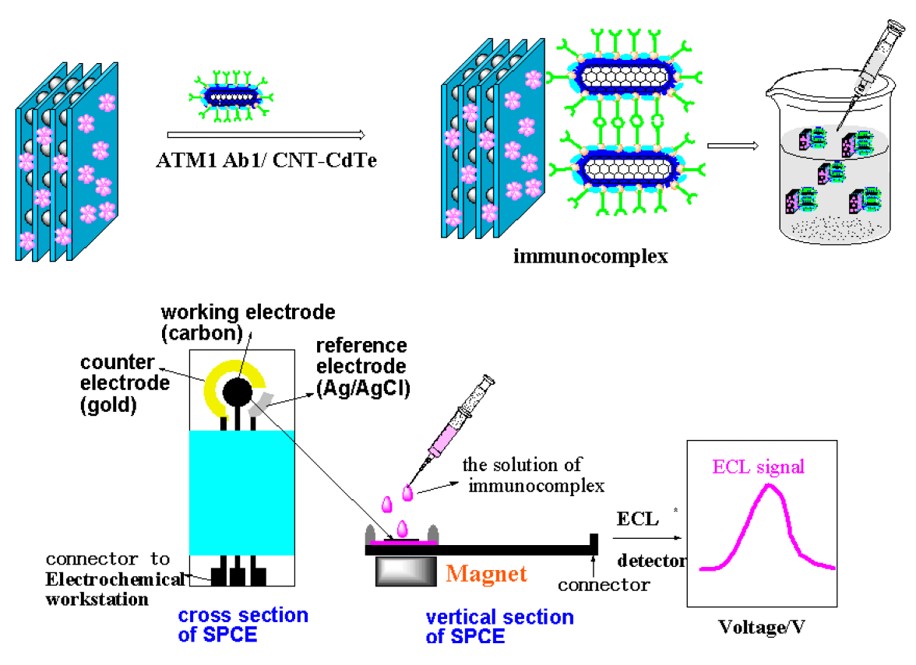 Fig.2 The sandwich ECLIA procedure for detection of ATM1.1
In this work, researchers presented an ultrasensitive electrochemiluminescent immunoassay (ECLIA) for detecting aflatoxin M1 (ATM1) in milk. The assay utilized magnetic Fe3O4-graphene oxide (Fe-GO) as an absorbent and antibody-labeled CdTe quantum dots (CdTe QDs) as signal tags. Fe3O4 nanoparticles were immobilized on graphene oxide to form magnetic nanocomposites for ATM1 adsorption and extraction. The primary antibody (ATM1 Ab1) was conjugated with CdTe-carbon nanotube nanocomposite to create the signal tag for detection. The method demonstrated exceptional sensitivity for detecting ATM1 in milk, achieving a detection limit of 0.3 pg/mL, making it suitable for dairy industry labs. Compared to ELISA, it offered improved sensitivity, faster analysis time, and simpler sample preparation, making it ideal for rapid, high-throughput screening of mycotoxins in food.
2. Sensitive Time-Resolved Fluorescence Immunoassay Based on the Combination of Europium with the Anti-Oxyfluorfen Monoclonal Antibody
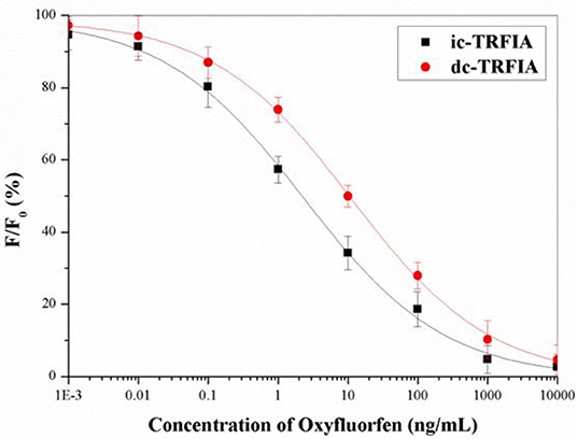 Fig.3 The standard curve of TRFIA for oxyfluorfen.2
In this paper, lanthanide europium (Eu) with autofluorescence properties was chosen as a marker to label the monoclonal antibody of oxyfluorfen for developing two time-resolved fluorescence immunoassays (TRFIA): direct competition (dc-TRFIA) and indirect competition (ic-TRFIA). The methods were applied to analyze both spiked and real samples, with results correlated to gas chromatography-electron capture detection (GC-ECD) for accuracy verification. The developed TRFIA methods demonstrated high precision and reliability for detecting oxyfluorfen residues. This ultrasensitive, rapid, cost-effective approach offers a promising tool for high-throughput screening and monitoring oxyfluorfen for environmental and agricultural products.
Features of Our Services
Profound ECL Labeling Expertise
Flexible Service Options
We offer both fully custom project design, where we develop a labeling strategy from concept to completion, and customized projects that integrate seamlessly with your existing protocols, catering to diverse client requirements worldwide.
Stringent Quality-Controlled Services
Every conjugation service is executed under rigorous quality management, leading to well-characterized labeled products. Our services are fully supported by comprehensive technical documentation and expert consultation.
Expedited Project Timelines
We are committed to accelerating your research progress through our efficient workflow and dedicated project management, ensuring a fast turnaround time without compromising quality, all at a competitive price point.
Post-Conjugation Functional Validation
Beyond chemical characterization, we offer optional functional validation of your labeled biomolecules in relevant assay systems, providing empirical proof of their biological activity and performance in your intended application.
Q&A
-
Q: My target protein is expressed at very low levels. Can special labeling really help with its detection?
A: Absolutely. Special labels like Europium and Ruthenium are particularly suited for detecting low-abundance targets due to their inherent high quantum yields and the ability to minimize background noise through time-resolved or ECL detection. This allows for significantly lower limits of detection compared to conventional methods, making them ideal for challenging assays involving scarce biomolecules.
-
Q: Can you assist me in choosing the most appropriate label for my specific application?
A: Yes, this is a cornerstone of our service. Our scientific team works collaboratively with you from the outset. We thoroughly assess your target molecule, assay format, detection instrument capabilities, and research goals to recommend the optimal labeling strategy, including the most suitable label type (Europium, Ruthenium, or others), conjugation chemistry, and purification methods to ensure your project's success.
-
Q: I need to label a small molecule, not a protein or antibody. Is this something you can handle?
A: Absolutely. Our expertise extends beyond large biomolecules. We are proficient in the custom labeling of a wide range of small molecules and peptides. Our chemists will work with you to identify suitable reactive groups on your small molecule and select the appropriate conjugation chemistry to ensure stable and functional labeling for your specific research needs.
-
Q: Can you provide services for multiplexing, where I need to detect multiple targets simultaneously?
A: Yes, multiplexing is a key application for our special labeling services. We can design and implement multi-label strategies using distinct, spectrally resolvable labels, including different Europium chelates or combinations of Europium and Ruthenium, to enable the simultaneous detection of multiple analytes within a single sample, optimizing sample usage and data acquisition efficiency.
-
Q: Are your special labeling services compatible with automated high-throughput screening platforms?
A: Yes, the labels we utilize, particularly Europium and Ruthenium, are highly compatible with automated high-throughput screening (HTS) platforms commonly used in drug discovery and diagnostics. Their robust signal, minimal background, and long-lived emission properties make them ideal for rapid and reliable detection in large-scale automated assays, enabling efficient screening of vast compound libraries.
Creative Biolabs is committed to providing high-quality IVD antibody development services for worldwide customers. With rich experience and longtime expertise, we can offer valuable bioconjugation services in your development of diagnostics, bioassays as well as drug formulations. No matter which fields you are working, we are here for help. Importantly, our experienced scientists can assist you to select the most appropriate label methods for your research.
If you are interested in learning more about Creative Biolabs’ special labeling service, please feel free to contact us and get exclusive technical support services. Our project manager will get in touch with you within 24 hours and help you design an appropriate labeling method for your specific requirements.
References
- Gan, Ning, et al. "An ultrasensitive electrochemiluminescent immunoassay for Aflatoxin M1 in milk, based on extraction by magnetic graphene and detection by antibody-labeled CdTe quantumn dots-carbon nanotubes nanocomposite." Toxins 5.5 (2013): 865-883. Distributed under Open Access license CC BY 3.0, without modification.
- Sheng, En Ze, et al. "Sensitive time-resolved fluorescence immunoassay for quantitative determination of Oxyfluorfen in food and environmental samples." Frontiers in chemistry 8 (2021): 621925. Distributed under Open Access license CC BY 4.0, without modification.
- Distributed under CC BY 3.0, from Wiki, without modification.
For Research Use Only.