
Antibiotic induced Diarrhea Modeling & Pharmacodynamics Service
Creative Biolabs offers a variety of well-established models to evaluate the efficacy of antiemetic drugs. These models are customized to meet specific research needs, utilizing advanced technologies to assess the effectiveness of potential therapies in treating emesis. Our expert team provides comprehensive support throughout the process, from experimental design to data analysis.
Introduction
Emesis, or vomiting, is a complex reflex that involves the forceful expulsion of stomach contents through the mouth, often triggered by a variety of stimuli. It can be induced by toxins, infections, medications (such as chemotherapy drugs), or gastrointestinal disorders. The process is primarily regulated by the brainstem’s vomiting center, which integrates signals from the gastrointestinal system, vestibular system, and other sensory inputs. While emesis can serve as a protective mechanism to expel harmful substances from the body, it can also be a debilitating symptom, especially when chronic or induced by treatments like chemotherapy, leading to significant patient distress. There are several forms of emesis based on their causes. Acute emesis typically occurs in response to sudden triggers like food poisoning or infections, while chronic emesis may result from ongoing conditions such as gastrointestinal diseases, neurological disorders, or medication side effects. Understanding the mechanisms of emesis and developing effective treatments is crucial for improving patient quality of life, particularly in those undergoing cancer therapy.
Disease Models and Applications
The antibiotic-induced diarrhea model is a preclinical tool used to study the gastrointestinal disturbances caused by antibiotics, which are often associated with altered gut microbiota and diarrhea. In this model, rodents are administered broad-spectrum antibiotics, such as ampicillin, clindamycin, or ciprofloxacin, to induce gastrointestinal disruptions. The antibiotics disrupt the normal gut flora, leading to an overgrowth of pathogenic bacteria like Clostridium difficile, which is commonly responsible for antibiotic-associated diarrhea in humans. The model mimics the symptoms observed in patients, such as diarrhea, weight loss, and changes in stool consistency. One of the key advantages of this model is its ability to replicate the clinical features of antibiotic-induced diarrhea, offering insights into the mechanisms of gut dysbiosis and potential therapeutic interventions. It is also useful for screening drugs that target gut flora restoration or the prevention of infection by opportunistic pathogens. However, a limitation of this model is its dependence on specific bacterial strains, which may not fully mimic the diverse microbial environment in human patients. Additionally, antibiotic-induced diarrhea may vary across species, and the rodent model may not fully represent the complexity of human gut microbiota interactions, limiting its predictive value for all therapeutic approaches.
Simulates: The Antibiotic-Induced Diarrhea Model simulates gastrointestinal disturbances, specifically diarrhea, caused by the disruption of gut microbiota due to broad-spectrum antibiotic treatments. It closely replicates conditions like antibiotic-associated diarrhea (AAD) in humans, which is often linked to infections such as Clostridium difficile overgrowth or alterations in gut flora.
Evaluates Drugs: This model is used to evaluate the efficacy of drugs designed to prevent or treat antibiotic-induced diarrhea. It is particularly useful for testing probiotics, gut microbiota modulators, anti-diarrheal agents, and antibiotics with a lower risk of causing gut dysbiosis. Additionally, it helps screen therapies that target Clostridium difficile infections or aim to restore normal gut flora.
Measurements
We offer a variety of measurements for evaluating drug efficacy in the antibiotic-induced diarrhea model, utilizing an array of advanced technologies, including but not limited to:
- General observations: frequency of diarrhea episodes, stool consistency, weight loss, and overall animal health.
- Microbiota analysis: Quantification of gut microbial populations using techniques like 16S rRNA sequencing to evaluate changes in gut flora composition.
- Histopathology: Examination of gastrointestinal tissues for signs of inflammation, damage, or overgrowth of pathogenic bacteria such as Clostridium difficile.
- Cytokine profiling (e.g., ELISA): Measurement of pro-inflammatory cytokines such as TNF-α, IL-6, and IL-1β to assess inflammation in the gut.
- Hematology analysis and serum biomarkers: Analysis of blood and serum parameters, including liver enzymes, C-reactive protein, and electrolytes, to evaluate systemic effects and dehydration.
- Gene/protein expression profiling via RT-qPCR and Western blot: Quantification of genes and proteins related to gut barrier function, inflammation, and microbial-host interactions.
In addition to the established antibiotic-induced diarrhea model, our expertise extends to the development of novel animal models tailored to specific research needs, guided by literature and prior studies. Our scientific team is available to assist in experimental design, model selection, and data analysis, ensuring a customized and effective approach to your project at every stage.
Related Services
In addition to the antibiotic-induced diarrhea model, we also offer various other diarrhea models induced by different methods to accommodate a wide range of research needs.
Advantages
- Comprehensive Expertise: We specialize in a wide range of therapeutic areas, including infectious diseases, gastrointestinal disorders, cancer, and metabolic diseases. This allows us to provide tailored solutions for diverse research needs.
- Customizable Research Models: We offer highly adaptable animal models, such as the Antibiotic-Induced Diarrhea Model, that can be customized to meet your specific research objectives, whether you're studying drug efficacy, disease mechanisms, or microbiome interactions.
- Advanced Technologies: Our research is supported by cutting-edge technologies, such as high-throughput screening, molecular profiling, and advanced imaging, ensuring accurate and reliable results that accelerate your drug development process.
- Full-Service Support: From experimental design to data interpretation, we offer comprehensive support throughout your project. Our scientific team works closely with you to ensure the most effective approach for your research.
- Proven Success: With years of experience and a track record of successful collaborations, we have helped numerous clients advance their drug development pipelines, bringing innovative therapies closer to clinical use.
- Commitment to Quality and Compliance: We uphold the highest standards of regulatory compliance and quality assurance in every aspect of our research, ensuring that all studies are reproducible, reliable, and aligned with industry standards.
Work with Us
- Summarize the project requirements and fill in the information collection form.
- Sign a CDA from both parties to further communicate information, such as targets.
- Select an animal model, discuss experimental design, and determine assay parameters.
- Project costing and project schedule forecasting.
- We provide a detailed project plan, including the required sample quantities, methods, and protocols.
- Both parties confirm the project details and start the project.
- Confirm the timeline of the project.
- We provide periodic results and information on the animal's condition.
- We will work together to make project adjustments as necessary.
- We provide a comprehensive project report promptly.
- We arrange transportation for the produced samples.
- We provide a discussion of the project results and help to arrange the next steps.
- Data storage and archiving.
FAQs
-
Q1: What is the antibiotic-induced diarrhea model used for?
A1: The antibiotic-induced diarrhea model is used to simulate gastrointestinal disturbances, particularly diarrhea, caused by the disruption of gut microbiota due to antibiotic treatment. It is designed to mimic antibiotic-associated diarrhea (AAD) in humans and is commonly used to evaluate potential therapeutic interventions.
-
Q2: How does the antibiotic-induced diarrhea model work?
A2: Rodents are administered broad-spectrum antibiotics, such as ampicillin or ciprofloxacin, to induce gut dysbiosis and promote conditions like antibiotic-associated diarrhea. This leads to symptoms such as diarrhea, weight loss, and changes in stool consistency, replicating the clinical features observed in human patients.
-
Q3: What are the main advantages of using the antibiotic-induced diarrhea model?
A3: The model provides a reliable and reproducible platform to study antibiotic-associated gastrointestinal disturbances. It is useful for evaluating drugs aimed at restoring gut flora balance, preventing infections like Clostridium difficile, or treating diarrhea caused by antibiotics.
-
Q4: What types of drugs can be evaluated with this model?
A4: The model is particularly useful for evaluating probiotics, gut microbiota modulators, anti-diarrheal agents, and antibiotics with a lower risk of causing gut dysbiosis. It can also be used to test therapies targeting Clostridium difficile infections or those designed to restore gut health.
-
Q5: Are other gastrointestinal disease models available?
A5: Yes, we offer a range of gastrointestinal models, including those for inflammatory bowel disease (IBD), irritable bowel syndrome (IBS), and other digestive system disorders, depending on the specific needs of your research.
Published Data
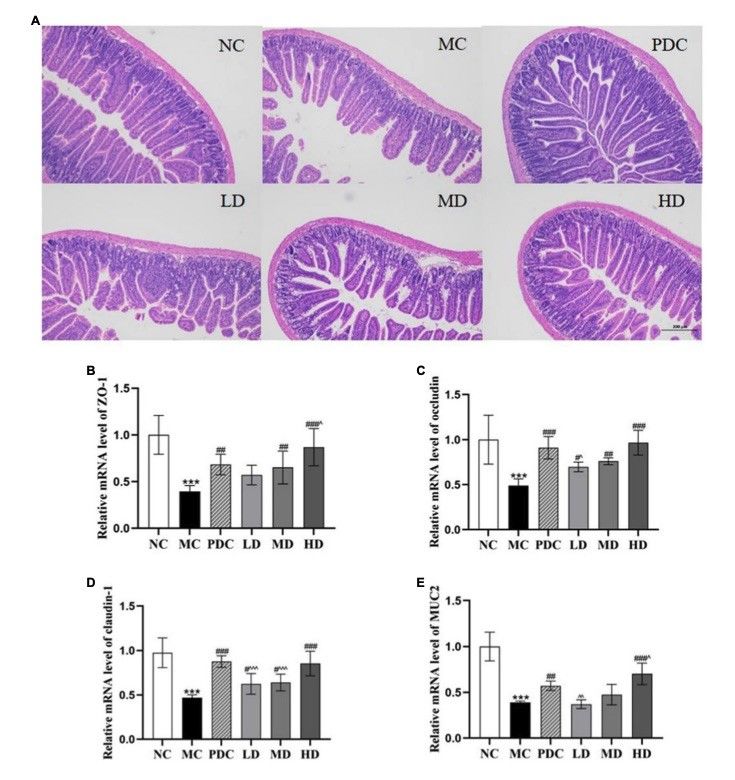 Fig. 1 Effects of complex probiotics on the intestinal in AAD model mice.1
The objective of our study is to evaluate the effects of complex probiotics in alleviating ampicillin-induced antibiotic-associated diarrhea (AAD). The photomicrographs of HE-stained intestinal sections in Figure 1A show that in the NC group, the small intestinal mucosa was intact, with closely arranged villi. In the MC group, the mucosa was severely damaged, and the villi were sparsely arranged. Probiotic administration attenuated this damage in a dose-dependent manner, with higher doses showing more protection. The mRNA expression levels of ZO-1, occludin, claudin-1, and MUC2 were lower in the MC group, confirming successful establishment of the AAD model. Probiotics significantly increased the mRNA expression of these proteins, especially in the PDC and HD groups, indicating improved intestinal barrier function. The MD group showed moderate improvements, with no significant difference in MUC2 expression. Compared to the PDC group, the HD group had higher ZO-1 expression, while the LD group showed reduced occludin and MUC2 levels. These results demonstrate that high doses of complex probiotics effectively alleviate intestinal barrier damage in the AAD model, as shown in Figures 1B–E.
Reference
- Li, Wenwen et al. "Complex probiotics alleviate ampicillin-induced antibiotic-associated diarrhea in mice." Frontiers in Microbiology vol. 14 1156058. 14 Apr. 2023, DOI:10.3389/fmicb.2023.1156058. Distributed under an Open Access license CC BY 4.0, without modification.
For Research Use Only.