
Carbon Tetrachloride (CCL₄) induced Liver Fibrosis/Cirrhosis Modeling & Pharmacodynamics Service
Creative Biolabs offers a variety of well-established animal models to assess the efficacy of potential therapeutic agents targeting liver fibrosis and cirrhosis. These models enable detailed evaluation of disease progression, therapeutic outcomes, and safety profiles, facilitating the development of novel liver disease treatments.
Introduction
Liver fibrosis is a progressive condition characterized by the excessive accumulation of extracellular matrix proteins, which leads to the scarring of liver tissue. Over time, untreated fibrosis can evolve into cirrhosis, a more severe form of liver disease marked by extensive scarring, nodular regeneration, and loss of normal liver architecture. Both liver fibrosis and cirrhosis can result from chronic liver injuries such as viral infections (e.g., Hepatitis B and C), excessive alcohol consumption, non-alcoholic fatty liver disease (NAFLD), or autoimmune liver diseases. These conditions disrupt liver function and may eventually lead to liver failure, portal hypertension, and hepatocellular carcinoma. Early-stage liver fibrosis is often asymptomatic, making it challenging to diagnose without advanced imaging or biopsy techniques. Cirrhosis, in its advanced stages, is associated with a range of complications, including variceal bleeding, ascites, and hepatic encephalopathy. Liver fibrosis and cirrhosis are key targets in liver disease research, and several models have been developed to better understand the pathophysiology and test potential treatments.
Disease Models and Applications
The CCL4 induced liver fibrosis/cirrhosis model is widely used to study chronic liver diseases, including fibrosis and cirrhosis. To establish this model, CCL4 (carbon tetrachloride) is administered to rodents, typically through intraperitoneal injection, over a period of several weeks. CCL4 is metabolized by the liver, leading to the generation of free radicals, which cause hepatocyte damage, inflammation, and collagen deposition, ultimately resulting in fibrosis and, with prolonged exposure, cirrhosis. The model mimics human liver fibrosis and cirrhosis, providing valuable insights into the mechanisms of liver damage and fibrogenesis. A key advantage of this model is its ability to replicate various stages of liver injury, from early fibrosis to advanced cirrhosis. However, the model's limitations include the fact that it does not fully replicate the complex etiology of human cirrhosis, which can result from multiple factors like viral infections or non-alcoholic fatty liver disease. Despite these limitations, the CCL4 model remains a cornerstone for evaluating antifibrotic therapies and understanding the progression of liver diseases.
- Simulates: The CCL4 induced liver fibrosis/cirrhosis model simulates the progression of chronic liver diseases, including fibrosis, cirrhosis, and associated complications like portal hypertension and liver dysfunction. It closely replicates the pathological features seen in human liver fibrosis and cirrhosis.
- Evaluates Drugs: This model is commonly used to evaluate drugs targeting liver fibrosis, cirrhosis, and related complications. It is particularly useful for assessing the efficacy of antifibrotic agents, hepatoprotective compounds, and treatments aiming to reverse or halt liver damage and fibrosis progression.
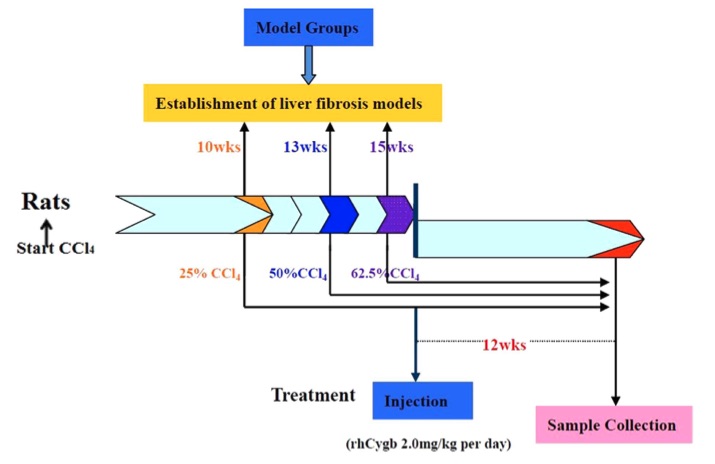 Fig. 1 Schedule for the treatment and experimental tests.1
Measurements
To evaluate the efficacy of drugs in the CCL4 induced liver fibrosis/cirrhosis model, we provide a range of measurements and analytical methods based on established scientific practices:
- General observations: body weight, liver weight/body weight ratio, survival rate, and clinical signs of liver dysfunction such as jaundice.
- Histopathology: Liver tissue staining (e.g., H&E, Masson's Trichrome) for assessing inflammation, hepatocyte damage, collagen deposition, and fibrosis severity.
- Immunohistochemistry: Detection of immune cell infiltration (e.g., T-cells, macrophages) and fibrosis-related markers such as α-SMA in liver tissues.
- Cytokine profiling (e.g., ELISA): Measurement of pro-inflammatory cytokines such as TNF-α, IL-6, and IL-1β to assess the inflammatory response in liver injury.
- Liver function biomarkers: Serum levels of ALT, AST, bilirubin, and albumin to evaluate liver injury and functional impairment.
- Gene/protein expression: RT-PCR and Western blot techniques for analyzing the expression of fibrosis-related genes (e.g., collagen, TGF-β) and signaling pathways involved in liver fibrosis.
Related Services
In addition to the CCL4 induced liver fibrosis/cirrhosis model, we also offer other models for acute liver injury, including those induced by ANIT and acetaminophen. These models provide diverse options for studying different mechanisms of liver injury and evaluating potential therapeutic agents.
- Thioacetamide (TAA) induced Liver Fibrosis/Cirrhosis Model
- Bile Duct Ligation (BDL) induced Primary Biliary Cirrhosis Model
- Alpha-Naphthylisothiocyanate (ANIT) induced Primary Biliary Cirrhosis Model
- 3,5-Diethoxycarbonyl-1,4-Dihydrocollidine (DDC) induced Primary Biliary Cirrhosis Model
Advantages
- Comprehensive model options: We offer a variety of liver injury and fibrosis models to meet diverse research needs.
- Expert scientific support: Our team assists with model selection, experimental design, and data analysis to ensure optimal results.
- Reliable and reproducible data: Our models provide consistent and reproducible results for drug efficacy testing.
- Customizable experimental protocols: Tailored solutions for studying specific mechanisms of liver injury and fibrosis.
- Advanced analytical tools: Access to cutting-edge technologies, including molecular profiling and histopathological techniques.
Work with Us
- Summarize the project requirements and fill in the information collection form.
- Sign a CDA from both parties to further communicate information, such as targets.
- Select an animal model, discuss experimental design, and determine assay parameters.
- Project costing and project schedule forecasting.
- We provide a detailed project plan, including the required sample quantities, methods, and protocols.
- Both parties confirm the project details and start the project.
- Confirm the timeline of the project.
- We provide periodic results and information on the animal's condition.
- We will work together to make project adjustments as necessary.
- We provide a comprehensive project report promptly.
- We arrange transportation for the produced samples.
- We provide a discussion of the project results and help to arrange the next steps.
- Data storage and archiving.
FAQs
-
1. How long does it take to observe liver fibrosis in the CCL4 model?
Liver fibrosis typically develops after 4-6 weeks of CCL4 administration, with more severe cirrhosis observed after 8-10 weeks of treatment.
-
2. Can this model be used for studying the reversal of liver fibrosis?
Yes, the CCL4 model is suitable for studying the reversal of liver fibrosis through the administration of antifibrotic agents and evaluating their effects on liver regeneration and collagen deposition.
-
3. What are the main limitations of the CCL4 induced liver fibrosis model?
The model primarily induces fibrosis through free radical generation and does not fully replicate the multifactorial causes of human cirrhosis, such as viral infections, alcohol abuse, or metabolic diseases.
Published Data
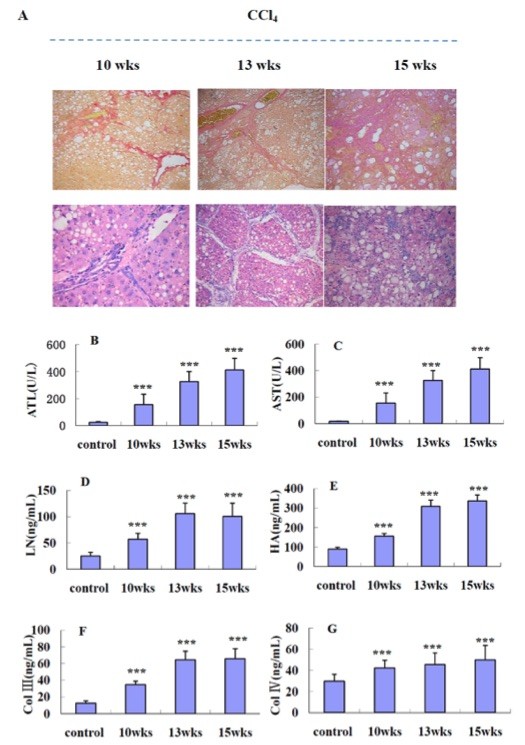 Fig. 2 Examination of liver histology and serum biochemistry at different stages (10, 13, 15 weeks) in CCL4 model rats.2
All experiments successfully induced liver fibrosis, as confirmed by liver histology and serum biochemistry analysis (Fig. 2A–G). Mortality was absent in all experimental groups. In the rat liver fibrosis model, rats treated with CCL4 were sacrificed at three different time points: the 10th, 13th, and 15th weeks. At the time of sacrifice, all rats exhibited significant fibrosis, with notable differences in the extent of fibrotic tissue across the groups. Hepatolobular injury, including centrilobular necrosis, ballooned hepatocytes, and lipid accumulation, was evident in the 15-week model group (Fig. 2A). These findings were consistent with the serum biochemistry results (Fig. 2B–G). Additionally, administration of a higher dose of CCL4 for an additional 3 weeks in group B (medium) led to a substantial extension of toxicity, increasing serum enzyme values (p < 0.01) approximately two-fold, except for Col IV. However, no significant differences (p > 0.05) were observed between group B (medium) and group C (severe).
Reference
- Li, Zhen et al. "The Effect of rhCygb on CCl4 induced Hepatic Fibrogenesis in Rat." Scientific Reports vol. 6 23508. 23 Mar. 2016, DOI:10.1038/srep23508. Distributed under an Open Access license CC BY 4.0, without modification.
For Research Use Only.