
Coxsackievirus induced Myocarditis Modeling & Pharmacodynamics Service
Introduction
Myocarditis, an inflammatory condition of the heart muscle, is a critical contributor to sudden cardiac death and a precursor to dilated cardiomyopathy (DCM) and heart failure. While various factors can trigger this inflammation, viral infections, particularly by coxsackievirus B3 (CVB3), are frequently implicated. Understanding its complex pathology and progression is paramount for developing effective treatments.
Creative Biolabs offers a diverse array of meticulously characterized and well-established preclinical models, enabling comprehensive evaluation of therapeutic efficacy for myocarditis.
Coxsackievirus-Induced Myocarditis Model
The coxsackievirus-induced myocarditis (CVM) model, predominantly utilizing CVB3, stands as a widely recognized and indispensable tool for preclinical research into viral myocarditis and its subsequent progression to dilated cardiomyopathy. This robust model faithfully replicates the key pathological events observed in human disease, including initial viral replication, acute inflammatory responses, and the chronic myocardial remodeling that can lead to heart failure. Researchers can gain profound insights into disease pathogenesis and assess the efficacy of potential therapeutic interventions before clinical translation.
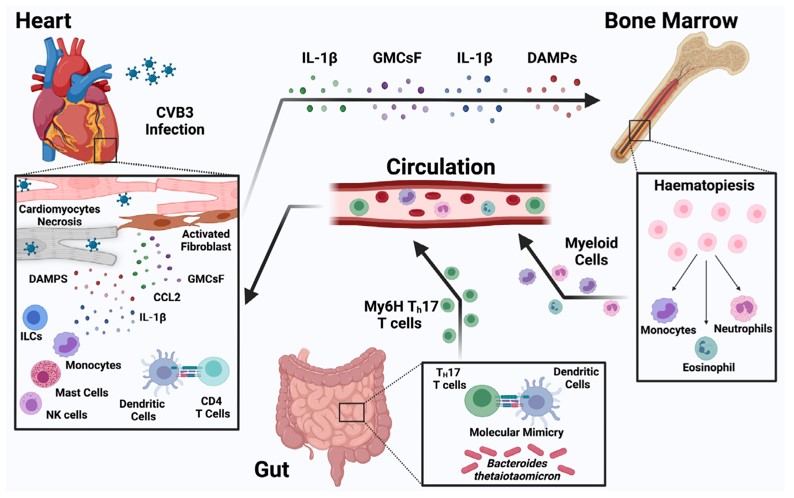 Fig.1 Immune regulation of CVB3-induced myocarditis.1,3
Model Construction Steps
Our strategy centers on inducing a consistent and measurable inflammatory response and subsequent cardiac damage by infecting susceptible murine hosts with a carefully titrated dose of cardiotropic CVB3. This method enables the study of both acute and chronic myocarditis, mirroring human disease progression.
01Animal Selection
Healthy, age-matched murine strains, typically C57BL/6 or A/J mice, are selected based on the specific research objectives and their known immunological responses to CVB3.
02Viral Preparation
The cardiotropic CVB3 strain (e.g., Nancy strain) is propagated and purified, and its infectious titer is precisely determined to ensure consistent viral inoculum.
03Disease Induction
Mice are administered a predetermined dose of CVB3 via intraperitoneal (IP) or intramuscular (IM) injection. Control groups receive a sham injection of saline or vehicle.
04Disease Progression Monitoring
Animals are closely monitored for clinical signs. The model progresses through an acute inflammatory phase (days 3-14 post-infection) and a subacute/chronic phase (from week 2), marked by myocardial remodeling, fibrosis, and cardiac dysfunction.
Strengths and Limitations
Strengths:
- Translational Relevance: Closely mimics the pathological progression of human viral myocarditis and subsequent dilated cardiomyopathy.
- Reproducibility: Established protocols ensure consistent disease induction and measurable outcomes.
- Versatility: Applicable for evaluating a wide range of therapeutic strategies, from antivirals to immunomodulators.
- Comprehensive Readouts: Allows for extensive phenotyping across cardiac function, histology, viral load, and immune responses.
Limitations:
- Species Differences: As a murine model, it may not fully capture all nuances of human immune responses or disease progression.
- Strain Specificity: The specific CVB3 strain and mouse genetic background can influence disease severity and outcomes.
- Complexity: The biphasic nature of the disease requires careful timing of interventions and comprehensive monitoring.
Evaluation Platform
Creative Biolabs' state-of-the-art evaluation platform offers a comprehensive suite of instruments and tests to thoroughly characterize disease progression and therapeutic efficacy in the CVM model. Our capabilities span biochemical, molecular, cellular, histopathological, and advanced imaging analyses, providing a holistic view of cardiac health and disease modulation.
Test Indicators:
- Cardiac Function: Echocardiography (ejection fraction, fractional shortening, ventricular dimensions)
- Histopathology: H&E staining (inflammation, necrosis), Masson's trichrome/Picrosirius Red (fibrosis quantification)
- Viral Load: Quantitative PCR (viral RNA levels in tissue)
- Immune Profiling: Flow cytometry (immune cell populations), ELISA (cytokines, chemokines)
- Molecular Biomarkers: Gene expression analysis (inflammation, fibrosis, remodeling pathways)
- Survival Analysis: Monitoring of animal survival rates
Applications
- Disease Simulation: Accurately simulates acute viral myocarditis, chronic dilated cardiomyopathy, and heart failure induced by viral infection, providing a robust platform to understand disease progression.
- Antiviral Drug Evaluation: Ideal for screening and evaluating novel antiviral compounds aimed at inhibiting CVB3 replication and mitigating acute cardiac damage, crucial for early intervention strategies.
- Immunomodulatory Therapy Assessment: Used to test drugs designed to modulate the host immune response, reduce inflammation, and prevent autoimmune sequelae, offering pathways to control immune-mediated damage.
- Anti-fibrotic and Remodeling Interventions: Critical for investigating agents that target myocardial fibrosis and adverse ventricular remodeling, crucial steps in preventing heart failure progression and preserving cardiac function.
- Pathogenesis Studies: Facilitates deeper understanding of the complex interplay between viral infection, host immunity, and cardiac injury mechanisms, revealing new therapeutic targets.
- Biomarker Discovery: Supports the identification and validation of novel diagnostic or prognostic biomarkers for viral myocarditis and DCM, aiding in early detection and personalized treatment.
- Vaccine Development: Provides a robust platform for assessing the protective efficacy of vaccine candidates against CVB3 infection and subsequent cardiac pathology, contributing to preventative medicine.
Related Myocarditis Models
Our Advantages
- Unrivaled Expertise: Our team comprises highly experienced virologists, immunologists, and cardiovascular pharmacologists.
- Reproducibility and Quality: We adhere to rigorous SOPs and quality control, ensuring reliable and consistent data.
- Customization and Flexibility: Models are tailored to your specific research questions, study designs, and endpoints.
- State-of-the-Art Facilities: Equipped with advanced technology for precise disease induction and comprehensive analysis.
- Dedicated Project Management: A single point of contact ensures seamless communication and proactive support throughout your study.
Work with Us
- Summarize the project requirements and fill in the information collection form.
- Sign a CDA from both parties to further communicate information, such as targets.
- Select an animal model, discuss experimental design, and determine assay parameters.
- Project costing and project schedule forecasting.
- We provide a detailed project plan, including the required sample quantities, methods, and protocols.
- Both parties confirm the project details and start the project.
- Confirm the timeline of the project.
- We provide periodic results and information on the animal's condition.
- We will work together to make project adjustments as necessary.
- We provide a comprehensive project report promptly.
- We arrange transportation for the produced samples.
- We provide a discussion of the project results and help to arrange the next steps.
- Data storage and archiving.
Contact Us
Creative Biolabs is dedicated to providing robust preclinical models and expert support, accelerating your research in viral myocarditis and heart failure. We invite you to connect with our team to explore how our CVM model can be customized to meet your unique research needs and advance therapeutic development.
FAQs
-
Q1: What specific viral strain of CVB3 do you typically use for model induction, and why?
A: We primarily utilize the cardiotropic Nancy strain of CVB3. This particular strain is well-documented for its consistent ability to induce both acute myocarditis and subsequent chronic cardiomyopathy in susceptible murine models, ensuring high reproducibility and relevance to human disease progression. Its established pathological profile makes it an ideal choice for reliable research outcomes.
-
Q2: How do you ensure the reproducibility of the CVM model across different studies?
A: Achieving high reproducibility is paramount at Creative Biolabs. We implement stringent standard operating procedures (SOPs) for every step, including precise viral inoculum preparation and titration, standardized animal handling and infection routes, and consistent environmental conditions. Our rigorous quality control measures and experienced personnel further minimize variability, ensuring your data is consistently reliable.
-
Q3: Can your CVM model be adapted to study the chronic phase of myocarditis leading to dilated cardiomyopathy?
A: Absolutely. Our CVM model is inherently designed to capture the full spectrum of disease progression. Following the acute inflammatory phase, the model naturally transitions into a subacute and chronic phase characterized by myocardial fibrosis and ventricular remodeling, ultimately leading to cardiac dysfunction and dilation. This allows for comprehensive investigation of interventions aimed at preventing or reversing chronic cardiomyopathy.
-
Q4: Is it possible to customize the viral inoculum or infection route for specific research hypotheses?
A: Yes, customization is a cornerstone of our service. We understand that specific research questions may necessitate variations in model induction. We can adjust the viral inoculum concentration and explore different infection routes (e.g., intraperitoneal, intramuscular) to optimize the model for your unique experimental design, ensuring it aligns precisely with your scientific objectives.
-
Q5: How do you address potential variability in animal responses within the CVM model?
A: Variability is an inherent aspect of in vivo research. We mitigate this through careful animal sourcing, strict randomization, consistent housing conditions, and robust statistical planning to determine appropriate group sizes. Our comprehensive phenotyping and longitudinal monitoring also help identify and account for individual animal responses, ensuring statistically sound data interpretation.
Published Data
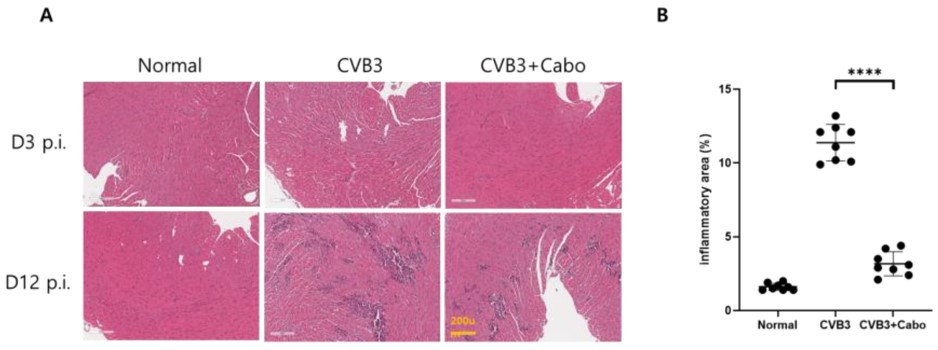 Fig.2 Decrease of myocardium inflammation in caboxamycin-treated CVB3-induced myocarditis mouse model.2,3
This study, utilizing the CVM model, investigated the antiviral efficacy of caboxamycin. In this project, the CVM mouse model was employed to evaluate the compound's ability to mitigate cardiac damage and viral load. Results showed that caboxamycin treatment significantly reduced CVB3 VP1 protein production and viral RNA levels, leading to decreased myocardial inflammation, improved cardiac function, and enhanced survival rates in the infected mice. This case exemplifies the model's utility in identifying promising new antiviral therapies for myocarditis.
References
- Čiháková, Daniela et al. "Meeting the Challenges of Myocarditis: New Opportunities for Prevention, Detection, and Intervention-A Report from the 2021 National Heart, Lung, and Blood Institute Workshop." Journal of clinical medicine vol. 11,19 5721. 27 Sep. 2022. https://doi.org/10.3390/jcm11195721
- Kim, Hong-Gi et al. "Caboxamycin Inhibits Heart Inflammation in a Coxsackievirus B3-Induced Myocarditis Mouse Model." Viruses vol. 16,5 677. 25 Apr. 2024. https://doi.org/10.3390/v16050677
- Distributed under Open Access license CC BY 4.0, without modification.
For Research Use Only.