
Thioacetamide (TAA) induced Liver Fibrosis/Cirrhosis Modeling & Pharmacodynamics Service
Creative Biolabs offers a variety of well-established animal models to evaluate the efficacy of treatments for liver fibrosis and cirrhosis. These models simulate the pathophysiological processes of human liver diseases, allowing for precise testing of therapeutic interventions. Our services ensure reliable and reproducible results, aiding in the development of effective treatments.
Introduction
Liver fibrosis is a progressive scarring of the liver tissue caused by chronic liver injury due to factors such as viral infections (hepatitis B and C), alcohol abuse, non-alcoholic fatty liver disease (NAFLD), and certain toxins. It results in the accumulation of extracellular matrix components, leading to the disruption of normal liver architecture. If left untreated, liver fibrosis can progress to cirrhosis, a more severe form of liver damage where the liver becomes severely scarred and loses its ability to function properly. Cirrhosis is characterized by widespread fibrosis, nodular regeneration, and liver dysfunction, often leading to complications like portal hypertension, liver failure, and hepatocellular carcinoma. Liver fibrosis and cirrhosis represent significant global health concerns, with growing prevalence due to the increasing burden of chronic liver diseases. Early diagnosis and intervention are crucial to prevent progression to cirrhosis and improve patient outcomes.
Disease Models and Applications
The Thioacetamide (TAA) induced Liver Fibrosis/Cirrhosis Model is a widely used method for studying liver fibrosis and cirrhosis. In this model, liver fibrosis is induced by repeated administration of TAA, typically through intraperitoneal injection. TAA is metabolized in the liver to produce toxic metabolites, leading to hepatocyte injury, inflammation, and progressive fibrosis. This model closely mimics the pathological features of human liver cirrhosis, including the development of fibrosis, hepatocyte necrosis, and architectural distortion of the liver. The advantages of this model include its reproducibility and the ability to simulate the chronic progression of liver disease. However, it may not fully replicate all aspects of human liver cirrhosis, such as portal hypertension, and the dosing schedule needs to be carefully controlled to avoid excessive toxicity.
- Simulates: The Thioacetamide (TAA) induced Liver Fibrosis/Cirrhosis Model simulates liver diseases such as chronic liver fibrosis and cirrhosis, commonly caused by alcohol abuse, viral hepatitis, or toxin exposure. It provides insights into the progression from fibrosis to cirrhosis, including complications like hepatocyte injury, inflammation, and fibrosis.
- Evaluates Drugs: This model is used to evaluate the efficacy of drugs aimed at preventing or reversing liver fibrosis and cirrhosis. It is particularly useful for testing anti-fibrotic agents, liver protectants, and anti-inflammatory drugs, as well as compounds targeting the molecular mechanisms involved in fibrosis progression.
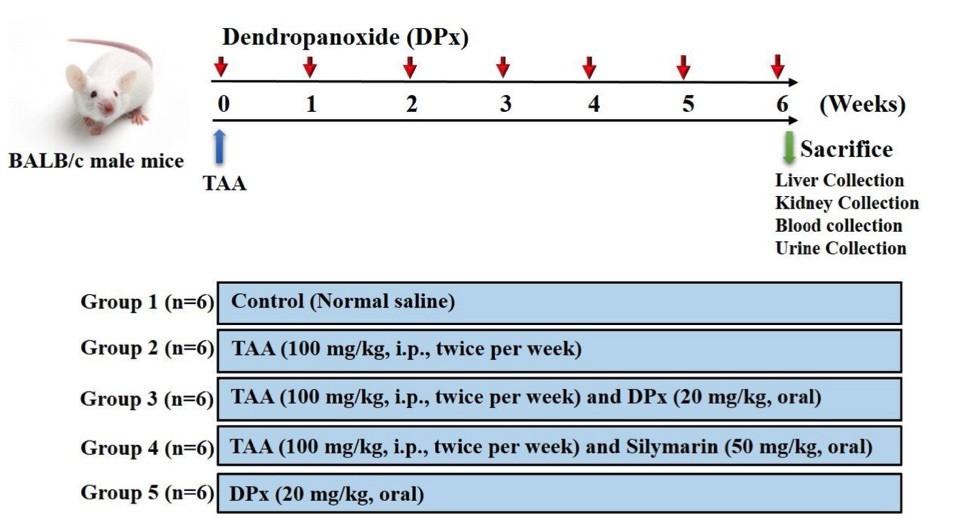 Fig. 1 Experimental design.1
Measurements
We offer a comprehensive range of measurements for assessing the efficacy of treatments in the Thioacetamide (TAA) induced Liver Fibrosis/Cirrhosis Model, employing advanced technologies such as:
- General Observations: Monitoring of body weight, mortality rate, stool consistency, and signs of gastrointestinal bleeding.
- Histopathological Analysis: Liver tissue evaluation using H&E staining to assess the degree of fibrosis, necrosis, and liver architecture.
- Immunohistochemistry: Detection of immune cell infiltration (e.g., macrophages, T-cells) in the liver, a key marker of inflammation.
- Cytokine Profiling (ELISA): Quantification of inflammatory mediators like TNF-α, IL-6, and IL-1β to evaluate the immune response.
- Hematology and Serum Biomarkers: Measurement of liver enzymes (AST, ALT), bilirubin, and other serum markers to monitor liver function and damage.
- Gene/Protein Expression Analysis: RT-qPCR and Western blot techniques for profiling gene and protein expression related to fibrosis progression, such as collagen type I and matrix metalloproteinases (MMPs).
Additionally, we provide expert guidance in experimental design, model selection, and data analysis to ensure that your research needs are met with precision and scientific rigor.
Related Services
In addition to the Thioacetamide (TAA) induced Liver Fibrosis/Cirrhosis Model, our company also offers alternative methods for inducing liver fibrosis and cirrhosis, including CCl4 and bile duct ligation models. These models provide diverse options depending on the specific goals of your research. We work closely with clients to choose the most appropriate model for their needs.
- CCL4 induced Liver Fibrosis/Cirrhosis Model
- Bile Duct Ligation (BDL) induced Primary Biliary Cirrhosis Model
- Alpha-Naphthylisothiocyanate (ANIT) induced Primary Biliary Cirrhosis Model
- 3,5-Diethoxycarbonyl-1,4-Dihydrocollidine (DDC) induced Primary Biliary Cirrhosis Model
Advantages
- Expertise: Our team of scientists provides specialized knowledge in model development, drug testing, and data analysis.
- Customized Solutions: We offer tailored approaches for each project, ensuring the best model and methodology to address specific research objectives.
- Reproducibility and Reliability: Our models are rigorously validated for consistent, reproducible results in liver fibrosis and cirrhosis studies.
- Comprehensive Support: We assist with experimental design, model selection, and post-study data analysis, providing full project support from start to finish.
- State-of-the-Art Technology: Access to the latest technology in histological analysis, molecular profiling, and serum biomarker testing.
Work with Us
- Summarize the project requirements and fill in the information collection form.
- Sign a CDA from both parties to further communicate information, such as targets.
- Select an animal model, discuss experimental design, and determine assay parameters.
- Project costing and project schedule forecasting.
- We provide a detailed project plan, including the required sample quantities, methods, and protocols.
- Both parties confirm the project details and start the project.
- Confirm the timeline of the project.
- We provide periodic results and information on the animal's condition.
- We will work together to make project adjustments as necessary.
- We provide a comprehensive project report promptly.
- We arrange transportation for the produced samples.
- We provide a discussion of the project results and help to arrange the next steps.
- Data storage and archiving.
FAQs
-
1. What types of diseases can be studied with the Thioacetamide (TAA) induced Liver Fibrosis/Cirrhosis Model?
The TAA model primarily simulates liver fibrosis, cirrhosis, and hepatocellular injury, commonly associated with chronic alcohol use, hepatitis, and toxic exposure.
-
2. How long does it take to observe the development of fibrosis in this model?
Typically, fibrosis can be observed after 4–6 weeks of TAA administration, depending on the dosing schedule and animal strain.
-
3. What are the advantages of using the TAA model over other liver fibrosis models?
The TAA model closely mimics the chronic progression of liver disease, including hepatocyte damage, inflammation, and fibrosis, making it an ideal choice for evaluating anti-fibrotic drugs.
-
4. Can this model be used to test antiviral or anti-inflammatory drugs?
Yes, the TAA model is well-suited for testing drugs that target inflammation, fibrosis, and liver regeneration, including antivirals for hepatitis and anti-inflammatory agents.
Published Data
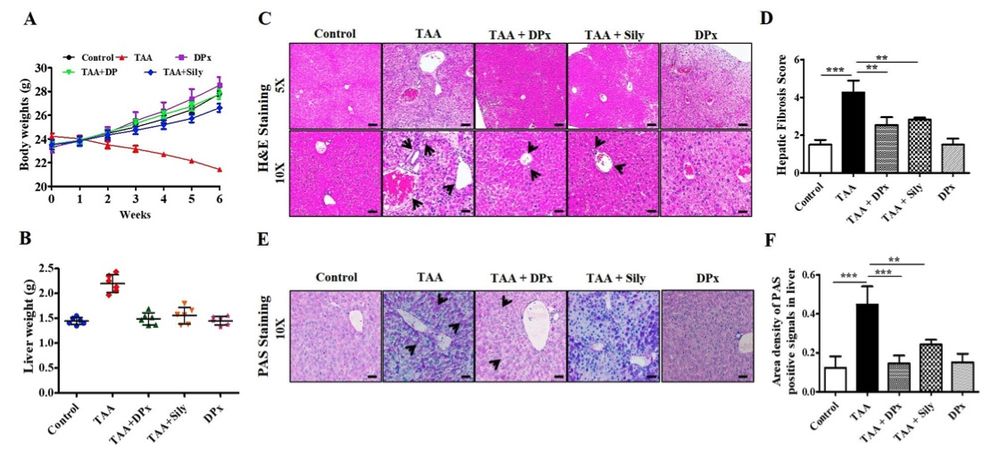 Fig. 2 Protective effects of DPx on TAA induced hepatic fibrosis.2
Thioacetamide (TAA) treatment induced significant morphological changes in the livers of BALB/C mice, whereas treatment with DPx effectively mitigated these alterations. Body weight gain was notably reduced in the TAA-treated group compared to the untreated control group, while no significant weight changes were observed in the groups treated with DPx or silymarin (Figure 2A). Likewise, the relative liver weight was markedly increased in the TAA-treated group, while DPx and silymarin treatments protected against the TAA induced liver weight alterations (Figure 2B). Histopathological analysis revealed typical liver architecture with intact portal tracts and central veins in control mice. In contrast, TAA-treated mice exhibited severe necrosis surrounding connective tissue and the central vein, alongside notable degenerative changes and inflammatory infiltrates. However, these morphological liver abnormalities were substantially reduced in the TAA-treated mice upon administration of DPx or silymarin (Figures 2C and 2D). Additionally, PAS staining indicated a significant improvement in glycogen storage in the livers of mice treated with either DPx or silymarin (Figures 2E and 2F).
Reference
- Li, Zhen et al. "The Effect of rhCygb on CCl4 induced Hepatic Fibrogenesis in Rat." Scientific Reports vol. 6 23508. 23 Mar. 2016, DOI:10.1038/srep23508. Distributed under an Open Access license CC BY 4.0, without modification.
For Research Use Only.