Exosomal Cytokines Profiling Service
Overview Services Features FAQs
Overview
Exosomes play a crucial role in intercellular signal transduction and serve as a novel source of biomarkers for the diagnosis and prognosis of diseases. Recent evidence suggests that cytokines released from encapsulated exosomes can cause biological effects when they come into contact with sensitive cells. Creative Biolabs offers comprehensive services for exosomal cytokine detection, providing flexible and professional solutions tailored to the specific requirements of each project.
Background of Exosomal Cytokines
The bidirectional communication between cells and their microenvironment is essential for maintaining physiological and pathological conditions in the human body. Cytokines are critical regulators of immune function and inflammation and are influenced by various factors, leading to high heterogeneity in studies. In multicellular organisms, cytokines are generally considered soluble factors mediating cell-to-cell communication. They can be secreted through typical secretion mechanisms or via exosomes.
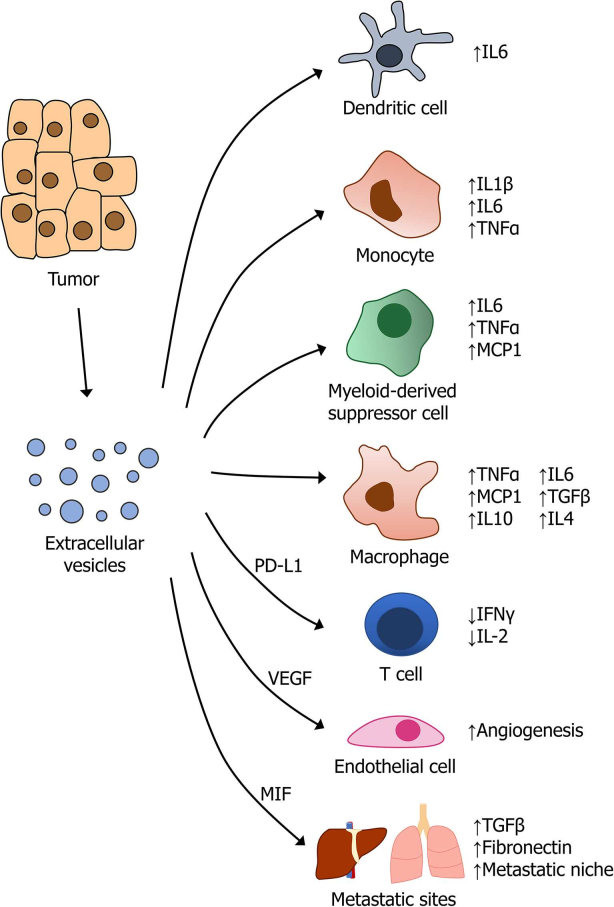 Fig.1 Regulation of cytokine signaling by tumor-derived extracellular vesicles.1,3
Relationship of Exosome and Cytokines
A growing body of evidence shows that exosomes are key players in cell-to-cell communication, driving inflammation, autoimmunity, and infectious disease pathology. Exosomes can be a source of pro-inflammatory cytokines, such as tumor necrosis factor-α (TNF-α), IL-6, IL-1β, IL-8, and monocyte chemoattractant protein-1 (MCP-1), which can stimulate various cells to produce these cytokines. Exosomes can also induce the activation and proliferation of B cells and T cells, the migration of granulocytes to inflammatory tissues, and the promotion of inflammatory pathways in recipient cells. These studies indicate that exosome-associated cytokines (exosomal cytokines) may be novel biomarkers.
Services
Creative Biolabs offers microsphere and flow cytometry technology for the simultaneous detection of up to 48 cytokines. The detection principle is based on fluorescence-encoded microspheres covalently cross-linked with monoclonal antibodies. First, these monoclonal antibodies bind to the target cytokines, forming an antigen-antibody complex. Next, a fluorophore-labeled detection antibody is added, which binds to the complex and emits a fluorescence signal. By measuring the fluorescence intensity, the concentration of the cytokine can be accurately determined.
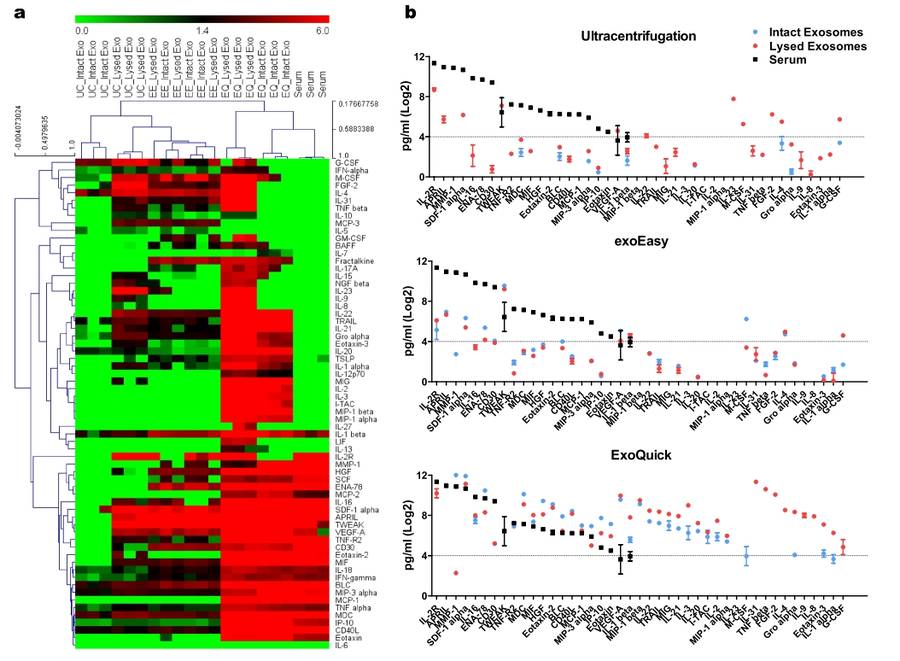 Fig.2 Comparison of cytokine expression in exosomes isolated using three different methods.2,3
Features
Our exosomal cytokines profiling platform offers the following advantages:
-
The ability to detect many groups of cytokines simultaneously with a small sample size, requiring only 50 μl to detect multiple indicators.
-
Cost-effective, saving reagent costs and being more economical than ELISA.
-
High sensitivity with a wider dynamic range than fluorescence colorimetric methods.
-
Better reproducibility with less sample handling and approximately the same liquid kinetics.
Creative Biolabs specializes in basic exosome research and application. For over 10 years, we have been dedicated to providing industry-leading, high-quality products and professional services to our customers, helping them enhance their value and capabilities, thereby promoting the vigorous development of exosome science. For more information, please feel free to contact us.
FAQs
Q: How much exosome sample is required for cytokine analysis?
A: Clients need to provide at least 50μL of exosomes (with particle concentration of ≥10^10 particles/mL) per sample, and at least three biological replicates per group. Additionally, it is recommended to analyze cytokines in both intact exosomes (exosomes not lysed) and exosomal proteins (exosomes lysed) to obtain a more comprehensive cytokine profile from the exosomes.
Q: What does the output of the results look like? What data does it include?
A: Clients will receive a detailed report that includes concentration data for each cytokine tested, as well as necessary statistical analyses. The report will also include quality control data from the experiments, and comparisons with reference ranges or control groups. In addition, our advantage is that our technicians can further analyze the concentration data according to the requirements put forward by customers.
References
-
Barnes, B. J., Somerville, C. C. Modulating cytokine production via select packaging and secretion from extracellular vesicles. Frontiers in immunology. 2020, 11.
-
Jung, H. H., et al. Cytokine profiling in serum-derived exosomes isolated by different methods. Scientific reports. 2020, 10(1): 1-11.
-
Distributed under Open Access license CC BY 4.0, without modification.
For Research Use Only. Cannot be used by patients.
Related Services: