
Adenoviral Vector-based Suicide Gene Therapy Development
Molecular chemotherapy is a gene therapy approach aimed at achieving selective eradication of cancer cells via a genetically expressed toxin. This method is often denoted as "suicide gene therapy". Adenovirus vector-mediated suicide gene therapy has achieved a positive effect on cancer treatment. Creative Biolabs is dedicated to establishing the most exquisite service platform for our clients and our one-stop adenovirus vector construction services can provide comprehensive technical support for the treatment of human diseases.
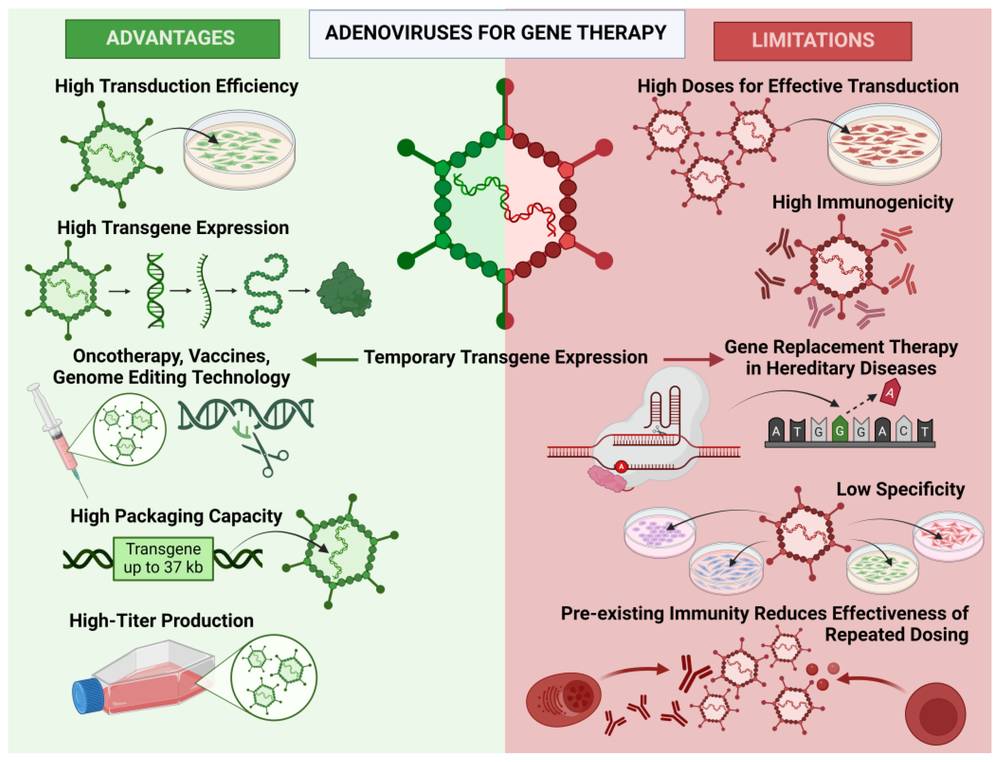 Figure 1. Advantages and limitations of adenoviral vectors in gene therapy.1
Introduction of Suicide Gene Therapy
Suicide gene therapy attracts special attention because it allows selective conversion of non-toxic compounds into cytotoxic drugs inside cancer cells. A number of suicide gene systems have been identified, including the herpes simplex virus thymidine kinase (HSV-TK) gene, the cytosine deaminase (CD) gene, the nitroreductase gene, and the Escherichia coli Deo gene.
HSV-TK and Ganciclovir System
HSV-TK is the most widely studied enzyme that is used for suicide gene strategies. The prodrug for HSV-TK is ganciclovir (GCV), and herpes simplex virus type 1 (HSV-1) produces HSV-TK. Phosphorylation of GCV by HSV-TK into a monophosphate form (GCV-MP) is the rate-limiting step in the generation of a cytotoxic drug. Guanylate kinase metabolizes the monophosphate to the diphosphate form (GCV-DP) and then to the triphosphate form (GCV-TP). The triphosphate form is highly toxic to cells by inhibiting DNA polymerase and by incorporation into DNA with chain termination. Therefore, GCV in the presence of HSV-TK is a prodrug that causes cell death.
CD and 5-Fluorocytosine System
CD is an enzyme that catalyzes the deamination of cytosine to uracil. This reaction converts an inert prodrug, 5-fluorocytosine (5-FC), to a highly toxic chemotherapeutic agent, 5-fluorouracil (5-FU). The cytotoxic effects of 5-FU occur following its conversion to 5-fluoro-2'-deoxyuridine-5'-monophosphate (5-FdUMP) (through a de novo pyrimidine pathway). 5-FdUMP is an irreversible inhibitor of thymidylate synthase and thus inhibits DNA synthesis by deoxythymidine triphosphate (dTTP) deprivation.
Nitroreductase and CB1954 System
The Escherichia coli enzyme nitroreductase in combination with the prodrug CB1954 [5-(aziridine-1-yl)-2,4-dinitrobenzamide] is the most promising suicide gene systems. CB1954 is a weak, monofunctional alkylating agent. The nitroreductase enzyme DT diaphorase converts CB1954 to its 4-hydroxylamino derivative, which afters acetylation via thioesters such as acetyl coenzyme A (CoA), then becomes a powerful bifunctional alkylating agent. The activated prodrug is then capable of forming poorly repaired DNA crosslinks. The advantage of the nitroreductase-CB1954 suicide gene system is that killing mediated by activated CB1954 is not dependent on the cell cycle phase, potentially allowing quiescent tumor cells to be killed.
Escherichia coli Deo and 6-Methylpurine Deoxyriboside System
The Escherichia coli Deo gene codes for an enzyme, purine nucleoside phosphorylase (PNP), not found in human cells. The PNP enzyme cleaves 6-methyl purine deoxyriboside (MEP) to liberate 6-methyl purine, a potent, membrane-permeant and freely diffusible toxin. The hallmarks of this approach are strong bystander killing in human colon, melanoma, and glioma cancer cells in vitro. The ability of the activated prodrug in killing both proliferating and non-proliferating cancer cells is attributed to its mechanism of action which is independent of DNA synthesis.
Advantages of Adenoviral Vectors
Adenoviral vectors provide several distinct advantages that make them ideal for suicide gene therapy:
High Transduction Efficiency
Adenoviruses efficiently infect a wide variety of cell types, including both dividing and non-dividing cells, ensuring robust gene delivery.
Large Transgene Capacity
With a packaging capacity of up to ~36 kb, adenoviral vectors can accommodate complex genetic constructs, including multiple therapeutic genes or regulatory elements.
Non-Integrating Genome
Adenoviral DNA remains episomal, significantly reducing the risk of insertional mutagenesis and enhancing safety for therapeutic applications.
Strong and Rapid Gene Expression
Adenoviral vectors enable high-level transient expression, which is ideal for therapies requiring controlled and time-limited activity.
Our Comprehensive Service
Creative Biolabs provides an end-to-end solution tailored to each client's therapeutic objectives.
Adenoviral Vector Design and Engineering
Our experts design customized adenoviral vectors to maximize therapeutic efficacy and specificity.
Key Features:
- Selection of optimal adenoviral serotypes (e.g., Ad5, Ad5/3 chimeric vectors)
- Tumor- or tissue-specific promoters (hTERT, survivin, AFP, PSA, GFAP)
- Inducible and regulatable expression systems
- Dual or multi-gene constructs
- Incorporation of reporter genes for tracking
- Capsid modification for enhanced targeting
- MicroRNA-regulated expression for improved specificity
Suicide Gene Optimization
We assist clients in selecting and optimizing the most suitable suicide gene system.
Capabilities Include:
- Codon optimization for enhanced expression
- Enzyme engineering for improved catalytic efficiency
- Subcellular localization optimization
- Comparative evaluation of multiple systems
- Development of combinational strategies for synergistic effects
Recombinant Adenovirus Construction
Our state-of-the-art platform ensures efficient and reliable construction of recombinant adenoviral vectors.
Process:
- Shuttle plasmid design and synthesis
- Homologous recombination or seamless cloning
- Virus rescue in HEK293 or derivative cell lines
- Amplification and scale-up
- Sequence verification and genetic stability assessment
Virus Production and Purification
We provide high-quality adenoviral vector production suitable for both research and translational applications.
| Feature | Description |
|---|---|
| Production Scale | Research to preclinical scale |
| Purification Methods | CsCl gradient or chromatography |
| Viral Titers | Up to 10¹²–10¹³ VP/mL |
| Endotoxin Levels | <5 EU/mL |
| Storage | Optimized buffer formulations |
Comprehensive Quality Control
Rigorous quality control ensures the safety and reliability of all delivered vectors.
| QC Test | Method | Purpose |
|---|---|---|
| Viral Titer | qPCR, plaque assay | Quantification |
| RCA Detection | PCR-based assays | Biosafety |
| Purity | SDS-PAGE, HPLC | Contaminant assessment |
| Sterility | Microbial culture | Safety |
| Endotoxin | LAL assay | in vivo suitability |
| Transgene Expression | qPCR, Western blot | Functional validation |
Applications
The success of suicide gene therapy depends heavily on how and where the vector is delivered. Creative Biolabs optimizes delivery for every application:
- Intratumoral (IT) – Most common for accessible solid tumors (breast, melanoma, prostate). We add hyaluronidase to the formulation to improve vector distribution throughout the tumor mass.
- Intraperitoneal (IP) – For ovarian, pancreatic, and colorectal peritoneal metastases. We formulate vectors in large volumes (200 mL) with low endotoxin and verify even distribution using luciferase reporter imaging.
- Intravesical (IVes) – For bladder cancer. Our mucoadhesive polymers (e.g., chitosan) increase residence time from 30 minutes to >4 hours, boosting transduction efficiency 5 fold.
- Convection Enhanced Delivery (CED) – For glioblastoma. We formulate vectors in artificial cerebrospinal fluid (aCSF) and provide protocols for continuous infusion pumps, achieving distribution volumes >10 cm³ in rodent brains.
Comparison with Other Viral Vectors
| Feature | Adenovirus | Lentivirus | AAV |
|---|---|---|---|
| Genome Integration | No | Yes | Rare |
| Transgene Capacity | High | Moderate | Limited |
| Expression Duration | Transient | Long-term | Long-term |
| Transduction Efficiency | Very High | High | Moderate |
| Immunogenicity | High | Moderate | Low |
| Production Scalability | Excellent | Good | Moderate |
How We Accelerate Your Application Specific Development
For any application listed above – and for those not listed – Creative Biolabs performs a set of pre-validation steps before launching your full project:
- Cell type specific transduction efficiency – Measured on your primary cells or cell lines using a GFP expressing control vector.
- Prodrug sensitivity threshold – IC₅₀ values determined with and without the suicide gene.
- Bystander effect range – Quantified in co culture systems (transduced:non transduced ratios from 1:10 to 1:1000).
- Immunogenicity profile – Cytokine release (IL 6, TNF α, IFN γ) measured in the relevant species (mouse, rat, rabbit, or non human primate).
Collaboration Workflow
| Phase | Key Activities | Outcomes |
|---|---|---|
| Consultation | Project discussion and feasibility assessment | Customized development roadmap |
| Strategy Design | Vector and suicide gene optimization | Scientifically robust design |
| Construction & Production | Adenovirus generation and QC | High-quality viral vectors |
| Functional Validation | in vitro and in vivo studies | Proof-of-concept data |
| Reporting & Delivery | Comprehensive documentation | Ready-to-use materials |
| Ongoing Support | Technical and regulatory assistance | Long-term partnership |
Why Choose Creative Biolabs?
Selecting the right partner is critical to the success of any gene therapy program. At Creative Biolabs, we combine deep scientific expertise, advanced technological platforms, and a client-centric approach to accelerate the development of adenoviral vector-based suicide gene therapies. Our commitment to quality, innovation, and collaboration ensures that your project progresses efficiently from concept to preclinical validation and beyond.
1. Extensive Expertise in Adenoviral Vector Engineering
With years of experience in viral vector development, Creative Biolabs has established a strong reputation in the field of gene therapy. Our multidisciplinary team of molecular biologists, virologists, and translational scientists possesses in-depth knowledge of adenoviral biology and suicide gene systems.
2. Fully Customized and Flexible Solutions
We recognize that each gene therapy project is unique. Our services are fully customizable, allowing us to tailor vector design, suicide gene selection, and validation strategies to meet specific research and therapeutic objectives.
3. End-to-End Service Platform
Creative Biolabs offers a seamless, integrated workflow that supports every stage of adenoviral suicide gene therapy development. From initial concept to functional validation, our comprehensive platform minimizes the need for multiple vendors and streamlines project timelines.
Frequently Asked Questions (FAQ)
Q: What is adenoviral vector-based suicide gene therapy?
A: Adenoviral vector-based suicide gene therapy is a targeted treatment strategy in which an adenovirus delivers a gene encoding a prodrug-activating enzyme into diseased cells. After administration of a non-toxic prodrug, the expressed enzyme converts it into a cytotoxic compound, leading to selective elimination of the target cells. This approach enhances therapeutic precision while minimizing systemic toxicity.
Q: Why are adenoviral vectors ideal for suicide gene therapy?
A: Adenoviral vectors offer high transduction efficiency, the ability to infect both dividing and non-dividing cells, and a large genetic payload capacity for complex constructs. Their non-integrating nature reduces the risk of insertional mutagenesis, while robust transient expression makes them particularly suitable for controlled therapeutic applications, especially in oncology.
Q: Which suicide gene systems are commonly used?
A: The most widely utilized systems include HSV-TK/Ganciclovir, Cytosine Deaminase/5-Fluorocytosine, and Nitroreductase/CB1954. Each system has unique advantages, such as strong bystander effects or effectiveness in hypoxic tumor environments. Our experts help select and optimize the most appropriate system based on your specific disease model and therapeutic goals.
Q: Can adenoviral suicide gene therapy be targeted to specific tissues or tumors?
A: Yes. Target specificity can be significantly enhanced through the use of tumor- or tissue-specific promoters (e.g., hTERT or survivin), capsid engineering to retarget viral tropism, and microRNA-regulated expression systems. These strategies help minimize off-target effects and improve therapeutic efficacy in the intended tissues.
Q: What deliverables will I receive at the end of the project?
A: Clients receive high-quality, ready-to-use materials and comprehensive documentation, including verified plasmid constructs, high-titer purified adenoviral vectors, detailed vector maps, and complete quality control reports. Optional in vitro and in vivo validation data, along with certificates of analysis and a final technical report, are also provided to support downstream research and regulatory activities.
Contact Us
Creative Biolabs has focused on the development of gene therapies for years, and we whole-heartedly cooperate with you to accomplish our shared goals. Our team provides you with outstanding support and meets your specific needs with a professional technology platform. If you are interested in our services, please contact us or send an inquiry.
Reference
- Muravyeva A, Smirnikhina S. Adenoviral vectors for gene therapy of hereditary diseases. Biology, 2024, 13(12): 1052. https://doi.org/10.3390/biology13121052 Distributed under Open Access license CC BY 4.0, without modification.
