
Custom shRNA Lentivirus Library
Vector-based shRNA (short-hairpin RNA) expression library has been widely used to screen functional genes. Especially, lentivirus is widely used as a vehicle to deliver shRNAs to target cells because it can provide long-term gene silencing with high delivery efficiency. As a leading company in the field of gene therapy, Creative Biolabs is capable of offering custom shRNA lentivirus library targeting multiple genes.
shRNA Library for RNA Interference (RNAi)
Over the past years, RNAi screens have become a central method in the field of functional genomics to identify critical cancer pathways, molecular drug targets, and therapeutic synergies. With the construction of shRNA libraries, large-scale screens can now be efficiently performed without expensive liquid- and plate-handling automation. In the pooled shRNA library, thousands of different shRNAs are introduced into a cell population, which is then selected for a phenotype of interest. Cells expressing shRNAs that target genes involved in this phenotype are either depleted or enriched compared to a non-selected control population. Candidate genes that are potentially targeted by the enriched or depleted shRNAs can be further investigated by downstream functional studies.
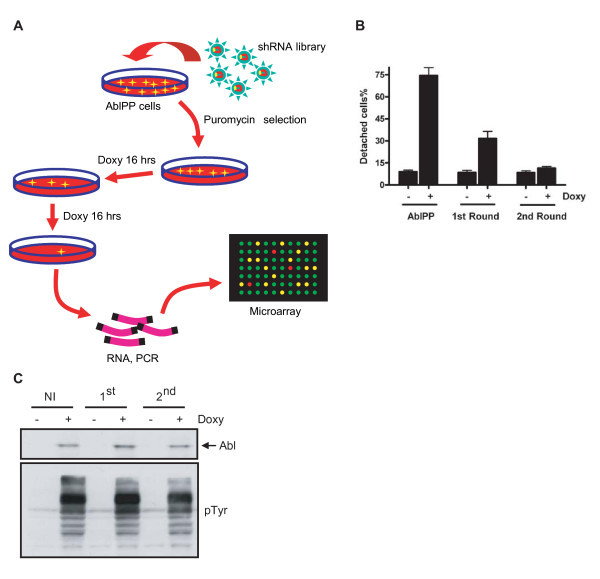 Figure 1. shRNA library screening of Abl kinase-induced cell detachment.1
Why shRNA Lentivirus Libraries Matter in Functional Genomics
Functional genomics aims to connect genes with biological phenotypes. While sequencing and omics technologies can identify candidate genes associated with disease or cellular states, functional validation is essential to determine whether those genes actively drive biological processes. shRNA libraries provide a practical and scalable way to test gene function through systematic knockdown.
In a typical shRNA library screen, thousands of shRNA constructs are introduced into a cell population. Each construct is designed to reduce the expression of a specific gene. Following selection pressure or phenotypic enrichment, cells carrying shRNAs that influence the phenotype of interest become enriched or depleted. By identifying the shRNA sequences present in the final cell population, researchers can infer which genes contribute to the biological process being studied.
This strategy is particularly valuable for:
- Identifying genes essential for cancer cell survival
- Discovering drug resistance or drug sensitivity genes
- Mapping signaling pathway dependencies
- Exploring synthetic lethal interactions
- Studying viral infection, immune response, or host-pathogen interactions
- Validating candidate therapeutic targets
- Investigating stem cell differentiation and lineage commitment
- Establishing disease-relevant gene function in cellular models
Our Custom shRNA Lentivirus Library Solutions
1. Custom shRNA Design for Target Gene Sets
Creative Biolabs provides custom shRNA design based on target gene sequences, transcript information, species requirements, and research objectives. Creative Biolabs can also incorporate control shRNAs into the library, such as non-targeting controls, housekeeping gene controls, viability-related controls, or pathway-specific positive controls. These controls help researchers monitor transduction efficiency, selection pressure, assay performance, and screen quality.
2. Lentiviral Vector Backbone Selection
Creative Biolabs provides flexible lentiviral vector options to accommodate diverse research needs. Our scientists help clients select a vector format that supports the intended screening workflow and biological model. For example, a pooled drug-resistance screen may benefit from a vector design compatible with next-generation sequencing readout, while an arrayed assay may require a reporter system that facilitates cell sorting or imaging-based analysis.
3. Custom Library Construction
Once the shRNA designs and vector format are finalized, Creative Biolabs proceeds with library synthesis, cloning, transformation, amplification, and plasmid library preparation. Because shRNA library construction is a multi-step process, careful control at every stage is essential to preserve library complexity and representation. Our team focuses on maintaining library diversity and minimizing sequence bias during construction.
Customization Options
Creative Biolabs offers extensive customization to meet different research requirements.
| Customization Area | Available Options |
|---|---|
| Target scope | Client-defined gene list, pathway panel, disease gene set, functional category |
| Library format | Pooled, arrayed, or custom format |
| Delivery format | Plasmid library or packaged lentiviral library |
| shRNAs per gene | Flexible design based on client needs |
| Expression mode | Constitutive or inducible |
| Selection marker | Antibiotic or fluorescent marker options |
| Controls | Non-targeting, positive, pathway-specific, viability-related controls |
| Viral preparation | Standard or high-titer lentiviral packaging |
| QC level | Standard QC or project-specific advanced QC |
| Downstream support | Transduction guidance, screening design consultation, validation support |
This flexible service model allows clients to obtain a library that fits their exact experimental system rather than adapting their project to a generic product.
Our Service Workflow
-
Step 1: Project Consultation and Experimental Strategy Design
Every project begins with a detailed consultation. Our scientists review the client's research objectives, target gene list, biological model, screening format, delivery requirements, and downstream readout strategy. We also discuss whether the library will be used in pooled or arrayed format, whether inducible expression is required, and what type of final deliverable is most appropriate.
-
Step 2: shRNA Design and Library Architecture Planning
After the project scope is confirmed, Creative Biolabs designs shRNA sequences for the target gene set. Multiple shRNAs can be designed for each gene to improve knockdown confidence and support hit validation. We also design appropriate control elements and determine the final structure of the library.
-
Step 3: Vector Construction and Library Cloning
Once the shRNA designs are approved, the library is cloned into the selected lentiviral vector backbone. This step requires careful handling to maintain representation across all library elements. Creative Biolabs uses optimized cloning and amplification procedures to support high-quality library construction.
For arrayed libraries, individual constructs can be prepared and organized according to client requirements. For pooled libraries, we focus on preserving diversity and minimizing bias during cloning and amplification.
-
Step 4: Library Quality Control
Quality control is essential for reliable shRNA screening. Creative Biolabs performs appropriate QC testing based on library format, project scale, and client requirements. QC may include concentration assessment, sequence verification, representation analysis, plasmid quality evaluation, and viral titer determination for packaged libraries.
-
Step 5: Lentiviral Packaging and Titer Determination
For clients requesting ready-to-transduce libraries, Creative Biolabs packages the plasmid library into lentiviral particles. We optimize production conditions to support sufficient titer and library complexity. The viral material can be supplied in aliquots for convenient use and storage.
High-quality viral preparation is particularly important for pooled screening, where uneven packaging or poor titer can negatively affect library coverage.
-
Step 6: Delivery, Documentation, and Technical Support
Creative Biolabs delivers the final library along with project-relevant documentation. Depending on the scope of service, deliverables may include library information, vector map, shRNA design summary, QC data, titer information, and handling recommendations.
Our support does not end with delivery. Clients can consult our scientists regarding transduction conditions, MOI optimization, selection strategy, representation maintenance, and downstream validation planning.
What You Receive
Creative Biolabs provides flexible deliverables according to project requirements. Depending on the selected service package, clients may receive:
- Custom-designed shRNA library targeting client-specified genes
- Multiple shRNAs per target gene
- Negative and positive control shRNAs if requested
- Lentiviral vector map and library design information
- Plasmid shRNA library
- Pre-packaged ready-to-transduce shRNA lentiviral library
- Constitutive or inducible vector format
- Fluorescent or antibiotic selection marker options
- Library QC documentation
- Viral titer information for packaged libraries
- Technical recommendations for screening setup
- Optional support for downstream experimental planning
Our goal is to provide not only a library product, but also a practical and reliable experimental foundation for functional screening.
Why Choose Creative Biolabs?
| Key Feature | Creative Biolabs | Standard Library Products | In-House Construction |
|---|---|---|---|
| Custom Gene List | ✓ | Limited panels | ✓ |
| shRNA Design | Multiple shRNAs per gene | Pre-designed only | Requires design expertise |
| Library Format | Pooled / arrayed | Fixed format | Depends on capacity |
| Plasmid Library | ✓ | △ | ✓ |
| Ready-to-Transduce Lentivirus | ✓ | Sometimes available | × |
| Constitutive / Inducible System | Flexible options | Usually fixed | Needs vector engineering |
| Lentiviral Packaging | High-titer production | Product-dependent | × |
| Library Representation Control | QC-supported | Limited data | Risk of bias |
| Control shRNAs | Positive / negative controls | Standard controls | Must be added separately |
| Workflow Efficiency | One-stop service | Purchase only | Time-consuming |
✓ = Available / strong support
△ = Limited or project-dependent
× = Not typically available
Frequently Asked Questions (FAQ)
Q: What is a custom shRNA lentivirus library?
A: A custom shRNA lentivirus library is a collection of lentiviral vectors carrying shRNA sequences designed to knock down a specific group of genes. Instead of using a pre-made library, researchers can define the exact target genes based on their disease model, pathway of interest, or screening hypothesis. Creative Biolabs can provide the library as plasmid DNA or as packaged lentiviral particles ready for transduction.
Q: Why use lentivirus for shRNA library delivery?
A: Lentiviral vectors are widely used because they can efficiently deliver shRNA constructs into many cell types, including difficult-to-transfect and non-dividing cells. They support stable integration and long-term shRNA expression, which is important for screens requiring extended selection, drug treatment, differentiation, or phenotypic development. This makes lentiviral shRNA libraries highly suitable for functional genomics studies.
Q: How many shRNAs should be designed for each gene?
A: The number of shRNAs per gene depends on the purpose of the screen, library size, and desired confidence level. In many projects, multiple shRNAs are designed for each transcript to increase the probability of effective knockdown and reduce the risk of interpreting off-target effects as true hits. Creative Biolabs can recommend an appropriate design strategy based on your target list and screening format.
Q: Can Creative Biolabs provide both plasmid and viral library formats?
A: Yes. Creative Biolabs can deliver custom shRNA libraries in plasmid format or as pre-packaged ready-to-transduce lentiviral libraries. Plasmid libraries are suitable for clients with in-house lentiviral production capability, while packaged lentiviral libraries are ideal for researchers who want to proceed directly to cell transduction and screening.
Q: Can I request an inducible shRNA lentivirus library?
A: Yes. Creative Biolabs supports both constitutive and inducible vector formats. Inducible shRNA systems are especially useful when continuous knockdown may impair cell growth, when the target gene is essential, or when researchers need to control the timing of gene silencing during differentiation, treatment, or phenotypic analysis.
Accelerate Your Discovery Timeline Today
Creative Biolabs is committed to accelerating the development of gene therapy programs. If you are interested in our custom shRNA lentivirus library service, please feel free to contact us and tell us what gene you want to target. Our scientists will send you a service proposal including price, turnaround and other relevant information as soon as possible.
Reference
- Huang, X.; et al. (2008). Systems analysis of quantitative shRNA-library screens identifies regulators of cell adhesion. BMC systems biology, 2(1), p.49. https://doi.org/10.1186/1752-0509-2-49 Distributed under Open Access license CC BY 4.0, without modification.
