
Custom shRNA Lentivirus Service
Small hairpin RNA (shRNA) has been used as a research tool to control the expression of specific genes in numerous experimental organisms and to promote the development of gene therapeutics methods. As a tool to deliver genetic material into cells (in vivo or in vitro), lentiviral vectors are widely used to integrate shRNA into the genome of both dividing and non-dividing cells and thus down-regulate the specific gene. As a leading company providing comprehensive gene therapy solutions, Creative Biolabs has developed a top technology platform to offer custom shRNA lentivirus service for any specific gene.
Why shRNA Lentivirus Is a Powerful Tool for Gene Silencing
Gene knockdown experiments often require more than transient inhibition. In many research settings, especially those involving long-term cell culture, selection, differentiation, tumor model establishment, or in vivo studies, researchers need a gene silencing system that remains active over time. shRNA lentiviral vectors are particularly useful in these cases because they can stably introduce shRNA expression cassettes into target cells.
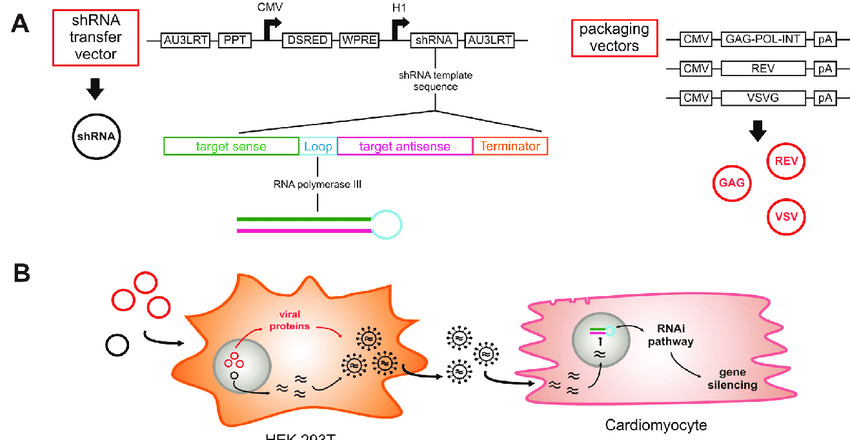 Figure 1. Delivery of shRNA by lentiviral vectors.1
Once delivered, shRNA is transcribed inside the cell, processed through endogenous RNA interference pathways, and guides sequence-specific degradation or suppression of target mRNA. This enables sustained reduction of target gene expression and allows researchers to study gene function under more stable experimental conditions.
Compared with transient siRNA transfection, shRNA lentivirus offers several important benefits:
| Feature | shRNA Lentivirus Advantage |
|---|---|
| Long-term knockdown | Enables stable suppression over extended culture periods |
| Broad cell compatibility | Suitable for many dividing, non-dividing, primary, and stem cell types |
| Difficult-to-transfect cells | Viral delivery improves gene transfer efficiency where lipid-based transfection may fail |
| Selection-ready systems | Antibiotic or fluorescent markers can support enrichment of successfully transduced cells |
| Scalable applications | Can be used for individual gene knockdown, pooled studies, and model generation |
| In vitro and in vivo research utility | Supports cell-based studies and selected animal model applications |
For researchers studying genes involved in proliferation, differentiation, survival, immune response, metastasis, neuronal function, viral replication, or disease progression, stable shRNA-mediated knockdown can provide a practical and durable experimental system.
Creative Biolabs' Custom shRNA Lentivirus Service Overview
Creative Biolabs offers an integrated service package covering the key steps required to generate custom shRNA lentivirus. Clients may start from a gene symbol, Gene ID, target sequence, transcript accession number, or a validated knockdown sequence. Our scientists then design and construct shRNA lentiviral vectors according to the project requirements.
Our service can include:
| Service Module | Description |
|---|---|
| Target gene information review | Evaluation of gene sequence, transcript variants, species, and target region suitability |
| shRNA sequence design | Design of multiple candidate shRNA sequences targeting the gene of interest |
| Scrambled control design | Construction of appropriate negative control shRNA sequence |
| Lentiviral vector construction | Cloning of shRNA oligonucleotides into lentiviral expression vectors |
| Reporter/selection marker customization | Optional eGFP, puromycin, neomycin, or other marker options |
| Lentivirus packaging | Production of recombinant shRNA lentiviral particles using optimized packaging systems |
| Titer determination | Measurement of lentiviral titer to support appropriate downstream use |
| Quality control | Verification of insert identity, plasmid quality, sterility-related parameters, and virus performance indicators |
| Optional knockdown validation | qPCR, western blot, fluorescence monitoring, or cell-based validation based on project needs |
| Delivery of final materials | Ready-to-use shRNA lentivirus and documentation for downstream experiments |
Comprehensive Service Workflow
Our Custom shRNA Lentivirus Service follows a rigorous, four-step standardized operating procedure (SOP) to ensure maximum knockdown efficiency and viral quality. We manage the entire process, requiring only your target gene's NCBI accession number, Gene ID, or sequence.
-
Step 1: Target Sequence Screening & shRNA Bioinformatics Design
Using proprietary bioinformatics algorithms, our scientists analyze your target mRNA sequence to identify optimal RNAi target sites. We design 3 to 5 candidate shRNA sequences, carefully avoiding known off-target homologies by blasting against the host genome. We evaluate thermodynamic stability, GC content, and secondary structure avoidance to maximize RISC loading efficiency. If you already have a validated siRNA or shRNA sequence, we can directly utilize it.
-
Step 2: Vector Construction & Cloning
The synthesized shRNA oligonucleotides are annealed and cloned into our optimized lentiviral transfer plasmids. These plasmids feature self-inactivating long terminal repeats (LTRs) to enhance safety. We offer a variety of transfer vectors featuring different promoters to drive shRNA expression, alongside CMV or EF1a promoters driving reporters and antibiotic resistance genes. All constructed plasmids undergo Sanger sequencing confirmation.
-
Step 3: Viral Packaging & Production
High-quality, endotoxin-free transfer plasmids are co-transfected with our 3rd- generation packaging plasmids and envelope plasmid (pMD2.G) into a highly permissive HEK293T producer cell line. We utilize optimized transfection reagents and culture media to ensure maximum viral shedding into the supernatant over a 48-to-72-hour harvest window.
-
Step 4: Concentration, Purification & Titration
The viral supernatant is collected, clarified via centrifugation, and filtered through 0.45 μm membranes. Depending on your required titer, the virus is concentrated using ultracentrifugation (sucrose cushion) or PEG precipitation. The final viral preparation is meticulously titrated using p24 ELISA (physical titer) and flow cytometry/FACS or qPCR (functional infectious titer). We guarantee a functional titer of ≥ 1 × 10⁷ TU/mL for standard preps, with ultra-high titers (≥ 109 TU/mL) available for in vivo applications.
Service Specifications
We offer clear, upfront specifications so you know exactly what to expect. A standard custom shRNA project yields the following deliverables:
| Feature | Specification Details |
|---|---|
| Input Required from Client | Gene Name, NCBI Gene ID, Accession Number, or user-provided sequence. |
| Knockdown Guarantee | ≥ 70% mRNA knockdown by at least one of the three provided constructs. |
| Constructs Provided | 3 independent targeting shRNA lentiviruses + 1 Scrambled (Non-Targeting) Negative Control lentivirus. |
| Volume & Titer (In Vitro) | 1 mL per construct at ≥ 1 × 10⁷ TU/mL (Transducing Units/mL). |
| Volume & Titer (In Vivo) | Custom volumes at ≥ 1 × 10⁸ to 109 TU/mL (Purified via ultracentrifugation). |
| Promoter Selection | shRNA driven by U6 or H1. Reporters driven by CMV, PGK, or CAG. |
| Estimated Turnaround Time | 3 to 5 weeks (depending on sequence complexity and requested titer grade). |
Extensive Quality Control (QC) Panel
Quality is the cornerstone of reproducible science. Our lentiviral vectors undergo a rigorous analytical testing pipeline before release. We understand that in vivo applications, in particular, require exceptionally clean viral preparations to prevent immune toxicity and experimental artifacts.
- Sequencing Verification: 100% sequence accuracy of the shRNA insert in the transfer plasmid.
- Functional Titration (FACS/qPCR): Accurate determination of infectious particles to ensure predictable MOI (Multiplicity of Infection) during your experiments.
- p24 Antigen ELISA: Measurement of physical viral particles to assess total viral yield and quality.
- Sterility & Mycoplasma Testing: Strict microbiological testing to guarantee the absence of bacterial, fungal, and mycoplasma contamination.
- Endotoxin Testing: Limulus Amebocyte Lysate (LAL) assay performed on purified in vivo grade viruses to ensure endotoxin levels are < 10 EU/mL.
Why Choose Creative Biolabs as Your shRNA Lentivirus Partner?
Your research deserves more than a one-size-fits-all viral vector. We combine deep molecular biology expertise, cutting-edge AI design algorithms, and rigorous quality control to deliver custom shRNA lentivirus solutions that you can trust.
✅ Assured Knockdown Efficiency with Low Off-Target Risks
Each shRNA is designed with careful assessment of seed-sequence complementarity and potential unintended microRNA-like off-target effects.
✅ High-Titer Lentiviral Production
Our expanded lentiviral vector production line serves both research-grade and preclinical needs with consistent quality and purity.
✅ Flexible Transgene Options
Choose from multiple promoters, selectable markers (Puromycin, GFP, RFP), and inducible systems to match your experimental design.
✅ Comprehensive QC Across All Batches
Every shRNA lentiviral prep is validated for titer, sterility, and functional knockdown at no extra charge, ensuring reproducibility in every downstream application.
What We Can Deliver
Creative Biolabs provides flexible deliverables based on project scope. Clients may request a simple ready-to-use virus package or a more comprehensive solution that includes design, production, validation, and experimental support.
For a typical custom shRNA lentivirus project, deliverables may include:
| Deliverable | Description |
|---|---|
| Custom-designed shRNA constructs | Usually multiple shRNA candidates targeting the gene of interest |
| Scrambled shRNA control | Negative control for evaluating sequence-specific knockdown |
| Lentiviral vector plasmids | Available upon request for archiving or further use |
| Ready-to-use shRNA lentivirus | Viral particles prepared for downstream transduction |
| Reporter or selection marker | eGFP, puromycin, or other marker options |
| Titer information | Supports planning of MOI and transduction conditions |
| Sequence confirmation | Verification of cloned shRNA insert |
| Project report | Summary of construct design, production, QC, and handling recommendations |
Frequently Asked Questions (FAQ)
Q: What information do I need to provide to start a custom shRNA lentivirus project?
A: You can start with a target gene name, Gene ID, accession number, or nucleotide sequence. Please also provide the species, target cell type, preferred reporter or selection marker, and downstream application if available. If you already have a validated shRNA sequence, we can use it directly for vector construction and lentivirus packaging.
Q: How many shRNA constructs should I test for one target gene?
A: For most targets, we recommend testing at least three independent shRNA constructs. shRNA performance can vary depending on target accessibility, transcript structure, and cellular context. Testing multiple candidates increases the chance of identifying a strong knockdown construct and helps support more reliable biological interpretation.
Q: Can you provide a scrambled shRNA control?
A: Yes. Creative Biolabs can provide scrambled or non-targeting shRNA control lentivirus. This control is important for evaluating background effects caused by viral transduction, shRNA expression, antibiotic selection, or reporter expression. We can also provide empty vector or reporter-only controls depending on the experimental design.
Q: Can I choose the reporter or selection marker?
A: Yes. Common options include fluorescent reporters such as eGFP and antibiotic selection markers such as puromycin, neomycin, hygromycin, or blasticidin. The best choice depends on your cell type, detection method, and whether you plan to enrich or establish stable knockdown cells.
Q: Can shRNA lentivirus be used in primary cells or stem cells?
A: Yes, lentiviral vectors are often selected for difficult-to-transfect cells, including many primary cells and stem cell systems. However, transduction conditions must be optimized carefully to balance efficiency and cell viability. Creative Biolabs can provide high-titer or concentrated virus and help recommend suitable transduction strategies.
Start Your Gene Silencing Journey Today
Creative Biolabs has been devoted to offering ready-to-use shRNA lentivirus to promote the development of our global customers' programs. Normally, we provide a set of three expression constructs and a scrambled control for every target gene. Our experienced scientists will do all they can do to deliver safer and higher titer shRNA lentivirus vectors for both in vivo and in vitro research. Please feel free to contact us for more details and our scientists will have a further in-depth discussion on your project.
Reference
- Brea M S, Morgan P E, Pérez N G. Intramyocardial gene silencing by interfering RNA. Journal of RNAi and Gene Silencing 13(-):550-556. 2017. Distributed under Open Access license CC BY 4.0, without modification.
