
Development of Adenoviral Vector as Immune Stimulant
Gene therapy is a clinical strategy that may potentially treat an array of genetic and nongenetic diseases, as well as a novel method for drug delivery and vaccination. The removal of the replicative and pathogenic ability of adenovirus, combined with their capacity to carry the therapeutic transgene and an ability to efficiently infect a variety of mammalian cell types makes adenoviral vectors amenable for use in gene therapy. As a world-class provider of biotechnology, Creative Biolabs provides omnidirectional technologies to meet the diverse needs of our customers. With our professional experience and advanced adenovirus vector construction platform, we are confident in offering the best service for the treatment of a range of diseases.
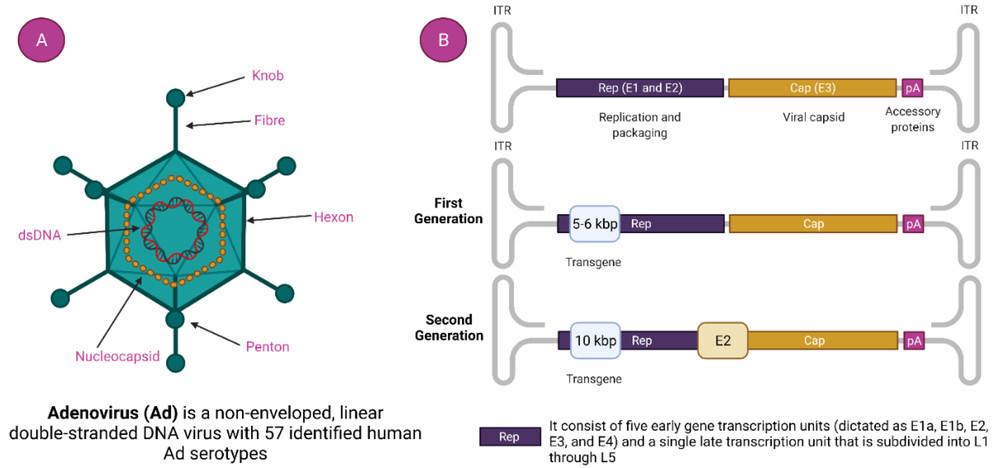 Figure 1. Adenovirus and adenovirus-based vector.1
Adenovirus-Induced Immune Stimulation
A major feature of the use of adenovirus vectors is to stimulate the host immune response. Adenovirus vectors induce the innate immunity that results in the inflammation of transduced tissues. Unlike adaptive immunity, the innate response is mediated by the adenovirus particle and does not require viral transcription. In vivo, the innate immune response involves the induction of cytokines and activation of effector leukocytes that comprise the host response to these virus particles. A number of interactions with leukocytes and with epithelial and endothelial cells are essential in triggering the host response to adenovirus vectors. Signal transduction via MAP kinases and NF-κB-mediated gene transcription are triggered during early virus-cell interactions and are key events in the innate recognition of adenovirus vector transduction. Human adenovirus serotypes 5 (HAd5) is the most studied adenovirus and a large proportion of adenovirus vectors tested in the clinic are based on this serotype. HAd5 is a good immune stimulant, its capsid proteins have strong antigenicity, and genomic DNA can induce innate immune responses. The scientists developed the HIV vaccines based on HAd5, and early trials demonstrated the induction of strong, long-lasting transgene-specific immune responses even in HAd5-seropositive subjects. When used as an anticancer vaccine platform, HAd5-based vectors induced strong antivector as well as transgene-specific immunity. While induction of antivector immunity may hamper the duration of transgene expression, it nonetheless works in favor by attracting immune mediators to the site of vaccine antigen, particularly in the case of anti-cancer vaccines.
Strategic Considerations for Developing an Adenoviral Immune Stimulant
Developing an adenoviral vector as an immune stimulant is not a one-size-fits-all process. The desired immunological outcome – whether tumor rejection, viral clearance, or tolerance breaking – dictates every design parameter.
Serotype Selection & Shielding Strategies
Pre-existing neutralizing antibodies against common human serotypes (especially Ad5) can dampen immune responses. We offer:
- Rare serotypes: Ad26, Ad35, Ad48, Ad11 – lower seroprevalence.
- Chimeric or pseudotyped vectors: Combining hexon, fiber, or penton from different serotypes to evade neutralization and alter tropism.
- Chemical shielding: PEGylation or polymer coating to reduce pre-existing immunity and enhance targeting.
- Hexon hypervariable region (HVR) modification: Replacing HVRs to escape neutralizing antibodies while retaining immunogenicity.
Genetic Engineering to Fine-Tune Immune Activation
We can engineer the adenoviral genome to incorporate genetic adjuvants or to delete immunosuppressive elements:
- Insertion of immunostimulatory transgenes: IL-12, IL-15, GM-CSF, CD40L, FLT3L – to recruit and activate dendritic cells.
- Co-expression of checkpoint inhibitors: Anti-PD-1 scFv, anti-CTLA-4 scFv, or dominant-negative TGF-β receptor.
- Deletion of immunomodulatory genes: e.g., E1A, E1B, E3 (to reduce immune evasion) – shifting balance toward enhanced antigen presentation.
- Incorporation of multiple antigens (polyvalent constructs) for broad immune coverage.
Head-to-Head Comparison: Adenoviral vs. Other Immune Stimulants
| Feature | Adenoviral Vector | mRNA/LNP | Peptide/Adjuvant | DNA Vaccine |
|---|---|---|---|---|
| Innate immune activation | High (TLR9, STING, NLRP3) | Moderate (TLR7/8) | Low (depends on adjuvant) | Very low |
| Transgene size | Up to 8–10 kb | ~5 kb | Short peptides only | Up to 10 kb |
| Single-dose immunogenicity | Strong | Moderate (needs boost) | Weak | Very weak |
| Cold chain requirement | -80°C (liquid) or 25°C (lyophilized) | -20°C to -80°C | 2–8°C | 2–8°C |
| Manufacturing complexity | Established (HEK293 suspension) | Complex (LNP formulation) | Simple | Simple |
| In vivo duration of expression | 7–14 days (transient – ideal for immune stimulation) | 3–5 days | N/A | 2–4 weeks |
Our Services
At Creative Biolabs, we provide comprehensive and customizable solutions for the development of adenoviral vectors as immune stimulants. Our services are designed to support researchers and biopharmaceutical companies from early concept development to preclinical validation. By integrating advanced vector engineering with deep immunological expertise, we enable the creation of adenoviral platforms that elicit robust and precisely controlled immune responses.
Adenoviral Vector Design and Construction
We offer customized design and construction of adenoviral vectors tailored to specific immune activation objectives. Our team supports a wide range of vector backbones and genetic configurations to ensure optimal transgene expression and safety.
| Service Component | Description | Customer Benefit |
|---|---|---|
| Serotype Selection | Choice of human or chimpanzee adenoviral serotypes | Reduced pre-existing immunity and improved targeting |
| Promoter Optimization | CMV, EF1α, tissue-specific, or inducible promoters | Enhanced and controlled transgene expression |
| Transgene Engineering | Antigens, cytokines, or immune modulators | Tailored immune activation |
| Replication Strategy | Replication-deficient or oncolytic adenoviruses | Flexibility for different therapeutic applications |
| Multigene Expression | Bicistronic or multicistronic constructs | Coordinated expression of multiple immune factors |
Immune-Stimulatory Payload Engineering
Adenoviral vectors can be engineered to deliver a diverse array of immune-enhancing molecules. Our expertise enables the design of vectors that stimulate both innate and adaptive immunity, thereby maximizing therapeutic efficacy.
| Payload Category | Examples | Functional Role |
|---|---|---|
| Cytokines | IL-12, GM-CSF, IFN-β, IL-15 | Enhance immune cell activation and expansion |
| Co-stimulatory Molecules | CD80, CD86, 4-1BBL, OX40L | Promote T cell activation and persistence |
| Tumor Antigens | NY-ESO-1, HER2, MAGE-A3 | Induce tumor-specific immune responses |
| Neoantigens | Patient-specific epitopes | Enable personalized immunotherapy |
| Chemokines | CCL5, CXCL9, CXCL10 | Recruit immune cells to target tissues |
| PRR Agonists | CpG motifs, STING activators | Amplify innate immune signaling |
Capsid Engineering and Immune Targeting
To enhance immune activation and overcome biological barriers, we provide advanced capsid modification services that enable precise targeting of immune cells and tissues.
| Engineering Strategy | Purpose | Application |
|---|---|---|
| Fiber Knob Modification | Redirect tropism to specific cell types | Targeting dendritic cells or tumor cells |
| Hexon Engineering | Reduce neutralizing antibody recognition | Overcoming pre-existing immunity |
| PEGylation/Shielding | Improve circulation time | Systemic administration |
| Chimeric Capsids | Combine features of multiple serotypes | Enhanced transduction efficiency |
| Ligand Insertion | Target specific receptors | Precision immune modulation |
Adenoviral Vector Production and Purification
We provide high-quality viral vector manufacturing services suitable for research and preclinical applications, ensuring consistency and scalability.
| Parameter | Specification |
|---|---|
| Production Scale | From small research batches to large preclinical quantities |
| Packaging Cell Lines | HEK293, PER.C6, or customized systems |
| Purification Methods | CsCl gradient ultracentrifugation or chromatography |
| Quality Control | Titer determination, sterility, endotoxin, and purity testing |
| Storage | Optimized buffer systems for long-term stability |
In Vitro Immunological Validation
To ensure functional immune activation, we offer a suite of in vitro assays that evaluate the biological activity of adenoviral immune-stimulatory vectors.
| Assay | Purpose | Readout |
|---|---|---|
| Transgene Expression | Confirm successful gene delivery | qPCR, Western blot, ELISA |
| Dendritic Cell Maturation | Evaluate innate immune activation | CD80/CD86 expression |
| Cytokine Profiling | Measure immune signaling | ELISA, multiplex assays |
| T Cell Activation | Assess adaptive immune response | Flow cytometry, IFN-γ ELISpot |
| Cytotoxicity Assays | Evaluate tumor cell killing | LDH or viability assays |
Applications of Adenoviral Immune-Stimulatory Vectors
Cancer Immunotherapy
- Therapeutic cancer vaccines
- Oncolytic adenovirus development
- Tumor microenvironment modulation
- Immune checkpoint synergy
Infectious Disease Vaccines
- COVID-19, influenza, HIV, Ebola
- Rapid antigen delivery platforms
- Single-dose vaccine potential
Combination Immunotherapy
- Adenovirus + checkpoint inhibitors
- Adenovirus + CAR-T therapies
- Adenovirus + mRNA or protein vaccines
Personalized Immunotherapy
- Neoantigen-based vaccines
- Patient-specific immune activation
- Precision immunomodulation
Why Choose Creative Biolabs for Your Adenoviral Immune Stimulant Development?
| Feature | Our Advantage |
|---|---|
| Experience | 400+ adenoviral projects completed, 50+ IND filings supported. |
| Serotype portfolio | Ad1, Ad2, Ad5, Ad6, Ad11, Ad19, Ad24, Ad26, Ad35, Ad48, Ad49, chimeric. |
| Transgene capacity | Up to 10 kb including multiple expression cassettes (bidirectional promoters, 2A peptides). |
| Purity & yield | >99% pure, endotoxin <1 EU/mL, titers up to 1E13 VP/mL. |
| Turnaround | Cloning to purified virus: 6–8 weeks; GMP batch: 4–6 months. |
| Regulatory support | Full CMC documentation, virus characterization, stability studies, and RCA testing. |
| Custom assays | Neutralization antibody assay, TCID50, plaque assay, qPCR, potency assay (IFN-γ ELISpot). |
Our Comprehensive Development Platform for Adenoviral Immune Stimulants
Creative Biolabs offers a streamlined, milestone-driven workflow covering all stages from early discovery to IND-enabling studies and manufacturing.
Phase I: Vector Design & Molecular Cloning
- In silico optimization of transgene expression.
- Selection of appropriate promoter.
- Construction of shuttle vectors and homologous recombination in E. coli or using bacterial artificial chromosome (BAC) technology.
- Quality control: Restriction mapping, sequencing, and endotoxin-free maxiprep.
Phase II: Virus Rescue, Amplification & Purification
- Transfection into complementing cell lines.
- Small-scale amplification and plaque purification.
- CsCl gradient ultracentrifugation or chromatography-based purification.
- High-titer production with low endotoxin and host cell protein residues.
Phase III: Immunogenicity & Functional Characterization
- In vitro assays: Transduction efficiency on target cells; transgene expression by Western blot, ELISA, or flow cytometry.
- Innate immune activation: TLR reporter cell assays, IFN-α/β ELISA, inflammasome activation.
- Adaptive immunity: Immunization of mice or humanized models – measure antigen-specific T cells and antibodies.
- Vector neutralization assay: Assess pre-existing immunity and vector persistence.
Phase IV: Process Development & GMP Manufacturing
- Upstream: Suspension culture in bioreactors.
- Downstream: Two-step chromatography.
- Fill/finish: Formulation optimization for stability.
- Quality control: Sterility, mycoplasma, adventitious viruses, replication-competent adenovirus (RCA) testing, potency assays.
- Regulatory documentation: Master cell bank (MCB), working cell bank (WCB), batch records, and CMC packages for IND filing.
What You'll Receive
- Fully engineered adenoviral vector constructs
- High-quality viral stocks
- Detailed experimental reports
- Immunogenicity data
- Optimization recommendations
- Scalable production protocols
Frequently Asked Questions (FAQ)
Q: Why are adenoviral vectors considered powerful immune stimulants?
A: Adenoviral vectors possess intrinsic immunogenic properties that enable them to activate both innate and adaptive immune responses. They are recognized by pattern recognition receptors (PRRs), leading to cytokine production and dendritic cell maturation. Additionally, their high transgene expression facilitates efficient antigen presentation via MHC I and II pathways. This dual mechanism makes them ideal platforms for vaccines and cancer immunotherapies.
Q: What types of immune-stimulatory payloads can be incorporated into adenoviral vectors?
A: A wide range of immune-modulating genes can be integrated into adenoviral vectors, including cytokines, co-stimulatory molecules, tumor-associated antigens, and patient-specific neoantigens. Chemokines and PRR agonists can also be included to enhance immune cell recruitment and activation. These payloads can be expressed individually or in combination to achieve synergistic therapeutic effects.
Q: How do you address pre-existing immunity to adenoviral vectors?
A: Pre-existing neutralizing antibodies against common adenoviral serotypes, such as Ad5, can reduce transduction efficiency. To overcome this challenge, we employ alternative serotypes (e.g., Ad26, Ad35, and chimpanzee-derived adenoviruses), capsid engineering, and heterologous prime-boost strategies. These approaches enhance vector delivery and maintain strong immunogenicity. Our team selects the optimal strategy based on the specific therapeutic application.
Q: Are adenoviral vectors safe for research and preclinical applications?
A: Yes, adenoviral vectors used in our services are typically replication-deficient, ensuring a strong safety profile while maintaining high transgene expression. Extensive quality control measures—including sterility, endotoxin testing, and replication-competent adenovirus (RCA) assays—are performed to guarantee reliability. These vectors have been widely used in both preclinical and clinical studies. Our designs also allow for additional safety features when required.
Q: Can adenoviral immune-stimulatory vectors be used in combination therapies?
A: Absolutely. Adenoviral vectors are highly compatible with other therapeutic modalities, such as immune checkpoint inhibitors, CAR-T cell therapies, oncolytic viruses, and protein or mRNA vaccines. Their ability to enhance antigen presentation and modulate the tumor microenvironment makes them excellent partners in combination regimens. Such strategies often result in synergistic immune activation and improved therapeutic outcomes. We provide customized designs to support these combination approaches.
Ready to Discuss Your Project?
Creative Biolabs is the right partner to help you bring new gene therapy approaches to the market. The adenoviral vectors construction requires in-depth expertise and flexible implementation. Over the years, we have accumulated scientific experience and are very proud of our high-quality adenovirus vector construction services to ensure your requirements are met. If you are interested in our services, please feel free to contact us, our experienced technicians will provide you with the most detailed questions and answers.
Reference
- Chavda V P, Bezbaruah R, Valu D, et al. Adenoviral vector-based vaccine platform for COVID-19: current status. Vaccines, 2023, 11(2): 432. https://doi.org/10.3390/vaccines11020432 Distributed under Open Access license CC BY 4.0, without modification.
