
Heat-induced Adenovirus Vector Construction Service
Delivery of hsp70 promoter-driven transgene expression cassettes to tumor cells using adenoviral vector is a promising strategy for cancer therapy. Creative Biolabs has state-of-the-art facilities and experienced staff to assist the customers in all areas of adenoviral vector design and construction. With in-depth expertise in this field, we offer inducible adenovirus vector construction services with rapid turnaround time and lowest price.
Introduction of Heat-induced Gene Expression System
The heat shock response is a highly conserved process involving transient increases in the transcription of many heat shock genes when cells are subjected to heat stress. Heat shock gene expression is mediated through the interaction of an activated trimer of heat shock factor 1 (HSF-1) with a heat shock element (HSE) found in the promoters of heat-inducible genes. Studies have shown that some heat shock promoters, specifically, the hsp70 promoter, can activate thousands of times of gene expression in response to moderate hyperthermia. Incorporation of a heat shock gene promoter into a gene transfer vector has the potential to provide high levels of control of therapeutic gene expression in locally heated tumors. In the case of heat-inducible promoters, such as hsp70b, gene expression is typically targeted by local vector delivery, such as intratumoral adenovirus injection. Moreover, the addition of HSE to the hsp70 promoter improves inducibility and increases expression levels of the transgene.
Why Adenoviral Vectors?
Selecting the right vector is critical for achieving controlled, efficient, and safe transgene expression. While multiple delivery systems exist, adenoviral vectors offer distinct advantages for heat-inducible gene therapy, particularly when spatial and temporal precision are required.
| Parameter | Adenoviral Vectors | Lentiviral Vectors | Adeno-Associated Vectors (AAV) | Non-Viral Systems |
|---|---|---|---|---|
| Transduction Efficiency | High in both dividing and non-dividing cells | High in dividing and non-dividing cells | High in many cell types, but limited by serotype tropism | Low to moderate; highly dependent on formulation and delivery method |
| Genomic Integration | No – remains episomal; avoids insertional mutagenesis | Yes – integrates into host genome; risk of oncogenesis | Minimal – predominantly episomal; low integration rate | No – transient expression unless integrated via CRISPR/etc. |
| Expression Duration | Transient, high-level (days to weeks) – ideal for controlled, short-term therapies | Long-term, stable – may be undesirable for toxic or immunomodulatory transgenes | Long-term, stable – challenging to turn off once delivered | Transient – often requires repeated administration |
| Packaging Capacity | Large – up to 8–9 kb (E1/E3-deleted); accommodates complex promoters (e.g., hsp70 + HSE arrays) | Moderate – ~8 kb | Small – ~4.5 kb; limited space for large promoters and transgenes | Unlimited in principle, but delivery efficiency declines with size |
| Immunogenicity | Moderate to high – can be beneficial for oncolytic applications; pre-existing immunity common | Low to moderate – but integration raises safety concerns | Low – widely used in gene therapy, but repeated dosing may be limited by neutralizing antibodies | Variable – depending on carrier (lipid, polymer, etc.); often low immunogenicity |
| Safety Profile | Well-established; E1/E3-deleted vectors are replication-deficient; decades of clinical experience | Integration-associated risks; insertional mutagenesis documented in clinical trials | Excellent safety profile; approved for multiple clinical applications | Generally safe; but efficiency and reproducibility remain challenges |
| Compatibility with Heat-Inducible Systems | Excellent – transient, high expression matches the rapid on/off kinetics of hsp70 promoters | Poor – integration leads to constitutive expression even if promoter is inducible | Limited – small capacity restricts use of optimized HSE-enhanced promoters | Moderate – can deliver plasmid DNA with heat-inducible promoters, but low transduction limits utility |
| Production Scalability | Highly scalable – high yields from HEK293 or PER.C6 cells; GMP processes well established | Scalable, but lower titers than adenovirus | Scalable, but production is complex and costly | Easily scalable but batch-to-batch variability remains |
Construction of Heat-induced Adenoviral Vectors
The hsp70b promoter can drive high-level transgene expression in the context of an adenoviral vector while maintaining relatively low levels of basal expression. By using the enhanced green fluorescent protein (EGFP) as a reporter gene, it was demonstrated that the expression of the heterologous gene controlled by the hsp70 promoter in the adenoviral vector could be elevated to 500-1000-fold over the background by moderate hyperthermia (39 °C to 43 °C) in tissue cultured cells. For example, under the control of heat shock promoter, a recombinant adenoviral vector containing EGFP was constructed to transduce exponential growth or plateau human prostate cancer cells (Dut-145 cells), which mediate high expression of EGFP. Furthermore, recombinant adenovirus vectors encoding the mouse IL-12 gene and the human TNF-ɑ gene, respectively, under the control of the hsp70b promoter have also been constructed and produced.
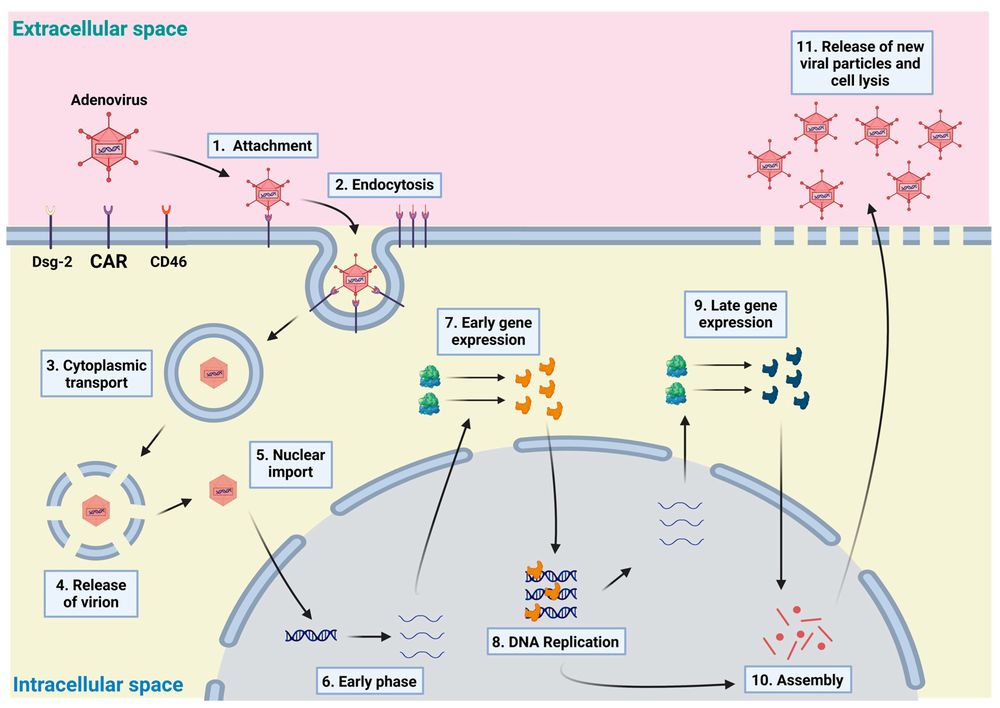 Figure 1. The life cycle of adenovirus.1
Application of Heat-induced Adenoviral Vectors
The heat-induced gene expression system provides a promising approach to gene therapy that can be used to treat cancer and other diseases that require local or transient treatment of gene expression. The ability to localize and regulate expression from heat shock promoters in adenoviral vectors has proven to be particularly beneficial for many cancer applications, especially if the therapeutic products are highly toxic, such as proteotoxic or cytokines. Recently, heat-induced adenovirus vectors targeting of therapeutic genes such as IL-2, IL-12 and TNF-ɑ has shown good success in glioma and melanoma tumor models. Heat-induced adenoviral vector-mediated gene therapy shows some advantages over other therapies:
- Heat-inducible gene transfer vectors may allow therapeutic genes to be targeted to locally heated tumors, thereby reducing nonspecific systemic gene expression.
- The gene expression in vivo can be controlled and defined even when vectors are administered systemically.
- No long-term side effects have been observed during decades of experimental cancer treatment.
Services at Creative Biolabs
Creative Biolabs is a leading expert in adenoviral vector design and construction for gene delivery and gene therapy applications. Heat-induced adenoviral vectors have important application prospects in the fields of gene delivery and gene therapy. Based on our proprietary platform technology, we provide quality heat-induced adenoviral vector construction services to our global customers to meet their research and clinical needs.
Custom Vector Design & Engineering
- Promoter Optimization: We offer standard hsp70 promoters or enhanced synthetic promoters with multiple HSE repeats to maximize sensitivity.
- Transgene Integration: Whether you are delivering cytokines (IL-2, IL-12, TNF-α), suicide genes (HSV-TK), or reporter genes (EGFP, Luciferase), we ensure codon optimization for the target host species.
- Serotype Selection: While Ad5 is the gold standard, we offer various serotypes and chimeric fibers (e.g., Ad5/35) to overcome pre-existing immunity or improve cell-specific entry.
Rigorous Validation & Characterization
Each batch of heat-induced adenovirus undergoes a battery of tests:
- Thermal Response Profiling: Verification of the temperature-dependent induction curve (from 37°C to 45°C).
- Titer Measurement: Accurate determination of IFU/mL and VP/mL using qPCR and plaque assays.
- Purity Assessment: HPLC-based analysis to ensure low endotoxin levels and high viral particle integrity.
Large-Scale Production & Purification
For projects requiring high-titer, high-purity virus, we scale up using optimized bioprocessing methods.
| Scale | Culture System | Purification Method | Typical Yield |
|---|---|---|---|
| Research Grade | Adherent HEK293 in roller bottles |
Freeze-thaw lysis CsCl ultracentrifugation |
10¹⁰–10¹¹ PFU |
| Preclinical Grade | Suspension HEK293 in bioreactors |
Depth filtration Anion exchange chromatography Tangential flow filtration (TFF) |
10¹²–10¹³ PFU |
Quality Control & Functional Validation
Every adenoviral vector lot undergoes a comprehensive QC panel to ensure consistency, safety, and performance.
| QC Parameter | Method | Acceptance Criteria |
|---|---|---|
| Physical Titer | OD₂₆₀ (viral particles/mL) | ≥1 × 10¹² VP/mL |
| Infectious Titer | TCID₅₀ or plaque assay (PFU/mL) | PFU/VP ratio ≥1:50 |
| Transgene Identity | PCR or NGS | 100% match to reference |
| Sterility | 14-day bacterial/fungal culture | No growth |
| Endotoxin | LAL assay | ≤1.0 EU/mL |
| Replication Competence | Serial passage in A549 cells | No CPE after 3 passages |
In addition to the above services, other regulated adenoviral vector construction services are also available at Creative Biolabs, including:
- Radiation-induced Adenovirus Vector Construction
- Hypoxia-inducible Adenovirus Vector Construction
- Tetracycline-inducible Adenovirus Vector Construction
- FK506/Rapamycin-inducible Adenovirus Vector Construction
Our Adenoviral Vectors in Heat-Inducible Gene Therapy
| Advantage | Benefit for Heat-Inducible Systems |
|---|---|
| Episomal, transient expression | Expression ceases when heat is removed; ideal for regulated therapies |
| High transduction efficiency | Maximizes number of cells expressing the therapeutic gene upon heating |
| Large cloning capacity | Enables use of optimized promoters with multiple regulatory elements |
| Proven safety in cancer applications | Decades of use in clinical trials with no long-term vector-related adverse events |
| Compatibility with local delivery | Intratumoral injection + focal hyperthermia confines expression to target tissue |
| Well-established manufacturing | Reliable, scalable production ensures reproducible results from research to clinic |
Frequently Asked Questions (FAQ)
Q: What is the typical induction fold for hsp70-driven vectors?
A: With our optimized constructs, induction ratios of 500- to 1000-fold are routinely achieved upon exposure to 42°C for 1–2 hours, depending on cell type and transgene.
Q: Can I use this system with focused ultrasound?
A: Yes. Focused ultrasound (FUS) combined with microbubbles is an excellent method to induce localized hyperthermia in deep tissues and is compatible with our vectors.
Q: Do you offer non-adenoviral heat-inducible vectors?
A: While we specialize in adenoviral systems, we can also develop heat-inducible AAV, lentiviral, or non-viral vectors upon request.
Q: What cancer models are best suited?
A: We have extensive experience with subcutaneous and orthotopic tumor models, particularly for prostate, breast, glioma, melanoma, and pancreatic cancers.
Q: How do I get started?
A: Simply contact us using the form below. Our scientific team will arrange a consultation to understand your goals and propose a tailored plan.
Partner with Creative Biolabs
Creative Biolabs is not just a service provider; we are your research partner. Our team of virologists and gene therapy experts are dedicated to overcoming the limitations of conventional viral delivery. Whether you are in the discovery phase or moving toward pre-clinical trials, our Heat-induced Adenovirus Vector Construction Services provide the precision and reliability your project demands. For more detailed information, please feel free to contact us or directly send us a quote.
Reference
- Scarsella L, Ehrke-Schulz E, Paulussen M, et al. Advances of recombinant adenoviral vectors in preclinical and clinical applications. Viruses, 2024, 16(3): 377. https://doi.org/10.3390/v16030377 Distributed under Open Access license CC BY 4.0, without modification.
