
Engineering the Next Wave of Immunotherapy
Developing effective immune cell therapies requires overcoming significant hurdles: gene silencing, exhaustion in suppressive microenvironments, and off-target effects. Success depends not just on the therapeutic transgene, but on the vector architecture that delivers and regulates it.
Creative Biolabs offers a comprehensive Lentiviral Vector (LV) design platform specifically for immune modulation research. We engineer vectors to carry multi-functional payloads—such as cytokines, checkpoint inhibitors, and safety switches—while optimizing promoter specificity for T-cells, NK cells, and myeloid lineages. Our services focus on providing high-quality tools for discovery and pre-clinical validation.
Payload Precision
Bicistronic and tricistronic designs using 2A peptides to co-express receptors with cytokines (e.g., IL-15, IL-12) or metabolic enhancers.
Microenvironment Resistance
Vectors designed to express dominant-negative receptors (e.g., DNR-TGFβ) or secretion factors to modify the local immune environment.
Safety Mechanisms
Integration of inducible suicide genes (iCasp9, HSV-TK) or detection markers (tEGFR) for precise experimental control.
Immune Vector Design Services
T-Cell & Receptor Engineering
High-efficiency gene transfer for CD4+ and CD8+ T cells with optimized expression kinetics.
Selection of EF1α, PGK, or MSCV promoters to ensure sustained expression in activated T cells without silencing.
Multi-cistronic backbones utilizing P2A/T2A peptides to co-express receptors (TCRs, Chimeric Receptors), selection markers (e.g., LNGFR), and safety switches.
Functional assessment including surface expression (FACS), cytokine release (ELISA), and cytotoxicity assays.
NK Cell Engineering
Overcoming the resistance of Natural Killer cells to viral transduction for off-the-shelf research applications.
Usage of specialized envelopes (e.g., BaEV, RD114-TR) that bind to receptors abundant on NK cells (ASCT2), significantly boosting transduction rates over VSV-G.
Protocols utilizing TBX21 or specific cytokine cocktails (IL-2/IL-15/IL-21) during transduction to maintain NK cytotoxicity and persistence.
Macrophage & Myeloid Vectors
Facilitating gene delivery into monocytes and macrophages for tumor infiltration studies.
Incorporation of Vpx protein into viral particles to degrade SAMHD1, a restriction factor that blocks lentiviral infection in myeloid lineages.
Usage of myeloid-specific promoters (e.g., CD68, CD11b) to restrict transgene expression to macrophages and monocytes.
Logic Gating & Smart Vectors
Vectors that compute signals to increase specificity and safety in complex environments.
Design of vectors delivering synthetic receptors (e.g., SynNotch) that induce payload expression only upon sensing a specific priming antigen.
Combinatorial vector systems that require two antigens for activation (AND gate) or shut down in the presence of normal tissue markers (NOT gate).
Combinatorial Screening
High-throughput discovery of factors that enhance immune cell persistence and function.
Pooled CRISPR or shRNA lentiviral libraries designed to screen for genes that prevent T-cell exhaustion or enhance metabolic fitness.
NGS-based analysis of enriched populations post-challenge to identify novel therapeutic targets.
Technical Capabilities
Our platform integrates immunology and virology to solve the unique challenges of gene delivery into primary immune cells.
Complex Vector Architecture
Standard vectors often fail when payloads exceed 5-6kb or require complex regulation. We engineer optimized backbones for multi-functional immune cells.
-
Bi/Tricistronic Expression Efficient co-expression of therapeutic genes, cytokines, and markers using codon-optimized 2A peptide linkers (P2A, T2A, E2A).
-
Inducible Systems Integration of Tet-On/Off or NFAT-responsive promoters to drive payload expression only upon T-cell activation, reducing tonic signaling toxicity.
Tropism & Entry
Immune subsets have distinct receptor profiles. We match the viral envelope to the target cell to maximize entry efficiency.
-
Alternative Pseudotyping Beyond VSV-G, we offer Gibbon Ape Leukemia Virus (GALV) for T-cells and BaEV/RD114 for NK cells to utilize nutrient transporters (PiT-1, ASCT2) for entry.
-
Surface Engineering Display of costimulatory ligands (e.g., anti-CD3 scFv) directly on the viral surface to activate resting T cells during transduction.
Production & Purification
Our platform utilizes advanced HEK293T-based transient transfection systems optimized for high-yield production of 3rd generation self-inactivating (SIN) lentiviral vectors. Recognizing that primary immune cells—such as T-cells and NK cells—are highly sensitive to impurities, we employ a multi-stage purification process to remove host cell proteins (HCP), residual DNA, and serum components.
| Feature | Specification / Capability | Description |
|---|---|---|
| Production System | 3rd Generation SIN System | Employs a split-genome packaging strategy for maximum safety and minimal risk of RCL. |
| Scalability | Pilot to Large Scale | Production volumes ranging from 100 μL aliquots to multi-liter batches for systemic delivery. |
| Purification Method | Multi-modal Chromatography | High-resolution removal of impurities using Ion-Exchange (IEX) or Tangential Flow Filtration (TFF). |
| Standard Titer | ≥ 10^8 TU/mL | Guaranteed functional titers validated on Jurkat or primary T-cell lines. |
| Ultra-High Titer | ≥ 10^9 TU/mL | Concentrated stocks available for applications requiring low volume and high efficiency. |
| Purity Grade | Research & Pre-clinical | Optimized to ensure minimal toxicity and high viability in sensitive primary cell cultures. |
| Endotoxin Levels | < 10 EU/mL | Stringent control to prevent non-specific immune activation during modulation assays. |
Application Scenarios
Our engineered lentiviral vectors are optimized for diverse research applications across the immunology landscape.
CAR-T/TCR-T Cell Therapy
We specialize in the delivery of complex Chimeric Antigen Receptor (CAR) and T-Cell Receptor (TCR) constructs into primary T cells. Our platform ensures high-efficiency integration of multi-cistronic payloads, enabling the simultaneous expression of targeting receptors alongside costimulatory molecules or safety switches to enhance anti-tumor efficacy and clinical safety profiles.
NK Cell Engineering
Overcoming the natural resistance of Natural Killer cells to viral entry, our engineered vectors utilize specialized pseudotyping strategies like BaEV or RD114. This allows for stable genetic modification of NK cells to express CARs or cytokines, significantly improving their persistence and cytotoxic performance against hematological malignancies and solid tumors.
Immune Checkpoint Modulation
Our vectors facilitate the precise knock-down or over-expression of immune checkpoint molecules such as PD-1 or CTLA-4 within the tumor microenvironment. By delivering shRNA or CRISPR/Cas9 components, we enable the development of "armored" immune cells that are resistant to immunosuppressive signals, thereby sustaining their activity in hostile tumor conditions.
APC Modification
We provide tools for the genetic enhancement of Dendritic Cells and other APCs to improve antigen processing and presentation. By introducing specific tumor antigens or costimulatory factors, our lentiviral systems help create more potent cellular vaccines that can effectively prime the endogenous immune system for a robust and memory-guided anti-tumor response.
Treg Therapy
For autoimmune diseases and transplant rejection, our platform supports the modification of Regulatory T cells to promote immune tolerance. We engineer vectors to deliver lineage-defining transcription factors like FOXP3 or antigen-specific receptors, ensuring the stability and suppressive function of Tregs even in inflammatory environments.
In Vivo Immune Modulation
Advancing beyond ex vivo cell engineering, our high-titer and high-purity lentiviral vectors are suitable for direct in vivo administration. This approach enables the targeted delivery of therapeutic genes to immune cell subsets within the body, offering a streamlined pathway for treating infectious diseases, chronic inflammation, and localized tumors.
Why Partner with Creative Biolabs?
Leveraging years of deep-seated expertise in both viral vector engineering and cellular immunology, we provide a robust framework for advancing your therapeutic candidates from concept to pre-clinical validation.
Deep Immunology Expertise
We don't just manufacture viruses; we understand the underlying T-cell and NK cell biology that drives therapeutic success. Our scientists provide expert consultation on promoter selection to prevent gene silencing and exhaustion, ensuring your vector design is optimized to maintain metabolic fitness and long-term persistence in suppressive environments.
Seamless End-to-End Platform
Our platform offers a comprehensive "one-stop" workflow, spanning from the initial design of the gene-of-interest (GOI) construct to the production of high-titer lentivirus and subsequent functional killing assays. This integrated approach eliminates the logistical hurdles of multi-vendor projects and ensures complete continuity in data and quality control throughout the development cycle.
Rigorous Functional Validation
Beyond physical titers, we offer the option to validate your vector by transducing primary human PBMCs, T cells, or NK cells. We provide detailed flow cytometry analysis to verify surface expression and biological activity, giving you the confidence that your custom-engineered vectors will perform exactly as expected in your downstream experimental models.
Flexible & Scalable Solutions
Whether your project requires 100 μL of vector for a pilot in vitro screen or large-scale, high-concentration batches for complex in vivo animal studies, our platform scales to meet your specific research needs (Research Use Only). We offer tailored purification grades and formulation buffers optimized for maximum cell viability and minimal non-specific toxicity.
Development Workflow
A streamlined pathway from vector design to functional validation, ensuring your immune cell therapy concepts are ready for testing.
Construct Design & Strategy
We collaborate to define the payload (Receptor, Cytokine, Switch) and vector backbone. Decisions are made on promoter usage (EF1α vs PGK), orientation, and safety elements (insulators). We also select the optimal envelope (VSV-G, BaEV, etc.) based on the target immune cell subset.
Cloning & Verification
The transfer plasmid is constructed using seamless cloning to avoid scars. We perform codon optimization to enhance mRNA stability and translation in human T cells. The final construct is verified by Sanger sequencing and restriction digest.
High-Titer Production
Vectors are produced in HEK293T cells. For immune modulation studies, high purity is critical to prevent toxicity. We use multi-modal chromatography or ultracentrifugation/TFF to remove serum and cellular debris, concentrating vectors to >10^8 - 10^9 TU/mL (Pre-clinical/Research Grade).
Physical & Functional QC
Release testing includes p24 ELISA (physical titer), RT-qPCR (genomic titer), and flow cytometry based functional titer on Jurkat or primary T cells. We check for sterility, mycoplasma, and endotoxin levels to ensure the vector is safe for sensitive primary cell culture.
Custom Bioassays (Optional)
Upon request, we perform extended characterization: Transduction of primary PBMC-derived T cells, assessment of receptor expression levels, and even preliminary cytotoxicity assays against target tumor lines to validate the biological activity.
Delivery & Support
Vectors are aliquoted, cryopreserved, and shipped on dry ice. You receive a full data package, including the vector map, sequencing data, and Certificate of Analysis. We also provide protocols for optimal transduction.
What You Receive
Complete documentation and high-quality reagents to ensure your immune modulation experiments are reproducible and robust.
Plasmid & Maps
Annotated vector maps (SnapGene/GenBank format) and sequence verification data. We also provide a sample of the packaging plasmid DNA for your own internal propagation or future viral production.
Concentrated Virus
Purified, high-titer lentiviral vector aliquots (standard >10^8 TU/mL, high concentration >10^9 TU/mL) stored in optimal formulation buffer to maintain infectivity for primary T and NK cells.
Quality Certificate
Certificate of Analysis (CoA) detailing physical and functional titers, sterility results, and endotoxin levels. For custom projects, FACS data showing transduction efficiency in target immune cells is included.
Published Data
Case Study: Lentiviral Vectors Drive Superior Memory T-Cell Formation
Background
Generating high-quality memory CD8+ T cells is crucial for effective therapeutic vaccines against cancer and chronic infections. While Adenovirus serotype 5 (Ad5) vectors are known for inducing massive effector T cell expansion, they often drive these cells toward a terminally differentiated, exhausted state, limiting the formation of durable immunological memory.
Solution
A comparative study was conducted to evaluate the immune kinetics of Lentiviral vectors (LV) versus Ad5. Researchers tracked the phenotypic evolution of antigen-specific CD8+ T cells, specifically analyzing their transition from the effector phase to the memory phase using markers for "stemness" (CD127) and terminal differentiation (KLRG1).
Result
The study revealed that LV immunization induces a "time-compressed" effector phase, allowing T cells to commit to the memory lineage significantly earlier than those induced by Ad5. LV-primed cells rapidly upregulated the IL-7 receptor (CD127) and downregulated KLRG1, establishing a robust pool of Central Memory T cells (Tcm) with superior proliferative capacity upon secondary challenge.
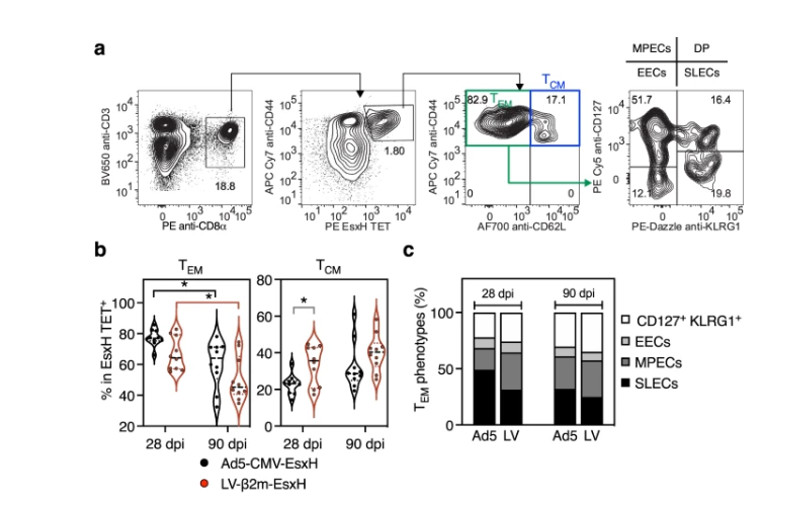
Figure 1: Earlier commitment to memory T cells after immunization with lentiviral vector compared to Ad5 vector.
Lentiviral vector induces high-quality memory T cells via dendritic cells transduction. Commun Biol, 2021;4:736. https://doi.org/10.1038/s42003-021-02251-6 Distributed under Open Access license CC BY 4.0, with modification.
Frequently Asked Questions
Start Your Immune Vector Design
Have the following details ready to expedite your proposal:
- Payload: Transgene structure (Gene of Interest, tag, etc.).
- Cell Type: T Cells, NK Cells, Macrophages, or iPSCs?
- Expression: Constitutive (EF1a) or Inducible (NFAT/SynNotch)?
- Scale: Pilot screening (mL) or Animal Study (L)?
- Safety: Suicide gene or detection marker requirements?
Get a Specialized Quote
Our immunology experts will review your design and propose the optimal vector strategy.
Start Your Project Today
Tell us about your project, and our experts will get back to you with a customized quote and proposal.
