
miRNA-Regulated Lentiviral Vectors Development Service
miRNA-regulated lentiviral vector is a combination of specifically expressed miRNAs with lentiviral vectors as an optimized gene delivery system to achieve a better therapeutic effect. Equipped with powerful genetic technologies and experienced expert team, Creative Biolabs provides comprehensive custom lentiviral vector services based on the value of high-quality and time-saving.
miRNA Introduction
miRNAs are small, non-coding RNAs that regulate gene expression at the post-transcriptional level through sequence-specific interactions with target mRNAs. Upon binding to complementary sequences-typically located in the 3′ untranslated region (3′UTR)-miRNAs induce mRNA degradation or inhibit translation. Importantly, miRNA expression patterns are highly tissue- and cell-type specific. This intrinsic biological feature enables the use of miRNA-mediated regulation as a powerful tool to restrict transgene expression, enhance biosafety, and improve therapeutic specificity in lentiviral vector–based applications.
miRNA Based Gene Therapy
microRNA (miRNA) is a class of non-coding single-stranded RNAs with 21-24 nucleotides encoded by endogenous genes. Over a thousand of miRNAs have been identified since the first discovery in 1993. These miRNAs have been indicated to play critical functions in a series of important biological processes (such as cell cycle, differentiation, apoptosis, stress response) through the regulation of gene expression. The dysregulation of miRNA in different tissues or stages will result in a variety of pathological conditions, including cancers, metabolic disorders, neurological diseases, etc. Besides, both biofunctions and diversity of miRNAs lay the foundation of the favorable application of miRNAs in the gene therapy.
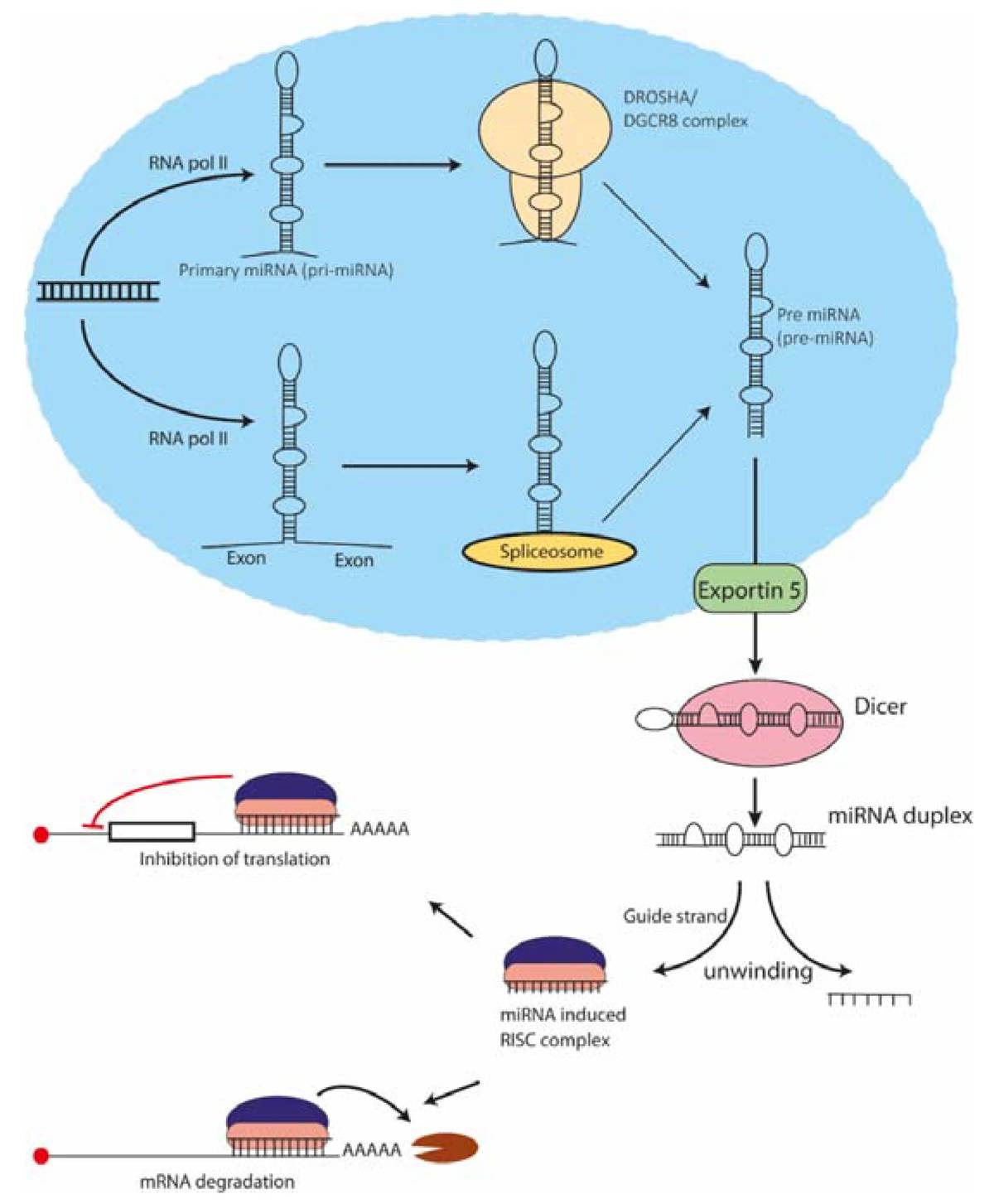 Figure 1. Biogenesis and mechanism of action of miRNAs.1
miRNAs based gene therapy is mainly embodied in the application for cancer gene therapy, which is owed to its significant reverse regulation of target genes. The expression inhibition or target recognition dysregulation of miRNA is the original cause of abnormal levels of tumor-associated proteins, further leading to abnormal proliferation, differentiation or apoptosis of tumor cells. Therefore, the main principle of miRNAs-based gene therapy is accurate miRNA delivery to tumor sites by a vector system functioning as a negative regulator of tumor-associated genes expression.
miRNA Inducible Lentiviral Vectors
Lentiviral vector is a class of delivery system using lentiviruses as vectors to transfer a gene of interest into the cells in vivo, which plays an irreplaceable role in gene therapy. But generally constructed lentiviral vectors are capable to infect a wide range of cell types with no selectivity and specificity. Definitely, the miRNA inducible lentiviral vector is a type of modified ideal gene delivery system with several advantages:
- The tissue, activation or differentiation-specific expression pattern of miRNAs enhance the specificity and safety of the lentiviral vectors.
- Lentiviral vector can protect miRNAs from degradation by circulation or nucleases in the cytoplasm, by which miRNA not only regulates the specificity of the lentiviral vector but also functions to regulate the gene expression of targeted tissues.
Applications of miRNA-Regulated Lentiviral Vectors
The utility of miRNA-regulated LVs extends across the entire spectrum of biomedical research and therapeutic development. By exploiting the unique miRNA "fingerprints" of different cell types, we facilitate applications that were previously unattainable.
Hematopoietic De-targeting and Immune Evasion
One of the most critical applications is the use of miR-142-3p target sequences. This miRNA is highly enriched in hematopoietic cells, particularly Antigen-Presenting Cells like dendritic cells and macrophages. By incorporating miR-142-3p targets into the vector, transgene expression is effectively silenced in APCs. This prevents the presentation of transgene-derived peptides on MHC Class I molecules, significantly reducing the host immune response against the therapeutic protein and enabling long-term tolerance.
Hepatotoxicity Mitigation
In systemic gene therapy, the liver acts as a sink for viral vectors, often leading to hepatotoxicity due to supraphysiological expression levels. The incorporation of target sites for miR-122 enables the sequestration of expression away from hepatocytes while allowing therapeutic levels in other target organs, such as the heart or central nervous system.
Oncology and Oncolytic Virotherapy
miRNA expression profiles are frequently dysregulated in cancer. For instance, let-7 is often downregulated in tumorigenic cells but abundant in normal tissue. Vectors regulated by let-7 targets can be engineered to express cytotoxic payloads exclusively in cancer cells, sparing healthy tissue and expanding the therapeutic window of suicide gene therapies.
Stem Cell Lineage Tracing and Safety
Ensuring the safety of Induced Pluripotent Stem Cell (iPSC) therapies is critical. Vectors can be engineered with targets for pluripotency-associated miRNAs. This ensures that suicide genes or differentiation factors are only active (or inactive) at specific stages of differentiation, acting as a failsafe against teratoma formation.
Design Principles of miRNA-Regulated Lentiviral Vectors
Our miRNA-regulated lentiviral vectors are engineered by inserting one or multiple miRNA target sites (miRTs) into the 3′UTR of the transgene cassette. Key design considerations include:
- Selection of biologically relevant miRNAs with well-characterized expression profiles
- Optimization of miRT copy number, spacing, and orientation
- Balancing repression efficiency with long-term expression stability
- Avoiding saturation of endogenous miRNA pathways
This rational design ensures robust repression in miRNA-positive cells while maintaining efficient expression in miRNA-negative target cells.
Services At Creative Biolabs
As an experienced expert in the field of gene therapy, Creative Biolabs has made remarkable achievements in viral vector construction during the past decade. We provide a series of lentiviral vectors services for gene therapy, covering from the design and construction of the lentiviral vectors, safety determination to lentiviral vectors titration, as well as other tailored services.
- Vector Construction: Custom cloning of open reading frames (ORFs), shRNAs, or gene editing components into a lentiviral backbone containing an optimized 3' UTR miRT cassette.
- Combinatorial Engineering: We offer dual-layer regulation services, combining tissue-specific promoters with miRNA off-target sequences for maximum specificity.
- Viral Packaging: From small-scale (approximately 1 mL) to large-scale
Why Choose Our Services?
The development of miRNA regulatory vectors requires a delicate balance of thermodynamics and virology.
- Deep Expertise: Creative Biolabs has many years of professional experience in lentiviral vector technology. We understand how to modify the 3'UTR without compromising viral genome stability or affecting packaging efficiency.
- Customized Service: Unlike off-the-shelf product suppliers, we treat each project as unique. We customize the number of miRTs, linker sequences, and promoter combinations based on the abundance of specific miRNAs in your target cells.
- Data-Driven Design: Our strategy is based on bioinformatics analysis of miRNA expression profiles, ensuring that the targets we select are biologically relevant to your model organism (human, mouse, rat, etc.).
- Fast Delivery: Our optimized production process allows us to deliver high-quality customized vectors in just 3-4 weeks.
Frequently Asked Questions
Q: Will inserting miRNA target sites reduce gene expression in the target tissue?
A: Ideally, no. If the target miRNA is indeed absent in your target tissue, the miRT sequence in the 3'UTR should remain unbound, and the transcript should remain stable. However, careful bioinformatics analysis is needed to ensure that the miRNA is not expressed at low levels in the target cells.
Q: Can I combine multiple different miRNA target sites in one vector?
A: Yes. We can design combinatorial miRT cassettes (e.g., targets for miR-122 and miR-142-3p) to simultaneously target the liver and the immune system. This "logic gating" approach allows for highly complex expression patterns.
Q: How many copies of the miRNA target site are needed?
A: The standard protocol recommends using 4 copies of the perfectly complementary sequence, separated by optimized linkers, to provide the strongest silencing effect (typically >50-fold inhibition). Too few copies may lead to incomplete silencing, while too many copies may lead to instability. We will optimize this for each project.
Q: Is there a risk of endogenous miRNA saturation (sponge effect)?
A: If the transgene expression level is extremely high, the mRNA can act as a "sponge," sequestering available miRNAs and preventing them from regulating their natural targets. We mitigate this risk by optimizing promoter strength to ensure expression levels are within the physiological range and do not disrupt host cell homeostasis.
Q: How is this service different from AAV services?
A: While AAV also supports miRNA regulation, lentiviral vectors have a larger vector capacity (>8 kb, compared to less than 4.7 kb for AAV) and allow for permanent genomic integration. This makes miRNA-regulated lentiviral vectors ideal for ex vivo stem cell therapy and long-term lineage tracing studies.
Connect with Us Anytime!
By partnering with Creative Biolabs, you gain access to world-class expertise in vector engineering, ensuring that your research is built upon a foundation of precision, safety, and reliability. Whether you are developing novel immunotherapies, modeling complex diseases, or mapping neural circuits, our miRNA-Regulated Lentiviral Vectors Development service provides the control you need to achieve breakthrough results. What you need to do is just contact us or communicate with us for more detailed information.
Reference
- Dhungel B, Ramlogan-Steel C A, Steel J C. MicroRNA-regulated gene delivery systems for research and therapeutic purposes. Molecules, 2018, 23(7): 1500. https://doi.org/10.3390/molecules23071500 (Distributed under Open Access license CC BY 4.0, without modification.)
