
Safety Assessment of Nucleic Acid
Nucleic acids, comprising polymeric sequences of nucleotides such as RNA, DNA, and their analogs, are being increasingly explored as direct therapeutic agents for addressing a broad spectrum of disease conditions. Assessing the safety of nucleic acids is crucial for advancing scientific research, ensuring treatment efficacy, and meeting regulatory requirements. Only through comprehensive safety assessments can the safety and efficacy of nucleic acid therapeutic drugs be ensured. Analyzing the safety of nucleic acids involves multiple aspects. As a professional nucleic acid manufacturer, Creative Biolabs provides some of the main aspects along with corresponding detection methods.
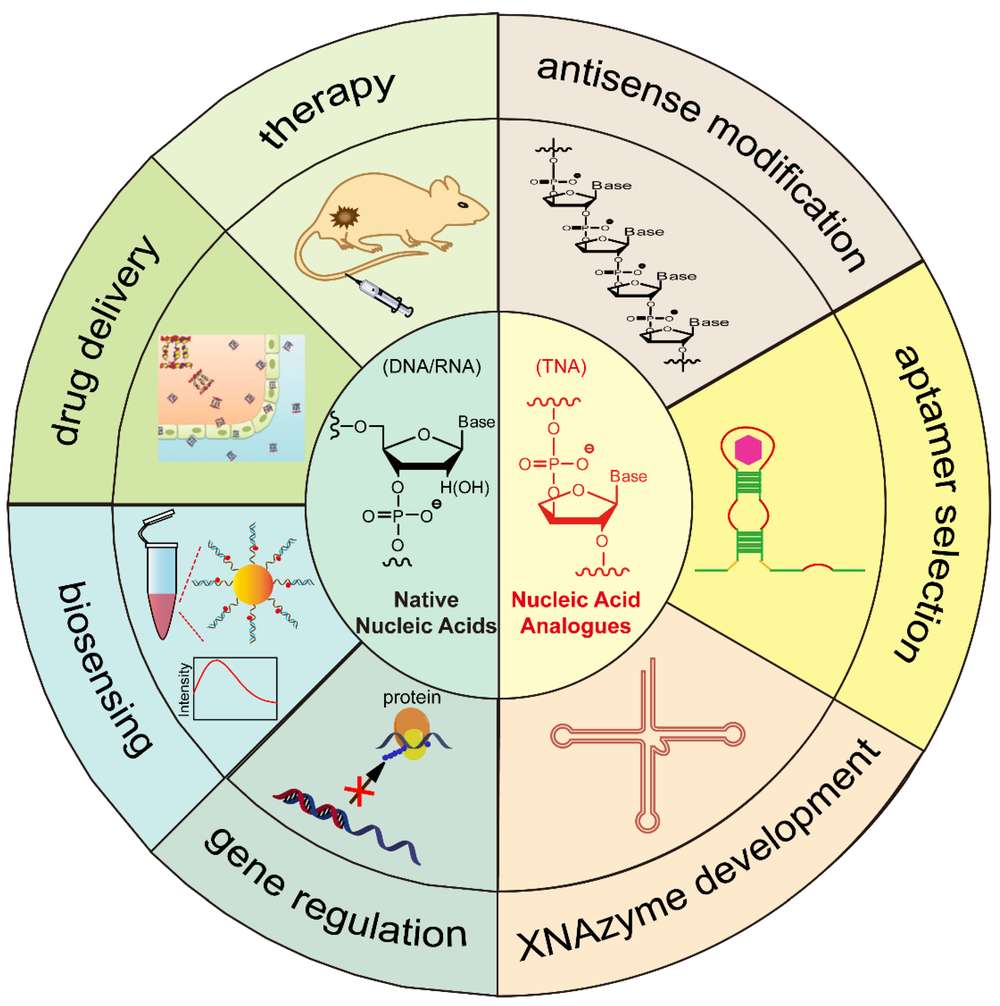 Figure 1. Schematic illustration of nucleic acids and their analogues for biomedical applications.1
Safety Assessment of Nucleic Acid
The Rise and Market Potential of Nucleic Acid Drugs
From the approval of the first siRNA drug to the crucial role of mRNA vaccines during the COVID-19 pandemic, and the entry of CRISPR-based gene-editing therapies into clinical trials, nucleic acid drugs have moved from the proof-of-concept stage to the commercialization stage. By directly intervening in the transmission of genetic information, they offer new solutions for targets that were traditionally difficult to drug, covering fields such as oncology, genetic diseases, metabolic diseases, and infectious diseases.
The Specificity and Necessity of Safety Assessment
The safety considerations for nucleic acid drugs differ fundamentally from those for traditional small molecule or antibody drugs. Their synthetic structures, mechanisms of action (interactions with intracellular RNA/DNA), and delivery vectors (lipid nanoparticles, GalNAc conjugates, viral vectors) can all raise different safety concerns. Therefore, establishing a customized lifecycle safety assessment framework is not only a regulatory requirement but also a necessary condition for reducing drug development risks.
Systematic Evaluation Strategy for Nucleic Acid
A comprehensive safety evaluation strategy is multi-dimensional:
- Pharmacological Toxicity - Assessing toxicity resulting from enhanced targeted pharmacological effects due to target inhibition or activation.
- Chemical/formulation-related Toxicity - Toxicity that may arise from chemical modifications of the delivery system and the nucleic acid molecule itself.
- Immunotoxicity - A core challenge for nucleic acid drugs. Unmodified RNA can be recognized by intracellular pattern recognition receptors, triggering potent type I interferon responses and cytokine release.
- Genogenic Toxicity - Primarily for gene editing therapies and antisense oligonucleotides (ASOs), requiring assessment of off-target editing, genomic structural variations, and insertional mutation risks.
Industry Trends and Future Outlook
01 Safety Challenges of Emerging Nucleic Acid Therapies
The emergence of novel therapies such as circular RNA, self-amplifying RNA, and aptamers presents new safety challenges due to their unique structures and mechanisms, necessitating the continuous development of innovative assessment methods.
02 Innovation in Assessment Technologies
Microphysiological systems, artificial intelligence, and digital twin technologies will further improve the accuracy and efficiency of toxicity prediction, moving towards the vision of "first-in-a-chip human trials."
03 Safety Differences in Personalized Nucleic Acid Therapies
With the advancement of personalized therapies (e.g., individualized neoantigen cancer vaccines), assessing and managing safety differences between individuals will become a new scientific frontier.
Advanced Evaluation Technologies and Platforms
Advanced In Vitro Model Systems
- 3D Organoids and Organ-on-a-Chip: Simulating the complex microenvironment of human organs to assess cell type-specific toxicity of nucleic acid drugs in tissues such as the liver, kidney, and heart.
- Primary Immune Cell Co-culture Models: Precisely assessing the activation effects of nucleic acid molecules and their carriers on immune cell subsets such as macrophages and dendritic cells.
Transgenic and Disease-Specific Animal Models
- Humanized Immune System Mouse Models: Used to more accurately predict the immune responses that nucleic acid drugs may induce in humans.
- Disease-Related Animal Models: Assessing therapeutic indices in a pathological context, distinguishing between efficacy-related effects and off-target toxicity.
Multi-omics and Biomarker Discovery
Unbiased screening through transcriptomics, proteomics, and other methods can systematically reveal toxic pathways and facilitate the discovery of novel biomarkers for preclinical and clinical monitoring.
Our Services
Creative Biolabs is dedicated to de-risking the development of nucleic acid therapeutics through our integrated, state-of-the-art safety assessment platform. Our differentiated advantage lies in our end-to-end service model, ensuring seamless integration between analytical quality control, toxicology studies, and regulatory submission readiness. Our specialised service offerings encompass full Vector Quality Control, comprehensive Toxicology Studies in relevant animal models, and dedicated support for large-scale Transcriptomic Surveillance required for genotoxicity assessments.
| Test Item | Methods and Description |
|---|---|
| Human Source Contamination (HSC) |
Detecting whether the sample is contaminated with human genomic DNA templates. This is suitable for nucleic acid products requiring control over exogenous genes and environmental contamination, enabling precise confirmation of the type and degree of exogenous contamination through the synthesis of probes. |
| Endotoxin |
Using the Limulus reagent for semi-quantitative detection of endotoxin helps mitigate its impact on downstream experiments, ensuring accurate results. Endotoxin detection in samples intended for animal experiments and endotoxin-sensitive cell assays, such as those involving stem cells. |
| Sterility | Sterility validation involves evaluating the bacteriostatic and fungistatic properties of nucleic acids to prevent any interference with the detection of microbial contaminants. |
| Bioburden | This assay quantifies the total number of viable microorganisms present in nucleic acid products or on the surfaces of production equipment. |
| Toxicity Assays |
This involves in vitro assessments of cell viability, proliferation, gene expression, and cellular functionality, alongside in vivo evaluations such as immunotoxicity, hepatotoxicity, nephrotoxicity, immunohistological analysis, and other comprehensive toxicity screenings. Techniques like cell viability assays, gene expression analysis, and histopathological examination are used. |
| Immunogenicity Assays |
Assess the immunogenic potential of nucleic acids by measuring immune cell activation, cytokine release, or antibody production in vitro or in vivo. Using lymphocyte proliferation assay in vitro, and white blood cell interleukin determination, lymphocyte expression analysis in vivo. |
Results Delivery
Our commitment to quality extends to the final deliverables. We understand that our data package forms the basis of your regulatory filings.
- Timeline and Milestones: Every project begins with a clear and well-defined schedule, including key milestones for study initiation, interim reports, and final report delivery.
- Data Package Contents: We provide a complete electronic data package, including all raw data files, processed data, comprehensive quality control metrics, detailed methodological standard operating procedures (SOPs), statistical outputs, and data analysis reports.
Case Studies: From Mechanism to Solution
Safety Optimization of mRNA Vaccines and Therapeutic Drugs
Optimization of mRNA nucleotide modifications (e.g., pseudouridine) and LNP lipid composition and charge can significantly reduce its inherent immunogenicity and improve tolerability. Our technology platform systematically quantifies the impact of different formulation compositions on the immune cytokine profile, helping clients select safer formulations.
Safety Management of Hepatic-Targeted siRNA Drugs
GalNAc conjugation enables efficient hepatic delivery of siRNA. Long-term toxicity studies need to focus on the reversible elevation of liver enzymes and accumulation in hepatocyte endosomes. Our platform's hepatotoxicity screening and long-term animal studies provide clients with a comprehensive safety dataset for hepatic-targeted siRNAs.
Frequently Asked Questions
Q: How do I choose the most suitable animal model for the toxicology of my nucleic acid drug project?
A: Model selection depends on several factors: drug type (e.g., siRNA typically requires liver involvement, ASO requires kidney involvement), target of action (species with high target sequence homology should be selected), delivery system, and clinical indication. Our expert team will comprehensively assess the suitability for rodents and non-rodents based on your molecular characteristics and recommend the use of wild-type, disease models, or humanized transgenic animals to generate the most predictive toxicology data.
Q: How does the immunogenicity assessment of mRNA drugs differ fundamentally from that of traditional protein drugs?
A: The core difference lies in the mechanism and receptors that trigger the immune response. The immunogenicity assessment of traditional protein drugs primarily focuses on adaptive immunity (antigen-specific T cell and B cell responses). However, the greatest risk of mRNA drugs, especially unmodified mRNA, comes from the overactivation of the innate immune system. mRNA itself or its impurities can be recognized by intracellular receptors such as TLR7/8 and RIG-I, leading to the release of strong type I interferons and inflammatory factors. This can not only cause acute toxicity (such as fever and chills) but also inhibit the expression of target proteins.
Q: How does Creative Biolabs select the most suitable animal model for my gene therapy products?
A: Model selection is based on scientific principles and regulatory guidance. We prioritize species that can express therapeutic targets and are sensitive to specific viral vectors (e.g., for AAV, we choose primates due to poor transduction in rodents) to ensure that the model is biologically relevant to human safety and efficacy.
Q: How do you guarantee the detection of rare off-target events?
A: We employ sensitive analytical methods, including digital PCR (ddPCR) and deep sequencing, resulting in detection limits far below standard methods. Our proprietary bioinformatics tools focus on analyzing highly conserved genomic regions and identifying low-frequency cell clones that may carry undesirable integration or off-target editing.
Connect with Us Anytime!
The safety testing of nucleic acids involves assessing various aspects to ensure their safe use in biomedical applications. Creative Biolabs is committed to delivering thorough nucleic acid safety services globally. With our advanced technology and skilled scientists, we guarantee top-notch service quality for your nucleic acid. For further details, please don't hesitate to reach out to us for a price quote. We promise a response within 24 hours and will collaborate closely with you to devise an ideal method tailored to your project requirements.
Reference
- Wang F, Li P, Chu H C, et al. Nucleic acids and their analogues for biomedical applications. Biosensors, 2022, 12(2): 93. https://doi.org/10.3390/bios12020093 (Distributed under Open Access license CC BY 4.0, without modification.)
