Aldehyde Reaction based Glycoprotein Conjugation Service
Principle of Aldehyde Reaction based Glycoprotein Conjugation Service
Glycoproteins, with their diverse and complex carbohydrate structures, play pivotal roles in nearly all biological processes, from cell recognition to immune response. However, the inherent heterogeneity of natural glycosylation presents significant challenges for developing consistent and predictable biopharmaceuticals. Traditional conjugation methods often result in heterogeneous products, limiting their therapeutic potential. The aldehyde reaction-based glycoprotein conjugation service offers a revolutionary solution, enabling precise, site-specific attachment of various molecules to glycoproteins. This advanced approach, leveraging insights from cutting-edge chemical and chemoenzymatic strategies, provides an unparalleled level of control over the conjugation process, leading to highly defined and functionally optimized bioconjugates. The core principle of aldehyde-based glycoprotein conjugation relies on the formation of a stable covalent bond between an aldehyde group (R−CHO) on the glycoprotein and a nucleophilic partner on the molecule to be conjugated (the payload). The most common reactions involve:
-
Oxime formation: Reaction with an oxamine (R'−O−NH2) to form a stable oxime bond (R−CH=N−O−R'). This reaction is highly efficient and proceeds rapidly under mild conditions.
-
Hydrazone formation: Reaction with a hydrazide (R'−CO−NH−NH2) to form a hydrazone bond (R−CH=N−NH−CO−R'). While generally stable, oxime bonds are often preferred for their superior stability in biological environments.
Both reactions are characterized by their high selectivity for aldehydes, minimizing side reactions with other functional groups commonly found on proteins. This selectivity is key to achieving site-specific conjugation.
Which Glycoproteins Are Suitable for Aldehyde based Conjugation Services?
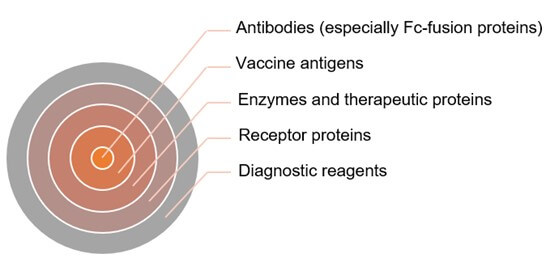
A wide range of glycoproteins is suitable for aldehyde-based conjugation services, particularly those that can be engineered to incorporate aldehyde tags or those with naturally occurring vicinal diols that can be oxidized to aldehydes. This includes:
How to Provide Glycoprotein Conjugation Services based on Aldehyde Reaction?
Creative Biolabs' Glycoprotein Conjugation Service is a sophisticated platform designed to create highly defined glycoprotein conjugates. This service leverages the unique reactivity of aldehyde groups to form stable covalent bonds with various payloads under mild, biocompatible conditions. We provide comprehensive glycoprotein conjugation services based on aldehyde reaction through a multi-stage, highly controlled process, ensuring precision and quality at every step. This is an expanded, more detailed view of our workflow:
-
Purified Glycoprotein: If the client provides a purified glycoprotein, our team assesses its suitability for aldehyde generation. This might involve identifying naturally occurring vicinal diols for periodate oxidation or introducing specific chemical handles for subsequent aldehyde generation.
-
Recombinant Expression with Aldehyde Tags: For optimal control, we often recommend and perform recombinant expression of the target glycoprotein. This involves designing the gene sequence to include specific short peptide sequences (e.g., Cys-aldehyde tags or formylglycine tags) at desired conjugation sites. These tags are genetically encoded, ensuring their precise placement during protein synthesis.
-
Enzymatic Conversion (for engineered tags): If genetically encoded formylglycine tags are used, we employ a highly specific enzyme, such as recombinant formylglycine generating enzyme (FGE), to convert the formylglycine residue into a reactive aldehyde group. This enzymatic step is extremely precise and occurs under mild, physiological conditions.
-
Chemical Oxidation (for native glycans): For glycoproteins containing native N-glycans or O-glycans with vicinal diols, mild periodate oxidation can be used to selectively cleave specific sugar residues, generating aldehyde groups. This method requires careful optimization to avoid over-oxidation or damage to the protein backbone.
-
The molecule to be conjugated (e.g., a specific carbohydrate, a small molecule drug, or a fluorescent label) is chemically functionalized with a nucleophilic group that will react specifically with the aldehyde. Common functional groups include hydrazides, oxamines, or aminooxy groups. This step ensures the payload is ready for efficient and selective conjugation.
-
The aldehyde-modified glycoprotein is mixed with the functionalized payload under carefully controlled, mild aqueous conditions.
-
The nucleophilic group on the payload rapidly and selectively reacts with the aldehyde group on the glycoprotein, forming a stable covalent bond (oxime or hydrazone linkage).
-
Reaction parameters such as reactant ratios, concentration, temperature, and reaction time are meticulously optimized to achieve the desired conjugation efficiency and stoichiometry.
-
Following the conjugation reaction, the mixture undergoes rigorous purification to isolate the desired glycoprotein conjugate from unreacted starting materials, excess reagents, and any potential byproducts or aggregates.
-
Common purification techniques include size-exclusion chromatography (SEC), ion-exchange chromatography (IEX), or affinity chromatography, chosen based on the properties of the conjugate and unconjugated components.
-
The purified glycoprotein conjugate undergoes extensive characterization to confirm its identity, purity, and structural integrity. This includes Mass Spectrometry (MS), spectroscopic and chromatographic analysis, and functional assays.
Creative Biolabs is your trusted partner for advanced bioconjugation, offering a powerful aldehyde reaction-based and Azide Reaction-based glycoprotein conjugation service that delivers precision, homogeneity, and enhanced functional properties for your biomolecules. Our cutting-edge technology and commitment to quality ensure that your projects are advanced with unparalleled control and efficiency. Please contact us to discuss your project or learn more about how Creative Biolabs' conjugation service can benefit your research.
Published Data
This research delves into the creation of two straightforward and broadly applicable chemical methods for effectively attaching protein antigens onto the surface of Generalized Modules for Membrane Antigens (GMMA). GMMA are naturally occurring vesicles shed by Gram-negative bacteria, engineered to enhance their release and minimize adverse reactions. The study employed a structured experimental design to pinpoint the ideal conditions for preparing GMMA before the attachment process, thereby ensuring consistent and efficient conjugation. The resulting combination of GMMA and antigens successfully triggered a robust immune response, generating antibodies against both the introduced antigen and the GMMA itself. The utilization of distinct chemical approaches enables the precise attachment of two different antigens onto a single GMMA particle, paving the way for the development of vaccines that target multiple pathogens simultaneously.
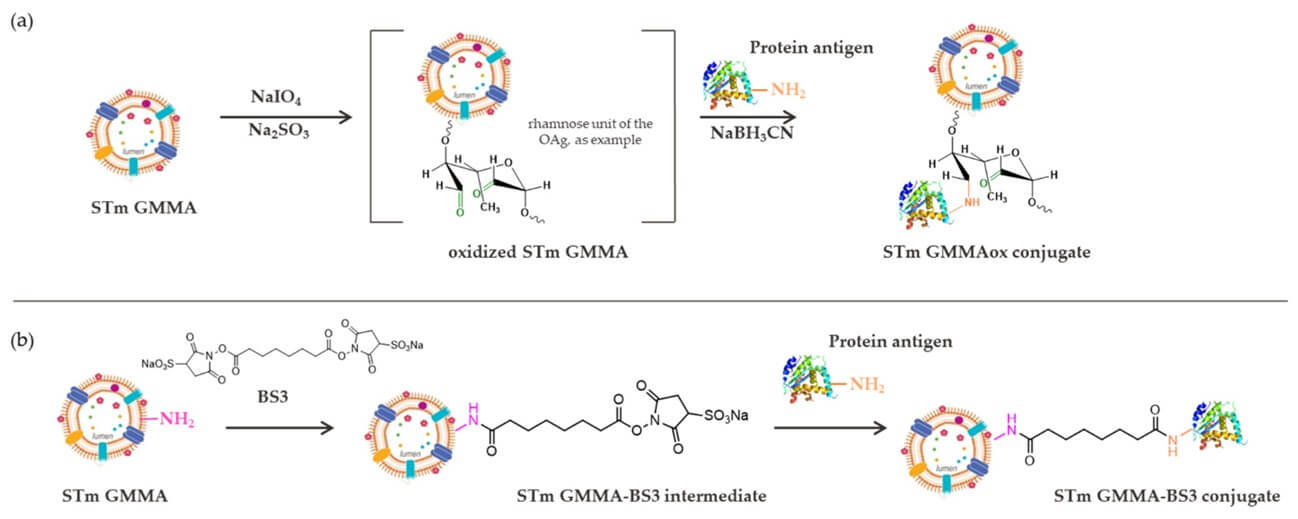 Fig.1 GMMA-based heterologous antigen modification process.1
FAQs
Q1: How does Creative Biolabs' aldehyde-based conjugation compare to traditional random conjugation methods?
A1: Our aldehyde-based method offers significantly higher precision and site-specificity compared to traditional random conjugation techniques. Traditional methods often result in heterogeneous mixtures with varying conjugation sites and stoichiometries, leading to inconsistent product quality and unpredictable biological activity. Our approach ensures a homogeneous product with a defined conjugation site, which is crucial for reproducibility and efficacy, especially for therapeutic applications.
Q2: What types of molecules can be conjugated to glycoproteins?
A2: Our service is highly versatile and can conjugate a wide range of molecules to glycoproteins, provided they can be functionalized with a complementary nucleophilic group (e.g., hydrazide). This includes various carbohydrates (polysaccharides, oligosaccharides), small-molecule drugs, peptides, fluorescent dyes, biotin, and other biomolecules. We work closely with you to ensure your desired payload is compatible with our chemistry.
Q3: Is the conjugation stable, and how does it affect the glycoprotein's biological activity?
A3: The oxime and hydrazone linkages formed via aldehyde chemistry are highly stable covalent bonds, ensuring the integrity of your conjugate in various biological environments. Furthermore, because the conjugation is site-specific and performed under mild conditions, the native structure and biological activity of your glycoprotein are largely preserved. We perform comprehensive functional assays as part of our characterization to confirm that the conjugation has not negatively impacted the desired biological activity.
Customer Review
Unparalleled Site-specificity
"The unparalleled site-specificity using Creative Biolabs' aldehyde reaction-based glycoprotein conjugation service in our therapeutic antibody development has significantly improved our drug's homogeneity and in vivo half-life. This precision is a game-changer for our next-generation biologics." - Prof. J. Bro***n.
Mild Reaction Conditions
"The mild reaction conditions employed by Creative Biolabs' Aldehyde Reaction based Glycoprotein Conjugation Service were crucial for preserving the delicate structure of our enzyme. We observed no loss of enzymatic activity post-conjugation, which was a critical advantage over other harsher chemical methods we previously attempted." - Dr. A. Dav***s.
References
-
Di Benedetto, Roberta, et al. "Novel simple conjugation chemistries for decoration of GMMA with heterologous antigens." International Journal of Molecular Sciences 22.19 (2021): 10180. DOI: 10.3390/ijms221910180. Distributed under an Open Access license CC BY 4.0, without modification.
Related Services
For Research Use Only.