Antibody Glycoconjugation Service
Antibody Glycoconjugation for Advanced Biologics
In modern biomedical research and biopharmaceuticals, antibodies, as an important biological molecule, are widely used in disease diagnosis, treatment, and basic research. With the deepening of understanding of antibody functions, antibody modification and transformation have received more and more attention. Antibody glycoconjugation is an important means to enhance the stability, efficacy, and targeting of antibodies by specifically connecting sugar molecules to them. Creative Biolabs' antibody glycoconjugation service helps you overcome these hurdles and accelerate your therapeutic development by providing precisely engineered, site-specific antibody conjugates through our innovative metabolic glycoengineering platform. We provide precisely engineered antibody conjugates, providing unparalleled homogeneity, stability, and functional integrity. We provide solutions for various applications, including the development of next-generation antibody-drug conjugates (ADCs) with enhanced therapeutic windows, targeted gene delivery vehicles for precise cellular targeting, and highly specific fluorescently labeled antibodies for advanced research and diagnostic applications. Our expertise ensures that your conjugated biologics maintain optimal binding affinity and pharmacokinetic properties, crucial for successful preclinical and clinical progression.
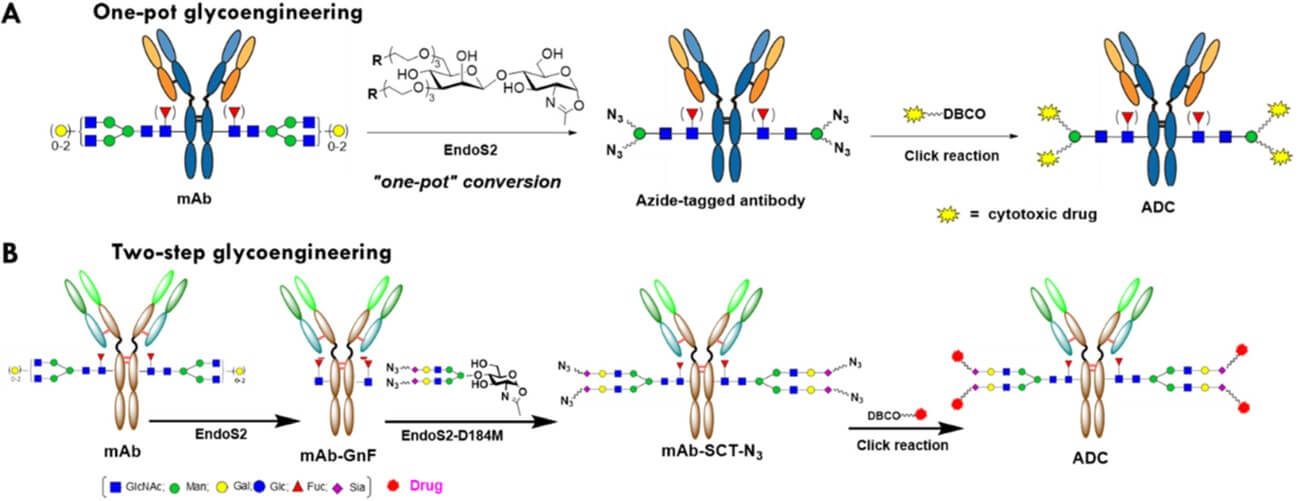 Fig.1 Schematic diagram of sugar-specific antibody conjugation.1
How to Provide Antibody Glycoconjugation Service at Creative Biolabs?
Creative Biolabs stands at the forefront of Glycoprotein Conjugation technology, offering a unique conjugation platform that addresses the critical needs of modern biopharmaceutical development. Our commitment to innovation, precision, and client success sets us apart. Our antibody glycoconjugation service follows a meticulously designed, multi-stage workflow, ensuring transparency and high-quality deliverables at every step. Our service is built upon a proprietary metabolic glycoengineering platform combined with advanced protein engineering and click chemistry. Our detailed process is designed for clarity, efficiency, and superior results.
We begin by computationally designing novel N-linked glycosylation sites into the Fc region of your antibody. Our selection criteria prioritize sites that are highly solvent-exposed and located within flexible loop structures, ensuring the introduced glycans are readily accessible for modification without disrupting antibody folding or function. This step is critical for achieving true site-specificity.
The selected N-glycosylation sites are introduced into the heavy chain DNA sequence of your antibody via site-directed mutagenesis.
-
Recombinant Antibody Expression
The engineered antibody constructs are then transiently or stably expressed in mammalian cell lines (e.g., CHO). During this expression phase, the cell culture media are supplemented with specific, high-flux azido-sugar analogs. These analogs are metabolically incorporated into the growing N-glycans on the antibody, effectively "tagging" the antibody with azide groups at the engineered sites. This leverages the cell's natural biosynthetic pathways, making the process highly efficient and gentle on the antibody.
Following the expression, the azide-functionalized antibodies are purified to high homogeneity using standard protein purification techniques, primarily Protein G affinity chromatography.
-
Site-Specific Payload Conjugation
The purified antibodies, now bearing azide groups at precise locations, are reacted with your therapeutic or diagnostic payload that has been functionalized with a complementary click chemistry moiety (e.g., dibenzocyclooctyne, DBCO). This reaction is performed under mild, aqueous conditions, ensuring minimal impact on the antibody's integrity. The efficiency of this conjugation is exceptionally high, leading to well-defined conjugates.
-
Conjugate Purification & Characterization
Post-conjugation, the final antibody conjugates are purified to remove any unreacted payload or byproducts. Rigorous characterization follows, including purity assessment, antigen binding affinity, Fc receptor binding, and stability profiling.
Necessity of Antibody Glycoconjugation Service
|
Basic Research
|
-
The glycosylation state of antibodies can significantly affect their biological properties, such as binding affinity, stability, and half-life. Through sugar conjugation, the effect of glycosylation on antibody activity can be systematically studied, thereby enhancing researchers' understanding of the mechanism of immune response.
|
|
Drug Development
|
-
As a biological drug, the modification of glycosylation can enhance its efficacy and safety. For example, certain carbohydrate structures have been found to enhance antibody-dependent cell-mediated cytotoxicity (ADCC), so the therapeutic effect of antibodies is optimized through sugar conjugation.
|
|
Diagnostic Technology
|
-
Antibody sugar conjugation services can be used to develop new diagnostic reagents. In clinical tests, antibodies with specific sugar groups can improve the recognition ability of target molecules, thereby improving the sensitivity and specificity of detection.
|
|
Vaccine Development
|
-
In vaccine development, antibody sugar conjugation can enhance the binding ability of antibodies to antigens, thereby stimulating a stronger immune response and improving the effectiveness of vaccines.
|
Key Advantages
-
Unrivaled site-specificity: Our metabolic glycoengineering platform ensures precise, site-specific conjugation to engineered N-glycans. This results in chemically defined, homogeneous products with superior consistency and reduced impurities.
-
Preserved antibody functionality: Our mild, non-destructive conjugation process, leveraging click chemistry, maintains the intrinsic structure, stability, and antigen-binding affinity of the antibody. This is crucial for ensuring the therapeutic efficacy and safety of your conjugated biologics.
-
Streamlined manufacturing: By integrating the conjugation handle directly into the antibody during cellular expression, our approach simplifies the overall manufacturing process, leading to more efficient and reproducible production.
-
Flexible customized services: Design experimental plans according to the specific needs of clients and provide personalized services to meet the needs of different research directions.
At Creative Biolabs, we are dedicated to empowering your research and accelerating your therapeutic development with cutting-edge antibody glycoconjugation solutions. Our commitment to precision, quality, and client success ensures that your projects advance efficiently and effectively. For detailed information, to discuss your specific project requirements, or to request a custom quote, please do not hesitate to contact our expert team.
Published Data
This paper presents a thorough assessment of two distinct chemoenzymatic strategies for creating site-specific antibody-drug conjugates (ADCs) by modifying their glycan structures. The research focuses on methods that leverage endoglycosidases to precisely attach drug payloads to antibodies. The first method explored is a two-step process: antibodies are initially stripped of their existing glycans, then new, modified N-glycan oxazolines are enzymatically reattached. The second approach is a more streamlined "one-pot" reaction, where antibodies are simultaneously deglycosylated and functionalized with a disaccharide oxazoline. The researchers synthesized ADCs using both technological routes, incorporating two different linker-payload combinations. A comprehensive series of in vitro and in vivo experiments was then conducted. Figure 2 highlights the in vitro characterization of these newly developed glycosite-specific ADCs, which provides strong evidence for the favorable biochemical and cellular properties of the ADCs generated by these innovative glycan remodeling techniques.
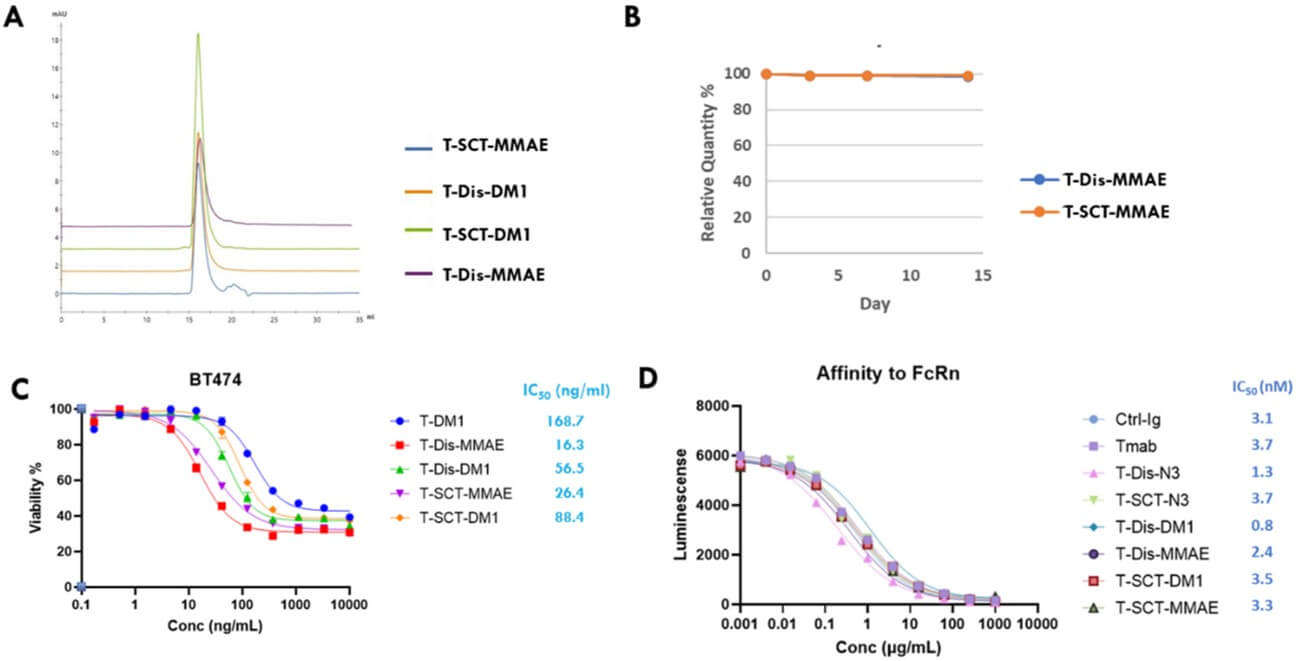 Fig.2 In vitro evaluation of ADCs prepared by two glycan remodeling methods.1
FAQs
Q1: How does Creative Biolabs' glycoengineering approach compare to other site-specific conjugation methods, such as chemoenzymatic strategies?
A1: While chemoenzymatic methods can achieve site-specificity, they typically involve multi-step in vitro enzymatic reactions (deglycosylation followed by reglycosylation). Creative Biolabs' platform, by contrast, leverages the cell's natural glycosylation machinery during antibody expression to incorporate the conjugation handles. This metabolic approach often simplifies the overall manufacturing workflow, potentially reducing costs and processing time by avoiding additional enzymatic steps post-purification, while still delivering superior site-specificity and homogeneity. We encourage you to reach out to discuss the best approach for your specific project.
Q2: Will the conjugation process affect my antibody's antigen-binding affinity or stability?
A2: A key advantage of Creative Biolabs's approach is its minimal impact on antibody function. By engineering conjugation sites into the Fc region, away from the antigen-binding domains, and utilizing mild click chemistry, we ensure your antibody's antigen-binding affinity is preserved. Our extensive characterization, including biolayer interferometry and thermal stability assays, consistently demonstrates that our conjugated antibodies maintain their native binding properties and exhibit excellent stability in physiological conditions. We are confident in delivering conjugates that perform optimally.
Q3: What types of payloads can be conjugated using Creative Biolabs' antibody glycoconjugation service?
A3: Our platform is highly versatile and compatible with a wide range of payloads functionalized with a click chemistry moiety. We have successfully demonstrated conjugation with cytotoxic small molecules for ADCs, fluorophores for labeling, and biomaterials/nanoparticles for targeted gene delivery. If you have a unique payload in mind, our scientific team is eager to discuss its compatibility and explore custom solutions to meet your specific research or therapeutic goals.
Customer Review
Exceptional Stability
"We needed a stable fluorescently labeled antibody for long-term in vivo imaging. Creative Biolabs' glycoengineered conjugates demonstrated remarkable plasma stability, maintaining their fluorescence over extended periods, which far surpasses what we achieved with amine-linked labels. Their process is surprisingly straightforward." - Ms. L. M. Al***n.
Unmatched Homogeneity
"Using Creative Biolabs's antibody glycoconjugation service in our ADC development has significantly improved the homogeneity of our conjugates, eliminating the batch-to-batch variability we struggled with using traditional methods, which is a game-changer for our therapeutic window optimization." - Dr. A. G. Au***er.
Reference
-
Yang, Qiang, et al. "Evaluation of Two Chemoenzymatic Glycan Remodeling Approaches to Generate Site-Specific Antibody-Drug Conjugates." Antibodies 12.4 (2023): 71. DOI: 10.3390/antib12040071. Distributed under an Open Access license CC BY 4.0, without modification.
Related Services
For Research Use Only.