GFP Binding Protein Glycoconjugation Service
What Is Green Fluorescent Protein (GFP) Binding Protein?
GFP is a widely utilized protein derived from the jellyfish Aequorea victoria, renowned for its intrinsic fluorescence without the need for additional cofactors. Its unique β-barrel structure encapsulates a chromophore, allowing it to emit bright green light when excited by blue or UV light. Due to its robust fluorescence and relatively small size, GFP is commonly fused to other proteins (forming "GFP fusion proteins") to enable their visualization, localization, and dynamic tracking in live cells or organisms. By glycoconjugating GFP, its biological properties, stability, and intracellular localization can be changed, thereby greatly improving its application value in research. Creative Biolabs's Glycoprotein Conjugation Service leverages cutting-edge bioorthogonal chemistry and genetic engineering to enable precise, site-specific glycan attachment, providing homogeneous tools essential for advanced glycobiology research and biopharmaceutical innovation.
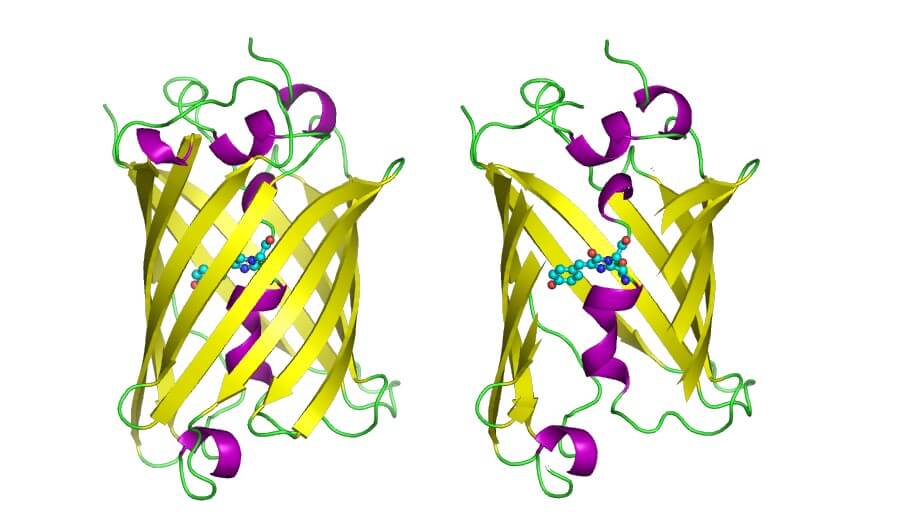 Fig.1 Structure of GFP.Distributed under Open Access license Public domain, from Wiki, without modification.
Steps of Our GFP Binding Protein Glycoconjugation Service
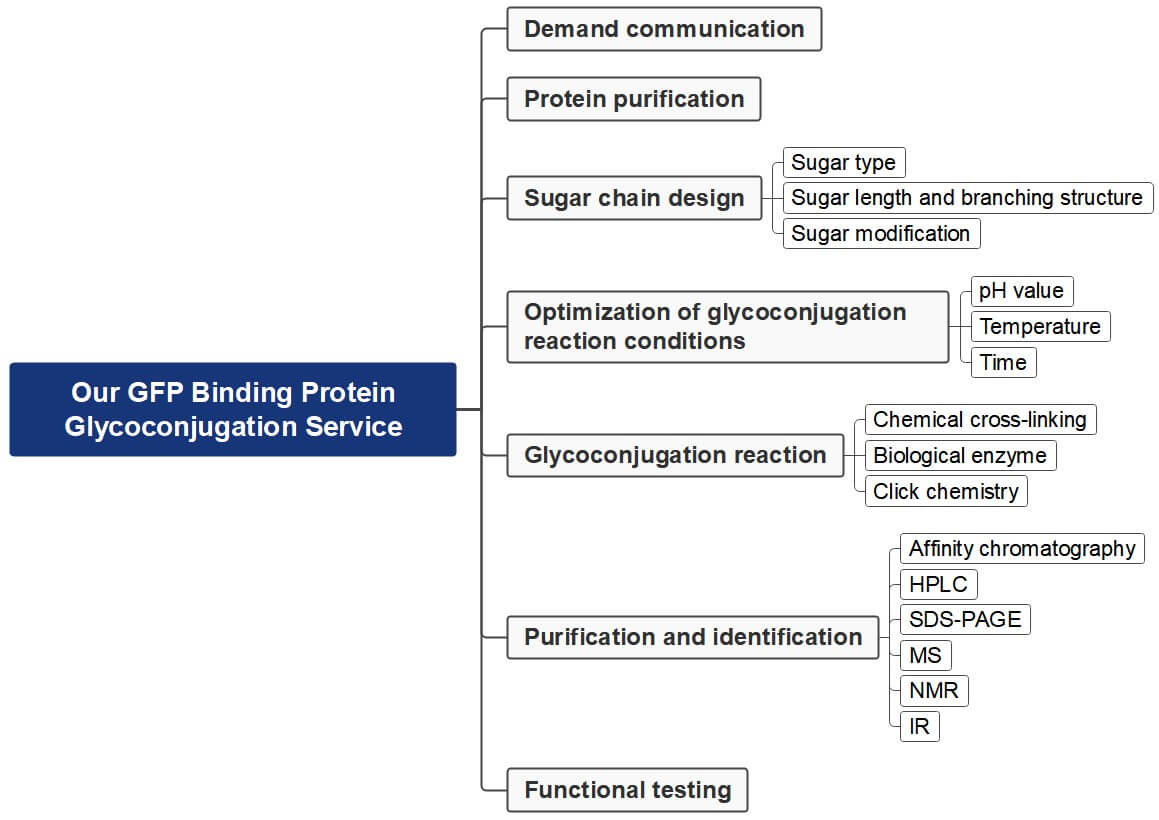
Creative Biolabs' GFP binding protein glycoconjugation service provides a robust and versatile glycoconjugation platform for creating precisely modified glycoproteins. Our service focuses on conjugating various glycans to GFP binding proteins, enabling a wide array of applications in both fundamental research and drug discovery. The process of providing GFP binding protein glycoconjugation services usually includes the following steps:
Before starting any experiment, we fully communicate with clients to clarify their needs, including the characteristics of the target protein, the type of sugar chain, the required degree of functionalization, and the final application scenario.
Obtaining a high-purity GFP binding protein is a prerequisite for successful glycoconjugation. This usually includes:
-
Choice of expression system (such as E. coli, yeast, insect cells, or mammalian cells).
-
Protein expression and cultivation.
-
Protein extraction and purification: Commonly used methods include affinity chromatography, ion exchange chromatography, and gel filtration chromatography.
Based on the client's application requirements, our team of experts designs appropriate sugar chain structures. The choice of sugar chain can be based on:
-
The type of sugar (such as glucose, galactose, mannose, etc.).
-
The length and branching structure of the sugar chain.
-
Whether the sugar chain needs to be modified (such as phosphorylation, sulfation, etc.).
-
Optimization of glycoconjugation reaction conditions
Before the glycoconjugation reaction, the optimal reaction conditions need to be determined. Common optimization parameters include:
-
pH value: The pH of the reaction affects the binding efficiency of protein and glycan.
-
Temperature: Different chemical reactions show different activities at different temperatures.
-
Time: Too long or too short a reaction time will affect the efficiency of glycoconjugation.
-
Glycoconjugation reaction
According to the designed sugar chain and optimized reaction conditions, a specific glycoconjugation reaction is carried out. The following reaction methods are selected.
-
Chemical cross-linking method: Use chemical reagents to covalently link sugars and proteins.
-
Biological enzyme method: Use specific glycosyltransferases to catalyze the binding of sugar chains and proteins.
-
Click chemistry: Achieve fast, simple, and efficient sugar conjugation through a "click reaction", which includes Aldehyde Reaction-based and Azide Reaction-based Glycoprotein Conjugation.
-
Purification and identification
After the reaction is completed, we will purify and identify the glycoconjugation product to ensure the quality and functionality of the final product. Common purification methods include affinity chromatography, high-performance liquid chromatography (HPLC), and SDS-PAGE analysis. In addition, the final product is characterized by nuclear magnetic resonance (NMR), mass spectrometry (MS), and infrared spectroscopy (IR) to confirm the structure of the glycoconjugation.
Finally, we will perform functional testing on the glycoconjugated GFP to verify its utility in specific applications.
Why Is It Necessary to Glycosylate the GFP-binding Protein?
-
Visualizing specific glycoforms: By attaching specific glycans to GFP-tagged proteins, researchers can directly visualize and track particular glycoforms within living cells.
-
Deciphering glycan function in real-time: It allows for the real-time study of how specific glycans influence protein trafficking, localization, interactions with other molecules (e.g., lectins, receptors), and overall biological functions.
-
Creating defined biological probes: Homogeneous, site-specifically glycoconjugated GFP fusion proteins serve as superior tools for in vitro and in vivo studies, offering consistent and predictable behavior compared to heterogeneously glycosylated counterparts.
Creative Biolabs is your trusted partner for cutting-edge glycoconjugation solutions, including Antibody Glycoconjugation, Growth Factor Glycoconjugation, and various Glycoprotein Conjugation services. Our GFP binding protein glycoconjugation service provides precise and homogeneous glycoconjugates, essential for advancing your understanding of glycobiology and accelerating the development of novel biotherapeutics. Please contact our team of experts today to discuss your specific project needs.
Published Data
This research presents a novel method for creating proteins with precisely modified N-termini, enabling advanced bioconjugation applications. The core of the strategy involves two key steps, visually represented in Figure 2. Initially, the team modified GFP to eliminate internal methionine (Met) residues while preserving its proper folding capability. The next step focused on incorporating bio-orthogonal reactive groups specifically at the N-terminus of this engineered GFP, which is free from internal methionine. The success of this method was confirmed by various analyses, showing that the modified GFP retained its activity and structural integrity. Crucially, the presence of these unique chemical handles at the N-terminus allowed for the successful conjugation of two GFP molecules using copper(I)-catalyzed click chemistry, demonstrating the potential for creating complex protein assemblies. This innovative approach promises to simplify and improve the creation of site-specifically modified proteins for various applications, including diagnostics and therapeutics.
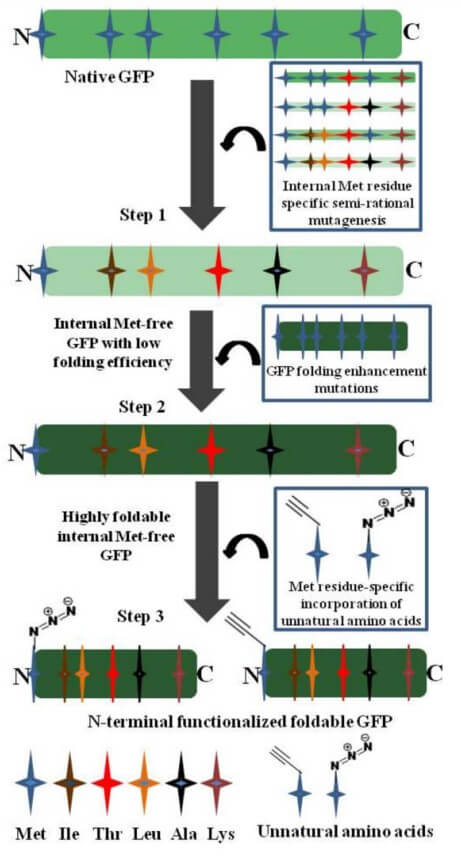 Fig.2 Process for generating N-terminally functionalized GFP.1
FAQs
Q1: What types of glycans can be incorporated using Creative Biolabs' service?
A1: Our service is highly versatile, capable of incorporating a wide range of glycans, from simple monosaccharides to complex oligosaccharides, including challenging structures like sialyl-type glycans. We can work with commercially available glycans or custom-synthesize specific structures according to your project requirements.
Q2: Can this glycoconjugation service be applied to non-GFP-tagged proteins?
A2: Absolutely! While our service highlights GFP binding proteins due to their inherent visualization advantages, the underlying bioorthogonal chemistry and genetic encoding technology are broadly applicable to any target protein. GFP serves as an excellent model and valuable tag, but we can engineer and glycoconjugate your protein of interest regardless of a GFP fusion.
Q3: What are the typical purity and yield of the glycoconjugated protein?
A3: We strive for the highest possible purity and optimized yields. Purity typically exceeds 95%, as verified by SDS-PAGE and mass spectrometry, ensuring minimal interference from unreacted components or byproducts. Yields can vary depending on the complexity and expression levels of the target protein, as well as the specific glycan, but our optimized protocols aim to maximize the amount of high-quality glycoconjugate delivered.
Customer Review
Unparalleled Specificity
"Using Creative Biolabs's GFP binding protein glycoconjugation service in our research has significantly improved our ability to generate site-specifically glycosylated constructs for detailed structural analysis, overcoming the heterogeneity issues we faced previously." - Mr. J. K. Ro***g.
Accelerated Research
"The speed and efficiency of Creative Biolabs's approach to GFP-tagged protein glycoconjugation drastically accelerated our investigation into glycan-mediated cell signaling, providing homogeneous probes that yielded exceptionally clear functional data." - Prof. M. W. H***s.
Reference
-
Soundrarajan, Nagasundarapandian, et al. "Conjugation of proteins by installing BIO-orthogonally reactive groups at their N-termini." PloS one 7.10 (2012): e46741. DOI: 10.1371/journal.pone.0046741. Distributed under an Open Access license CC BY, without modification.
Related Services
For Research Use Only.