Meningioma Research related Glycosylation Analysis Service
How Creative Biolabs' Meningioma related Glycosylation Analysis Service Can Assist Your Project?
Are you currently facing challenges in identifying non-invasive biomarkers for brain tumors or uncovering novel therapeutic targets in meningioma research? Meningiomas, while often benign, can progress to aggressive forms, necessitating objective diagnostic and prognostic tools. Aberrant glycosylation, a crucial post-translational modification, is a recognized hallmark of cancer, influencing tumor growth, invasion, and immune evasion. Creative Biolabs' meningioma-related glycosylation analysis service helps you accelerate biomarker discovery and deepen mechanistic understanding through advanced glycomics profiling techniques. Our meningioma-related glycosylation analysis service provides comprehensive insights into the aberrant glycosylation patterns associated with meningioma progression, from molecular changes to functional impact and clinical biomarker potential. We deliver precise identification of glycan biomarkers for diagnosis and prognosis, detailed characterization of glycosylation alterations in various sample types, and support for understanding the role of glycosylation in tumor biology. These insights are crucial for advancing diagnostic tools and identifying new therapeutic targets.
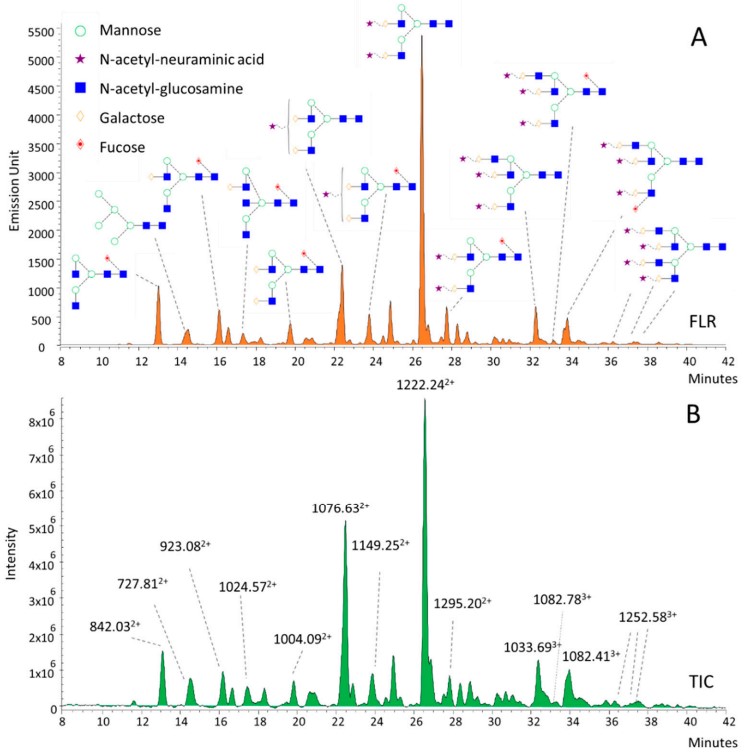 Fig.1 Serum N-glycosylation profile in patients with meningioma.1
What is the Detailed Analysis Process?
Our streamlined workflow ensures robust and reliable results for your meningioma research, designed for clarity and efficiency at every stage.
-
Sample Collection & Pre-processing
Ethical collection of clinical samples (serum, plasma, tissue) or preparation of cell cultures. For MS-based glycomics, this involves enzymatic release of N-glycans or chemical release of O-glycans, followed by clean-up using solid-phase extraction to isolate pure glycan fractions.
-
Instrumental Analysis
-
For MS-based Glycomics: Purified glycans are injected into the UHPLC/FLD/Q-TOF system. A precise gradient separates glycans, and the Q-TOF mass analyzer detects and fragments them, generating spectra for identification against comprehensive glycan libraries.
-
For Raman Spectroscopy: Samples (tissue, serum, spheroids) are placed under a confocal Raman microscope. A laser excites the sample, and scattered light is collected to generate a spectral signature, often targeting specific regions of interest.
-
Data Processing & Interpretation
-
MS Data: Raw data is processed using specialized software (e.g., MassHunter) to identify glycan compositions and quantify their relative abundances.
-
Raman Data: Spectra are processed using baseline correction and normalization.
-
Bioinformatics & Statistical Modeling
-
Both Platforms: Processed data is subjected to rigorous statistical analysis (e.g., ANOVA, t-tests) to identify statistically significant glycan or spectral changes.
-
Machine Learning: Multivariate analyses (e.g., principal component analysis) are employed to build predictive models and combined glycan indices (CGIs) for robust classification and performance evaluation.
-
Biological Validation & Reporting
The identified biomarkers or spectral signatures are correlated with clinical parameters (tumor grade, patient outcome) and interpreted in the context of current meningioma research, culminating in a comprehensive client report.
What are the Glycosylation Analyses Related to Meningioma Research?
Creative Biolabs offers targeted analyses for key glycosylation types and associated markers in meningioma research.
-
N-Glycan Profiling: Comprehensive analysis of N-linked glycans from serum, plasma, and tissue. We focus on analyzing alterations in fucosylated, sialylated, and complex N-glycans that are characteristic of meningioma.
-
O-Glycan Profiling: Detailed examination of O-linked glycans, particularly mucin-type O-glycans, which are known to be aberrantly expressed in cancer. This includes analysis of terminal sugar residues (e.g., Gal, GalNAc) and the expression of related glycosyltransferases.
-
Glycation Product Analysis: Quantification of advanced glycation end-products and other glycation-related modifications, which can influence glycosyltransferase expression and tumor cell behavior.
-
Glycosyltransferase Expression Analysis: Measurement of key glycosyltransferase (e.g., sialyltransferases, fucosyltransferases) mRNA or protein levels, correlating enzymatic activity with observed glycan profiles and tumor aggressiveness.
Creative Biolabs would like to empower your meningioma research with unparalleled project expertise and cutting-edge analysis capabilities. Our comprehensive Glycosylation Analysis Service, complemented by a suite of advanced omics and research services, delivers the critical insights needed to accelerate biomarker discovery, deepen understanding of disease mechanisms, and advance the development of novel diagnostics. Please contact us to transform your research into impactful solutions.
Published Data
This paper investigates modifications in the N-glycosylation patterns found in human blood serum from individuals afflicted with either primary brain tumors or those where cancer has spread to the brain (metastatic brain tumors). The research meticulously quantifies these serum N-glycans, first by processing them with the PNGase-F enzyme and labeling them with procainamide, then purifying them using magnetic nanoparticles. Subsequently, these purified glycans undergo precise measurement using liquid chromatography. Their specific structures are pinpointed through a combination of mass spectrometry and enzymatic digestion techniques. A statistical method known as linear discriminant analysis successfully differentiates between the various patient groups - those with primary tumors, those with metastatic tumors, and healthy individuals - based on their unique N-glycome profiles. Figure 2 vividly illustrates notable changes in serum N-glycosylation across various types of brain cancer. This figure specifically highlights a discernible reduction in biantennary neutral glycans among cancer patients when compared to healthy control subjects (panel A). Furthermore, the data presented in panels B and C of Figure 2 reveal a corresponding elevation in both sialylation and fucosylation levels within the glycan structures of cancer patients' serum. These alterations suggest a distinct biochemical signature associated with the presence of brain malignancies.
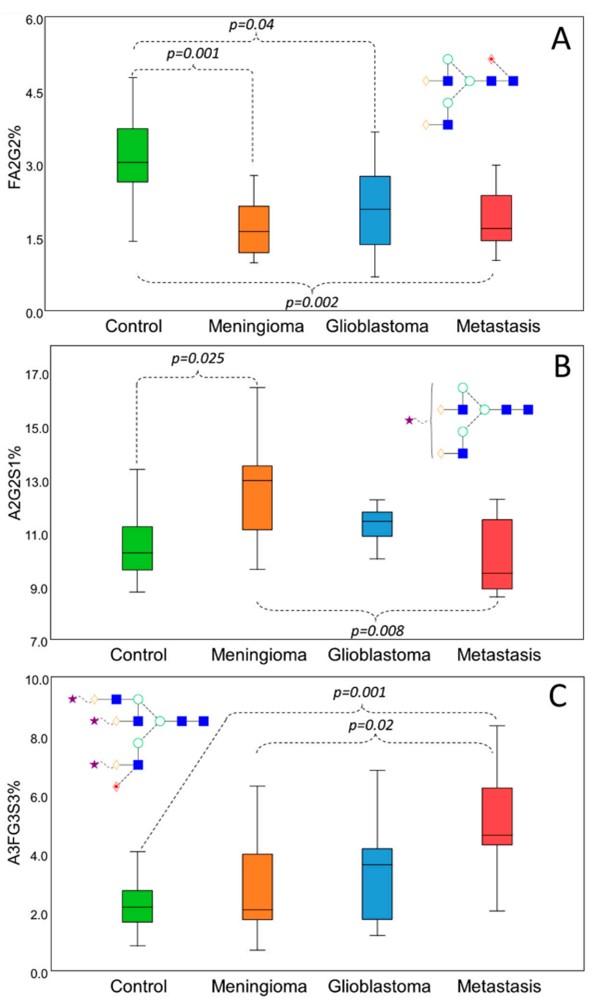 Fig.2 Differential manifestations of serum N-glycosylation levels in patients with different brain cancers.1
FAQs
Q1: What types of meningioma samples can Creative Biolabs analyze for glycosylation?
A1: Creative Biolabs is equipped to analyze a diverse range of sample types for meningioma research:
-
Blood samples: Serum and plasma, ideal for non-invasive liquid biopsy approaches and longitudinal monitoring.
-
Tissue samples: Formalin-fixed paraffin-embedded (FFPE) blocks or fresh-frozen tissue biopsies, allowing for direct analysis of tumor glycans within their microenvironment.
-
Cerebrospinal fluid (CSF): For direct insights into brain tumor glycans in the central nervous system (CNS) fluid compartment.
Q2: Can Creative Biolabs' services help clients identify novel therapeutic targets for meningioma?
A2: Absolutely. By meticulously mapping aberrant glycosylation patterns and identifying key dysregulated glycosyltransferases in meningioma, our services provide crucial insights into potential novel therapeutic targets. Understanding these changes can guide the development of new glyco-targeted therapies.
Q3: How can I analyze the complex glycosylation data generated by Creative Biolabs?
A3: Our service includes professional bioinformatics and mature biological interpretation. Our reports provide statistically validated results, clear visualizations, and actionable insights into the clinical and biological significance of the identified glycan signatures, making complex data accessible and relevant to your research objectives. We are also available for follow-up consultations.
Customer Review
Precision Analysis Data
"Using Creative Biolabs's N-glycomics service in our research has significantly improved our ability to identify novel, non-invasive diagnostic markers for brain tumors. The precision of their LC-MS data allowed us to confidently distinguish between tumor grades, which was previously a major hurdle." - Prof. J. Nor***s.
Deep Expertise and Professional Interpretation
"The Creative Biolabs team provided invaluable insights and deep expertise in their O-linked glycosylation analysis. They not only provided high-quality data but also helped us interpret the complex changes in our meningioma cell lines, guiding our understanding of tumor progression and identifying potential therapeutic avenues." - Dr. L. Par***r.
Reference
-
Váradi, Csaba, et al. "The analysis of human serum N-glycosylation in patients with primary and metastatic brain tumors." Life 11.1 (2021): 29. DOI: 10.3390/life11010029. Distributed under an Open Access license CC BY 4.0, without modification.
Related Services
For Research Use Only.