Hybridoma Re-Cloning Service
Overview Service Importance Published Data Features FAQ
At Creative Biolabs, we specialize in critical hybridoma rescue services, leveraging over two decades of expertise in antibody development.
We have developed a comprehensive hybridoma screening platform to provide suitable hybridoma re-cloning pathways. Our core mission is to restore the viability and productivity of compromised hybridoma lines, ensuring your research investments are protected and your projects advance without interruption.
Overview of Hybridoma Re-Cloning
Hybridoma re-cloning represents a vital intervention for maintaining the integrity and functionality of monoclonal antibody-producing cell lines. This intricate process is a popular hybridoma rescue measure, which involves the meticulous isolation and propagation of healthy, high-producing cells from a declining or contaminated hybridoma population. The primary objective is to re-establish a robust, monoclonal cell line that consistently secretes the desired antibody with its original characteristics. This methodology encompasses advanced techniques such as limiting dilution for precise single-cell isolation, semi-solid medium cloning for efficient selection, and sophisticated automated systems for high-throughput screening, all aimed at optimizing antibody yield and ensuring long-term stability. This comprehensive approach effectively counters issues like genetic drift, contamination, and diminished productivity.
Hybridoma Re-Cloning Service
Our comprehensive hybridoma re-cloning service employs a multi-pronged strategy to ensure the successful rescue and revitalization of your valuable cell lines. Each approach is tailored to the specific needs of the hybridoma and the nature of its compromise.
Limited Dilution Screening
Limiting dilution cloning remains a cornerstone technique for achieving true monoclonality. This method involves serially diluting a cell suspension to the point where, statistically, each well of a microtiter plate contains, ideally, only one cell. Subsequently, these individual cells are allowed to proliferate into distinct clones.
At Creative Biolabs, our skilled technicians meticulously perform this process, ensuring optimal cell viability during dilution and providing ideal growth conditions for clonal expansion. We then rigorously screen the resulting monoclonal populations for robust growth, high antibody production, and retention of original specificity, isolating the most desirable clones for further propagation and cryopreservation.
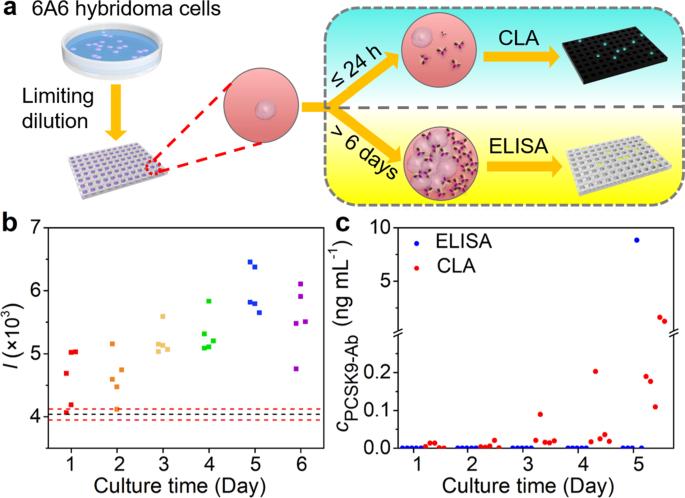 Fig.1 Assay of PCSK9-Ab secreted from hybridoma cells.1
Semi-Solid Cloning
The use of semi-solid media offers an advantageous alternative for hybridoma cloning, particularly when dealing with large cell populations or seeking to enhance cloning efficiency. In this method, cells are suspended in a viscous medium, typically containing methylcellulose, which restricts cell movement and allows for the formation of discrete colonies from individual cells.
We leverage this technique to facilitate the rapid identification and isolation of viable, antibody-producing clones. This approach can be particularly effective for separating healthy cells from debris or non-viable cells, providing a more efficient pathway to clonal recovery and expansion, especially in challenging rescue scenarios.
Automation System Screening
For high-throughput requirements and enhanced consistency, we integrate advanced automation systems into our re-cloning workflow. These sophisticated platforms enable precise, reproducible single-cell deposition and automated screening of hundreds or even thousands of clones simultaneously. The automation minimizes human error, significantly accelerates the screening process, and ensures uniformity across selected clones.
Our automated systems are equipped to identify and pick the most promising clones based on pre-defined criteria, such as antibody secretion levels or specific binding characteristics, thereby streamlining the rescue process and delivering optimized, stable hybridoma lines with remarkable efficiency.
Importance of Hybridoma Re-Cloning
Preserving Irreplaceable Assets
Hybridoma cell lines often represent years of research, significant financial investment, and unique intellectual property. Their loss can be catastrophic, necessitating a complete restart of the antibody development pipeline. Re-cloning acts as a safeguard, protecting these invaluable biological resources.
Maintaining Antibody Quality and Consistency
Over time, hybridomas can become heterogeneous, leading to variations in antibody production, specificity, or affinity. Re-cloning allows for the selection of superior, stable clones, guaranteeing a consistent supply of high-quality antibodies essential for reliable experimental results and product development.
Mitigating Contamination Risks
Contamination, particularly by mycoplasma, can severely impact cell health and experimental outcomes. Re-cloning protocols often incorporate decontamination steps, providing a clean, viable cell line free from common laboratory contaminants, thus ensuring the integrity of downstream applications.
Cost and Time Efficiency
Initiating a new antibody development project from scratch is a lengthy and expensive endeavor. Re-cloning a compromised hybridoma is significantly more cost-effective and time-efficient, minimizing resource expenditure and accelerating the path to discovery or product launch.
Published Data
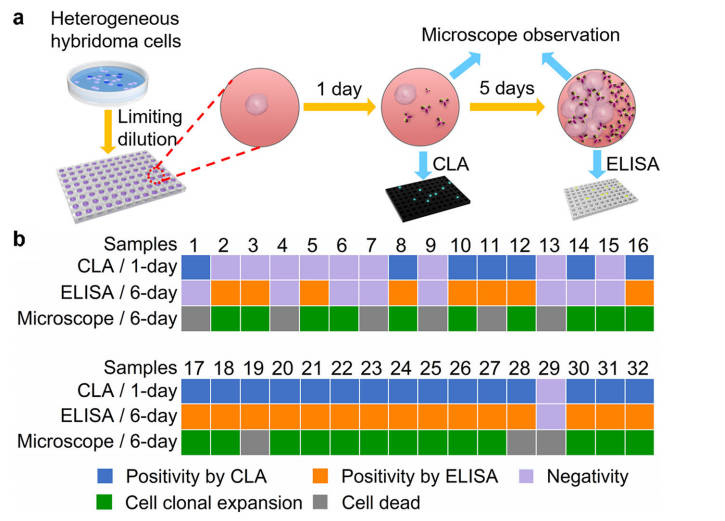 Fig.2 Screening of specific hybridoma cells.1
Ao, Hang, et al. conducted tests on 32 individual hybridoma cell samples, each housed in separate wells, utilizing both chemiluminescence and ELISA techniques. Specifically, these methods were employed to screen for specific hybridoma cells based on their chemiluminescent properties. The supernatant of hybridoma cell samples, cultured for one day, was analyzed using the chemiluminescence method to detect the content of PCSK9-Ab. Additionally, the ELISA method was applied to measure the PCSK9-Ab content in the supernatant of hybridoma cell samples after six days of culture, along with assessing the cellular status at this time point. The results revealed significant disparities among the hybridoma cells in terms of their secretion and proliferation capabilities.
Features of Our Service
-
A complete technical platform is the basis for timeliness.
-
A professional technical team ensures the accuracy of re-cloning.
-
Timely delivery of final re-cloning products and data.
-
Rich cloning experience ensures the quality of final candidate targets.
FAQ
-
Q: What information and materials do I need to provide to you to initiate a re-cloning service?
A: To begin the hybridoma re-cloning service, we request a frozen vial of the compromised hybridoma cell line, if available, or a live culture if freezing is not an option. Additionally, comprehensive information about the hybridoma is essential, including its origin, passage history, target antigen, antibody isotype, and any known issues or observations regarding its performance. Details about the antibody's expected specificity and any relevant screening assays you currently use will also greatly assist our team in the rescue and validation process.
-
Q: What is the expected success rate for hybridoma re-cloning at Creative Biolabs?
A: Creative Biolabs boasts a high success rate for hybridoma re-cloning, attributed to our extensive experience, advanced methodologies, and rigorous quality control. While specific success rates can depend on the initial condition of the hybridoma and the severity of its compromise, our expertise allows us to successfully rescue a significant majority of submitted lines. We are committed to transparent communication throughout the process, providing realistic expectations based on our initial assessment of your sample.
-
Q: Will the re-cloned hybridoma produce an antibody with the exact same specificity and affinity as the original?
A: Our re-cloning process is meticulously designed to isolate and expand cells that retain the original antibody characteristics. Through stringent screening methods, including ELISA and flow cytometry, we verify that the re-cloned hybridoma produces an antibody with the identical specificity and affinity as the original desired product. Our goal is to ensure that the rescued cell line is functionally equivalent to the healthy, productive state of your initial hybridoma.
-
Q: What kind of validation and quality control steps are performed on the re-cloned hybridoma before delivery?
A: Before delivery, every re-cloned hybridoma undergoes a comprehensive battery of validation and quality control tests. This includes assessing cell viability and growth kinetics to confirm robust proliferation. We quantify antibody production levels to ensure stable and high secretion. Additionally, we perform isotyping and confirm the antibody's specificity to verify its original characteristics. Crucially, all rescued cell lines are thoroughly tested for mycoplasma contamination to guarantee a clean and reliable product.
-
Q: Can you scale up the production of the re-cloned hybridoma if needed?
A: While our re-cloning service focuses on rescuing and stabilizing the hybridoma cell line, we also offer subsequent cell line expansion and antibody production services. Once your hybridoma is successfully re-cloned and validated, we can discuss options for scaling up cell culture to meet your specific antibody quantity requirements for research-scale production. Our capabilities extend beyond rescue to support your full antibody development pipeline.
Obtaining ideal hybridoma cells is a vital step in producing monoclonal antibodies. At Creative Biolabs, our professional technical team is dedicated to helping you re-clone and obtain high-yield cell lines to avoid losing valuable clones. If you are interested in more details of re-cloning services, please contact us in time.
Reference
-
Ao, Hang, et al. "Chemiluminescent screening of specific hybridoma cells via a proximity-rolling circle activated enzymatic switch." Communications Biology 5.1 (2022): 308.
Distributed under Open Access license CC BY 4.0, without modification.
All listed services and products are For Research Use Only. Do Not use in any diagnostic or therapeutic applications.