Agonist/Antagonist Uptake Assay Services
The [3H]-2-deoxy-D-glucose rat transporter cell basal agonist and antagonist uptake assay measures the cellular uptake of radiolabeled 2-DG, a glucose analog, to evaluate the effects of various compounds on glucose transporter activity in rat cells under basal conditions.
[3H]-2-deoxy-D-glucose
[3H]-2-deoxy-D-glucose is a radiolabeled form of 2-deoxy-D-glucose that is commonly used in research to study glucose transport and metabolism. In the case of a rat model, 2-DG can be administered to evaluate how glucose transporters operate in various tissues or under different physiological or pathological conditions. In rats, glucose transport is primarily mediated by specific glucose transporter proteins, most notably the GLUT (glucose transporter) family. The key GLUT transporters include:
When [3H]-2-DG is administered to rats, it is taken up by cells through these glucose transporters. However, unlike glucose, 2-DG is not fully metabolized in glycolysis. Once inside the cell, 2-DG is phosphorylated to 2-DG-6-phosphate, which cannot proceed further in glycolytic pathways. This results in a temporary accumulation of radioactive 2-DG-6-phosphate that can be quantified, allowing researchers to infer information about the rate of glucose transport. The use of [3H]-2-DG tracking can help in understanding various physiological mechanisms, evaluating insulin sensitivity, studying the effects of drugs, or investigating metabolic disorders, such as diabetes or cancer where glucose metabolism is often altered.
Agonist/Antagonist Uptake Assay at Creative Biolabs
Our [3H]-2-deoxy-D-glucose rat transporter cell basal agonist and antagonist uptake assay service is designed to evaluate the functional activity of glucose transporters in cellular models. Utilizing radiolabeled [3H]-2-deoxy-D-glucose, this service measures the uptake of glucose in response to various compounds, including potential agonists and antagonists. The assay can assess the effects of test substances on transporter activity, providing insight into their ability to modulate glucose uptake in rat cell lines. This is particularly valuable for understanding metabolic pathways and the pharmacological profiles of new therapeutic agents targeting glucose metabolism. Protocols are optimized for reproducibility and sensitivity, ensuring accurate quantification of transport activity across different conditions.
In addition to this, we also offer High Content Analysis (HCA)-based Low-Density Lipoproteins (LDL) Uptake Assay, if interested, you can click here for more information!
-
Assay Information
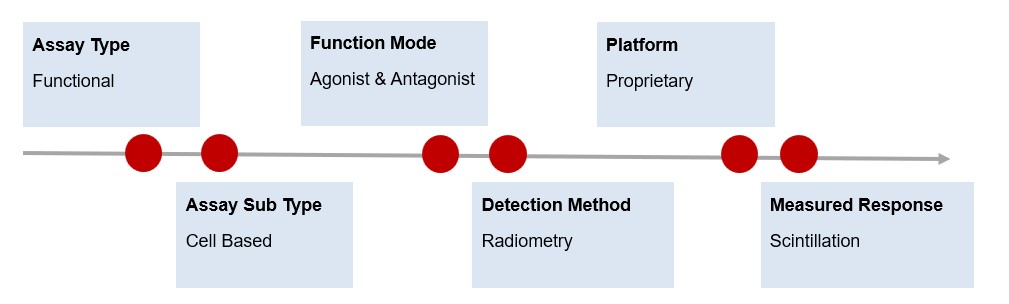
-
Process of Our Service

Cell Preparation
Rat cells (usually adipocytes or muscle cells) are cultured in appropriate conditions. These cells should express the glucose transporter proteins of interest.
Treatment with Test Compounds
The cells are treated with potential agonists or antagonists that may influence glucose uptake. This step is crucial to determine how these compounds affect the activity of glucose transporters.
Addition of [3H]-2-DG
A radioactively labeled analog of glucose, [3H]-2-deoxy-D-glucose, is added to the cell culture. This compound can be taken up by glucose transporters but is not metabolized like regular glucose.
Incubation
The cells are incubated for a specific time period, allowing the transport of [3H]-2-DG into the cells. This step should be optimized according to the cell type and experimental conditions.
Stopping Uptake
After the incubation period, the uptake process is halted, usually by washing the cells with a solution that removes excess [3H]-2-DG from the extracellular environment.
Lysis and Measurement
The cells are lysed, and the amount of [3H]-2-DG taken up is measured using a liquid scintillation counter. The amount of radioactivity corresponds to the level of glucose transport mediated by the transporter in the presence of the test compounds.
Data Analysis
The results are analyzed to determine the effects of the agonists or antagonists on glucose uptake, comparing treated and control samples to assess their influence on transporter activity.
Frequently Asked Question
Q1: What are the advantages of [3H]-2-deoxy-D-glucose rat transporter cell basal agonist and antagonist uptake assay?
A1: The use of [3H]-2-deoxy-D-glucose in rat transporter cell assays offers several advantages for studying glucose transport mechanisms. As a radiolabeled glucose analog, [3H]-2-DG provides a sensitive and quantitative measure of glucose uptake, allowing researchers to assess the functional activity of glucose transporters under various experimental conditions. The ability to evaluate both agonist and antagonist effects on transporter activity enhances our understanding of the regulatory mechanisms governing glucose metabolism. Additionally, the specificity of 2-DG for glucose transporters facilitates the differentiation between active transport and passive diffusion, leading to more accurate interpretations of cellular glucose uptake. This assay can also be adapted to screen for potential therapeutic agents that modulate glucose transporter activity, making it a valuable tool in metabolic research and drug discovery.
Contact Us
At Creative Biolabs, we are dedicated to advancing research in cellular transport mechanisms. We proudly offer the [3H]-2-deoxy-D-glucose (2-DG) rat transporter cell basal agonist and antagonist uptake assay, designed to facilitate your studies on glucose transport dynamics. The experienced team at Creative Biolabs is committed to providing high-quality reagents and unparalleled support to meet your research needs. If you have any questions or would like to learn more about this assay, please don't hesitate to contact us. We look forward to collaborating with you to further your scientific discoveries!
For Research Use Only | Not For Clinical Use


 Download our brochure