Creative Biolabs offers antibody protein solubility testing to assess the importance of an antibody or antibody fragment in biotechnology and drug development.
Learn More →Binding Assay Services
Overview What We Can Offer Workflow Publication Why Choose Us FAQs Customer Review Related Services Contact Us
Overview
Understanding the binding interactions between therapeutic candidates and various biological targets is essential for optimizing efficacy, safety, and pharmacokinetics. At Creative Biolabs, we specialize in providing high-quality binding assay services that are critical for the development and characterization of therapeutic antibodies and proteins. Our extensive array of binding assays, including Fc receptor (FcR), neonatal Fc receptor (FcRn), and complement C1q binding assays, deliver accurate, reliable, and reproducible results. Utilizing state-of-the-art technologies and unmatched expertise, Creative Biolabs delivers comprehensive solutions to meet your research and development needs.
FcR Binding Assay
The FcR binding assay is crucial for understanding how therapeutic antibodies interact with the immune system. FcγRs are found on the surface of immune cells and play a crucial role in antibody-mediated effector functions such as antibody-dependent cellular cytotoxicity (ADCC) and antibody-dependent cell-mediated phagocytosis (ADCP). Our FcR binding assay encompasses a broad range of Fc receptors, such as FcγRI (CD64), FcγRIIa (CD32a), FcγRIIb (CD32b), FcγRIIIa (CD16a), and FcγRIIIb (CD16b). Using advanced platforms such as surface plasmon resonance (SPR) and flow cytometry, we assess binding kinetics and affinity with high precision.
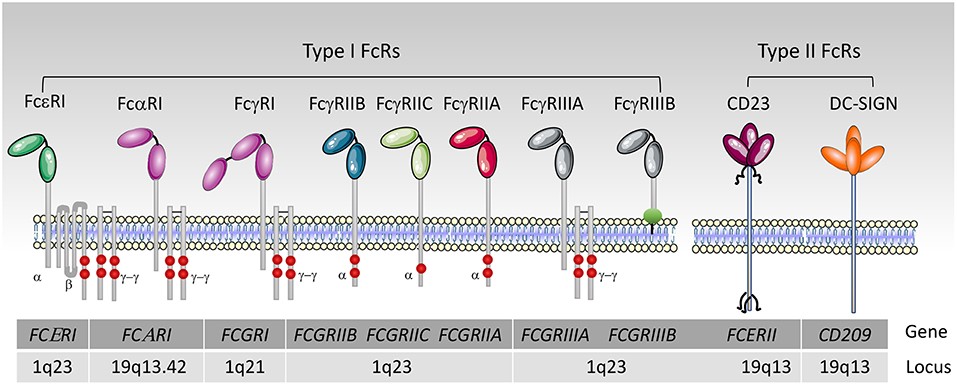 Fig.1 Types of FcRs.1, 4
FcRn Binding Assay
FcRn is responsible for protecting IgG antibodies from lysosomal degradation, thereby extending their half-life in the circulatory system. Creative Biolabs provides precise FcRn binding assays to accurately measure the binding affinity of therapeutic antibodies under physiological conditions. Our FcRn binding assay services are meticulously designed to evaluate the binding characteristics of IgG antibodies to FcRn under both acidic and neutral pH conditions. By leveraging our expertise, we help you optimize your therapeutic candidates for better pharmacokinetics and biodistribution.
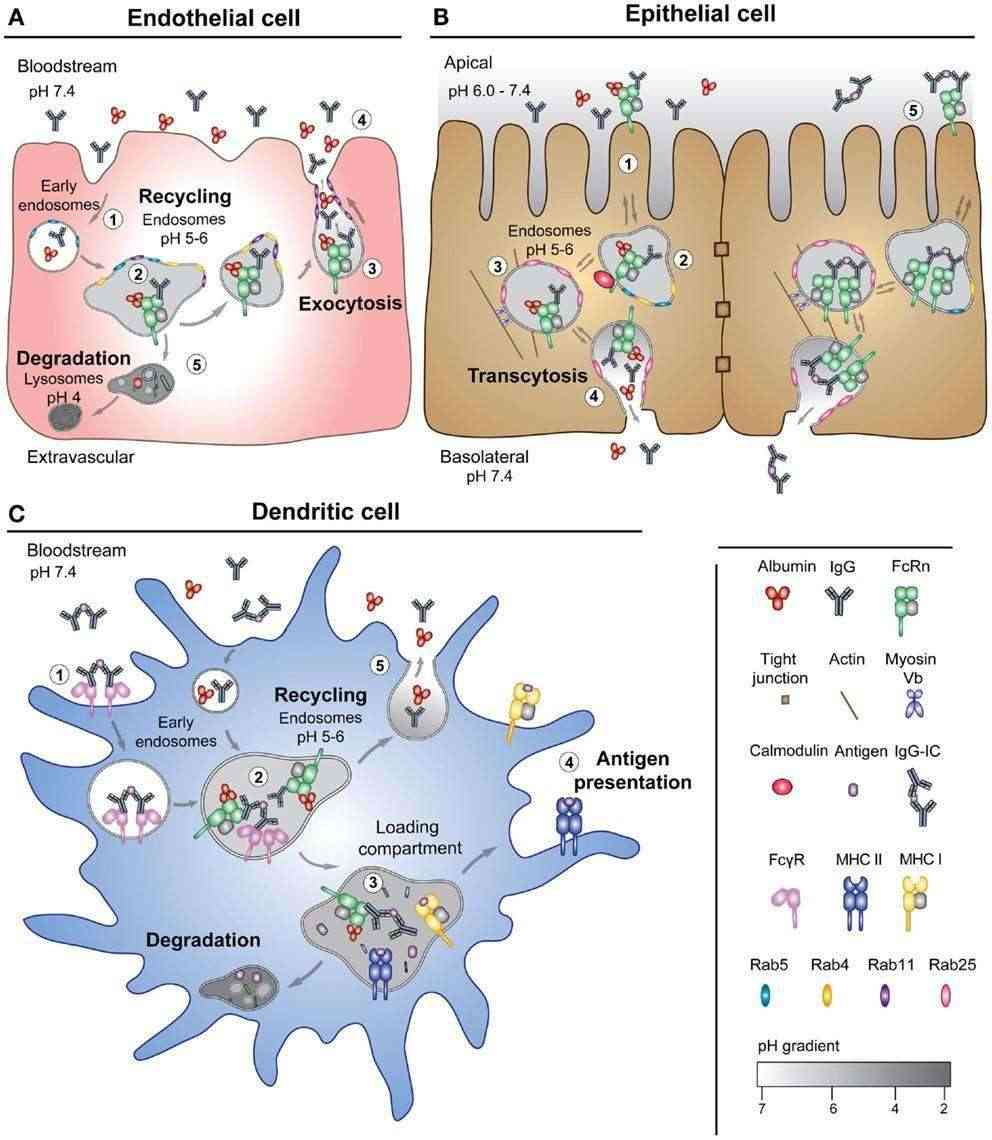 Fig.2 FcRn-mediated recycling and transcytosis.2, 4
Complement C1q Binding Assay
The complement system, especially the first component C1q, is integral to initiating the classical pathway of complement activation, which leads to the elimination of pathogens and altered cells. Our Complement C1q Binding Assay allows for the detailed evaluation of these interactions, offering insights into the antibody's potential to induce complement-dependent cytotoxicity (CDC). Employing techniques like ELISA and SPR, our assays deliver comprehensive data on C1q binding.
Our Technologies and Methods
At Creative Biolabs, we utilize cutting-edge platforms such as SPR, ELISA, and flow cytometry to ensure the highest accuracy and reliability in our binding assays. Choosing the best method for binding assays depends on the specific requirements of your study. By selecting the appropriate method, Creative Biolabs ensures that you receive the most relevant and accurate data for your therapeutic antibody and protein development projects.
- SPR and BLI are often considered the gold standards due to their ability to provide real-time kinetic data and high sensitivity.
- Flow Cytometry-based assays offer high-throughput capabilities and are particularly effective for cellular binding studies.
- ELISA, with its high specificity and sensitivity, is particularly useful for quantifying protein-protein interactions.
Workflow: A Seamless Path to Binding Insights
Our streamlined workflow at Creative Biolabs ensures a comprehensive, efficient, and transparent process, designed for clarity and optimal results. We prioritize clear communication and scientific rigor at every stage.
Required Starting Materials:
- Target protein/ligand: Purified and well-characterized, with a known concentration and information regarding its stability and storage conditions.
- Therapeutic candidate: Your specific antibody, small molecule compound, nucleic acid, or other binding partner, along with any relevant purity and concentration data.
- Project objectives: A clear definition of your specific goals, such as precise affinity determination, detailed kinetic analysis, high-throughput screening for lead discovery, or specificity assessment against a panel of related targets.
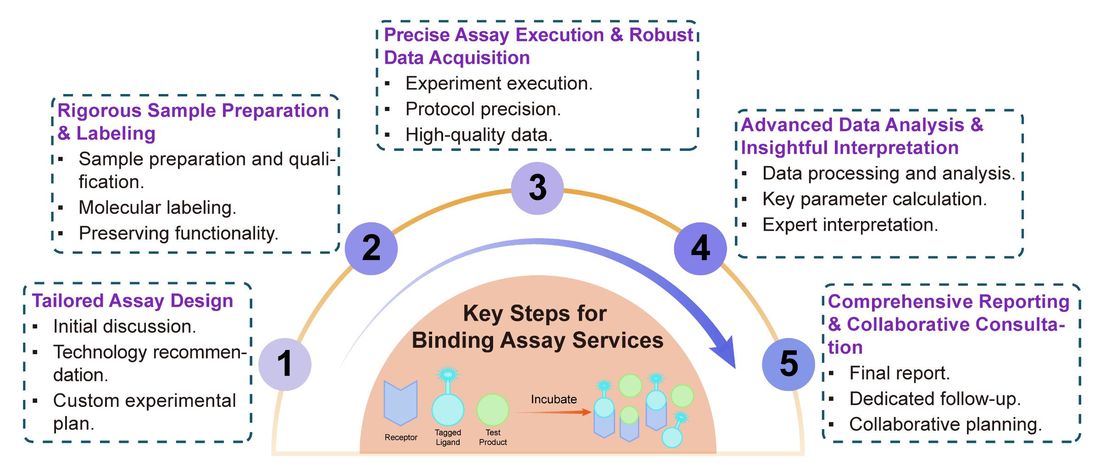
Final Deliverables:
- Comprehensive binding assay report: A detailed document including all raw data, analyzed binding curves, calculated binding parameters, and an expert scientific interpretation of the findings.
- Detailed methodologies and protocols: Full documentation of the experimental setup, reagent information, and precise procedures used, ensuring transparency and reproducibility for your records.
- Expert scientific consultation: A dedicated follow-up session with our lead scientists to review the results, discuss implications, and strategize future research directions.
Publication
This publication describes the development of a novel plate-based immunoassay to measure the binding affinity of antibodies to Fc-gamma receptors (FcγRs). The new assay uses a luminescent protein complementation technology, which offers a solution-based format to minimize surface-related artifacts common in traditional biosensor platforms. The authors validated the FcγR assays and demonstrated that they are specific, report IgG subclass-specific affinities, and can detect changes in Fc/FcγR interactions. The study highlights the advantages of this parallel screening method for accelerating the discovery of new therapeutic antibody drugs by enabling the simultaneous measurement of binding affinities for a large panel of antibodies against a family of FcγRs.
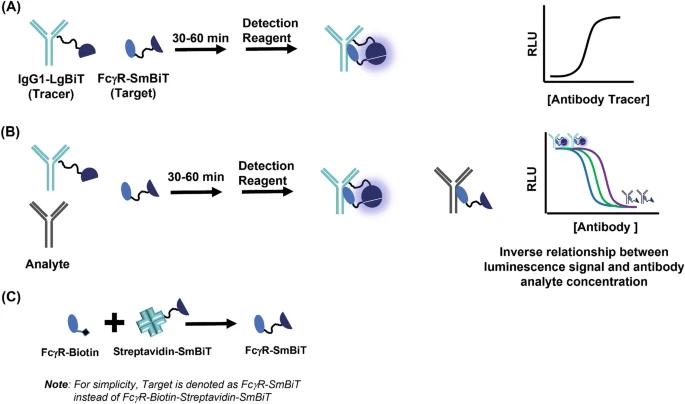 Fig.3 Schematic presentation of a FcγR immunoassay.3, 4
Why Choose Us?
Choosing Creative Biolabs for your binding assay needs means partnering with a recognized leader in molecular interaction analysis. Our unwavering commitment to scientific excellence, combined with our cutting-edge technologies and client-centric approach, uniquely positions us to accelerate your drug discovery journey.
Advantages:
- High sensitivity and specificity: Ensuring accurate detection of binding interactions with minimal background noise.
- Real-time monitoring: Providing dynamic insights into binding kinetics.
- High throughput: Enabling the analysis of multiple samples simultaneously for efficient data generation.
- Quantitative and qualitative data: Offering comprehensive insights into binding affinities and mechanisms.
Don't hesitate to contact us even if you're unsure about specific details; we're here to guide you through the process!
FAQs
Q1: What types of molecules can your binding assays analyze?
A1: At Creative Biolabs, we analyze a wide range of molecular interactions, including protein-protein, protein-small molecule, antibody-antigen, and nucleic acid-protein interactions. Our diverse technology portfolio accommodates various sample types and research needs, from purified components to complex biological samples.
Q2: Can your services accommodate high-throughput screening for large compound libraries?
A2: Yes, Creative Biolabs is fully equipped for high-throughput screening. Our platforms, particularly those utilizing homogeneous assays, are designed to efficiently screen large compound libraries, enabling rapid identification of potential hits and accelerating your lead discovery phase.
Q3: How does Creative Biolabs ensure the accuracy of affinity measurements, especially for challenging interactions?
A3: We ensure accuracy through a combination of factors: expert assay design tailored to the specific interaction, utilization of multiple orthogonal technologies to cross-validate results, and meticulous data analysis by seasoned biophysicists.
Customer Review
-
Exceptional Reproducibility
Using Creative Biolabs' binding assay services in our antibody characterization has significantly improved the reproducibility of our affinity measurements, overcoming the surface-related artifacts we struggled with using traditional SPR. The homogeneous format is a game-changer for high-throughput screening, allowing us to process more samples with greater confidence. - Dr. A***n Smith
-
In-depth Insights
Creative Biolabs' integrated approach, combining SPR for kinetics and ITC for thermodynamics, provided an unparalleled understanding of our small-molecule-target interactions. Their expertise facilitated a much deeper analysis than we could achieve in-house, guiding our lead optimization with precision and clarity. This multi-modal data was truly invaluable. - Dr. S***a Khan
Related Services
To further support your drug discovery and development efforts, Creative Biolabs offers a suite of complementary services that often go hand-in-hand with our binding assay services, providing a holistic solution for your research needs:
Kinetic Solubility Testing Service
In Vitro Anti-Tumor Efficacy
Creative Biolabs specializes in vitro CAR cell-mediated tumor killing assays to assess the ability of CAR-T/NK/MA cells or oncolytic viruses to kill tumor cells.
Learn More →How to Contact Us
Ready to unlock the full potential of your therapeutic candidates? Our team of experienced scientists at Creative Biolabs is eager to discuss your specific project requirements and design a customized binding assay strategy that meets your unique needs.
Contact Our Team for More Information!
References
- Ben Mkaddem, Sanae, Marc Benhamou, and Renato C. Monteiro. "Understanding Fc receptor involvement in inflammatory diseases: from mechanisms to new therapeutic tools." Frontiers in Immunology 10 (2019): 811. DOI: https://doi.org/10.3389/fimmu.2019.00811
- Sand, Kine Marita Knudsen, et al. "Unraveling the interaction between FcRn and albumin: opportunities for design of albumin-based therapeutics." Frontiers in Immunology 5 (2015): 682. DOI: https://doi.org/10.3389/fimmu.2014.00682
- Nath, Nidhi, et al. "A homogeneous bioluminescent immunoassay for parallel characterization of binding between a panel of antibodies and a family of Fcγ receptors." Scientific Reports 12.1 (2022): 12185. DOI: https://doi.org/10.1038/s41598-022-15887-z
- Distributed under Open Access license CC BY 4.0, without modification.
 Download our brochure
Loading case studies...
Online Inquiry