Utilize our extensive PDX bank for later-stage validation, allowing for the testing of lead compounds against clinically relevant tumor heterogeneity.
Learn More →Cell Line derived Xenografted Modeling Service
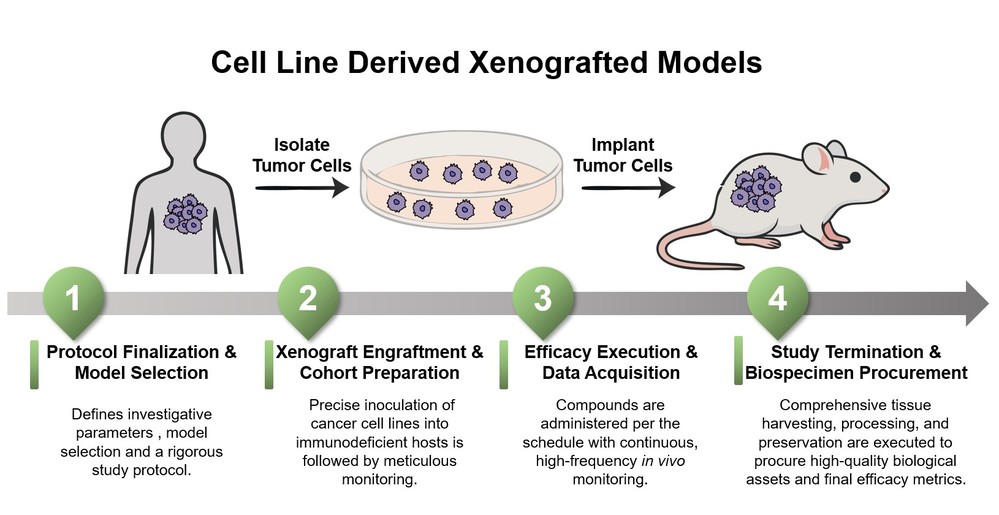
The cell line derived xenograft (CDX) models, as provided by Creative Biolabs, are instrumental in expediting preclinical efficacy validation and mitigating translational risk. This critical objective is realized through the deployment of advanced xenoplastic transplantation methodologies and facilitated access to a specialized, comprehensive CDX biobank. Creative Biolabs operates as a dedicated organization specializing in fundamental oncology research.
Introduction What We Can Offer Workflow Why Creative Biolabs Customer Reviews FAQs Related Services Contact Us
CDX Models for Cancer Therapy Development
Cell line derived xenograft models offer key decision-making information that allows the therapeutic candidates to move forward in preclinical testing for cancer immunotherapy development. To improve the cost-effectiveness and timeliness of sponsored preclinical development projects, Creative Biolabs has established multiple in vivo analysis systems with various CDX models to evaluate the candidates' mechanism of action, PD/PK profiles.
Discover how we can help - Request a consultation.
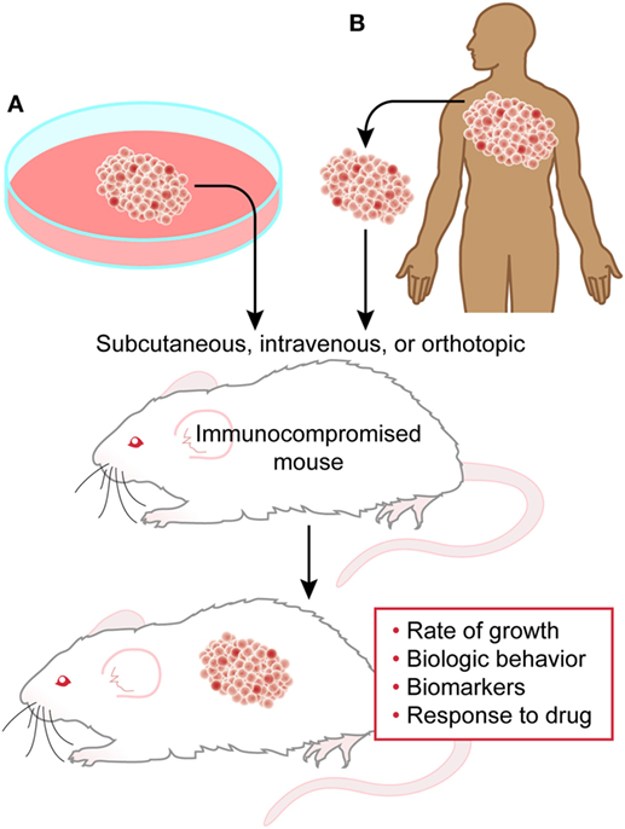 Fig.1 Cell line-derived and patient-derived xenograft model. 1
What We Can Offer
Creative Biolabs has established over 200 validated and well-characterized CDX models as well as luciferase-labeled CDX models, which ensures an easy model selection. CDX models cover the following cancer types, but are not limited to these. Working with CBL gives you access to customized CDX models to fit your program.
Solid Tumors
| Cancer Type | Cancer Type | Cancer Type | Cancer Type | Cancer Type |
| ■ Brain Cancer | ■ Breast Cancer | ■ Bone Cancer | ■ Bladder Cancer | ■ Cervical Carcinoma |
| ■ Colorectal Cancer | ■ Endometrial Cancer | ■ Epidermoid Carcinoma | ■ Gallbladder carcinoma | ■ Gastric Carcinoma |
| ■ Glioma | ■ Head and neck Cancer | ■ Liver Cancer | ■ Lung Cancer | ■ Melanoma |
| ■ Mesothelioma | ■ Nasopharyngeal Carcinoma | ■ Neuroblastoma | ■ Ovarian Cancer | ■ Pancreatic Cancer |
| ■ Prostate Cancer | ■ Renal Carcinoma | ■ Rhabdomyosarcoma | ■ Sarcoma | ■ Skin Cancer |
| ■ Thyroid Cancer | ■ Uterine | ■ Vulva Cancer |
Hematological Malignancies Models
| Cancer Type | Cancer Type | Cancer Type | Cancer Type |
| ■ Acute Lymphoblastic Leukemia | ■ Acute Monocytic Leukemia | ■ Acute Myeloid Leukemia | ■ Acute Myeloblastic Leukemia |
| ■ Acute Promyelocytic Leukemia | ■ Chronic Myeloid Leukemia | ■ Eosinophilic Leukemia | ■ Erythro Leukemia |
| ■ Histiocytic Lymphoma | ■ Megakaryoblastic Leukemia | ■ Multiple Myeloma | ■ Non-Hodgkin Lymphoma |
| ■ Lymphoma (B-cell) |
CDX Models at Creative Biolabs
Well-characterized cell line derived xenografts cover the following types for your research.
| Model Type |
| ✓ Subcutaneous model |
| ✓ Intravenous model |
| ✓ Orthotopic model |
| ✓ Metastasis model |
| ✓ Systemic model |
Highlights
Oncology Specialist Focus
Unlike generalist CROs, our entire scientific team is specialized in cancer biology, ensuring expert design and interpretation of your CDX data.
Deep Biobank & Coverage
We maintain an industry-leading biobank of CDX models, covering a diverse spectrum of solid tumors and hematological malignancies (including leukemias and lymphomas). This deep inventory ensures rapid access to your specific cancer subtype.

Advanced IC-CDX Platform
For I-O applications, our engineered immunocompetent models (IC-CDX) feature reconstituted human immune systems (HIS). This allows you to study complex human T-cell activation and checkpoint inhibitor efficacy using the highly reproducible CDX backbone.
Precision Implantation Expertise
We are highly proficient in technically demanding orthotopic implantations (e.g., intracranial, hepatic, pancreatic), which provide a more clinically relevant tumor microenvironment than standard subcutaneous models.
Discover how a partnership with us can streamline your research - Get a quote today.
Customer Reviews
-
Reproducibility & Cost-Efficiency
Creative Biolabs' CDX models significantly improved the standardization and rapid throughput of our initial screening. The low variability facilitated the confident exclusion of non-viable candidates, thereby preserving budget for PDX validation. - Dr. J**n D***e. -
Orthotopic Relevance
Creative Biolabs' expertise in orthotopic implantation was critical for our hepatic carcinoma study. It enhanced the translational relevance by accurately mimicking the native tumor environment, which was essential for evaluating our compound. - Dr. S**a R****u.
FAQs
Q: What is the comparative utility of CDX models versus PDX models in efficacy testing?
A: CDX models are superior for high-volume, mechanism-driven screening due to their reproducibility and cost-efficiency. PDX models are reserved for later validation, confirming clinical relevance using greater tumor heterogeneity.
Q: What constitutes the principal advantage of selecting a CDX model over an in vitro assay?
A: Our CDX models provide a crucial functional assessment in vivo, integrating the drug's pharmacokinetics and its ability to penetrate and inhibit tumor growth within a complex living system.
Related Services
Patient-Derived Xenografted Models
Humanized Models
The use of humanized mice is critical for long-term efficacy studies, generating robust T-cell maturation and stable immune systems necessary for chronic dosing evaluations.
Learn More →How to Contact Us
Creative Biolabs' CDX model maintains its indispensable status within the oncology drug development continuum. Investigators prepared to define the preclinical efficacy of their lead compound are formally invited to contact Creative Biolabs today to engage in a discussion regarding their specific study requirements with our dedicated oncology consultation team. Contact our team for more information and to discuss your project.
Reference
- Kohnken, Rebecca et al. "Overview of the Use of Murine Models in Leukemia and Lymphoma Research." Frontiers in oncology vol. 7 22. 20 Feb. 2017, doi:10.3389/fonc.2017.00022. Distributed under an Open Access license CC BY 4.0, without modification. https://doi.org/10.3389/fonc.2017.00022
 Download our brochure
Loading case studies...
Online Inquiry