We utilize advanced co-culture systems to simulate complex interactions between tumor cells and the immune system, providing deep mechanistic insights into therapeutic activation, immune evasion, and cell-mediated cytotoxicity.
Learn More →Efficacy Model Services
With the rapid progress of various immunotherapies, especially therapeutic antibodies, the discovery and development of potential anticancer immunotherapy approaches have become a promising direction. Creative Biolabs is dedicated to offering a comprehensive set of standalone or integrated services to support preclinical testing, including in vivo pharmacology, drug metabolism and pharmacokinetics, toxicology, and efficacy models.
Introduction What We Can Offer How We Can Help Why Creative Biolabs Customer Reviews FAQs Contact Us Related Services
Background
Even though many cancer immunotherapies offer fresh hope for cancer patients, only a small portion of cancer patients can be cured by immunotherapies. New immunotherapies need to be explored urgently. For a potential drug candidate, safety and efficacy data need to be evaluated before exposure to humans. To assess the antitumor efficacy in animal models, specific oncology efficacy models need to be established.
Partner with Creative Biolabs to ensure your preclinical data is truly predictive - Request a consultation.
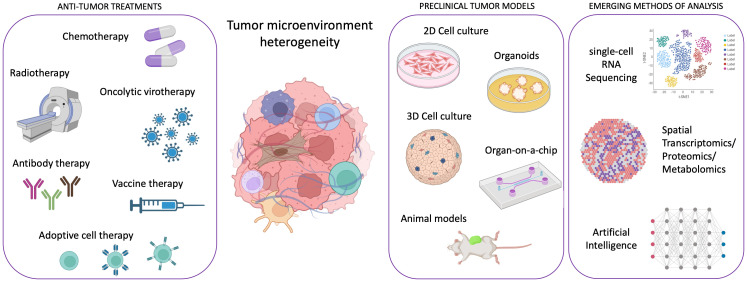 Fig.1 Integrating advanced efficacy models to address tumor microenvironment heterogeneity. 1
What We Can Offer
As an end-to-end solution provider and concentrated CRO in cancer immunotherapy discovery and development, Creative Biolabs offers a comprehensive suite of validated oncology in vivo models for our clients to advance their preclinical development projects in a cost-effective and timely manner. We are committed to helping you choose the most appropriate efficacy model, design studies, and screen assays matched to your drug candidates, including checkpoint inhibitors, co-stimulatory agonists, viruses, therapeutic engineered immune cells, cytokines, and antibodies.
Cell based Immune Mechanism Simulation Solutions
Immuno-Oncology Animal Models
These are specialized models essential for evaluating agents that target the immune system to fight cancer. They include syngeneic and human immune component models, focusing on the dynamic interplay between the drug, the tumor, and immune effector cells.
Learn More →Syngeneic Models
Utilize immunocompetent murine host mice and mouse-derived tumor cells. They are fast, cost-effective, and possess an intact, fully functional murine immune system, making them essential for initial T-cell engager, checkpoint inhibitor, and vaccine evaluations.
Learn More →Humanized Models
These models are reconstituted with human hematopoietic stem cells or peripheral blood mononuclear cells (PBMCs), resulting in functional, mature human immune system components (T cells, B cells, NK cells).
Learn More →Cell Line Derived Xenograft (CDX) Models
Involve transplanting established human cancer cell lines into immunodeficient mice. They offer fast, highly reproducible, and cost-effective initial efficacy screening and single-target MOA confirmation, serving as a reliable foundational screen for many compounds.
Learn More →Database of CDX Models
Creative Biolabs maintains an extensive, validated database of hundreds of CDX models spanning multiple cancer types, each meticulously characterized for genetic mutations (e.g., BRAF, KRAS, EGFR) and protein expression.
Learn More →Patient Derived Xenograft (PDX) Models
These models involve the direct transplantation of tumor tissue fragments from a source into immunodeficient mice. PDX models meticulously maintain the original tumor's genomic, histological, and molecular characteristics and tumor heterogeneity.
Learn More →Patient derived Organoid Model
We establish personalized 3D cancer models from specific patient tissues, providing a clinically relevant platform to evaluate therapeutic efficacy and drug response within a biomimetic, patient-specific environment.
Learn More →DCs-Involved Immuno-Oncology Models for In Vivo Testing
Specialized human immune component models focused on the function of dendritic cells (DCs). These are utilized for targeted in vivo testing of therapeutics designed to modulate or exploit the DC population for enhanced anti-tumor immunity.
Learn More →Macrophage-Involved Immuno-Oncology Models for In Vivo Testing
Custom models designed to assess therapeutic agents that modulate macrophage function. These are essential for evaluating agents whose efficacy relies on reprogramming the tumor microenvironment (TME) or leveraging phagocytosis (ADCP).
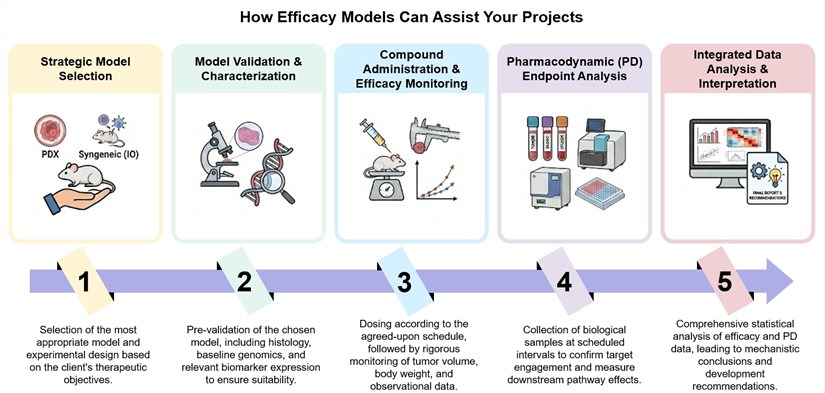
Learn More →How Creative Biolabs' service Can Assist Your Projects
Why Choose Us
| Our Advantages | Key Features |
|---|---|
| Extensive Model Inventory | Access an expansive, characterized repository encompassing over fifty diverse human cancer cell lines for xenograft models, facilitating precise screening against a wide array of disease characteristics. |
| High Data Fidelity | Our studies utilize rigorous quality control protocols and validated model systems to consistently generate highly reproducible and accurate efficacy data, accelerating your research progression. |
| Quality Assurance Expertise | Receive specialized consultation from experts, ensuring that the study design and data generation processes adhere to the highest internal quality standards for seamless compound development. |
Our strategy team is standing by to discuss your specific project needs and help you select the ideal efficacy model system. - Get a quote today.
Customer Reviews
-
Predictive Accuracy
The deployment of Creative Biolabs' efficacy models demonstrably enhanced the correlation between preclinical findings and projected in vivo outcomes within our comparative study framework, establishing a robust and reliable platform for the rigorous evaluation of our novel therapeutic agent. - J**n R**s. -
IO Mechanism
Using Creative Biolabs' efficacy models in our research has significantly improved the precise assessment of ADCC mechanisms mediated by our monoclonal antibody. The data from their specialized human immune component models provided clear evidence of functional human NK cell engagement. - C**y H**g.
FAQs
How do Creative Biolabs' PDX models offer higher predictive accuracy compared to traditional CDX models?
Our PDX models are sourced and maintained to preserve the tumor's original heterogeneity, stroma, and complex architecture - features often lost in long-term cell lines. This better recapitulation of the tumor microenvironment means that efficacy data is far more relevant to compound outcomes. We encourage you to discuss your specific tumor type with our preclinical strategy team for tailored PDX options.
What type of data will I receive if I use your service for late-stage validation?
You will receive a fully integrated package, including detailed tumor volume and survival curves, full-color histology slides, and comprehensive molecular data (e.g., flow cytometry results on immune cell infiltration, and spatial transcriptomics analysis). This integrated approach answers not just if the drug works, but how and why, providing the evidence needed for advancing compound development.
How to Contact Us
With extensive experience and expertise, Creative Biolabs has established comprehensive efficacy models to facilitate in vivo efficacy evaluation for new potential immunotherapeutic. Please don't hesitate to contact us for our experts' advice about choosing the appropriate efficacy model to best fit your needs.
Related Services
Reference
- Adriani, Giulia et al. "Editorial: Preclinical models and emerging technologies to study the effects of the tumor microenvironment on cancer heterogeneity and drug resistance." Frontiers in oncology vol. 13 1289756. 28 Sep. 2023. Distributed under an Open Access license CC BY 4.0, without modification. https://doi.org/10.3389/fonc.2023.1289756
 Download our brochure
Loading case studies...
Online Inquiry