Graft-Versus-Host Disease (GVHD) related Cytokine Analysis Service
Creative Biolabs has established a range of GVHD cytokine analysis platforms, offering comprehensive detection services spanning from DNA to RNA to proteins, and from cells to tissues. We have independently developed a variety of high-quality GVHD cytokine detection assays, including IL-2, IL-6, and IFN-gamma. Each assay has undergone rigorous quality control tests to ensure the effectiveness and reliability of the test results. We also offer customized multi-factor research and development services tailored to customer needs, along with comprehensive methodological verification of the testing system to ensure its scientific validity and stability.
Introduction
GVHD remains the leading complication of allogeneic hematopoietic stem cell transplantation (allo-HSCT), with a high mortality rate. The tissue damage of GVHD is caused by the recognition of host cell surface antigens by donor immune cells and the induction of cytotoxicity.This process is accompanies by the release of a large number of inflammatory cytokines, such as interleukins, TNF, and interferons.To support GVHD research and diagnosis, Creative Biolabs provides detection services for serum sIL-2R, IFN-gamma, TGF-β1, and other cytokine changes after allo-HSCT. For example, using methods such as semi-quantitative RT-PCR and ELISA, we enable dynamic monitoring of cytokine expression in multiple samples across multiple timepoints at the gene and protein level, respectively. We have been hoping to find a sensitive and feasible method to detect cytokines and cytokines that can predict the development of GVHD at an early stage. Our GVHD cytokine detection panel includes but is not limited to:
| IL-1 | IL-1R | IL-8 | TNF-α |
| IL-6 | TNFR | IL-10 | IL-10R |
| IFN | IL-2 | IL-23R | IL-17 |
Chief Services
The pathogenesis of skin GVHD after allo-HSCT is complex and may be the result of the interaction of multiple cells, cytokines, and signaling pathways. Therefore, blocking a single cytokine may not be enough, and further therapies that simultaneously inhibit multiple GVHD-associated cytokines and signaling pathways are needed. Meanwhile, many studies have shown that the cytokine gene polymorphism is also closely related to the occurrence of GVHD, and the cytokine gene polymorphism of donor and recipient determines the level of cytokines produced in the three stages of GVHD cytokine storm, which can cause different degrees of GVHD and affect the effect of hematopoietic stem cell transplantation. Our GVHD cytokine gene polymorphism analysis solutions include:
- GVHD cytokine analysis services
In the pre-treatment stage of hematopoietic stem cell transplantation, the cytokine storm induces the release of IL-1, IL-6, IL-8, TNF-α, and other factors to cause GVHD. In Creative Biolabs, our cytokine analysis department has complete facilities and advanced equipment, and its high-end technology platforms such as enzyme-related immunosorbent assay (ELISA) and CBA flow fluorescence capture microspheres can provide users with detection and quantification of high-throughput GVHD cytokines. Whether it is the early screening of a large number of candidate cytokines or the large-scale validation of specific factors, Creative Biolabs can find the right technology platform and service form to meet the research and development needs.
- GVHD cytokine gene sequence polymorphism analysis services
Many cytokine gene polymorphisms are significantly associated with GVHD and/or transplant prognosis. Cytokine gene polymorphism directly affects cytokine levels in vivo. Creative Biolabs provides GVHD cytokine gene polymorphism-related regulatory gene element analysis services, including promoter/enhancer region DNA sequence polymorphisms, cytokine gene 5' or 3' regulatory sequence polymorphisms, microsatellite polymorphisms, or signaling peptide-related gene polymorphisms.
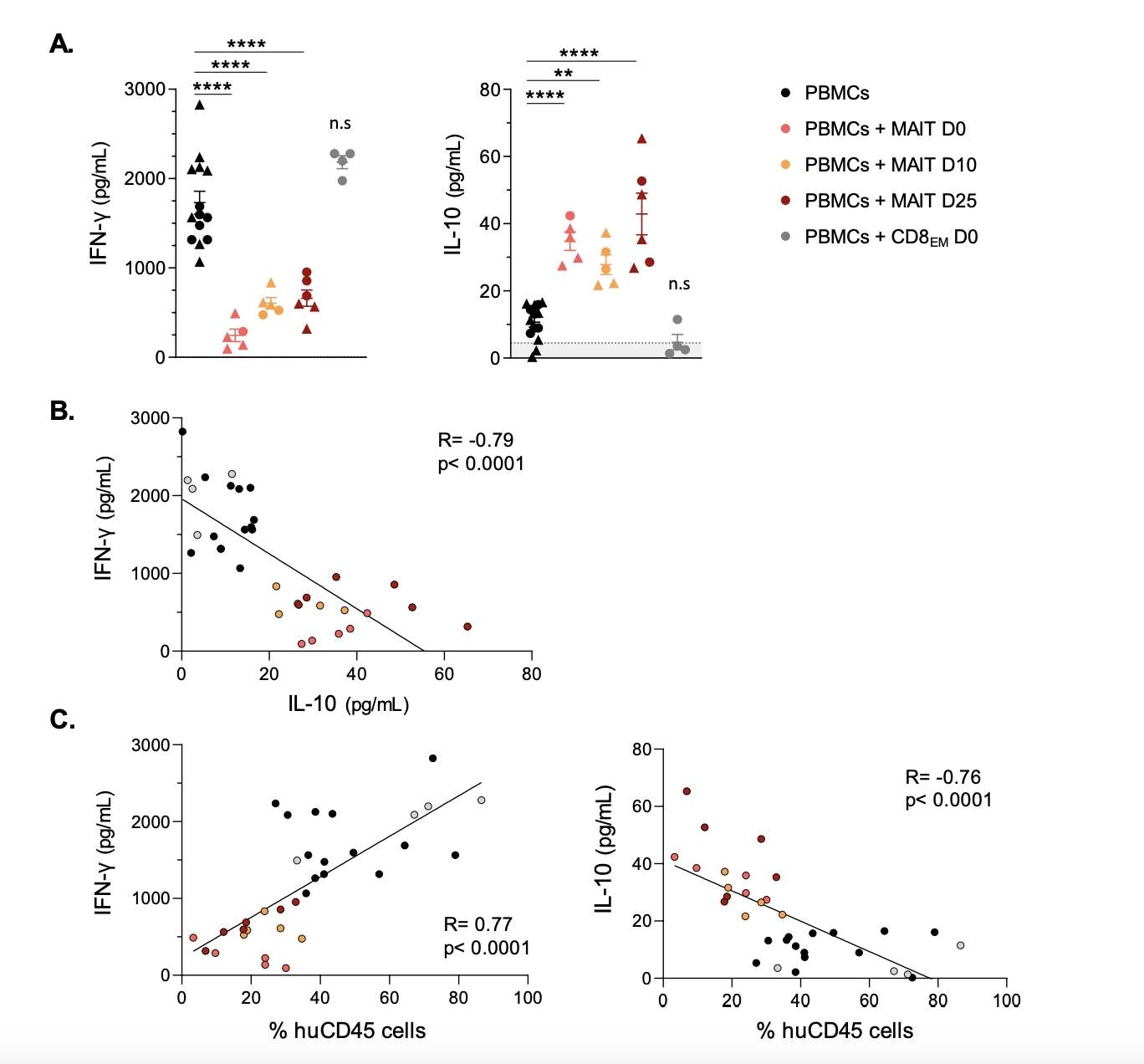 Fig.1 IFN-gamma and IL-10 Level Are Correlate With MAIT-Mediated Control of Xenoreactive T Cell Expansion.1
Advantages
- Simultaneous and rapid quantification of multiple GVHD cytokines;
- Reduce workflow and sample size requirements by combining the analysis of multiple target analytes in a single reaction volume;
- Quantifying targets at completely different concentrations by providing linearity over a wide range;
- Optimized antibody pairs guarantee detection specificity;
- Exclusive sample dilution system guarantees minimal matrix effects;
- Factor selection is flexible: it can be matched according to customer needs and is no longer restricted by the panel;
- Fewer samples and more data: each sample only needs 30-50μL, high throughput data output;
- Strict laboratory data storage scheme, experimental data with traceability.
Creative Biolabs is equipped with LC-MS, flow cytometry, enzyme-linked speck analyzer (ELISpot) interaction analyzer, and other advanced equipment, and has established a complete GVHD cytokine analysis and detection platform, to provide strong support for your scientific research and drug research work. If you are interested in our services, please feel free to contact us.
Reference
- Talvard-Balland, Nana, et al. "Human MAIT cells inhibit alloreactive T cell responses and protect against acute graft-versus-host disease." JCI insight 9.5 (2024).
 Download our brochure