ICAM-1 mediated Cell Adhesion Assay Service
Precision Adhesion Insights for Targeted Anti-Inflammatory Discovery
Intercellular adhesion molecule-1 (ICAM-1) plays a critical role in the adhesion process between leukocytes and the endothelial cells lining blood vessels, particularly during inflammatory responses. Under normal conditions, endothelial cells express low levels of ICAM-1. However, in the presence of inflammatory mediators such as TNF, IL-1, LPS, and PMA, the expression of ICAM-1 is significantly upregulated. This upregulation enhances the affinity of ICAM-1 for its ligand, LFA-1, on leukocytes, facilitating their adhesion to the site of inflammation. Targeting and modulating this interaction could pave the way for developing effective anti-inflammatory drugs. Creative Biolabs introduces the ICAM-1-mediated cell adhesion assay, designed to provide a comprehensive analysis of ICAM-1 interactions and evaluate potential inhibitors of this critical adhesion process.
Procedure
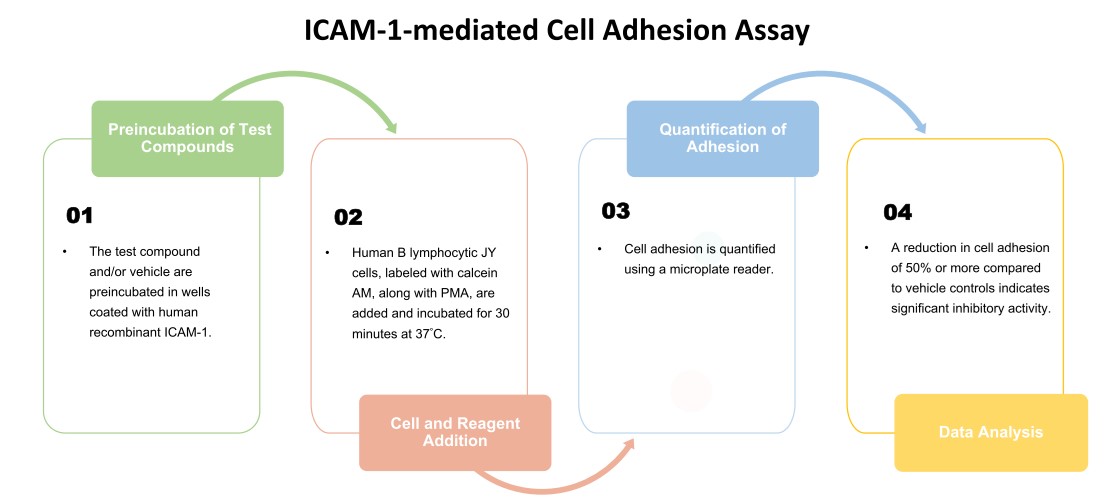
Our ICAM-1-mediated cell adhesion assay is a functional, cell-based assay that utilizes spectrofluorimetry to measure fluorescence in response to antagonist activity.
Advantages
Creative Biolabs' ICAM-1-mediated cell adhesion assay provides a precise and reliable method for studying cell adhesion mechanisms, particularly in inflammatory contexts. By employing advanced spectrofluorimetry, the assay delivers high sensitivity and accuracy in measuring fluorescence-based adhesion responses. The use of recombinant ICAM-1-coated wells and calcein AM-labeled JY cells ensures a robust evaluation of the adhesion process. Additionally, the ability to assess both the inhibitory effects of test compounds and potential cytotoxicity in a single assay provides a comprehensive overview of drug efficacy and safety. This integrated approach facilitates the identification of novel anti-inflammatory agents and supports the development of targeted therapies.
Publication Sharing
This study highlights the pivotal role of ICAM-1 in enhancing cell adhesion between human CD4+ T cells and B cells upon TCR/CD28 stimulation. The data reveal that ICAM-1 significantly facilitates increased adhesion between these cell types when T cells are activated through the TCR/CD28 pathway. The upregulation of ICAM-1 expression on T cells results in stronger and more stable interactions with B cells, which is essential for effective immune responses. This enhanced cell adhesion not only supports B cell activation but also plays a crucial role in subsequent IgG production and B cell differentiation, illustrating ICAM-1's critical function in modulating immune interactions and responses.
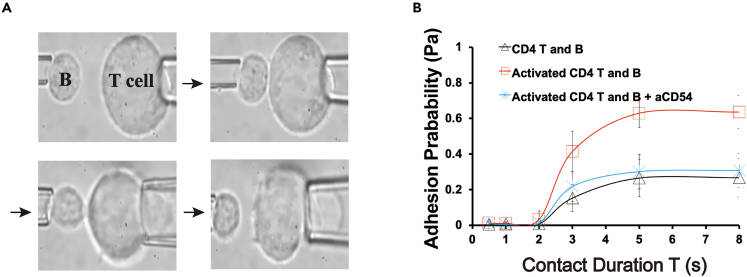 Fig.1 ICAM-1 is engaged in increased human CD4+ T cell-B cell adhesion upon TCR/CD28 stimulation.1
Frequently Asked Questions
Q1: What types of compounds can be tested using the ICAM-1-mediated cell adhesion assay?
A1: The assay is suitable for testing a wide range of compounds, including potential anti-inflammatory agents, small molecules, and biologics. It assesses their ability to inhibit the ICAM-1 and LFA-1 interaction.
Q2: How is the ICAM-1-coated plate prepared?
A2: Human recombinant ICAM-1 is coated onto the wells of the microplate, and this process is optimized to ensure proper binding and functionality for accurate adhesion measurement.
Q3: Can the assay detect both competitive and non-competitive inhibitors?
A3: Yes, the assay can identify both competitive and non-competitive inhibitors of the ICAM-1 and LFA-1 interaction, providing detailed insights into the mode of action of the test compounds.
Q4: What is the significance of the fluorescence measurement in the assay?
A4: Fluorescence measurement provides a sensitive and quantitative assessment of cell adhesion. The level of fluorescence correlates with the number of cells adhered to the ICAM-1-coated surface, allowing precise evaluation of compound efficacy.
Q5: How do you handle potential cytotoxicity in the assay?
A5: If significant inhibition of adhesion is observed, we perform additional tests to evaluate potential compound-induced cytotoxicity, ensuring that observed effects are due to specific inhibition of the ICAM-1 interaction rather than general cell toxicity.
At Creative Biolabs, we are dedicated to advancing your research with precise and insightful analyses. Our ICAM-1-mediated cell adhesion assay is designed to offer unparalleled accuracy in studying cell adhesion dynamics and evaluating potential anti-inflammatory agents. If you're looking to explore the efficacy of your compounds in modulating ICAM-1 interactions, contact us today to discuss how our assay can meet your research needs and contribute to your breakthroughs.
Reference
- Liu, Shuai, et al. "ICAM-1 mediated cell-cell adhesion exerts dual roles on human B cell differentiation and IgG production." Iscience 26.12 (2023). Distributed under Open Access license CC BY 4.0, without modification.
 Download our brochure