This assay determines degradation rates in liver systems, predicting in vivo clearance. This is essential for identifying suboptimal stability profiles and ensuring optimal therapeutic exposure.
Learn More →Reactive Metabolite Screening Service
At Creative Biolabs, our team of experts utilizes state-of-the-art technology and methods to screen for reactive metabolites. By screening for reactive metabolites, we aim to assess the potential safety risks associated with a drug candidate. Our assays provide valuable insights into the metabolic fate of drugs and identify any potential toxicities that may arise during their use.
Introduction What We Can Offer Workflow Why Creative Biolabs Customer Reviews FAQs Related Services Contact Us
Why Reactive Metabolite Assay?
Reactive metabolite screening is a crucial aspect of drug development and toxicology research. It involves the identification and assessment of potentially toxic metabolites, which are produced when drugs or other xenobiotics are metabolized by the body. Reactive metabolites are capable of reacting with biological macromolecules, such as DNA, RNA, or proteins, leading to potential toxicities or mutagenic effects, including DNA damage, protein modification, and lipid peroxidation. Therefore, it is essential to identify and evaluate these metabolites to avoid potential safety concerns in later stages of development.
Initiate project inquiry: request a formal consultation.
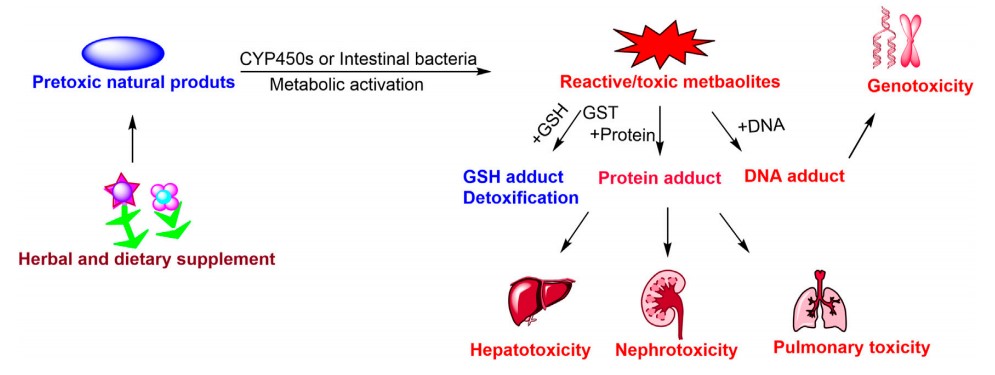 Fig.1 The toxicities of reactive metabolites. 1
What We Can Offer
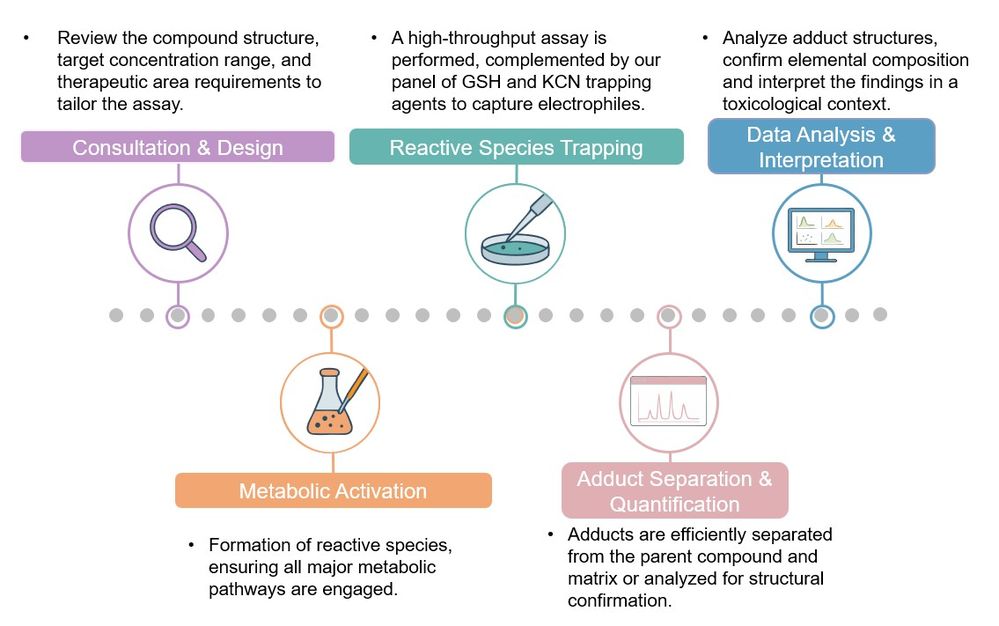
A reactive metabolite screening assay involves incubating the drug with liver microsomes or hepatocytes and then measuring the formation of reactive metabolites using various analytical techniques. We offer a range of assays, including glutathione trapping assay, cysteine trapping assay, cyanide trapping assay, and stable isotope labeling approaches, to comprehensively evaluate the potential for reactive metabolite formation. These assays allow us to detect and quantify reactive metabolites formed during the incubation of drugs with liver microsomes or hepatocytes.
There are several methods we offer to screen for reactive metabolites:
Glutathione Trapping Assay
Glutathione (GSH) is a common target for reactive metabolites, as it can form adducts with electrophilic intermediates. We offer the GSH trapping service that typically involves incubating the test compound with liver microsomes or hepatocytes in the presence of GSH, which acts as a trapping agent for reactive metabolites. The metabolite-GSH conjugates formed are then analyzed using analytical techniques such as liquid chromatography-mass spectrometry (LC-MS) to identify the reactive metabolites and assess their potential risks.
In addition, we offer cysteine (Cys) trapping and cyanide (KCN) service as an alternative study of GSH trapping.
Covalent Binding Assay
Covalent binding assays are considered the most accurate tool in drug development due to their ability to predict the potential toxicity of a drug candidate. These assays are typically performed using radiolabeled compounds, such as 3H or 14C. However, it is rare to conduct it in early-stage development because of the long and costly processes.
Cytotoxicity Assay
Reactive metabolites can lead to cellular damage and cytotoxicity. By exposing cells to the test compound and measuring cell viability or other markers of cell damage, such as ATP levels or LDH release, reactive metabolites can be identified.
Workflow of Our Reactive Metabolite Screening Service
Highlights
High-Throughput, Quantitative Screening
Utilize our efficient 35S-Cysteine assay, which enables the rapid screening and quantitative ranking of up to 30 lead compounds per plate, maximizing the throughput of your Sar-to-Safety campaigns.
Comprehensive Metabolic Coverage
Our assays ensure maximum coverage by incorporating cofactors for both NADPH and UDPGA metabolism, mitigating the risk of overlooking toxic metabolites formed by conjugation pathways like glucuronidation.

Gold-Standard Structural Confirmation
We employ state-of-the-art LC-HRMS and stable isotope labeling to generate the signature isotopic doublet, providing definitive proof and mass accuracy for the structural identity of the reactive adduct.
Actionable Risk Mitigation Reports
Creative Biolabs provides more than raw data; our final reports include expert, science-backed recommendations for structural de-risking to guide your medicinal chemistry efforts immediately.
Obtain a quotation today to experience the Creative Biolabs advantage.
Customer Reviews
-
Comprehensive Enzyme System
The simultaneous inclusion of both NADPH and UDPGA cofactors within the Creative Biolabs service provides a significant mechanistic advantage. This approach facilitated the identification of a reactive glucuronide metabolite that was previously undetected, thereby revealing a critical liability in our principal compound. - Dr. E***n Chen. -
Structural Insight
We relied upon Creative Biolabs' LC-HRMS analysis incorporating stable isotope labeling for adduct confirmation. The ability to precisely confirm the molecular structure and elemental composition of the trapped species via the isotopic doublet proved invaluable for validating the mechanism of toxicity to our internal safety team. - Jessica H**s.
FAQs
Q1: Should I perform your reactive metabolite screening service or go directly to the covalent binding assay?
A1: Our screening service is designed for early-stage optimization. While the covalent binding assay is the definitive quantitative study, our trapping service provides the mechanistic insight needed to make crucial chemical decisions before that significant investment. We recommend using our service first to select the safest lead, and then confirming the minimal risk with the covalent binding assay later in the preclinical phase.
Q2: Does your screening only detect metabolites formed by CYP450 enzymes?
A2: Absolutely not. Our assay system is designed for maximum coverage. We routinely include both the NADPH and UDPGA in our enzyme systems. This ensures we detect reactive metabolites generated by both phase I oxidation and phase II conjugation pathways, offering a truly comprehensive risk profile.
Related Services
Drug Metabolic Stability Analysis Service
Induction Measurement Service
We measure a compound's effect on CYP450 enzymes (mRNA and activity) to identify potential drug-drug interaction risks, ensuring proper drug combination safety profiling.
Learn More →How to Contact Us
Creative Biolabs' reactive metabolite screening service is your essential tool for mitigating the catastrophic risk of late-stage drug attrition. By providing rapid, high-throughput, and mechanistically detailed data on reactive metabolite formation, we empower your team to optimize chemical structures for safety and accelerate the transition to preclinical study. Please contact us now.
Reference
- Wang, Yi-Kun et al. "Metabolic Activation of the Toxic Natural Products From Herbal and Dietary Supplements Leading to Toxicities." Frontiers in pharmacology vol. 12 758468. 20 Oct. 2021. Distributed under an Open Access license CC BY 4.0, without modification. https://doi.org/10.3389/fphar.2021.758468
 Download our brochure
Loading case studies...
Online Inquiry