Creative Biolabs-Immuno-oncology

Retrospective Methods & Computational Lineage Tracing Service

Background Service Highlights FAQs Contact Us

Introduction: The Metabolic Imperative in Modern Oncology

At Creative Biolabs, we recognize that to truly unravel the intricacies of biological systems, researchers require insights into not just cellular states but also their historical relationships. This necessity has driven the development of advanced retrospective methods and sophisticated computational tools that transcend the limitations of traditional, imaging-based approaches. Our expertise at Creative Biolabs lies in harnessing these cutting-edge techniques to provide unparalleled resolution and accuracy in cell lineage analysis, propelling biomedical research forward, especially in the challenging realm of in vivo tumor dynamics.

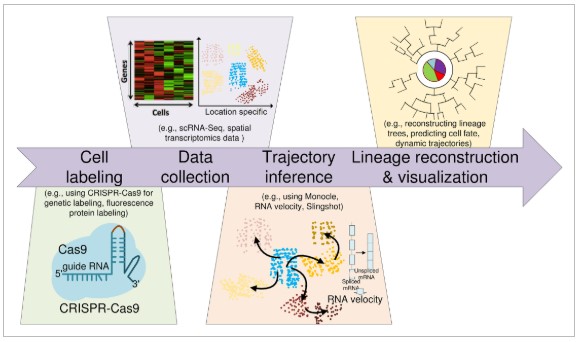
Fig.1 Workflow of computational cell lineage tracing. (OA Literature)Fig.1 Computational cell lineage tracing workflow.1

Our Retrospective Methods and Computational Lineage Tracing Service for In Vivo Tumor Lineage Tracing

Understanding the cellular origins, clonal evolution, and heterogeneous composition of tumors is paramount for developing effective cancer diagnostics and therapies. Traditional lineage tracing methods often fall short in complex in vivo tumor environments due to limitations in long-term tracking, sample accessibility, and the inability to analyze naturally occurring processes without prior manipulation. At Creative Biolabs, our specialized retrospective and computational lineage tracing services are uniquely positioned to address these critical needs, offering unparalleled insights into the dynamic landscape of cancer.

Retrospective Lineage Tracing: Unmasking Tumor Evolution In Vivo

Retrospective lineage tracing is particularly powerful for studying tumors because it leverages naturally occurring genetic and epigenetic alterations as intrinsic, permanent lineage markers within the tumor cells themselves. As cancer cells divide, they accumulate somatic mutations and epigenetic modifications, which are then inherited by their progeny. These alterations act as unique barcodes, allowing us to reconstruct the evolutionary history and clonal relationships within a tumor, even from archived or clinical biopsy samples where de novo labeling is impossible.

The core principle involves:

Mining Endogenous Tumor Barcodes: We identify and analyze the spectrum of naturally occurring genetic and epigenetic changes within tumor cells. For cancer research, key endogenous barcodes include:

  • Somatic Mutations (SNPs, Indels): These random mutations accumulate over cell divisions and are powerful markers for tracking clonal expansion and divergence within a tumor. By analyzing shared and unique mutations, the phylogenetic relationships among tumor cells can be inferred.
  • Copy Number Variants (CNVs): Gains or losses of large DNA segments are common in cancer and can represent significant clonal events, marking distinct tumor subclones.
  • Mitochondrial DNA (mtDNA) Mutations: While less frequent, mtDNA mutations can also serve as stable clonal markers within tumor lineages.
  • Epigenetic Modifications: Aberrant DNA methylation patterns are prevalent in cancer and can be stably inherited, providing additional layers of lineage information and potentially highlighting specific cancer-driving epigenetic events.
  • Tracing Clonal Expansion and Dissemination: By analyzing these inherited changes across different tumor regions, primary tumors, and metastatic sites, we can reconstruct the clonal architecture of a tumor. This allows us to:
    • Identify the origins of tumor heterogeneity.
    • Trace the routes and timing of metastatic dissemination.
    • Pinpoint ancestral cancer-initiating cells or specific subclones responsible for tumor progression or drug resistance.

A critical advantage of our retrospective approach for in vivo tumor tracing is its non-invasive nature, as it requires no prior manipulation of the patient's cells. This enables the analysis of human tumor biopsies, allowing direct insights into patient-specific disease progression and therapeutic responses. Creative Biolabs' expertise in handling diverse clinical tumor samples, including FFPE tissues, ensures reliable and high-quality data generation. We employ proprietary methodologies to mitigatein vitro noise inherent in amplification processes, thereby maximizing the accuracy and resolution of lineage reconstruction from challenging tumor material.

Computational Lineage Tracing: Decoding the Tumor Phylogeny

The complexity and sheer volume of genomic and epigenomic data derived from tumor samples necessitate advanced computational approaches to accurately reconstruct tumor lineage. Our computational lineage tracing platform takes these raw barcode profiles and transforms them into meaningful phylogenetic maps of tumor evolution.

The process involves:

  • Sophisticated Data Processing: Handling vast datasets generated from single-cell or bulk sequencing of tumor samples, including rigorous quality control and filtering of barcode information.
  • Phylogenetic Algorithm Application: Employing state-of-the-art phylogenetic algorithms to infer the most probable lineage trees based on the shared and unique somatic mutations, CNVs, and epigenetic markers across thousands or even millions of tumor cells. This allows us to visualize the branching patterns of tumor evolution.
  • Clonal Inference and Dynamics Modeling: Our computational tools identify distinct tumor subclones, track their relative expansion over time or across different tumor sites, and model the dynamics of clonal selection under various pressures, such as treatment.
  • Integration with Multi-Omics Data: Crucially, Creative Biolabs can integrate lineage information with other omics data, such as single-cell RNA sequencing or proteomics from the same tumor cells. This allows for simultaneous determination of clonal ancestry and cellular state (e.g., expression of drug resistance genes, differentiation status, immune cell interactions), providing a holistic understanding of how genotype dictates phenotype during tumor progression.

Creative Biolabs' computational infrastructure is designed for the unique challenges of tumor heterogeneity and clonal evolution. We leverage advanced bioinformatics tools and develop bespoke algorithms that are sensitive enough to detect rare subclones and robust enough to handle the inherent noise in clinical samples. This comprehensive approach enables the identification of cancer-initiating cells, the elucidation of mechanisms underlying tumor heterogeneity and metastasis, and the prediction of resistance pathways.

Our Comprehensive Service Content

Creative Biolabs offers a specialized suite of services tailored forin vivo tumor lineage tracing, designed to provide unparalleled insights into cancer biology:

Our Advantages

Creative Biolabs' two decades of leadership in biological research translate into distinct advantages for our clients seeking to unravel tumor lineages:

FAQs

Q1: Can Creative Biolabs' service trace lineage in archived tumor samples?

A1: Yes, our retrospective methods are ideally suited for archived samples, including FFPE tumor biopsies, as they leverage naturally occurring mutations rather than requiring prior labeling.

Q2: How can your service help identify drug resistance mechanisms in cancer?

A2: By tracing the lineage of tumor cells during treatment, we can identify specific clones that expand under therapeutic pressure. Integrating this lineage information with gene expression data allows us to pinpoint the genetic and phenotypic changes associated with drug resistance in these resistant subclones.

Q3: What is the benefit of integrating multi-omics data with tumor lineage tracing?

A3: Integrating multi-omics data (e.g., scRNA-seq, epigenomics) with lineage information allows you to understand not only how tumor cells are related but also what their functional state is. This can reveal how different subclones contribute to tumor aggression, metastasis, or immune evasion.

Q4: Can your service differentiate between tumor cells and normal stromal cells in a biopsy?

A4: Yes, our single-cell approaches can distinguish tumor cells from stromal or immune cells based on their unique molecular profiles, allowing for specific lineage tracing within the cancerous population.

Q5: How does Creative Biolabs handle the inherent heterogeneity of tumor samples?

A5: Tumor heterogeneity is precisely what our service is designed to address. Our high-resolution methods allow us to resolve and track individual subclones within a heterogeneous tumor, providing a detailed map of its evolutionary landscape.

Contact Us

The fight against cancer demands the most advanced tools. Creative Biolabs offers unparalleled expertise and cutting-edge technology in retrospective methods and computational lineage tracing, specifically designed to unravel the complexities of in vivo tumor evolution. Contact us today to discuss your specific oncology research needs and discover how Creative Biolabs can help you achieve transformative insights into cancer biology and therapy.

Reference

  1. Mao, Shanjun, et al. "Cell lineage tracing: Methods, applications, and challenges." Quantitative Biology 13.4 (2025): e70006. DOI: 10.1002/qub2.70006. Distributed under Open Access License CC BY 4.0, without modification.

For Research Use Only | Not For Clinical Use

Online Inquiry
Copyright © 2026 Creative Biolabs. All Rights Reserved.
ISO 9001 Certified - Creative Biolabs Quality Management System.
Close
Thanksgiving
Thanksgiving