We offer specialized downstream process development services to optimize the purification of your proteins and antibodies. This is critical for improving the yield, purity, and overall quality of your therapeutic molecules.
Learn More →T & B Cell based Surface Plasmon Resonance (SPR) Assay Service
Creative Biolabs' T and B Cell-based SPR Assay provides a sophisticated, real-time solution for quantifying complex immunological interactions. Our service delivers precise and reproducible kinetic data, allowing you to accurately measure the binding affinity and rates of your molecules. Creative Biolabs provides clear, actionable insights that help you make informed decisions, reducing guesswork and accelerating your project timelines.
Introduction What We Can Offer Workflow Why Creative Biolabs Customer Reviews FAQs Related Services Contact Us
Using Surface Plasmon Resonance (SPR) to Quantify the Binding Reaction
Surface Plasmon Resonance is a biosensor that uses the optical technique to quantify the binding reaction between biomolecules. The SPR technique, as a real-time biosensor, has become the standard epitope analysis approach. It can quantitatively measure the binding of an epitope to its receptor molecules without the need for labeling antigens or antibodies. With extensive experience in tumor antigen epitope discovery and validation, Creative Biolabs provides T and B Cell-based SPR assays for cancer epitope analysis.
For a comprehensive discussion of how our services can address your specific research needs, request a consultation.
What We Can Offer
-
Multiple Methods for Ligand Immobilization
Specific antigen peptides and variants or an overlapping peptides library are synthesized and immobilized on the chip. Ligand immobilization methods are shown below, but are not limited to this.Covalent Conjugation
The reaction between carboxyl and amino is used for covalent immobilization.
Capture Coupling
The interaction between streptavidin and biotin, and Ni2 to his tag is used.
Gold sensor chips are used where no surface chemistry is found. -
Data Analysis
The ligand-receptor binding activity is measured in resonance units (RU). For any given interactant, the change in the refractive index on coupling ligands is proportional to the amount of the ligand-receptor complex formed on the sensor surface. The interaction is recorded and displayed as a sensorgram in real-time, providing binding kinetics information between an epitope and its receptor.kon and koff
The association and dissociation kinetic rate constants, kon and koff.
Describe the formation and dissociation of the ligand-receptor complex.KD
The equilibrium dissociation constant.
Calculates from kon/koff.
Represents the binding affinity of one molecule to another.
SPR Assay Service at Creative Biolabs
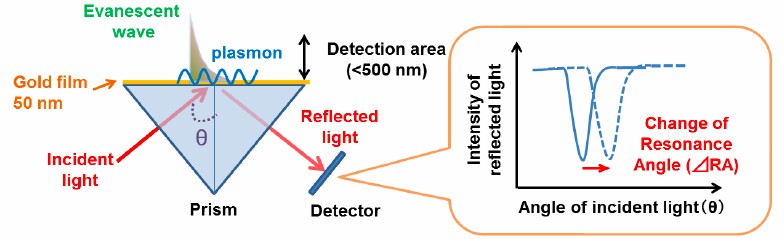 Fig.1 Principle of the SPR-based biosensor. 1
The following comprehensive workflow meticulously outlines the key stages of our T and B Cell-based SPR Assay service, each component of which is optimized by our expert team. This systematic approach is engineered to reliably deliver high-quality, actionable kinetic data essential for advancing your therapeutic or diagnostic research objectives.
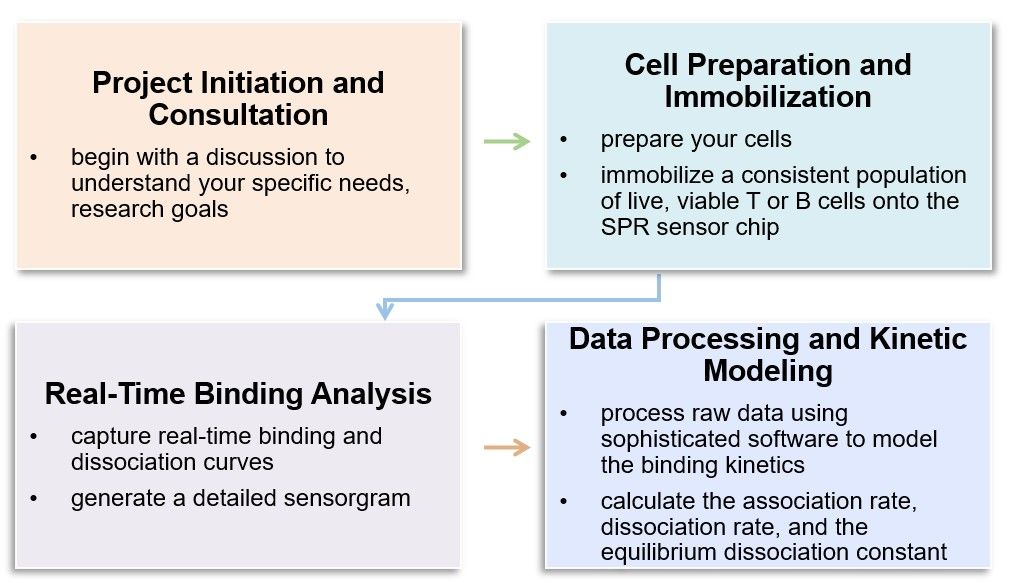 Fig.2 Workflow of T and B Cell-based SPR assay process.
Highlights
Diverse Ligand Immobilization
We utilize various methods like covalent conjugation (carboxyl/amino) and capture coupling (streptavidin/biotin) to ensure your target molecules are precisely and stably immobilized on the sensor chip for optimal analysis.
High-Resolution Data
Our platform measures binding in real-time and reports the ligand-receptor binding activity in RU, providing a detailed sensogram that captures binding and dissociation kinetics with high precision and accuracy.

Comprehensive Kinetic Analysis
We calculate key binding parameters, including the association rate, dissociation rate, and the equilibrium dissociation constant, from the real-time data, giving you a full picture of your molecule's binding affinity.
Unmatched Assay Features
Our service is characterized by its high sensitivity, label-free nature, and low detection limits, which allow for the measurement of multi-site binding and the characterization of complex molecular interactions.
Discover how a partnership with us can streamline your research - Get a quote today.
Customer Reviews
-
Enhanced Antibody-Antigen Characterization
Creative Biolabs' SPR assay vastly improved our characterization of antibody interactions on live cells. Its real-time, label-free data is crucial for understanding antibody potency and stability, leading to better therapeutic candidate decisions. - J***D. -
Game-Changing Insights for Vaccine Development
The multi-site binding capability of this assay was a game-changer for our vaccine development project. We were able to precisely measure how different immunogens bind to B-cell receptors, giving us critical insights that helped optimize our design. - A***R.
FAQs
What types of cells can be used in the assay?
Our assay is highly versatile and can be adapted to work with a wide variety of primary T and B cells, as well as established cell lines. Please contact our team to discuss your specific cell type and ensure compatibility.
How does this assay compare to flow cytometry for kinetic analysis?
While flow cytometry is excellent for identifying cell populations and can detect binding, it typically measures binding at a single endpoint, making it difficult to determine real-time kinetic rates. Our SPR assay, in contrast, provides a continuous, real-time sensorgram that allows for the precise measurement of these kinetic parameters.
Related Services
Epitope Binning and Mapping Service
Purification Development
This service provides a strategic approach to understanding antibody binding. Epitope mapping, in turn, precisely identifies the amino acid residues or structural features on a target protein that an antibody binds to.
Learn More →How to Contact Us
The SPR assay is a promising technique in the identification of cancer epitopes and biomarkers. Creative Biolabs is devoted to exploring potential cancer epitopes for diagnosis and therapeutics for our clients. Our T and B cell-based assay platform, of high efficiency and accuracy, can provide customized services to meet your demands. Please contact us for more detailed information.
Reference
- Yanase, Yuhki et al. "Surface plasmon resonance for cell-based clinical diagnosis." Sensors (Basel, Switzerland) vol. 14,3 4948-59. 11 Mar. 2014. Distributed under an Open Access license CC BY 3.0, without modification. https://doi.org/10.3390/s140304948
 Download our brochure
Loading case studies...
Online Inquiry