We quantify de novo generation and clonal expansion of Tregs to assess a patient's capacity to regenerate a healthy Treg pool, a critical indicator of GVHD risk.
Treg Reduction & Peripheral Tolerance Loss Analysis Service
Creative Biolabs offers specialized services for the analysis of Treg reduction and peripheral tolerance loss, critical factors in graft-versus-host disease (GVHD) diagnosis. Our comprehensive approach goes beyond simple cell counts to deeply investigate impaired Treg function and its direct link to the GVHD pathology. By providing crucial insights into the breakdown of immune regulation—a hallmark of peripheral tolerance loss—we deliver the essential data needed to precisely identify the disease state and inform the development of highly effective, targeted therapeutic strategies to restore immune balance.
Background What We Can Offer Workflow Publication Why Choose Us FAQs Customer Review Related Services Contact Us
The Scientific Foundation: Tregs, Tolerance, and the Pathogenesis of GVHD
Regulatory T cells are crucial for maintaining immune homeostasis and preventing autoimmunity. As a T-cell-mediated disorder, GVHD pathogenesis is fundamentally linked to a persistent reduction in functional Tregs and the rapid expansion of alloreactive effector T cells post-transplantation. This critical imbalance leads to a breakdown of peripheral tolerance, which drives the inflammatory and fibrotic features of GVHD. Our services are designed to address this core problem by providing detailed analysis of Treg populations and their suppressive function, drawing on insights from a broad body of scientific literature to ensure the highest level of scientific rigor.
Comprehensive Analysis to Illuminate the Immune Landscape
Our Treg reduction and peripheral tolerance loss analysis services offer a multi-faceted approach to characterize the immune microenvironment post-transplantation. We provide a comprehensive suite of analytical tools to assess every critical aspect related to Treg biology and peripheral tolerance.
Treg Generation and Expansion Analysis
Treg Maintenance and Stability Evaluation
We evaluate the long-term stability and suppressive phenotype of Tregs, including expression of FOXP3 and CTLA-4, and their ability to maintain suppressive capacity under ex vivo conditions.
Peripheral Tolerance Assessment
Our analysis evaluates overall peripheral tolerance by examining the balance between Treg and Teff populations, analyzing cytokine profiles (IL-10, TGF-β), and assessing Teff alloreactive potential for a holistic view of immune regulation.
Impairment Elucidation in GVHD Models
For preclinical research, we investigate Treg impairments in diverse animal or in vitro GVHD models, offering a robust platform for testing novel therapeutic interventions aimed at restoring Treg function and understanding disease pathology.
Workflow: From Sample to Solution
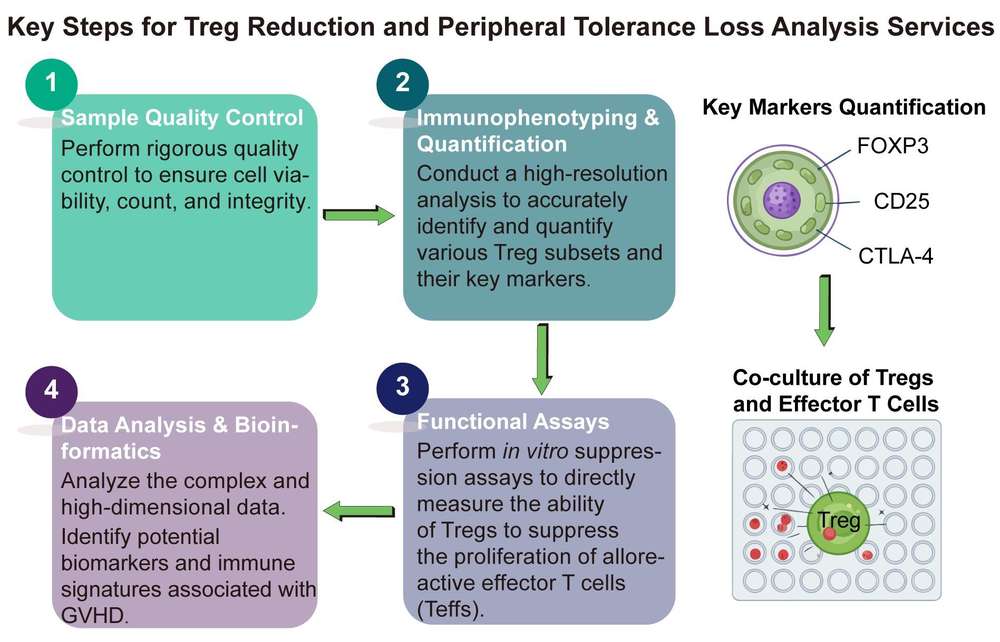
Required Starting Materials: To initiate a project, clients typically provide a range of materials, including:
- Patient-derived peripheral blood mononuclear cells (PBMCs) or purified T-cell subsets.
- Allogeneic cell lines or other relevant in vitro models for functional assays.
Final Deliverables:
-
Detailed Immunophenotyping Reports
High-resolution data on Treg subsets, including their frequency, phenotype, and marker expression. -
Functional Assay Data
Quantitative results from suppression assays demonstrating the suppressive capacity of your Treg samples. -
Summary Report with Key Findings
A concise report highlighting the most significant findings and their potential impact on your project's objectives.
Publication
This review examines the role of Tregs in GVHD. It details how an imbalance between effector T cells and Treg subsets (natural and induced) drives pathology. The authors discuss preclinical models showing Tregs can suppress GVHD and highlight emerging clinical trials using adoptive Treg therapy. Key challenges include ensuring the stability of Tregs and harnessing their suppressive function without compromising anti-tumor and anti-infection immunity.
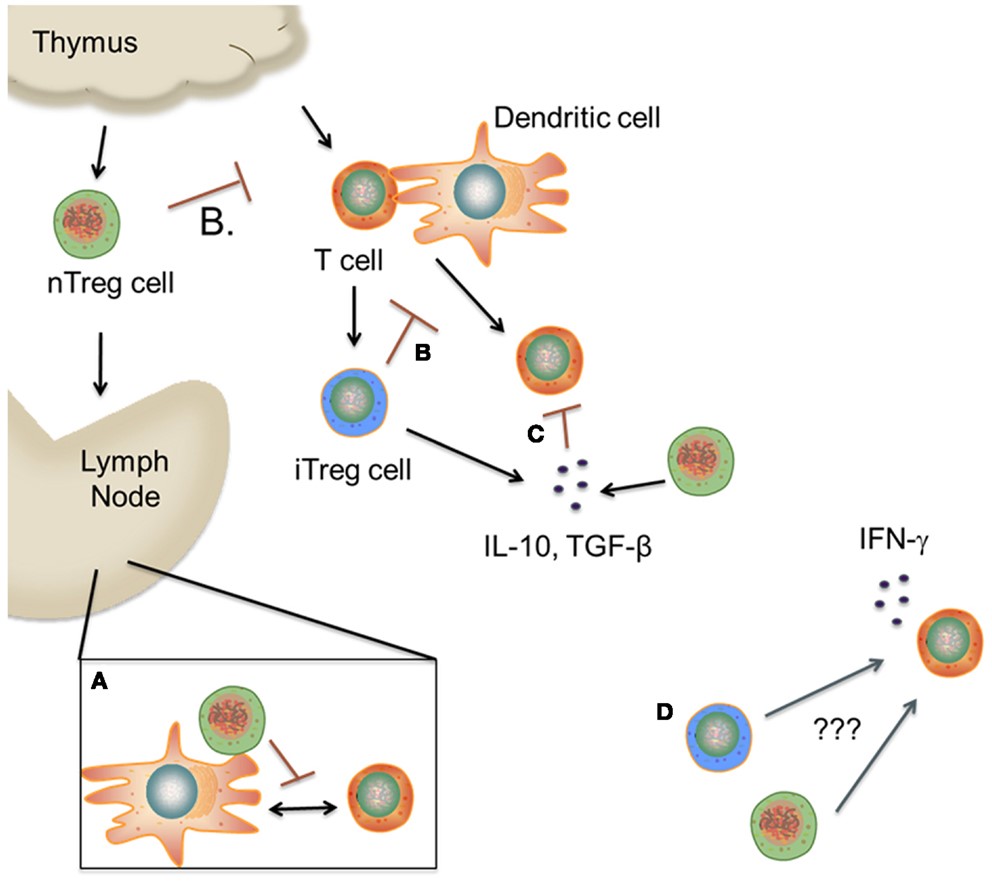 Fig.1 Mechanisms of Treg-mediated suppression in GVHD.1
Why Choose Us?
Our deep scientific acumen and unwavering commitment to client success are what set us apart. We leverage over two decades of experience and cutting-edge technology to provide services that go beyond mere data delivery. We provide actionable insights that directly address complex challenges like Treg instability and the need for personalized medicine. Our published data demonstrates a clear correlation between our Treg analysis and successful GVHD mitigation strategies, positioning us as a leader in the field.
Experience the Creative Biolabs Advantage - Get a Quote Today
FAQs
Q1: What types of samples do you accept for analysis?
A1: We can work with a variety of samples, including fresh or frozen PBMCs, sorted T-cell populations, and even cryopreserved samples.
Q2: Can you help with data interpretation after the analysis?
A2: Absolutely. Each project includes a comprehensive summary report with professional insights and interpretations of the data. Our scientific team is also available for consultations to help you understand the results and their implications for your research.
Q3: Is there a minimum sample size required?
A3: We have flexible requirements. While a certain minimum number of cells is necessary to perform robust assays, our team can work with you to determine if your samples are suitable.
Customer Review
-
A New Standard in Post-Transplant Monitoring
Using Creative Biolabs' Treg analysis has significantly improved our understanding of post-transplant immune reconstitution. Their precise data on Treg frequency and function were instrumental in optimizing our Phase II clinical trial protocol. - J***n S -
Pinpointing Immune Dysfunction with Precision
The peripheral tolerance assessment service from Creative Biolabs was a game-changer for our research on alloreactivity. Their analysis of the Treg/Teff balance allowed us to pinpoint the exact time point of immune dysregulation, providing a clear window for therapeutic intervention. - M***n L
Related Services
To further support your research, we recommend the following complementary services:
Intratumoral Treg Assay Service
Utilizing advanced techniques, we provide a comprehensive analysis of intratumoral Tregs, offering insights into their role in the tumor microenvironment for novel immunotherapeutic strategies.
Learn More →Tregs Migration Assay
Creative Biolabs offers premier Tregs migration assay services with expert Treg isolation, fluorescent labeling, and migration assay design (Transwell, real-time tracking, 3D models). We also provide chemokine/cytokine analysis and comprehensive data reporting.
Learn More →How to Contact Creative Biolabs
At Creative Biolabs, we are committed to providing the cutting-edge services you need to advance your research and therapeutic goals. Our Treg reduction and peripheral tolerance loss analysis services are designed to give you the clarity and confidence to make critical decisions in your GVHD projects.
Contact Us for Information and Project Discussion.
Reference
- Beres, Amy J., and William R. Drobyski. "The role of regulatory T cells in the biology of graft versus host disease." Frontiers in immunology 4 (2013): 163. Distributed under Open Access license CC BY 4.0, without modification. https://doi.org/10.3389/fimmu.2013.00163
 Download our brochure
Loading case studies...
Online Inquiry