
Applications
Online Inquiry
For research use only. Not intended for any clinical use.
This site is protected by reCAPTCHA and the Google Privacy Policy and Terms of Service apply.
Non-Human Primate (NHP) Application in Retinal Gene Therapy Validation
Are you currently facing low clinical translatability, delivery optimization hurdles, and crucial safety validation challenges in ocular gene therapy development? Creative Biolabs helps you secure preclinical success and regulatory confidence through highly relevant non-human primate disease models and advanced vector bioanalysis.
NHP Secure Preclinical Success with Gold-Standard Translational Models!
Gene therapy for irreversible vision loss requires robust preclinical validation, NHP models provide essential translational data for AAV vector safety, delivery, and functional efficacy, which is critical for IND submission.
Overview of NHP Applications
What Are Our Research Areas?
Ocular gene therapy aims to restore vision by delivering genetic material—most commonly using AAV vectors—to target cells like photoreceptors, retinal ganglion cells, or the retinal pigment epithelium. This field of research focuses on treating complex, often monogenic, diseases such as Leber congenital amaurosis, non-arteritic anterior ischemic optic neuropathy, and inherited retinal dystrophies. Preclinical validation requires models that accurately simulate the human eye's anatomy and physiology to assess vector delivery, transduction efficiency, and long-term therapeutic safety.
Why Choose Us?
NHP models are the scientific "gold standard" and an indispensable living bridge for translational vision research. Creative Biolabs leverages these advantages to de-risk your program:
- Genetic/Immunological Similarities: NHPs share the closest evolutionary and genetic proximity to humans, enabling accurate assessment of host-vector interactions and potential immunogenicity, which is vital for long-term gene therapy success.
- Clinical Translational Relevance: The NHP retina contains a cone-rich macula and fovea—critical structures absent in rodent models—allowing for the assessment of clinically relevant visual acuity and functional outcomes.
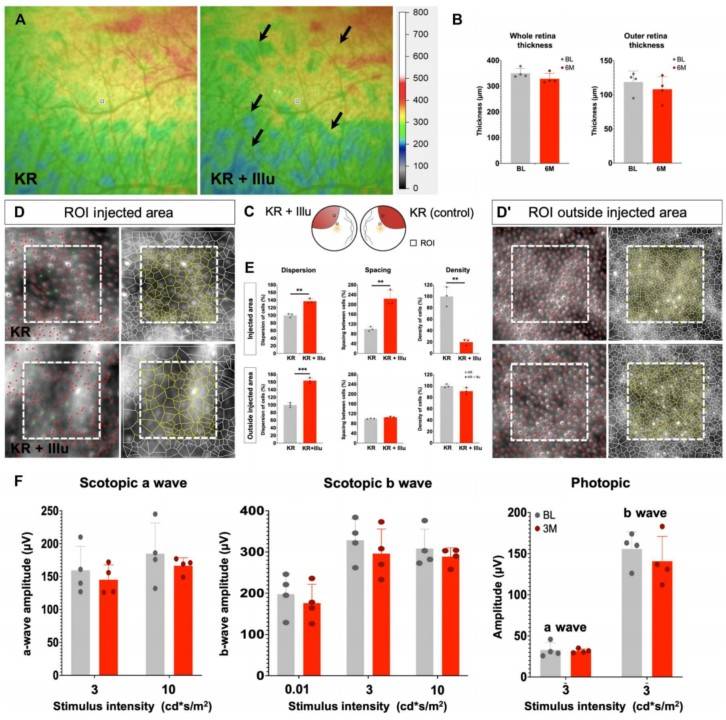 Fig.1 Optogene-driven retinal degeneration modeled in NHP retinas.1
Key Applications
Creative Biolabs' NHP models are critical across the entire translational spectrum of ocular gene therapy:
- AAV Vector Delivery and Biodistribution Optimization: NHPs are used to evaluate and refine the optimal route of administration and to confirm the tissue tropism and transduction efficiency of novel AAV serotypes and engineered capsids for specific targets, where non-primate models often fail to translate.
- Inducible Disease Modeling for End-Stage Therapies: NHPs allow for the creation of targeted models of retinal degeneration, such as the model targeting the Rhodopsin gene for rod-cone dystrophy or the polymer patch model for rapid, end-stage degeneration. These are essential for testing advanced treatments like stem cell transplantation or optogenetic therapies.
- Long-Term Systemic and Ocular Safety/Toxicity Studies: NHPs provide the most reliable platform to assess crucial safety parameters, including long-term vector stability, potential retinal inflammation, vector integration-associated mutations, and immunogenicity (Anti-Drug Antibody/ADA and Neutralizing Antibody/NAb responses).
- Gene Editing Efficacy and Off-Target Assessment: NHPs are used to validate the therapeutic window and determine the true in vivo editing efficiency of gene therapies. They are also vital for detecting potential off-target effects and genetic mosaicism in a larger, more complex genome before human trials.
How Do Creative Biolabs Support Your Projects?
Creative Biolabs supports your ocular gene therapy program by providing access to comprehensive, interconnected service capabilities.
| Service Capability | Corresponding Application Area |
| Ophthalmic Diseases Model Development | Developing NHP models for Inherited Retinal Diseases and optic neuropathies. |
| Gene Therapy Models (AAV, Lentivirus) | Evaluating the therapeutic efficacy and functional outcomes of AAV and non-viral vectors. |
| Advanced Therapy Safety (Gene/Cell Therapy) | Conducting long-term ocular and systemic toxicology studies, including dose-escalation and chronic effects. |
| Vector Copy Number (qPCR, ddPCR) | Quantifying vector biodistribution and persistence within retinal tissues and non-target organs after delivery. |
Translational Impact
Choosing the right preclinical partner directly translates into reduced clinical risk. Creative Biolabs' NHP models provide unparalleled early proof-of-concept and the most reliable data for predicting immune responses and toxicity.
- Data-Driven Messaging: Leverage the fact that NHP biodistribution and safety data is often required for gene therapy IND submissions.
- Reduced Risk of IND Failure: By accurately predicting systemic safety and long-term ocular inflammation, Creative Biolabs significantly reduces the risk of costly delays or clinical hold orders related to unpredicted preclinical toxicity.
Frequently Asked Questions
Q: What is the typical turnaround time for an AAV vector biodistribution and safety study in NHPs?
A: Timelines vary significantly based on the study design (single-dose vs. repeat-dose, acute vs. long-term safety). However, we have optimized our protocols, bioanalysis workflows (e.g., Vector Copy Number), and regulatory compliance to ensure the most efficient path to data delivery. Please contact our team today to discuss your specific vector, and we can provide a detailed, accelerated timeline.
Q: How do you address the low in vivo gene editing efficiency often seen in NHP models?
A: Low in vivo editing efficiency and off-target effects are genuine translational concerns. Creative Biolabs supports this challenge by offering advanced AAV vector and delivery optimization services, alongside ultra-sensitive ddPCR and next-generation sequencing assays to precisely quantify on-target editing, off-target modifications, and genetic mosaicism in the target retinal cells.
Q: Can you ensure the ethical standards and welfare of the NHPs used for these intensive gene therapy studies?
A: Ethical compliance and animal welfare are core to Creative Biolabs' mission and are paramount in all NHP studies, especially those involving genetic modification. We strictly adhere to global regulatory guidelines to maintain alignment between technological progress and the highest ethical standards.
Contact Us
Creative Biolabs provides a comprehensive suite of NHP models, advanced AAV vector analysis, and regulatory-grade safety testing that delivers the reliable preclinical data essential for translating groundbreaking ocular therapies. Reach out to our dedicated team of translational scientists to discuss your project's unique requirements and discover how our gold-standard NHP models can secure your path to the clinic.
Reference
- Ail, Divya, et al. "Inducible nonhuman primate models of retinal degeneration for testing end-stage therapies." Science Advances 9.31 (2023): eadg8163. Distributed under Open Access license CC BY 4.0, without modification. DOI: https://doi.org/10.1126/sciadv.adg8163