
Creative Biolabs is offering the most comprehensive services for antibody development projects. With strict regulation and effective execution, we are dedicated to providing the most valuable solutions to complete your projects.
HighlightsCreative Biolabs is offering the most comprehensive services for antibody development projects. With strict regulation and effective execution, we are dedicated to providing the most valuable solutions to complete your projects.
HighlightsCreative Biolabs has established a broad range of platforms for developing novel antibodies or equivalents. These cutting-edge technologies enable our scientists to meet your demands from different aspects and tailor the most appropriate solution that contributes to the success of your projects.
HighlightsWith deep understanding in antibody-related realms and extensive project experience, Creative Biolabs offers a variety of references to help you learn more about our capacities and achievements, including infographic, flyer, case study, peer-reviewed publications, and all kinds of knowledge that can assist your projects. You are also welcome to contact us directly for more specific solutions.
HighlightsGet a real taste of Creative Biolabs, one of the most professional custom service providers in the world. We are committed to providing highly customized comprehensive solutions with the best quality to advance your projects.
HighlightsFragment antigen-binding (Fab) molecules represent a highly versatile antibody format for probing protein interactions, studying receptor-ligand dynamics, and conducting biochemical assays. When engineered for pH sensitivity, Fab fragments become uniquely suited for capturing transient interactions and investigating biological processes that depend on environmental acidity, such as endosomal trafficking, ligand release, and vesicular sorting.
At Creative Biolabs, our pH-Sensitive Fab Discovery Service is tailored for researchers who require high-resolution binding data in acidic conditions without the complexity of full-length antibodies. These engineered Fab molecules enable precise control and real-time detection of pH-responsive binding events in vitro and in cell-based systems.
Our Fab discovery service is centered on a research-first approach that prioritizes precision, reproducibility, and flexibility. With a deep understanding of antibody structure and conformational dynamics, Creative Biolabs delivers Fab fragments that demonstrate clear pH-dependent binding behavior within your specified range. Our service offerings include:
In addition to Fab discovery, Creative Biolabs offers a portfolio of complementary services that enhance and extend your antibody research:
| Fab Repertoire Analysis Service | pH-Sensitive ScFv Discovery Service |
| pH-Sensitive Single Domain Antibody (SdAb) Discovery Service | pH-Sensitive Peptide Discovery Services |
Whether you're seeking to explore Fab-based biosensors or need pH-responsive reagents for receptor-ligand assays, Creative Biolabs brings targeted expertise to every project.
At Creative Biolabs, our pH-sensitive Fab discovery workflow combines structure with flexibility, offering an end-to-end path from antigen definition to validated Fab candidates. Every stage is informed by your target biology and designed for pH-responsiveness under physiologically relevant acidic conditions.
We begin by defining your microenvironment of interest (e.g., pH 4.5–6.5) and identifying potential pH-responsive epitopes through structural modeling and bioinformatics.
Recombinant protein expression or peptide synthesis is tailored for optimal epitope presentation, either for synthetic library design or host immunization.
We construct high-diversity Fab libraries either from immune sources or through synthetic design, ensuring CDR regions accommodate pH-sensitive structural modulation. Libraries are formatted for efficient expression in phage display vectors, with Fab-specific leader sequences and linker optimization.
Our high-throughput selection process uses customized panning combined with tightly controlled acidic and neutral pH washes to isolate Fab clones that exhibit binding gain or loss under defined pH conditions. Iterative biopanning cycles refine specificity while preserving structural integrity.
Clones demonstrating strong differential binding across pH points are validated, confirming functional pH-switch behavior.
Top candidates undergo sequence verification and engineering, including CDR tuning, solubility improvement, and rational mutations based on in silico modeling and pKa prediction.
Final candidates are expressed in optimized E. coli or HEK293 systems, with scale-up options to accommodate further biochemical or functional studies.
This systematic roadmap integrates phage display as a central engine of Fab discovery while allowing room for flexibility, refinement, and data-driven decision-making. It ensures transparency, reproducibility, and robust pH-sensitive performance across diverse research platforms.
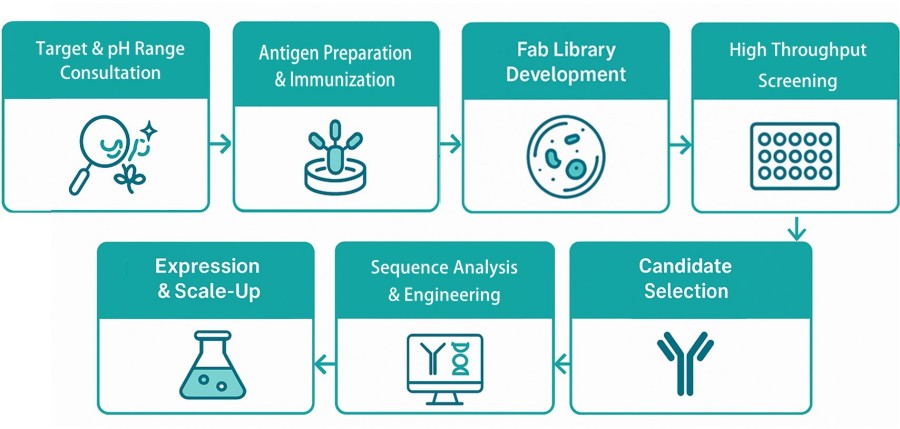 Fig.1 Discovery process for pH-Sensitive Fab molecules.
We combine cutting-edge techniques with validated experimental tools to deliver robust results:
Our infrastructure allows us to simultaneously explore multiple Fab variants, rapidly isolate functional candidates, and fine-tune molecular behavior with high fidelity.

Creative Biolabs leads the niche field of environment-sensitive antibody development

We focus exclusively on foundational research, giving us clarity in scope and execution
Every Fab discovery effort is uniquely scoped for your protein target, biological system, and assay platform

Combine Fab development with peptide, ScFv, or SdAb discovery workflows

Our team stays actively engaged throughout the project, with milestone-based updates and strategy input
After each project, Creative Biolabs provides a carefully compiled and research-ready deliverable package, allowing clients to immediately integrate the results into downstream experiments or further molecular development:
If your research demands precise, pH-sensitive Fab molecules that offer modularity and experimental clarity, Creative Biolabs is here to help. Reach out to begin customizing your Fab discovery campaign today.
All listed services and products are For Research Use Only. Do Not use in any diagnostic or therapeutic applications.








